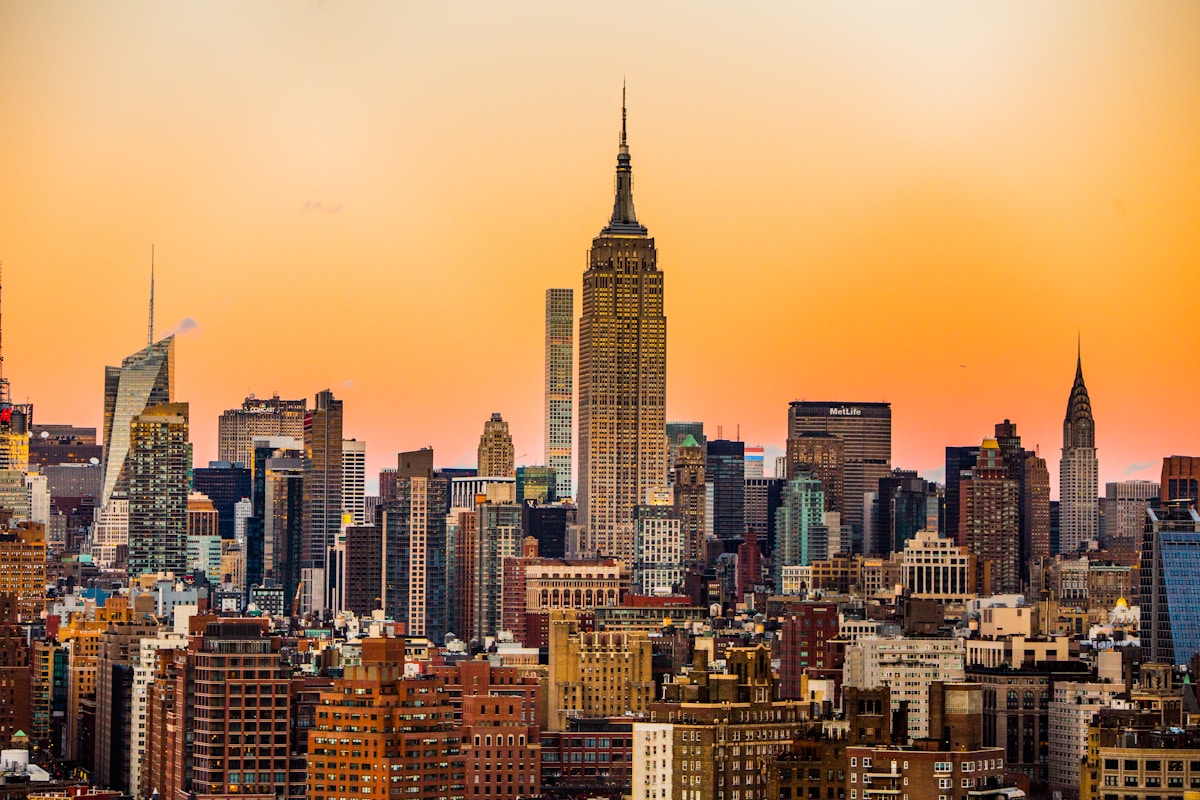
Two of the world’s great cities, New York and Los Angeles represent fundamentally different versions of American urban life - one vertical, dense, and powered by public transit; the other horizontal, car-dependent, and defined by outdoor space. Both are worth visiting, but they suit different travellers in different ways.
Quick Verdict
| Category | New York | Los Angeles |
|---|---|---|
| Overall cost | Higher | Moderate |
| Getting around | Subway | Car/Rideshare |
| Weather | Four seasons | Sunny year-round |
| Food scene | World-class, dense | World-class, spread out |
| Culture & museums | Exceptional | Strong, art-focused |
| Beaches | No | Yes |
| Best for | City immersion | Outdoor/lifestyle |
| Days needed | 4–5 | 5–7 |
Costs
New York edges ahead on overall expense. A night in a decent Midtown hotel - somewhere like the Pod 51 on East 51st Street - costs $180–230. Upgrade to the Kimpton Hotel Eventi near Madison Square Garden and you’re looking at $280–380. In Los Angeles, the Hollywood Roosevelt on Hollywood Boulevard runs $220–300, while the Figueroa Hotel Downtown sits around $160–220.
Food tells a more nuanced story. NYC has some of the cheapest fast food in any major Western city - a proper New York slice costs $3.50–4.50, deli sandwiches run $10–14, and there are Halal carts, dollar dumplings in Chinatown, and bodegas everywhere. LA’s equivalent cheap eats are excellent tacos ($3–5 each at street trucks) but the mid-range restaurant scene - a sit-down dinner for two with drinks - runs $90–130 in both cities.
Budget travellers can move through New York on $130–160/day including accommodation, transit, and food. LA on a budget is harder: car rental or frequent Ubers push that figure to $150–190/day even at the low end.
Food
Both cities have outstanding restaurant scenes, but they’re structured differently.
New York’s greatest strength is density and diversity. In a single neighbourhood - say, the East Village - you’ll find Ukrainian diners, Japanese ramen shops, Italian-American red-sauce joints, Thai spots, and farm-to-table American restaurants within a 10-minute walk. Russ & Daughters on Houston Street is the definitive smoked fish experience ($18–28 for a plate). Xi’an Famous Foods has hand-pulled noodles from $12. For a proper dinner, Via Carota in the West Village (mains $28–42) and Dirt Candy on the Lower East Side ($60 tasting menu) represent the city at its best.
Los Angeles leads on Mexican food, Pacific Rim cuisine, and health-forward cooking. The taco trucks along East Cesar E. Chavez Avenue in Boyle Heights serve some of the best tacos in the US for $3–5 each. Nobu Malibu is the splurge experience ($80–120/person), while Gjusta in Venice does exceptional California-style baked goods and deli plates for $15–20. The farmers’ markets - particularly the Hollywood Farmers Market on Sundays - are a genuine food experience rather than a tourist attraction. See our Los Angeles food guide for a full breakdown by neighbourhood and cuisine type.
Culture and Sights
New York packs extraordinary cultural density into a walkable geography. The Metropolitan Museum of Art (suggested donation $30) and MoMA (admission $25) are world-class. Central Park, the High Line, and Brooklyn Bridge are free. The Statue of Liberty requires a ferry ($24.50 for a basic ticket) and timed booking well ahead. Broadway tickets range from $80 for discount rush seats to $350+ for premium shows.
Los Angeles has a different rhythm - the Getty Center (free admission, though parking costs $20) and the Los Angeles County Museum of Art ($25 admission) are exceptional. The Griffith Observatory is free and has arguably the best view of any American city skyline. Universal Studios Hollywood ($110–120) and the Warner Bros. Studio Tour ($70) are the major paid attractions. The Santa Monica Pier and Venice Boardwalk are free and genuinely worth an afternoon.
See more on New York City and Los Angeles.
Accommodation
New York is expensive but geographically simple: stay in Midtown (tourist-dense), the Lower East Side or East Village (younger, more interesting), or Brooklyn (cheaper, excellent food, easy subway access). Avoid outer boroughs unless you know what you’re doing.
Search hotels in New York on Booking.com
Los Angeles requires careful neighbourhood choice because the wrong location means an hour in traffic every time you want to go anywhere. Stay in Santa Monica for the beach and walkability, West Hollywood for nightlife, Silver Lake for independent restaurants and coffee shops, or Downtown for walkability and the MOCA. The Hollywood/Highland area is convenient but overpriced and tourist-heavy.
Getting Around
This is the biggest practical difference between the two cities. New York’s subway ($2.90/ride, unlimited 7-day pass $34) covers virtually every major destination. You can visit all of Manhattan, most of Brooklyn and Queens, and parts of the Bronx without once opening the Uber app.
Los Angeles has the Metro system ($1.75/ride, $28 7-day pass) but the network is limited. Uber and Lyft are essential - a typical cross-city trip runs $20–40 depending on traffic and distance. Renting a car makes sense if you’re staying more than five days and want to explore beyond city limits. Parking in Santa Monica or West Hollywood averages $15–30/day.
See our USA driving guide for tips on car hire and navigating American roads.
When to Visit
New York in spring (April–June) and autumn (September–November) offers mild weather, lower hotel rates than summer, and manageable crowds. Summer is hot, humid, and expensive. Winter is cold but the city remains fully functional and hotel rates drop significantly - a January visit can yield Midtown hotels for $160–200/night.
Los Angeles has little seasonal variation - temperatures rarely drop below 60°F or climb above 85°F in coastal areas. The one exception: June Gloom is a real phenomenon, with overcast skies and morning fog covering the coast from late May through mid-June. For reliable sunshine, visit July through October. Winter is comfortable and hotel rates are often 15–20% below peak summer pricing.
The Verdict
Choose New York if you want maximum cultural density, a city you can explore without a car, and the classic American urban experience. Choose Los Angeles if outdoor space matters to you, you want beaches within the city, or you’re interested in the film industry, hiking culture, and health-forward lifestyle.
If you can only choose one and it’s your first time in the USA, New York is the more rewarding introductory experience. If you’ve already done New York, LA offers something genuinely different.
Read the best time to visit the USA for seasonal planning across all regions.
For guided tours in either city, browse the full USA tours selection. Compare flights to the USA and set up travel insurance before your trip.
More City Comparisons
- New York vs Chicago
- San Francisco vs Los Angeles
- Miami vs Los Angeles
- San Diego vs Los Angeles
- New York City travel guide
- Los Angeles travel guide
Plan Your Trip
✈️ Book your flights to the USA 🛡️ Get travel insurance 📱 Stay connected with an eSIM 🚗 Rent a car
Ready to Plan Your Trip?
Here are our top itineraries to help you plan your USA visit:
- 3 Days in New York City: First-Timer’s Itinerary - The best of the city in a long weekend
- 7 Days in New York City: Itinerary - A full week exploring every neighbourhood
- East Coast USA 10-Day Itinerary: NYC, DC, Philadelphia & Boston - The full East Coast circuit