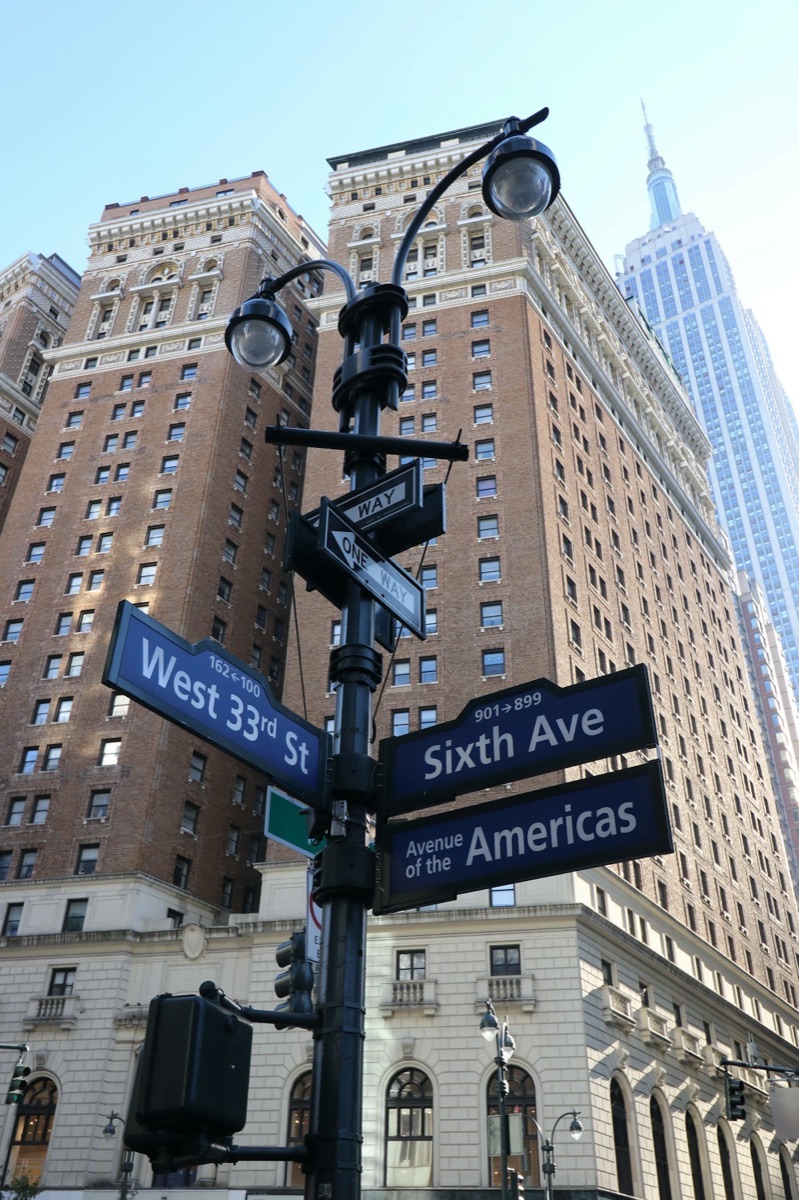
American English is the de facto national language of the United States. There is no official language at the federal level, but English is used in government, commerce, education, and daily life across all 50 states. The script is the standard Latin alphabet with 26 letters, identical to British English in form - though spelling and vocabulary diverge in hundreds of everyday words. This guide covers pronunciation, essential travel phrases by situation, regional expressions, and the etiquette rules that prevent accidental confusion.
Language in the USA
Approximately 78% of Americans speak English as their first language. Spanish is the second most spoken language (around 42 million native speakers), making it genuinely useful in California, Texas, Florida, Arizona, and Miami - where many service industry workers are bilingual. Major cities also host large communities speaking Mandarin, Korean, Vietnamese, Tagalog, and Russian. That said, English-language service is available everywhere in the country. You will not need a phrasebook in any tourist region.
American English differs from British, Australian, and Irish English in vocabulary, pronunciation, and idiom - not just spelling. The differences run far beyond “colour” versus “color.” A British visitor asking for the “loo” at a restaurant will likely get a blank stare. An Australian asking for the “bill” may find the server confused. The vocabulary sections below are designed to bridge that gap.
Pronunciation Guide for Non-Native Speakers
American English has several distinctive sounds. This matters most when asking for directions, reading street signs aloud, or understanding fast speech in restaurants and transport hubs.
| Sound | How it works | Example words | Practical tip |
|---|---|---|---|
| Rhotic r | Always pronounced - even at the end of words | car, butter, park, water | Say the “r” clearly at word-ends: “New Yorrk”, not “New Yawk” for formal contexts |
| Flat “a” | Nasal, spread lips | cat, bad, ask, can | More nasal than in British or Australian English |
| Flap t | Between vowels, “t” sounds like a soft “d” | butter, water, city, pretty | ”Budder”, “wadder”, “ciddy” are all normal fast speech |
| Long “o” | Rounded, slightly drawn out | no, go, phone, road | Lips more rounded than British English |
| ”wh” words | Usually just “w” | where, what, white, why | Most Americans say “wair”, not “hwair” |
| Contractions | Heavy in casual speech | going to → “gonna”, want to → “wanna”, out of → “outta” | Normal in conversation - not uneducated |
| Stress patterns | First syllable often stressed | ADdress, INsurance, REsearch | British speakers often stress the second syllable |
Accents vary widely. A Boston accent drops the final “r” (“pahk the cah”), a Southern accent draws out vowels, and a New York accent compresses speech rapidly. You will hear all of these on a cross-country trip. When you cannot understand someone, “Could you repeat that, please?” is always acceptable.
Greetings and Everyday Conversation
| What you’ll hear | What it means | How to respond |
|---|---|---|
| How’s it going? | Casual “hello” - no detailed answer expected | ”Good, thanks” or “Not bad” |
| What’s up? | Another casual greeting | ”Not much” or “Same old” |
| You guys | Addressing any group, regardless of gender | Universal across most of the US |
| Y’all | ”You all” - Southern and increasingly widespread | Common in Texas, the Southeast, and online |
| Have a good one | Goodbye | ”You too” |
| For sure | Yes / definitely | More casual than “certainly” |
| My bad | My mistake / I’m sorry | Informal but very common |
| No worries | You’re welcome / it’s fine | Replacing “you’re welcome” among younger Americans |
| I’m good | No thank you | ”Would you like more water?” - “I’m good” means no |
| Totally | Absolutely / yes | Filler word for agreement |
| Awesome | Very positive response | Used far more widely than in other English varieties |
Ordering Food and Dining Out
| Phrase | Meaning |
|---|---|
| Can I get…? | Standard way to order - more natural than “may I have” |
| For here or to go? | Eating in or taking away |
| Can I get the check? | Asking for the bill - “the bill” is understood but unusual |
| I’d like it with a side of… | Requesting an accompaniment (fries, salad, coleslaw) |
| How do you want your steak/burger? | Doneness: rare, medium-rare, medium, medium-well, well-done |
| Dressing on the side | Salad dressing served separately |
| Can we box that up? | Take leftovers home - completely normal and expected |
| Regular or large? | Size options - “regular” often means what other countries call “large” |
| Does this come with anything? | Asking about included sides |
| Can I substitute the fries for a salad? | Substitutions are expected and usually accommodated |
Tipping at restaurants: 18–20% of the pre-tax total is standard. Gratuity on a receipt means the tip. “Gratuity included” means it has already been added - check the receipt before adding more. Payment screens often prompt 18%, 20%, or 25% - this is the server’s tip, not an extra charge. At bars, USD 1–2 per drink is expected.
Getting Around
| American term | British/Australian equivalent | Meaning |
|---|---|---|
| Sidewalk | Pavement | Pedestrian path beside the road |
| Crosswalk | Pedestrian crossing / zebra crossing | Marked road crossing |
| Freeway / highway | Motorway | High-speed road |
| Gas station | Petrol station | Fuel stop |
| Trunk | Boot | Car storage compartment |
| Hood | Bonnet | Front of the car covering the engine |
| Block | - | One street segment (“it’s two blocks north”) |
| Downtown | City centre | Central business and entertainment district |
| Restroom / bathroom | Toilet / loo | Always say “restroom” in public - “toilet” sounds blunt to Americans |
| Elevator | Lift | Vertical transport in buildings |
| First floor | Ground floor | In the US, the ground level IS the first floor |
| Transfer | Change (trains/buses) | “Transfer at Union Station” means change trains there |
Accommodation Phrases
| Phrase | Context / Notes |
|---|---|
| I have a reservation under [name] | Standard check-in opener |
| What time is check-in / check-out? | Usually 3pm check-in, 11am check-out |
| Do you have early check-in available? | Often USD 25–50 extra, or free if room is ready |
| Can I get a late check-out? | Usually free until noon; charged beyond that |
| King or two queens? | Room type - one king bed or two queen beds |
| Non-smoking room, please | All US hotels are non-smoking indoors in most states |
| Do you have a rewards number? | Loyalty program prompt - say “no” if you don’t have one |
| The AC isn’t working | AC = air conditioning (HVAC = full heating and cooling system) |
| Can I get extra towels / pillows? | Housekeeping requests - call the front desk (“0” on most room phones) |
| What’s the WiFi password? | WiFi is standard in virtually all US hotels, from motels to luxury chains |
| Can you call me a cab / Uber? | Front desk will arrange it - “call” means organise, not phone personally |
| Do you have a parking fee? | Valet and self-park fees are common in city hotels: USD 30–60/night |
Numbers
| Number | Written | Spoken (American) |
|---|---|---|
| 0 | zero | ”zero” (or “oh” in phone numbers and addresses) |
| 1 | one | ”one” |
| 2 | two | ”two” |
| 3 | three | ”three” |
| 4 | four | ”four” |
| 5 | five | ”five” |
| 6 | six | ”six” |
| 7 | seven | ”seven” |
| 8 | eight | ”ate” (rhymes with “late”) |
| 9 | nine | ”nine” |
| 10 | ten | ”ten” |
| 11 | eleven | ”ee-LEV-en” |
| 12 | twelve | ”twelve” |
| 13 | thirteen | ”thir-TEEN” (stress on second syllable) |
| 15 | fifteen | ”fif-TEEN” |
| 20 | twenty | ”TWEN-tee” |
| 21 | twenty-one | ”TWEN-tee-one” |
| 100 | one hundred | ”a hundred” in casual speech |
| 1,000 | one thousand | ”a thousand” in casual speech |
| 1,000,000 | one million | ”a million” |
Key numbers for travel: 911 (all emergencies - police, fire, ambulance), 311 (non-emergency city services in most cities), 411 (directory assistance, mostly replaced by Google), 1-800 (toll-free - no charge to call).
Floors in buildings: Americans count from ground level as “the first floor.” The floor above street level is the second floor. A British visitor expecting their “ground floor” room to be at street level should note they are already on “floor 1.”
Emergency Phrases
| Situation | What to say or do |
|---|---|
| Any emergency | Call 911 - one number for police, fire, and ambulance |
| Non-emergency police | Call 311 in most cities |
| ”I need help” | Direct and clear - Americans respond well to plain language |
| ”I’ve been robbed” | Adds urgency vs “someone took my bag" |
| "I need a doctor” | Will get immediate help; specify “urgent care” for non-life-threatening issues |
| Pharmacy | Walk-in pharmacies at CVS, Walgreens, and Walmart - no prescription needed for over-the-counter medicine |
| Urgent care | For non-life-threatening medical issues - faster and cheaper than an emergency room |
| ”I don’t have insurance” | Tell the front desk - many urgent care clinics offer a cash-pay rate (approximately USD 100–250 as of 2026) |
| “Can you call an ambulance?” | Direct; alternatively dial 911 yourself - fastest option |
Regional Expressions
Vocabulary for soft drinks varies more than almost anything else in American English:
| Term | Region | Meaning |
|---|---|---|
| Pop | Midwest (Ohio, Michigan, Minnesota) | Any soft drink / soda |
| Soda | Northeast, California, Florida | Same thing - any soft drink |
| Coke | The South (Texas, Georgia, Alabama) | Any soft drink, not just Coca-Cola |
| Hella | Northern California | Very / a lot (“it’s hella far”) |
| Wicked | New England (Boston area) | Very / extremely (“wicked cold”) |
| The (freeway number) | Southern California | ”Take the 405” - adding “the” before freeway numbers |
| Ope | Midwest | Soft exclamation, like “oops” or “excuse me” |
| Jawn | Philadelphia | Any object or thing |
| Fixin’ to | The South and Midwest | About to (“I’m fixin’ to leave”) |
| Bless your heart | The South | Context-dependent - can be genuine or politely dismissive |
Measurements: Quick Reference
Americans do not use metric in daily life. These conversions come up constantly.
| US measurement | Metric equivalent | Where you’ll encounter it |
|---|---|---|
| 1 mile | 1.6 km | Road signs, GPS, distance |
| 1 foot | 30.5 cm | Height, room dimensions |
| 1 pound (lb) | 0.45 kg | Body weight, groceries |
| 1 ounce (oz) | 28 g | Food packaging |
| 32°F | 0°C (freezing) | Weather forecasts |
| 72°F | 22°C (room temperature) | Thermostat, weather |
| 90°F | 32°C (hot day) | Summer forecasts |
| 1 gallon | 3.8 litres | Fuel, milk |
Temperature shortcut: subtract 30 and divide by 2 for a rough Celsius conversion. 80°F → (80–30) ÷ 2 = 25°C (actual: 26.7°C). Close enough for deciding what to wear.
Language Etiquette
Directness is valued. Americans - particularly in urban areas - prefer plain, specific requests over indirect phrasing. “Can I get the check?” is more effective than “Whenever you’re ready, perhaps we might…” Short and direct is courteous, not rude.
Volume. Americans tend to speak louder in public than visitors from Japan, the UK, or Scandinavia typically expect. This is normal rather than aggressive. Equally, speaking quietly in a busy restaurant may mean you need to repeat yourself.
“Restroom” not “toilet.” Using the word “toilet” in public is considered blunt or clinical in most parts of the US. Ask for the restroom or bathroom. This is the single most common vocabulary confusion for UK and Australian visitors.
“I’m sorry” versus “excuse me.” Americans use “excuse me” when brushing past someone or needing to get attention. “I’m sorry” is for genuine apologies. British use of “sorry” as a reflexive filler (“sorry, could you tell me…”) can confuse Americans who take it literally.
Terms of address in the South. “Sir” and “ma’am” are standard in formal and service contexts across the South, Southwest, and Midwest. Using them back shows respect and is well received. In New York and urban California, they are less common.
Pace of interaction. In New York and Chicago, service interactions are fast and efficient - lingering over pleasantries is not expected. In the South and rural Midwest, exchanges tend to be warmer and more conversational. Match the pace of whoever you’re speaking with.
Do not ask “do you speak English?” In the US, this is unnecessary and can read as condescending. Everyone you encounter in tourist settings speaks English. If you encounter a language barrier, asking “do you have a colleague who speaks [language]?” is the tactful approach.
The US is enormous and regional differences run deep - a phrase perfectly normal in Texas may draw a blank in Maine. But the core vocabulary above works everywhere. When in doubt, Americans are generally forgiving of foreign accents and unusual phrasing - being direct and clear is always the right call.
Before arriving in the USA, sort your eSIM for the USA for instant data on landing, and arrange travel insurance. Browse guided tours and activities across the USA to plan ahead.
More Practical Guides for US Visitors
- First-time USA travel guide
- USA visa and entry requirements
- Getting around the USA
- USA travel costs - what to budget
- USA tipping guide
Plan Your Trip
✈️ Book your flights to the USA 🛡️ Get travel insurance 📱 Stay connected with an eSIM 🚗 Rent a car
Ready to Plan Your Trip?
Here are our top itineraries to help you plan your USA visit:
- One Week in the USA: New York, Washington DC and Chicago - Three iconic cities in seven days
- East Coast USA 10-Day Itinerary: NYC, DC, Philadelphia & Boston - The full East Coast circuit
- 10 Days on the West Coast: LA, San Francisco and Beyond - Pacific Coast highlights