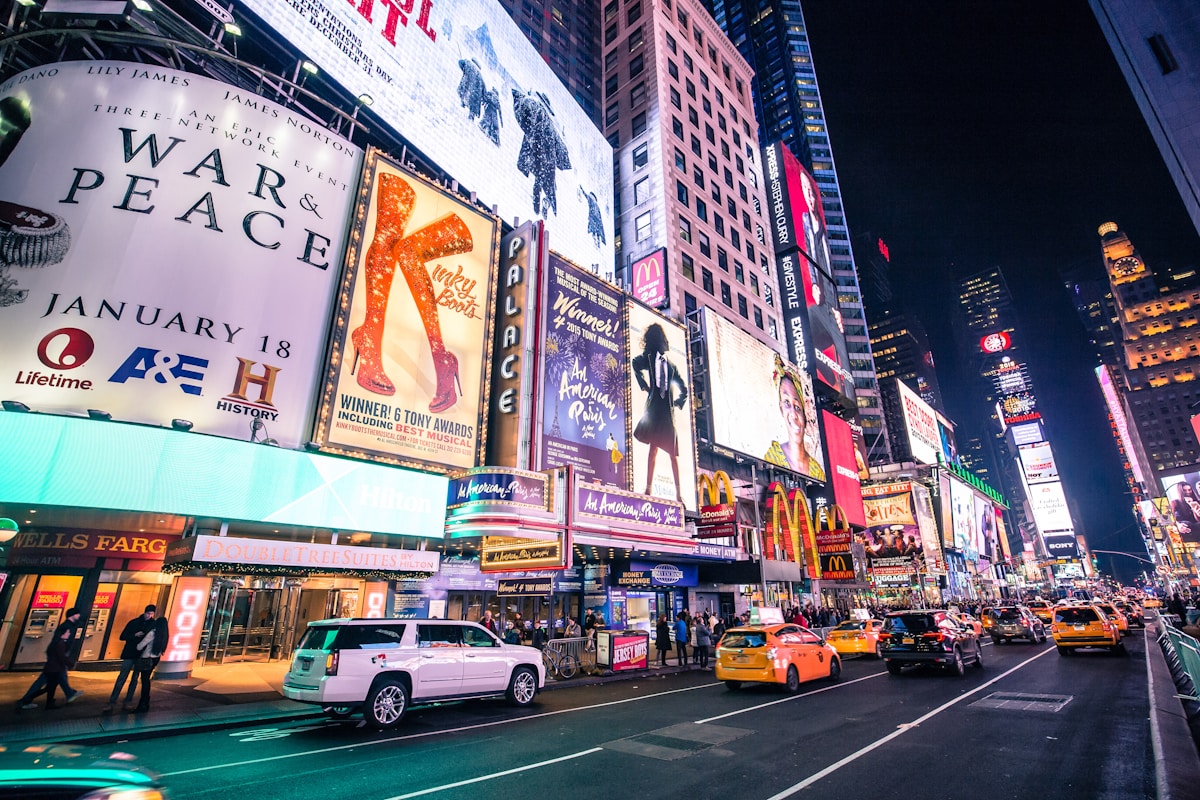
New York is the American city that needs no introduction. Chicago is the one that surprises almost every visitor who thought they already knew it. Both are great world cities with exceptional food, architecture, culture, and energy - but they’re built on different scales and offer different travel rhythms.
Quick Verdict
| Category | New York | Chicago |
|---|---|---|
| Hotel cost | $220–380/night | $150–250/night |
| Overall daily budget | $160–250 | $110–180 |
| Architecture | Art Deco + modern | World-class, river canyon |
| Food | Maximum variety | Deep-dish, steak, hot dogs |
| Sports culture | Strong | Intense (Bears, Bulls, Cubs) |
| Getting around | Subway | El train + walkable |
| Lake access | Ocean (nearby) | Lake Michigan (in city) |
| Days needed | 4–6 | 3–5 |
Search hotels in New York on Booking.com
Costs
Chicago is meaningfully cheaper than New York at every price point. In Chicago’s Loop, the Kimpton Gray Hotel runs $180–260/night; the Loews Chicago Hotel in River North is $160–240. For the same quality in Manhattan, budget $280–400.
Food savings compound quickly. An iconic Chicago deep-dish pizza at Lou Malnati’s (750 N. Michigan Ave) runs $18–28 for a personal or small deep dish. A proper Chicago hot dog at Portillo’s on Ontario Street costs $4.50. Dinner at Smyth (tasting menu, $145–175/person) represents the fine dining pinnacle. In New York, equivalent mid-range dinners run 20–30% higher and the tasting menu tier starts at $175.
Chicago’s transit is efficient and cheap: the CTA El runs $2.50/ride, and most major neighbourhoods are within a few stops of the Red Line. A 3-day transit pass is $20. In New York, the 7-day subway pass is $34 and covering the city properly requires more rides.
For comparable experiences, Chicago typically costs 25–35% less than New York.
Architecture
This is Chicago’s strongest card. The city invented the skyscraper - William Le Baron Jenney’s Home Insurance Building (1885) was the world’s first steel-frame high-rise - and the Chicago Architecture Center’s boat tours of the Chicago River show how that history evolved into one of the world’s great urban skylines.
Key architectural landmarks: the Tribune Tower (neo-Gothic, with fragments of famous buildings embedded in its base), the Wrigley Building (white terracotta, 1921), the modernist Crown Fountain in Millennium Park, and the Willis Tower (Skydeck admission $32–38, glass-floor ledges included). The Art Institute of Chicago on Michigan Avenue ($25 adults) houses the famous Chagall windows and Grant Wood’s American Gothic.
New York’s architectural story is told differently: the Art Deco crown of the Chrysler Building, the observation decks of the Empire State Building ($44–77 depending on tier and time) and One World Observatory ($46), and the soaring new glass towers of Hudson Yards. The Brooklyn Bridge is a 19th-century engineering masterwork worth crossing on foot.
Food
Chicago’s food culture has genuine roots. The deep-dish pizza debate - Giordano’s versus Lou Malnati’s versus Pequod’s - is a real Chicago cultural argument. (For the record: Lou Malnati’s for butter crust and quality toppings; Pequod’s in Lincoln Park for caramelised pan crust.) Chicago-style hot dogs have specific rules: Vienna Beef hot dog, poppy seed bun, yellow mustard, neon green relish, sport peppers, tomato slices, celery salt, and never ketchup. Gene & Jude’s in River Grove and Murphy’s Red Hots in Lakeview are institutions.
For upscale dining, Alinea on North Halsted (Grant Achatz’s molecular gastronomy flagship) is $210–290/person for the tasting menu and requires booking months ahead. Girl & the Goat in the West Loop does creative shared plates for $50–80/person and is easier to book.
New York’s Chinatown, Flushing, Little Italy, Jackson Heights, and Brighton Beach offer a density of international food options that Chicago can’t match. But for pure American regional food traditions, Chicago wins.
Sports Culture
Chicago’s sports culture is deep and emotionally intense. Cubs games at Wrigley Field (built 1914, the second-oldest ballpark in Major League Baseball) are a genuine cultural experience - tickets run $30–120 depending on section and opponent. The Cubs-White Sox Crosstown Classic is one of the year’s most heated local rivalries. The Bulls (basketball) and Bears (NFL, playing at Soldier Field on Lake Shore Drive) have devoted followings. United Center on Madison Street is a stunning arena for basketball and hockey.
New York has the Yankees (with the most legendary stadium name in baseball at $45–200/ticket), the Mets, the Knicks, Rangers, Jets, and Giants. The sheer number of teams and the passion of New York fans make the city a great sports city, but Chicago’s smaller-market intensity creates a different, arguably more intimate sports culture.
Getting Around
Chicago’s El train (the elevated railway, called “the L”) is genuinely charming and functional. The Red Line runs from Wicker Park and Logan Square through downtown to Wrigley Field, Hyde Park, and beyond. The Blue Line connects to O’Hare Airport ($2.50, 45 minutes from downtown) - one of the cheapest airport connections of any major US city. The Green and Orange Lines access the South and Southwest Sides.
New York’s subway is more comprehensive - 472 stations versus Chicago’s 145 - and runs 24/7. Both systems have their rough patches, but both make renting a car unnecessary.
The cultural core of Chicago is more compact than New York: the Loop, Millennium Park, the Magnificent Mile (Michigan Avenue shopping), River North, and the West Loop restaurant scene are all walkable in combination.
See city guides for New York City and Chicago.
When to Visit
Chicago earns its “Windy City” nickname in winter - temperatures from December through February can hit -10°F with wind chill making it feel colder than that. November and March are grey and cold. Chicago summers are warm and spectacular: July temperatures reach 80–88°F, Lollapalooza (Grant Park, late July/early August) and the Chicago Jazz Festival (Millennium Park, September) draw enormous crowds, and the lakefront becomes a genuine beach resort with sand volleyball and outdoor bars.
The best time to visit is late May through October. September and October are particularly good: summer crowds thin, temperatures are mild, and the Cubs push for the playoffs.
New York’s best months are April–June and September–November. Summers are hot, humid, and expensive. Winters are cold but functional.
The Verdict
New York wins on scale, diversity, and sheer intensity of urban experience. Chicago wins on affordability, architecture, American food culture, and the sense of a great city that doesn’t feel overwhelmed by its own tourism.
If you’ve already done New York, Chicago should be next on your US city list. If it’s your first time in America, New York is the essential starting point - but Chicago deserves at least four days.
Plan around USA travel costs and getting around the USA.
For guided tours in either city, browse the full USA tours selection. Compare flights to the USA and set up travel insurance before your trip.
More City Comparisons and Guides
- New York vs Los Angeles
- Boston vs New York
- Washington DC vs New York
- New York City travel guide
- Chicago travel guide
- 3 days in New York itinerary
- New York City 7-day itinerary
Plan Your Trip
✈️ Book your flights to the USA 🛡️ Get travel insurance 📱 Stay connected with an eSIM 🚗 Rent a car
Ready to Plan Your Trip?
Here are our top itineraries to help you plan your USA visit:
- 3 Days in New York City: First-Timer’s Itinerary - The best of the city in a long weekend
- 7 Days in New York City: Itinerary - A full week exploring every neighbourhood
- East Coast USA 10-Day Itinerary: NYC, DC, Philadelphia & Boston - The full East Coast circuit