The United States has approximately 12,000 miles of coastline touching four different bodies of water - the Pacific Ocean, the Atlantic Ocean, the Gulf of Mexico, and the Gulf of Alaska. That breadth means enormous variety: the Caribbean-clear water of Florida’s Gulf Coast, the cold dramatic Pacific of Big Sur, the wild barrier islands of North Carolina, and the volcanic black sand of Hawaii’s Big Island. This guide organises the best of them by region.
Gulf Coast Beaches
1. Siesta Key Beach - Sarasota, Florida Consistently ranked the top beach in the country by multiple annual rankings. The quartz sand is so fine and white it doesn’t heat up in the sun and squeaks underfoot. Water clarity is excellent; water temperature reaches 85°F in summer. Siesta Key Village (the small commercial strip off Beach Road) has restaurants and shops within walking distance. Free parking lots fill by 10am in summer - arrive early or take the free trolley from the Village. Nearest accommodation in Sarasota or on the key itself; expect $150–300/night for a beach-adjacent rental in season.
Search hotels in United States on Booking.com
2. Clearwater Beach - Clearwater, Florida One of Florida’s most popular beaches, with a wide, soft sand strip, consistent calm Gulf water, and a well-developed beachfront with restaurants and hotels within metres of the sand. Pier 60 hosts a nightly sunset celebration with street performers. The Clearwater Marine Aquarium is here (home of Winter the dolphin). Room rates on the beach run $180–350/night in peak season.
3. Fort De Soto Park - Tierra Verde, Florida (near St. Petersburg) A county park that consistently beats the resort beaches in quality: five interconnected islands, 1,136 acres, seven miles of beachfront. Largely undeveloped, with campgrounds. The north and south beaches are separated by mangrove habitat that’s home to excellent birdwatching. Bring food; the park concession is limited. Free camping spots book up months ahead.
4. White Sands National Park - Alamogordo, New Mexico Technically not on the ocean, but this 275-square-mile field of pure white gypsum sand is one of the most otherworldly landscapes in the country and worth including. The sand stays cool because gypsum doesn’t retain heat. Best at dawn and dusk when the light is low. Entrance fee approximately $25 per vehicle as of 2026; check the National Park Service website for current pricing.
5. Gulf Islands National Seashore - Florida Panhandle and Mississippi This federally protected stretch of barrier island coastline runs through Pensacola and Navarre in Florida and Ship Island in Mississippi. The water is emerald-clear, the sand is white, and development is minimal compared to resort beaches further south. Pensacola Beach is the most accessible entry point; Gulf Breeze is the nearest town with services.
Atlantic Coast Beaches
6. Cape Hatteras National Seashore - Outer Banks, North Carolina The Outer Banks is a chain of barrier islands off the North Carolina coast - separated from the mainland by sounds and reached by bridges or ferry. Cape Hatteras National Seashore stretches 70 miles through Bodie, Hatteras, and Ocracoke Islands, with wide, relatively uncrowded Atlantic beaches and one of the highest lighthouse towers in the country (Cape Hatteras Lighthouse, 1.25 miles south of Buxton). The southern end of Ocracoke Island is vehicle-free and reached by ferry from Hatteras ($15 per vehicle round-trip in 2026; check current rates).
7. Assateague Island - Maryland/Virginia Assateague is a 37-mile barrier island famous for its wild horses - descendants of domestic horses left here centuries ago. The Maryland side (Assateague State Park and the national seashore) has the best facilities; the Virginia side (Chincoteague National Wildlife Refuge) is the horse habitat. Camping is available on both sides; book months ahead. The beach itself is wide, Atlantic-facing, and virtually undeveloped. Approximately 2.5 hours from Washington DC and 3 hours from Philadelphia.
8. Cape Cod National Seashore - Massachusetts Established in 1961 and covering nearly 44,000 acres of the outer Cape, the national seashore protects miles of Atlantic-facing beach from development. Race Point Beach (near Provincetown) and Nauset Beach (near Orleans) are the signature spots. Water temperatures reach 65–70°F by August. Parking fills by mid-morning in summer - the Provincetown shuttle (service from Hyannis) is the practical alternative. Provincetown at the tip of the Cape is New England’s most character-rich beach town.
9. Myrtle Beach - South Carolina Myrtle Beach divides opinion: it’s unabashedly commercial, with a dense strip of chain restaurants, mini-golf, and resort hotels along the Grand Strand. But the beach itself is wide, flat, sand-coloured (not white), and the water is warmer than anywhere north of Florida on the Atlantic side (75–80°F in summer). Good for families who want easy access and amenities. Off-season rates (November–April) are significantly lower.
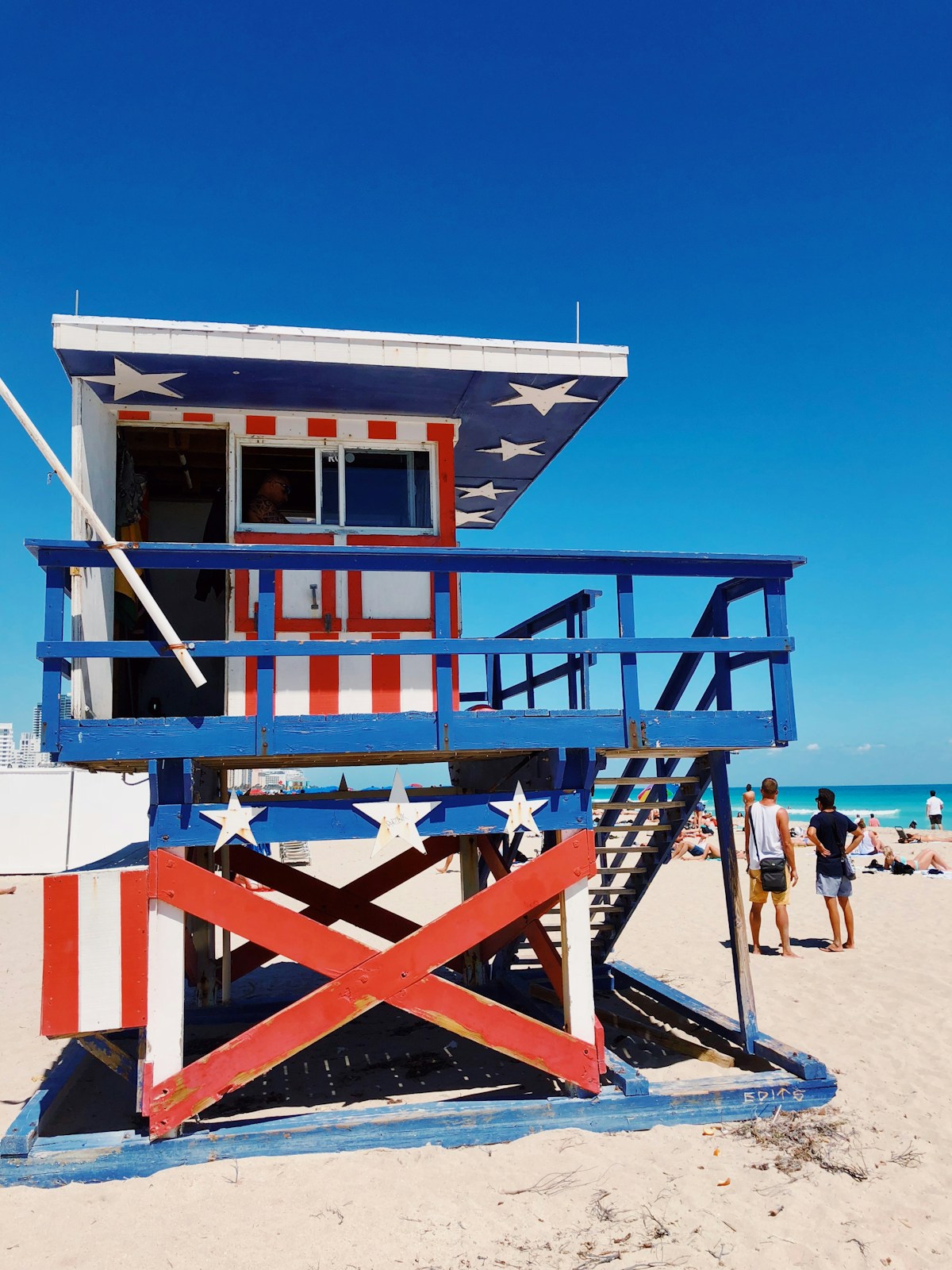
10. Miami Beach - Miami, Florida South Beach (the Art Deco district, Ocean Drive) is the most photographed beach in the country. The sand is white, the water is warm and clear, and the Art Deco architecture running along Ocean Drive is a genuine historic district (1200–1400 blocks are the most intact). Summer humidity and afternoon thunderstorms are real. Best in October–April. Hotel rates on Collins Avenue run $200–600/night in season. The beach itself is free; lifeguard towers, volleyball courts, and the boardwalk extending north are public.
Pacific Coast Beaches
11. Santa Monica Beach - Los Angeles, California Santa Monica Beach is the most accessible Pacific Coast beach from Los Angeles: the pier (with its small amusement park and ferris wheel), the wide flat beach, the beachside bike path extending 22 miles to Torrance. Water temperature reaches 68°F in summer - cold enough to require a wetsuit for extended swimming but manageable. Parking runs $3–8/hour in the city garages; public transit via the Metro E Line from Downtown LA is the practical alternative.
12. La Jolla Cove - San Diego, California La Jolla Cove is a small, protected cove (not a swimming beach per se) surrounded by cliffs and home to a large colony of California sea lions that park themselves on the rocks year-round. The snorkelling and sea kayaking are exceptional in the protected waters of the La Jolla Underwater Park Ecological Reserve. Children’s Pool (Casa Beach) a short walk south has harbour seals year-round. The Cove is free; sea kayak rentals run approximately $25–40/hour from nearby operators.
13. Big Sur Coast - California (Highway 1 between Carmel and San Simeon) Big Sur is not a single beach - it’s a 90-mile stretch of the most dramatic coastal highway in the country, with Pfeiffer Big Sur State Park (CA-1, Big Sur) as its centre. Pfeiffer Beach is reached via a narrow unpaved road (Sycamore Canyon Road); $12 fee per vehicle. The purple sand (from manganese garnet in the rock) is worth the effort. Julia Pfeiffer Burns State Park has McWay Falls, an 80-foot waterfall that drops directly onto a beach accessible only visually from the canyon overlook.
14. Olympic Peninsula Beaches - Washington State The coastal strip of Olympic National Park contains some of the most remote and wild beaches in the continental United States. Rialto Beach (near La Push), Ruby Beach, and Kalaloch are accessible by road but feel genuinely isolated: Pacific surf, sea stacks, driftwood logs. These are not swimming beaches - the water is dangerously cold and rip currents are present. They are beaches for walking, wildlife watching (grey whales pass during spring migration), and experiencing what the Pacific coast looked like before development. Entrance to Olympic NP: approximately $35 per vehicle as of 2026.
15. Cannon Beach - Oregon Cannon Beach is a small coastal town in northwest Oregon, three hours from Portland, best known for Haystack Rock - a 235-foot basalt sea stack that sits on the beach and is visible for miles. Tidepools around the base of Haystack Rock are rich with anemones, sea stars, and purple sea urchins; accessible at low tide. The beach itself is wide and flat, with consistent Pacific surf. The town of Cannon Beach has independent restaurants and shops worth an afternoon. July through September is the best weather.
Hawaii
16. Kaanapali Beach - Maui, Hawaii The three-mile strip of white sand fronting the west Maui resort corridor is the template for Hawaii beach resort development - calm, clear water, backed by hotels and the Whaler’s Village shopping centre. Black Rock (Puu Kekaa) at the north end has excellent snorkelling with sea turtles, fish, and spectacular afternoon cliff divers. The public beach access points between hotels mean the beach isn’t resort-exclusive. Hotel rates on Kaanapali run $350–700/night.
17. Hapuna Beach State Recreation Area - Big Island, Hawaii Consistently rated among Hawaii’s best beaches, Hapuna is a half-mile arc of white sand with body-surfable waves and generally calm conditions in summer. Located on the Kohala Coast, which is the driest part of the Big Island - reliable sun even when the rest of the island is raining. Day-use parking $10; facilities include restrooms and picnic areas. The Hapuna Beach Prince Hotel (now Westin Hapuna Beach Resort) sits adjacent; rooms from approximately $450/night.
18. Hanalei Bay - Kauai, Hawaii Hanalei Bay is a two-mile crescent bay on Kauai’s north shore, backed by Na Pali Coast mountains and the Hanalei Valley (planted in taro, a view unchanged in centuries). In summer the bay is calm and swimmable; in winter it becomes a world-class surfing break as north swells arrive. The town of Hanalei (small, with a good selection of local restaurants and the Hanalei Pier) sits at the east end of the bay. Access Kauai via Lihue Airport; Hanalei is about 45 minutes northwest by rental car.
19. Waipio Valley Black Sand Beach - Big Island, Hawaii Waipio Valley is only accessible by four-wheel drive down a 25% grade road or by hiking down on foot (and back up). The effort is significant and the road is frequently closed; check conditions before attempting. The black sand beach at the valley floor is surrounded by 2,000-foot valley walls and Hawaii’s tallest waterfall (Hi’ilawe Falls, visible from the valley). Swimming at Waipio is extremely dangerous due to currents and is not recommended. The experience is landscape-first.
20. Kapalua Bay - Maui, Hawaii A small, protected bay at the northern end of Maui’s west coast, Kapalua consistently appears on top-snorkelling lists for the level of sea life in the bay (sea turtles are common). The bay is small and protected from surf by two breakwater points, making it calm and swimmable for most of the year. Public beach access is via the Kapalua Bay Beach path from the Kapalua resort area. Morning light is best; the bay faces west so it can be shadowed by the afternoon.
Practical Notes for Beach Visitors
Water temperatures: Gulf of Mexico beaches are warmest year-round (75–85°F in summer, 65–70°F in winter on the south Florida Gulf). Atlantic beaches reach 75°F from South Carolina southward in summer. Pacific beaches are consistently cold (55–65°F in most of California, colder in Oregon and Washington). Hawaii beaches stay 77–82°F year-round. For the warmest water closest to the continental US, Puerto Rico offers Caribbean-temperature beaches (80–84°F year-round) and is US territory requiring no passport for American citizens.
Beach parking: Most public beaches in the continental US have free parking, though popular beaches in summer will fill well before noon on weekends. Some resort beaches charge for parking ($10–20/day). California state beach parking is typically $8–15 per visit.
Beach safety: The USA’s national beaches are overseen by National Park Service or state agencies. Many are unguarded - always swim at guarded beaches when available, especially with children. Rip currents are the leading cause of ocean swimmer fatalities; if caught in one, swim parallel to shore rather than against the current.
City & Island Guides
Browse tours and beach experiences across the USA for organised snorkelling, boat trips, and guided coastal excursions. Compare flights to the USA and get travel insurance before booking.
Plan Your Trip
✈️ Book your flights to the USA 🛡️ Get travel insurance 📱 Stay connected with an eSIM 🚗 Rent a car
Ready to Plan Your Trip?
Here are our top itineraries to help you plan your USA visit:
- One Week in the USA: New York, Washington DC and Chicago - Three iconic cities in seven days
- East Coast USA 10-Day Itinerary: NYC, DC, Philadelphia & Boston - The full East Coast circuit
- 10 Days on the West Coast: LA, San Francisco and Beyond - Pacific Coast highlights