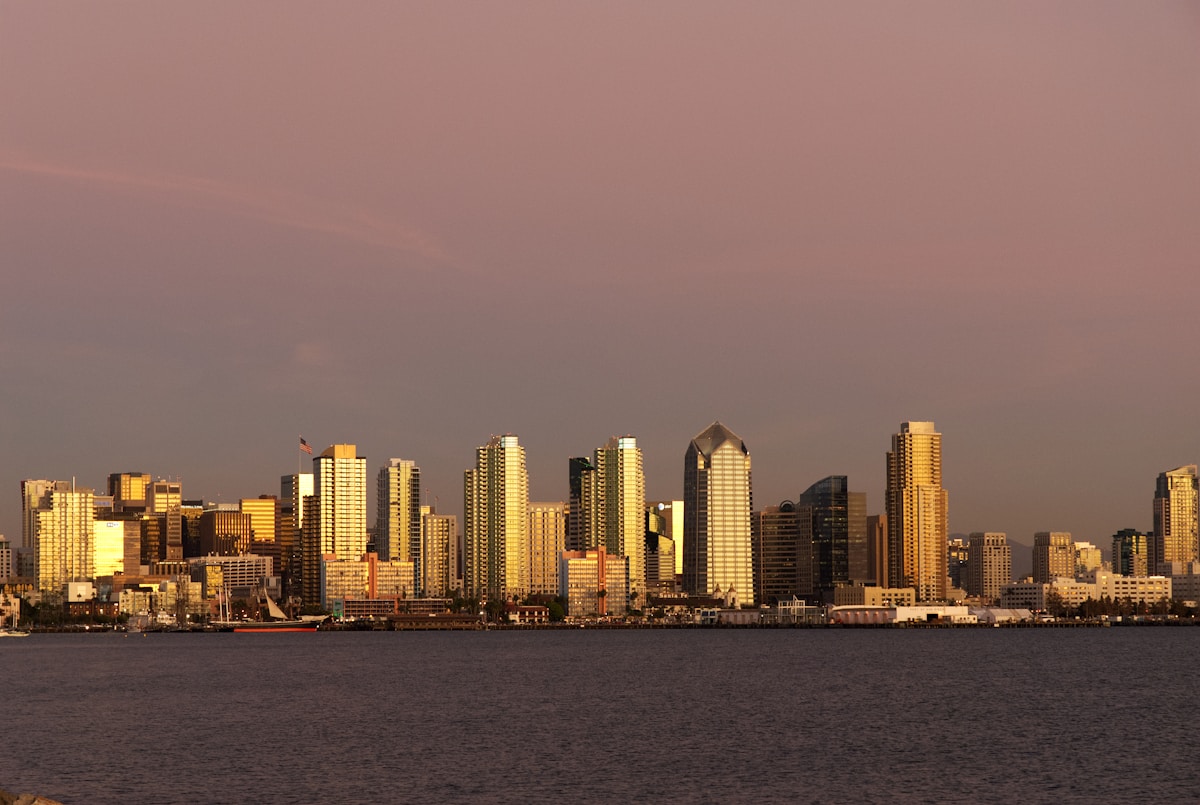
San Diego and Los Angeles share the Southern California sunshine and Pacific Ocean coastline - but they’re different in almost every practical way. San Diego is compact, relaxed, and beach-focused. Los Angeles is enormous, car-dependent, and offers a more complex mix of industry, culture, and neighbourhood diversity. Both are worth visiting, and the 120-mile drive between them makes combining them on one trip entirely practical.
Quick Verdict
| Category | San Diego | Los Angeles |
|---|---|---|
| Hotel cost | $160–260/night | $180–320/night |
| Beach quality | Excellent, less crowded | Good but more crowded |
| Neighbourhood feel | Compact, walkable (Gaslamp) | Vast, requires car |
| Zoo | World-famous | LA Zoo (smaller) |
| Theme parks | LEGOLAND, SeaWorld | Universal Studios |
| Military presence | Significant (Navy, Marines) | Minimal |
| Mexico access | 20 min to Tijuana | 3h to Tijuana |
| Days needed | 3–4 | 5–7 |
Search hotels in San Diego on Booking.com
Costs
San Diego runs cheaper than Los Angeles across most categories. In the Gaslamp Quarter - San Diego’s entertainment and hotel hub Downtown - the Pendry San Diego on J Street is excellent at $240–320/night; the Kimpton Solamar on Island Avenue ($180–250) is a strong mid-range option. Little Italy, a 10-minute walk northwest of the Gaslamp, has excellent independent hotel options from $160–220.
Los Angeles hotel pricing varies wildly by neighbourhood. West Hollywood runs $240–380; Santa Monica $260–380; Downtown LA $170–260. Finding a well-located room under $180 in Los Angeles at peak times is difficult.
Search hotels in Los Angeles on Booking.com
Transport costs are lower in San Diego: the city is small enough that Ubers rarely exceed $15–20 for most trips. The MTS trolley system ($2.50/ride, day pass $5) covers the tourist core reasonably well. In Los Angeles, cross-city Ubers frequently run $25–45, and parking in West Hollywood or Santa Monica averages $20–30/day.
Food is where San Diego particularly shines for value. Fish tacos ($3–8 each) at Rubio’s Original Café or Oscar’s Mexican Seafood trucks are among Southern California’s best casual meals. The Little Italy food market on Saturdays is a proper farmers’ market with prepared food from $8–15. Upscale dining at Addison (San Diego’s only AAA Five Diamond restaurant, 18-course tasting menu at $285/person) represents the city’s culinary ceiling.
Beaches
San Diego’s beaches are genuinely world-class. Coronado Beach - accessed via the dramatic Coronado Bridge or the Coronado Ferry ($5.75 each way) - has fine white sand, calm water safe for swimming, and the magnificent Hotel del Coronado (built 1888, tours available, beach access for non-guests) as backdrop. La Jolla Cove is a small protected beach with excellent snorkelling among leopard sharks and garibaldi fish (free, no equipment rental needed if you bring your own). Pacific Beach and Mission Beach are the surf culture hubs with beach bars, volleyball courts, and a 3-mile boardwalk.
Los Angeles beaches are longer and more diverse: Santa Monica State Beach is 3 miles of wide sand with a pier and Ferris wheel; Venice Beach has the famous boardwalk (street performers, Muscle Beach gym, skate parks); Malibu has some of the most beautiful and exclusive beach access in California. The downside: June Gloom cloud cover affects LA’s beaches through mid-June, water is cold (60–65°F year-round compared to San Diego’s 65–72°F), and accessibility requires either a rental car or Uber.
Attractions
San Diego Zoo (2920 Zoo Drive, Balboa Park) is one of the most highly regarded zoos in the world - 3,500 animals across 650 acres, including pandas and rare African animals. Adult admission is $66; budget a full day. Balboa Park itself is free to enter and contains 17 museums (most charge $10–20 admission), the Japanese Friendship Garden, and extensive walking paths. The USS Midway Museum (Navy pier, $26 adults) is an impressive aircraft carrier museum with 29 restored aircraft on deck.
Los Angeles attractions are more spread out: Universal Studios Hollywood ($110–135, plus optional Express Pass at $80–160) is the big theme park; the Getty Center (free, parking $20) and LACMA ($20) are the cultural heavyweights. Griffith Observatory (free) has the best city views in LA. The Santa Monica Pier is free and pleasant. For film industry specifics, the Warner Bros. Studio Tour ($70) is one of the best half-day activities in the city.
See city guides for San Diego and Los Angeles.
Food
San Diego’s food identity is built on California-Mexican cuisine, craft beer, and Pacific seafood. The Gaslamp Quarter has a dense concentration of restaurants - Craft & Commerce on India Street (small plates, $15–28) is outstanding. Little Italy’s Saturday Mercato has the best concentration of food vendors. For the genuine San Diego taco experience: Tacos El Gordo on Broadway (carne asada at 3am is a San Diego rite of passage, $4–6 each) and Galaxy Taco in La Jolla ($4–7 for craft tacos with local sourcing).
Los Angeles’ food scene is larger in scale and more diverse in range - the San Gabriel Valley’s Chinese food, Koreatown’s BBQ, and the Venice/Silver Lake café culture are all exceptional. But for the specific California beach food tradition of fish tacos, craft beer, and fresh Pacific seafood, San Diego is the better destination.
San Diego has more craft breweries per capita than any major US city: Stone Brewing World Bistro & Gardens in Escondido (30 minutes north), AleSmith Brewing in Mission Valley, and Ballast Point Brewing (now multiple locations) are the most celebrated.
Getting Around
San Diego’s MTS trolley has three lines covering the Gaslamp, Old Town, Mission Valley, and South Bay. The Blue Line connects Downtown to the Mexican border at San Ysidro ($2.50). For most tourist-relevant areas, the trolley plus walking covers the Gaslamp, Little Italy, and Balboa Park. La Jolla and Coronado require the ferry ($5.75) or a rental car/Uber ($15–25).
Los Angeles is car-dependent for almost all tourist movement. The one exception is the Metro from LAX to Culver City and the Purple Line to downtown museums. Renting a car in San Diego and driving to LA (about 2 hours in light traffic on I-5) is a practical option for multi-city visitors.
When to Visit
San Diego has the most reliably pleasant weather of any major American city. Average temperatures year-round: 65–75°F, with less of the June Gloom that affects Los Angeles. July through September are warm (75–82°F); December through February are mild (60–68°F). There is essentially no bad time to visit San Diego, which is why it has the highest percentage of sunny days of any major US city outside of Phoenix. July 4th brings huge beach crowds; hotel rates peak June through August.
Los Angeles has good weather most of the year but June Gloom (May–June marine layer) and some summer heat inland affect parts of the city. Best months: March–May and October–November for mild temps and lower hotel rates.
Day Trips and Nearby
San Diego’s proximity to Mexico is a major advantage: Tijuana is 30 minutes south on the Blue Line trolley (or drive, with US passport required). The Avenida Revolución area and Zona Gastronómica have excellent Mexican food - the city’s restaurants and craft cocktail bars are increasingly sophisticated.
From Los Angeles, Malibu, Santa Barbara, and Joshua Tree National Park (2.5 hours) are excellent day trips. Catalina Island (ferry from Long Beach or San Pedro, $80–90 round trip) is a popular weekend escape. Our day trips from Los Angeles guide has full logistics and distances for each option.
How to Book: San Diego vs Los Angeles
San Diego hotel strategy: The Gaslamp Quarter and Little Italy are the most practical bases - walking-distance to restaurants, the Convention Center, and Petco Park. Book 4–6 weeks ahead for standard visits; San Diego Comic-Con (mid-July) causes a citywide hotel shortage with rates tripling across all neighbourhoods, so book immediately when it’s announced if you’re travelling that week. Coronado Island hotels (Hotel del Coronado from $350/night) should be booked 2–3 months ahead in summer as island capacity is limited.
Los Angeles hotel strategy: The biggest decision is neighbourhood - LA is too large and traffic too unpredictable to commute long distances daily. Decide your primary focus (beach, entertainment industry sights, museums) and book accordingly. Santa Monica and Venice for beach visitors; West Hollywood for restaurants and nightlife; Downtown if you’re attending events at the Crypto.com Arena or visiting MOCA and the Broad. Parking adds $30–60/night at most LA hotels - a genuine cost difference that doesn’t show in the base rate. Factor this in when comparing quoted prices between San Diego (where parking is cheaper and often free) and LA. Book at least 6 weeks ahead for summer; LA hotel prices during the Oscars, Coachella weekend, and major concerts are significantly inflated.
Tours and activities: San Diego Zoo tickets are available same-day year-round, but booking online saves the queue. For San Diego’s USS Midway or Balboa Park museums, walk-in works fine. In Los Angeles, the Warner Bros. Studio Tour frequently sells out 1–2 weeks ahead; the Getty requires a timed parking reservation (free but essential). Book San Diego tours and Los Angeles tours on GetYourGuide for most day activities.
The Verdict
San Diego is the better beach destination - the beaches are superior, the city is more compact, it’s cheaper to navigate, and the craft beer and California-Mexican food scene is exceptional. Los Angeles offers more total experiences, more cultural diversity, and a more global range of restaurants and entertainment.
If you want sun, beaches, and a relaxed California trip, choose San Diego. If you want the breadth of a great world city, choose Los Angeles. Many visitors who base themselves in San Diego make a day trip to LA - this is arguably the optimal Southern California itinerary.
Read USA travel costs for budget planning across California. The 10-day West Coast itinerary covers both cities in a single trip.
For guided tours in either city, browse the full USA tours selection. Compare flights to the USA and set up travel insurance before your trip.
More City Guides and Comparisons
- San Diego travel guide
- Los Angeles travel guide
- San Francisco vs Los Angeles comparison
- New York vs Los Angeles comparison
- Miami vs Los Angeles comparison
- Joshua Tree National Park guide
- Pacific Coast Highway road trip
- 14-day California road trip itinerary
- Digital nomad guide to San Diego
Plan Your Trip
✈️ Book your flights to the USA 🛡️ Get travel insurance 📱 Stay connected with an eSIM 🚗 Rent a car
Ready to Plan Your Trip?
Here are our top itineraries to help you plan your USA visit:
- 14 Days in California: Road Trip Itinerary - Two weeks driving the Golden State
- 10 Days on the West Coast: LA, San Francisco and Beyond - Pacific Coast highlights