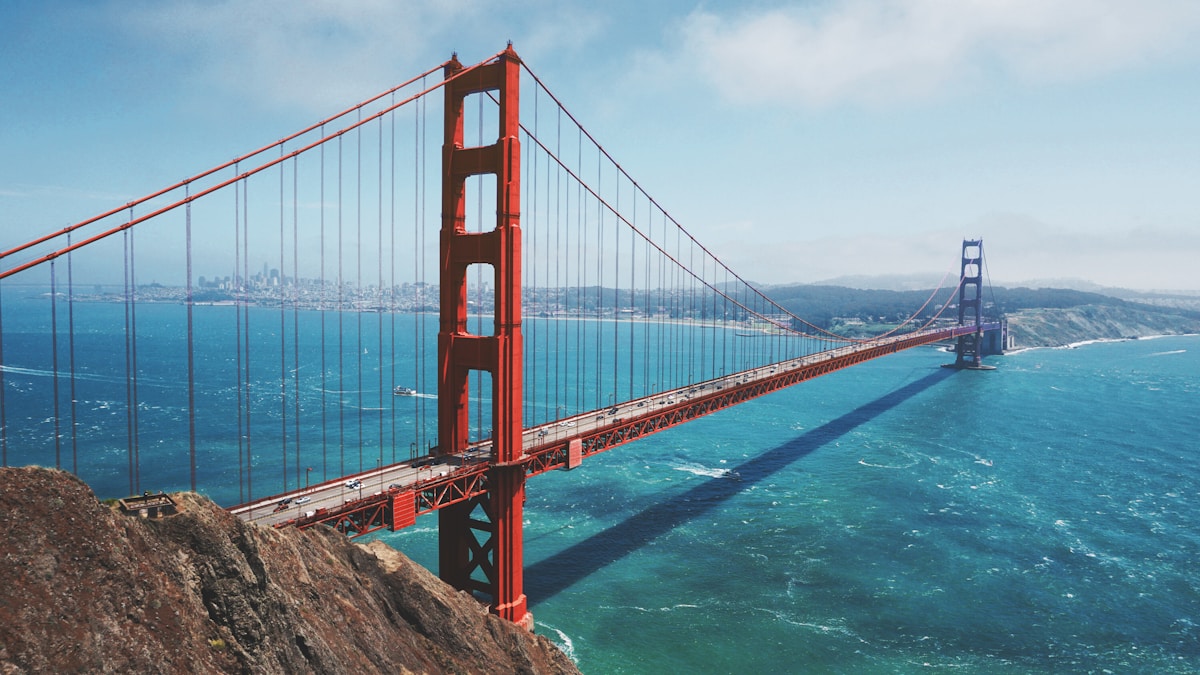
California’s two great cities are only 380 miles apart but occupy different worlds. San Francisco is compact, hilly, tech-driven, and cold enough to need a jacket in August. Los Angeles is sprawling, car-dependent, warm, and defined by entertainment and outdoor culture. Both are unmissable - but they’re not interchangeable.
Quick Verdict
| Category | San Francisco | Los Angeles |
|---|---|---|
| Size | Compact (49 sq miles) | Enormous (503 sq miles) |
| Getting around | BART + Muni (mostly) | Car/Rideshare (essential) |
| Weather | Cool, foggy, unpredictable | Warm, sunny, reliable |
| Food scene | Outstanding | Outstanding |
| Tech culture | Central | Present but secondary |
| Beaches | Cold water | Warm, accessible |
| Days needed | 3–5 | 5–7 |
| Best for | City walk, culture, food | Lifestyle, sun, film |
Costs
San Francisco hotel rates are high year-round. Union Square is the tourist hub - the Westin St. Francis runs $280–420/night; the Parc 55 (now Hilton) sits at $220–300. For better value and neighbourhood experience, try the Mission District: the Inn San Francisco on South Van Ness Avenue offers Victorian charm at $180–240.
Search hotels in San Francisco on Booking.com
Los Angeles mid-range accommodation clusters in West Hollywood ($220–320, good nightlife access) and Santa Monica ($240–360, walkable beach neighbourhood). Downtown LA has improved dramatically - the Freehand Hotel on 8th Street runs $160–240 and is centrally located.
Food costs are similar: a great casual meal runs $18–28 per person in both cities. San Francisco’s sourdough and seafood at the Ferry Building Marketplace (breakfast or lunch for $15–22) and Mission District burritos ($12–15 at La Taqueria on Mission Street) are iconic cheap eats. LA’s answer is the Korean BBQ in Koreatown ($25–35 per person all-in) and tacos at Mariscos Jalisco in Boyle Heights ($3–5 each).
The transport cost difference is significant: San Francisco’s Clipper Card unlimited monthly pass is $112 ($5/day), while LA visitors typically spend $25–45/day on Uber plus $15–25/day on parking.
Food
San Francisco’s food scene is defined by proximity to exceptional produce. The Ferry Building Farmers Market (Tuesday, Thursday, Saturday) features Cowgirl Creamery cheese, Boccalone salumi, and Blue Bottle Coffee - a food lover’s morning out for $15–25. The Mission District has some of the best burritos in California; try El Farolito on 24th Street for a late-night super burrito ($12–14). For a special dinner, Zuni Café on Market Street (brick-oven roast chicken for two, $130–160) has been a city institution for 40 years. State Bird Provisions does innovative California small plates for $65–90 per person.
Los Angeles’s breadth is unmatched: the San Gabriel Valley’s Chinese food rivals anything in mainland China; Koreatown’s 24-hour BBQ restaurants are legendary; Venice and Silver Lake have some of America’s best café culture. For a blow-out dinner, Bestia in Downtown LA (pasta and wood-fired dishes, $80–120/person) is consistently excellent. See our Los Angeles food guide for full neighbourhood-by-neighbourhood coverage.
Culture and Sights
San Francisco’s walkable geography makes sightseeing efficient. The Golden Gate Bridge is free to walk or cycle across (bike rental $40–50/half day at nearby shops). Alcatraz requires advance booking ($44.25 adults, often sold out 2–3 weeks ahead in summer). The de Young Museum in Golden Gate Park ($25 adults) and SFMOMA ($25 adults) are world-class institutions. The cable cars ($8 per ride) are both transport and tourist experience.
Los Angeles sights require more driving time between them. The Getty Center (free admission) is architecturally stunning with impressive impressionist and European art collections. The Natural History Museum ($35 adults) and LACMA ($20 adults) are excellent. Griffith Observatory is free with sensational city views. Hollywood’s Walk of Fame and Grauman’s Chinese Theatre are walkable from each other but require a Hollywood Metro station or Uber to reach.
See detailed guides for San Francisco and Los Angeles.
Neighbourhoods
San Francisco’s distinctive neighbourhoods are close together. The Mission is for Latin food and independent coffee shops. Castro is the historic LGBTQ+ heart of the city. Hayes Valley has boutique shopping and cocktail bars. North Beach is old Italian San Francisco. You can walk between most of them, though the hills require energy.
Los Angeles neighbourhoods function more like separate towns. Venice has the Boardwalk and Abbot Kinney Boulevard’s boutiques and restaurants. Silver Lake is the creative/indie hub with excellent coffee and record shops. West Hollywood has the Sunset Strip and LGBTQ+ scene. Koreatown is one of the densest urban neighbourhoods on the West Coast. Each requires a drive or rideshare to reach.
Getting Around
San Francisco’s BART (Bay Area Rapid Transit, $2.50–6.50 depending on distance) connects the airport to Union Square in 30 minutes. The Muni Metro and buses cover most of the city. The famous cable cars run on three lines for $8/ride. Rideshare is useful for the hills and cross-town trips. Car rental is unnecessary and actively impractical - street parking is expensive and scarce.
Los Angeles without a car is frustrating. The Metro covers major corridors ($1.75/ride, 7-day pass $28) but the city’s geography means most destinations require a transfer plus a walk. Renting a car ($50–80/day) unlocks Malibu, Pasadena, the Getty, and beach towns north of Santa Monica. Parking averages $15–30/day in central neighbourhoods.
When to Visit
San Francisco’s best months are September and October: temperatures reach 65–72°F, the fog lifts, the light is exceptional. July and August are often chilly and foggy - San Francisco is genuinely cold in summer evenings year-round, and visitors who show up in shorts in August are often caught out. Spring (March–May) is pleasant with mild temperatures and green hills.
Los Angeles is good year-round on the coast. The main caveat is June Gloom - marine layer clouds cover the beach areas through mid-June. For guaranteed beach weather, visit July–October. February through April is warm enough for outdoor dining, hotel prices are 15–20% below peak, and the city is quieter.
Prices by Season
San Francisco hotel prices peak in summer (June–August, $280–450/night for a decent room) and in October when tech conferences fill the city. The cheapest window is January–February ($160–260), when the weather is cool and wet. Shoulder season (March–May and November) offers reasonable prices and mild conditions.
Los Angeles prices are more stable year-round, with modest peaks around school holidays and major events (Oscar season in February–March inflates West Hollywood hotels 15–25%). January and February are the quietest months with prices 15–20% below summer rates. Thanksgiving week and Christmas–New Year are the most expensive periods.
For flights: San Francisco is served by SFO (most international flights), OAK (Southwest and low-cost carriers), and SJC (good for Silicon Valley access). Los Angeles is served by LAX (the main hub), BUR (Burbank, close to Hollywood and West Hollywood), and LGB (Long Beach, good for the South Bay). Checking all airports can save $80–150 each way.
The Verdict
For a compact, walkable, intensely urban California experience with world-class food and no need for a car, San Francisco is exceptional - especially in September or October. For sunshine, beaches, diversity of experience, and the quintessential California outdoor lifestyle, Los Angeles delivers on a bigger canvas.
If you can do both, combine them with a Highway 1 road trip - one of the great North American drives.
Read more about USA travel costs and driving in the USA.
For guided tours in either city, browse the full USA tours selection. Compare flights to the USA and set up travel insurance before your trip.
More City Comparisons and Guides
- New York vs Los Angeles
- Miami vs Los Angeles
- San Diego vs Los Angeles
- San Francisco travel guide
- Los Angeles travel guide
- Pacific Coast Highway road trip
- 14-day California road trip itinerary
Plan Your Trip
✈️ Book your flights to the USA 🛡️ Get travel insurance 📱 Stay connected with an eSIM 🚗 Rent a car
Ready to Plan Your Trip?
Here are our top itineraries to help you plan your USA visit:
- 14 Days in California: Road Trip Itinerary - Two weeks driving the Golden State
- 10 Days on the West Coast: LA, San Francisco and Beyond - Pacific Coast highlights