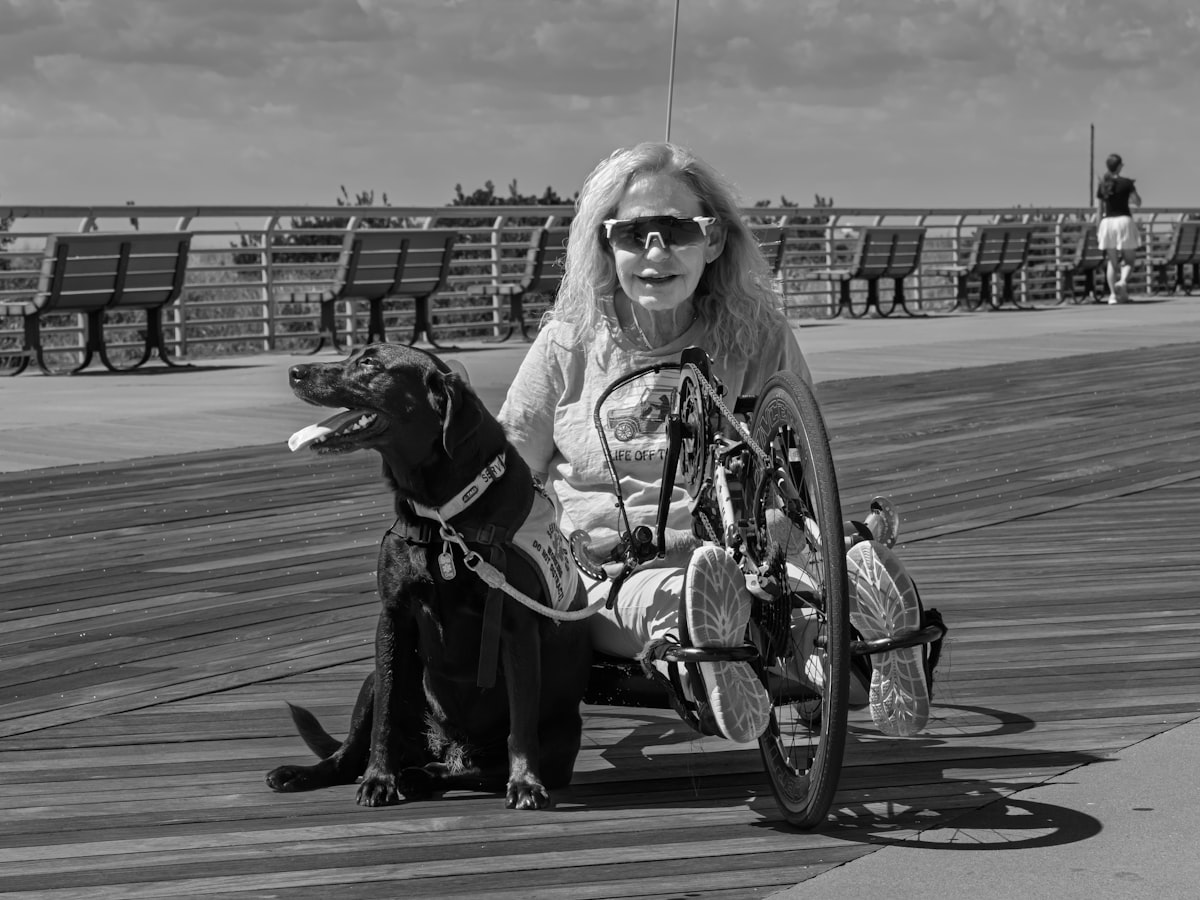
The United States has some of the strongest disability access laws in the world. The Americans with Disabilities Act (ADA), signed in 1990 and strengthened repeatedly since, sets baseline standards for accessibility across transport, accommodation, public buildings, and outdoor recreation - standards that many other countries simply do not require. That doesn’t mean every corner of the US is perfectly accessible, but it does mean travelers with disabilities will generally find a well-developed infrastructure waiting for them.
This guide covers the practical specifics: which cities are easiest to navigate, which national parks have genuine wheelchair access, how to handle air travel and car hire, and where to find the best planning resources.
What the ADA Means for Travelers
The ADA requires that any facility open to the public - hotels, restaurants, museums, shops, transit systems, parks - must be accessible to people with disabilities, or provide equivalent alternative access. In practice this means:
- New construction must be fully ADA-compliant; older buildings must be modified where “readily achievable.”
- Public transit fleets must include accessible vehicles with ramps or lifts and priority seating.
- Hotels of a certain size must provide a minimum number of accessible rooms (typically 1% of total rooms, with an absolute minimum of one per category type).
- Theme parks and attractions must provide equivalent access, either through accessible routes or reasonable accommodation.
Compared to Europe, Australia, or most of Asia, enforcement is more consistent in the US, and litigation is a realistic backstop when providers fall short. That said, “accessible” on a booking site doesn’t always mean roll-in shower or wide turning radius - always call ahead with specific questions.
Most Wheelchair-Friendly Cities
Washington, DC
DC is consistently ranked among the most accessible cities in the world. The Metro is fully ADA-compliant - every station has an elevator, and the system publishes real-time elevator outage alerts. The Smithsonian museums are free, sprawling, and excellent on accessibility, with ramped entrances, accessible restrooms, and automatic doors throughout. Sidewalk kerb cuts on the National Mall are reliable, and the flat terrain helps.
Chicago
The “L” train has accessible stations across most lines, and the city’s flat lakefront path is paved and open for miles. The Art Institute of Chicago, the Field Museum, and Navy Pier all have thorough accessible routes. Some older elevated stations still lack elevators - check the CTA’s accessibility map before travelling.
Portland, Oregon
Portland’s TriMet light rail and bus network is fully accessible, and the city is known for well-maintained footpaths and active disability advocacy. Powell’s Books is fully accessible across most of its building. The city’s compact walkable districts - Pearl, Mississippi, Division - have good kerb cuts and relatively flat terrain in the central areas. Portland is also a solid base for exploring the Pacific Northwest’s accessible trails.
San Diego
San Diego’s beach boardwalks - especially Mission Beach and Pacific Beach - are wide, paved, and flat. The San Diego Zoo and Safari Park both have accessible routes and accessible shuttle options within the parks. Balboa Park’s central paths are paved, though some garden areas are gravel. The Metropolitan Transit System (MTS) runs accessible buses and trolleys throughout the city.
Seattle
Seattle’s terrain is challenging - the hills between downtown and Capitol Hill are steep - but the waterfront, Pike Place Market area, and South Lake Union are manageable. King County Metro provides an extensive accessible bus network, and the Link Light Rail is fully ADA-compliant. The Seattle Art Museum and Chihuly Garden and Glass are both well set up for wheelchair users.
Denver
Denver’s 16th Street Mall is pedestrian-friendly with free accessible shuttles running its length. The light rail and commuter rail system (RTD) is fully accessible. The Denver Art Museum has elevator access across all floors. As a gateway to Rocky Mountain National Park, Denver matters - but note that the park itself has very limited flat accessible trails, and altitude (5,280 ft in the city, 12,000 ft+ in the mountains) can affect anyone with respiratory conditions.
Accessible National Parks
The National Park Service (NPS) has invested heavily in accessibility, and several parks offer genuine wheelchair-accessible experiences - not just token access.
Yellowstone is a standout. The boardwalk trails through the Upper Geyser Basin (including Old Faithful) are paved or firm-surface boardwalk and accessible to most manual and power wheelchairs. The Grand Prismatic Spring overlook boardwalk is also accessible. Many of Yellowstone’s drive-through pullouts let you see bison, elk, and geothermal features without leaving your vehicle. Check nps.gov/yell/planyourvisit/accessibility.htm for current trail conditions.
Grand Canyon South Rim has a paved Rim Trail stretching about 13 miles with several accessible sections. The Bright Angel Point to Mather Point stretch (around 0.7 miles) is relatively flat and paved. Free accessible shuttle buses serve all South Rim viewpoints during peak season. North Rim access is limited and some areas require a higher-clearance vehicle.
Yosemite Valley Floor offers one of the best accessible experiences in any US national park. The valley floor loop path is mostly paved and flat, passing Yosemite Falls, Bridalveil Fall, and iconic El Capitan views. Accessible shuttles run throughout the valley. Mirror Lake loop is paved for most of its length. Parking passes with accessible placards are accepted; book accommodation inside the park well in advance, as accessible rooms sell out months ahead.
Acadia National Park in Maine features a network of historic carriage roads - largely crushed gravel and relatively smooth - that are popular with hand cyclists and some wheelchair users. The 45-mile network was built in the early 20th century by John D. Rockefeller Jr. The Jordan Pond House and Thunder Hole area also have accessible paths. Plan your Acadia visit carefully - the park rewards early arrival.
The NPS Access Pass (free for US residents with permanent disabilities, $80 as of 2026 for non-residents) grants lifetime entry to all federal lands, plus discounts on camping and tours. Apply in person at any NPS entrance station or online at store.usgs.gov.
Air Travel Tips
TSA Cares helpline: Call 1-855-787-2227 (TTY: 711) at least 72 hours before your flight to request a dedicated Passenger Support Specialist to accompany you through the security screening process. This is free and significantly reduces stress at checkpoints.
Pre-boarding rights: All US airlines must offer pre-boarding to passengers who self-identify as needing more time or assistance. Inform the gate agent when you arrive. You do not need to justify or document your disability.
Gate-checking mobility devices: Airlines are required by the Air Carrier Access Act to gate-check manual wheelchairs and most power chairs at no charge. Your device should be waiting for you at the jet bridge on arrival. Tag it with contact information and a description of any custom settings (e.g., recline, tilt). Damage does happen - photograph your chair before check-in and know that airlines are liable for damage to mobility devices under ACAA regulations.
Power wheelchair battery declaration: Most lithium-ion batteries under 300 Wh are allowed in the cabin. Batteries over 300 Wh require airline approval. The FAA has a battery rules FAQ at faa.gov. Call the airline’s disability assistance line, not general reservations, to confirm.
Hotel Accessibility
ADA standards require hotels to provide accessible rooms with features such as: roll-in showers or tub transfer benches, grab bars, lowered beds, visual alarms, and TTY devices on request. However, what’s labeled “accessible” varies widely in practice.
Search hotels in United States on Booking.com
What to ask when booking:
- Does the accessible room have a roll-in shower or a tub?
- What is the door width (ADA minimum is 32 inches clear)?
- Is there a roll-under vanity and closet space with a lowered rail?
- Is the path from parking/drop-off to reception accessible (no steps, no gravel)?
Chains with consistent track records: Marriott and Hilton brands (including Courtyard, Hampton Inn, and Doubletree) tend to enforce ADA compliance consistently and have dedicated accessibility coordinators reachable by phone. Boutique hotels and older historic inns are the most variable - always call rather than booking online, and request written confirmation of room features.
Rental Cars with Hand Controls
Major car hire chains - Hertz, Avis, and Enterprise - maintain fleets of vehicles with hand controls, left-foot accelerator pedals, spinner knobs, and in some locations, wheelchair-accessible minivans with ramp or lift access.
Book as early as possible - at minimum 48–72 hours ahead, and ideally 2–4 weeks for hand controls and longer for WAVs (wheelchair-accessible vehicles). Confirm the reservation by phone 48 hours before pick-up. Most hand control vehicles are supplied at no additional charge under ADA requirements, though WAVs may carry a surcharge.
Getting around the US in your own accessible rental opens up destinations - like national park drives - that are difficult to reach any other way.
Service Animal Rights
Under the ADA, service animals trained to perform a specific task for a person with a disability must be admitted to all public accommodations - hotels, restaurants, shops, museums, theme parks, and transit systems. Only dogs (and in limited cases, miniature horses) qualify as ADA service animals. Staff may only ask two questions: (1) Is this a service animal required because of a disability? (2) What task has the dog been trained to perform?
At airports and on planes: Service animals are covered by the Air Carrier Access Act. From 2021, airlines are only required to accept trained psychiatric service dogs and task-trained service animals - not emotional support animals. Each airline has its own form and documentation requirements; download and complete these before your trip.
In national parks: Service animals are permitted anywhere the handler is permitted to go, including on accessible trails. They must be leashed.
Planning Resources
- AccessibleGO (accessiblego.com) - accessible travel booking platform covering hotels, tours, and transportation across the US and internationally. Filters by specific accessibility features.
- WheelchairTravel.org - detailed destination guides and trip reports written by a power wheelchair user. The US coverage is extensive, with city-by-city airport, hotel, and transport breakdowns.
- NPS Accessibility (nps.gov/subjects/accessibility) - official accessibility information for every national park, including trail surfaces, facility details, and the Access Pass application.
- Amtrak Accessibility (amtrak.com/accessible-travel-services) - Amtrak’s accessible travel page covers wheelchair spaces on trains, accessible station facilities, and how to book. Call 1-800-USA-RAIL to speak with an accessibility specialist.
- Curb-Free with Cory Lee (curbfreewithcorylee.com) - travel blog from a power wheelchair user covering US destinations with first-person practical detail.
For traveler protection on the road, consider travel insurance that explicitly covers pre-existing conditions and medical evacuation - particularly important if your mobility equipment requires specialist repair.
Before you travel, sort flights to the USA, an eSIM for the USA, and travel insurance. For airport connections, pre-booked transfers can make arrivals simpler, especially with luggage or when travelling with family.
Plan Your Trip
✈️ Book your flights to the USA 🛡️ Get travel insurance 📱 Stay connected with an eSIM 🚗 Rent a car
Ready to Plan Your Trip?
Here are our top itineraries to help you plan your USA visit:
- One Week in the USA: New York, Washington DC and Chicago - Three iconic cities in seven days
- East Coast USA 10-Day Itinerary: NYC, DC, Philadelphia & Boston - The full East Coast circuit
- 10 Days on the West Coast: LA, San Francisco and Beyond - Pacific Coast highlights