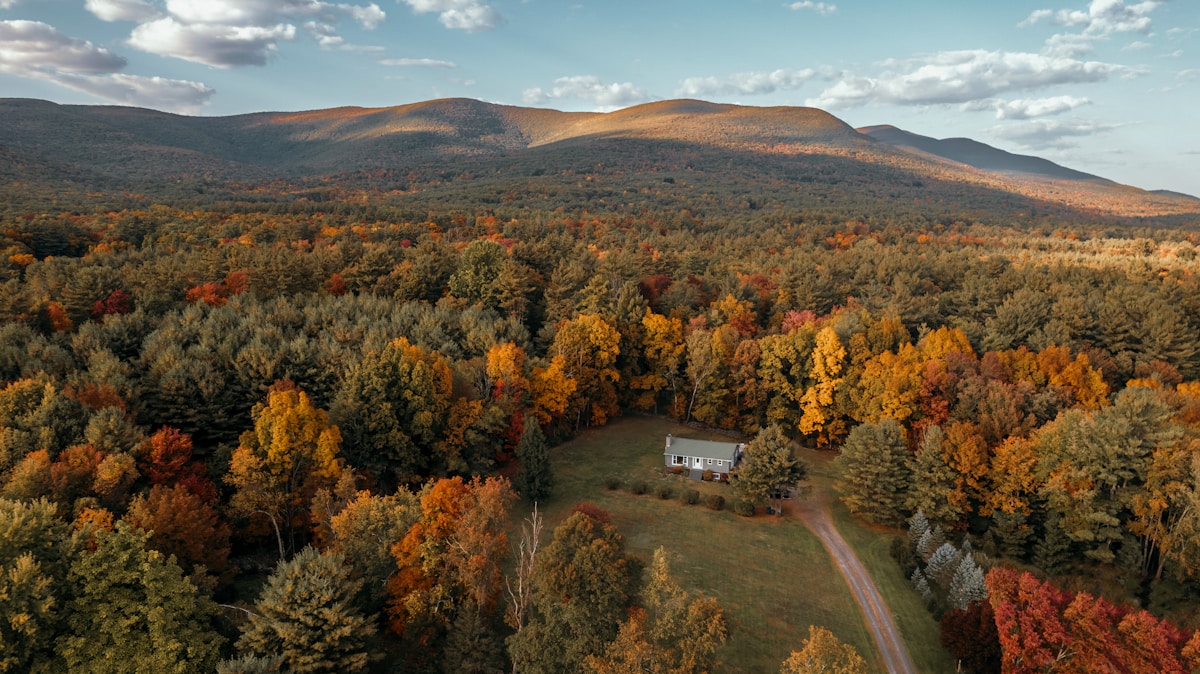
New York State is two entirely separate travel destinations: New York City, and everything north of it. The city draws 60+ million visitors per year and needs little introduction. Upstate New York - the Adirondacks, Finger Lakes, Hudson Valley, Catskills, and the western tier around Buffalo and Niagara Falls - absorbs only a fraction of those visitors and rewards them with wilderness, wine, and small cities that have genuine character.
New York City
New York City is five boroughs: Manhattan, Brooklyn, Queens, the Bronx, and Staten Island. Most visitors spend their time in Manhattan with day trips to Brooklyn. The key areas:
Midtown Manhattan is where most hotels sit and where the tourist infrastructure concentrates. Times Square (Broadway and 7th Ave near 46th Street), the Empire State Building (350 5th Ave; observation deck $44–50 adults, top deck $75–85), Rockefeller Center (the Top of the Rock observation deck at $42 adults has better views than the Empire State Building), and the Museum of Modern Art (11 W 53rd St; $30 adults, free Friday evenings 5:30–9pm) are all within walking distance of each other.
Search hotels in New York State on Booking.com
Lower Manhattan has the 9/11 Memorial and Museum (180 Greenwich St; Memorial outdoor pools free, Museum $33 adults), the Staten Island Ferry (free, 25-minute ride with direct views of the Statue of Liberty), and the Brooklyn Bridge (walk across from City Hall Park - 1.1 miles each way).
Brooklyn is worth a full day. DUMBO (Down Under the Manhattan Bridge Overpass) has the best Manhattan skyline view from any ground-level vantage point (Washington and Water Streets intersection). Smorgasburg (outdoor food market in Williamsburg, April–October, Saturdays 11am–6pm, free entry) is the best food market in the city. The Brooklyn Museum (200 Eastern Pkwy; $25 adults, free first Saturdays) houses one of the country’s major art collections.
Central Park (843 acres, 51 blocks long) has the Sheep Meadow for sunbathing, Bethesda Fountain and Terrace, the Conservatory Garden (the park’s most formal section), and the Jacqueline Kennedy Onassis Reservoir. The Metropolitan Museum of Art (1000 5th Ave at 82nd St; $30 adults, pay-what-you-wish on Saturdays 5–9pm) sits on the park’s eastern edge.
Accommodation: Budget hostels in Manhattan from $45/dorm; mid-range hotels in Midtown $200–350/night; hotels in the Financial District and Harlem tend to run $30–60 cheaper than Midtown for equivalent quality. Brooklyn hotels (Williamsburg, DUMBO) often offer better value - $150–250/night with direct subway access to Manhattan. For a full neighbourhood breakdown, see our where to stay in New York City guide.
Hudson Valley
The Hudson Valley runs 150 miles north from New York City to Albany along the Hudson River. Most easily accessed by Metro-North train from Grand Central Terminal to Poughkeepsie, Hudson, or other stops (1.5–2.5 hours, approximately $25–35 each way on off-peak fares).
Cold Spring (57 miles north of Manhattan) is the most photogenic Hudson Valley town: one main street of antique shops and restaurants descending to the river, the ruined Cornish Estate above it, and Bull Hill (Mount Taurus) for a challenging river-view hike. The Cornucopia restaurant (267 Main St) is a reliable lunch stop.
Hudson (120 miles north) is the Hudson Valley’s most arts-forward small city - a main street (Warren Street) of antique dealers, galleries, and restaurants that has attracted a significant creative community. The Basilica Hudson (110 S Front St) hosts large-format art and music events. Warren Kitchen and Cutlery has the most comprehensive knife shop you’ll find outside a major city.
Rhinebeck and the area around it are a concentrated cluster of dining destinations. Terrapin Restaurant (6426 Montgomery St; tasting menus from approximately $85/person) and the Beekman Arms hotel (circa 1766, from $150/night) are the anchors.
Dia Beacon (3 Beekman St, Beacon; $18 adults) is a contemporary art museum in a converted factory with large-format works by Richard Serra, Donald Judd, and Dan Flavin. The 1904 Nabisco box printing factory is 300,000 square feet - the scale is as much the point as the art.
Catskills
The Catskill Mountains begin about 100 miles north of Manhattan and were the original American resort destination - the “Borscht Belt” of mid-century Jewish summer resorts, most of which are now ruins or converted. The region has undergone significant revival since 2015 as NYC creative professionals buy up old farms and open restaurants.
Woodstock (population 5,800) is the name-famous village. The actual Woodstock Festival happened in Bethel, 60 miles away, but the Woodstock Arts scene (galleries, the Bearsville Theater, the Tinker Street corridor) is genuine. Bread Alone Bakery (29 Mill Hill Rd) is the best breakfast stop.
Kaaterskill Falls near Haines Falls is a 260-foot two-tiered waterfall - the tallest in New York State. Reach it via the Kaaterskill Clove trail from the Laurel House Road trailhead (2.5 miles round-trip, moderately strenuous on the return climb). The waterfall is most dramatic in spring when snowmelt is heaviest.
Hunter Mountain and Windham Mountain are the two main Catskill ski resorts. Hunter (Hunter, NY; daily lift tickets approximately $80–140 as of 2026) has the most vertical drop (1,600 feet) and stays open the longest season. Windham is slightly smaller but less crowded.
Adirondacks
The Adirondack Park is the largest park of any kind in the contiguous United States: 6.1 million acres, roughly the size of Vermont. Most of the land is private (including villages, farms, and resort camps), but 3 million acres is state-owned Wilderness.
Lake Placid (the village in Essex County) hosted the 1932 and 1980 Winter Olympics and remains a winter sports destination. Whiteface Mountain (the Olympic ski area, Wilmington; lift tickets approximately $80–130/day as of 2026) has the greatest vertical drop in the Northeast (3,430 feet). The Olympic Museum (1 Olympic Drive; $15 adults) covers both games.
Saranac Lake is the region’s most liveable village - a working-small-city with the ACR Homes design museum and legitimate local restaurant culture. Less resort-focused than Lake Placid.
Hiking the High Peaks: The 46 Adirondack High Peaks are tracked via the 46ers programme. Mount Marcy (trailhead at Heart Lake, near Lake Placid) is the most popular summit - 14.8 miles round-trip with 3,400 feet of elevation gain. Allow 8–10 hours. Cascade Mountain (trailhead on NY-73, near Keene) is shorter (4.8 miles round-trip) and has excellent views; good entry point for first-time Adirondack hikers.
Finger Lakes Wine Region
Seneca Lake and Cayuga Lake are the two primary wine corridors. New York State Route 14 along Seneca Lake’s west side has the most concentrated cluster of wineries - Chateau Lafayette Reneau, Wagner Vineyards (9322 State Rt 414, Lodi; tasting from $5), and Lamoreaux Landing (9224 State Rt 414, Lodi) are strong producers. Watkins Glen State Park at Seneca’s southern tip is free to enter; parking $7–10.
Cayuga Lake Wine Trail covers 17 wineries on both shores. Taughannock Farms Inn (2030 Gorge Rd, Trumansburg; rooms from $150/night) is the best base for the lake, with direct water access and a well-regarded restaurant. Ithaca, 10 miles south, adds craft beer, gorge hiking, and Cornell’s campus to the picture.
Getting Around New York State
New York City is the gateway. Amtrak’s Empire Service runs Albany–New York City (2.5 hours, $30–70), with connections west to Buffalo and Niagara Falls (6–7 hours total from Penn Station). Metro-North reaches Hudson Valley destinations from Grand Central. Everything north of the Metro-North zone - Adirondacks, Finger Lakes, Catskill backcountry - requires a car. Interstate 87 (the Thruway) runs from the city north to Montreal through Albany; I-90 crosses the state east-west from Albany to Buffalo.
| Destination | Distance from NYC | Best transport |
|---|---|---|
| Hudson | 120 miles | Amtrak (2 hrs, $20–35) or car |
| Catskills | 100–130 miles | Car essential |
| Finger Lakes | 230–280 miles | Car essential |
| Niagara Falls | 370 miles | Car (6 hrs) or Amtrak via Buffalo (9 hrs) |
| Lake Placid | 310 miles | Car essential (5 hrs) |
Browse tours and activities in New York City as a base for exploring the state. For getting around New York State, car hire in the USA is the most practical option outside the city. Compare flights to the USA and arrange travel insurance.
Related Guides
- New York City travel guide
- Niagara Falls visitor guide
- New York City 7-day itinerary
- New York vs Chicago - which to visit?
- New York vs Los Angeles comparison
- Boston vs New York comparison
- Washington DC vs New York comparison
- Acadia National Park guide
- New England road trip guide
- East Coast 10-day itinerary
- Best time to visit the USA