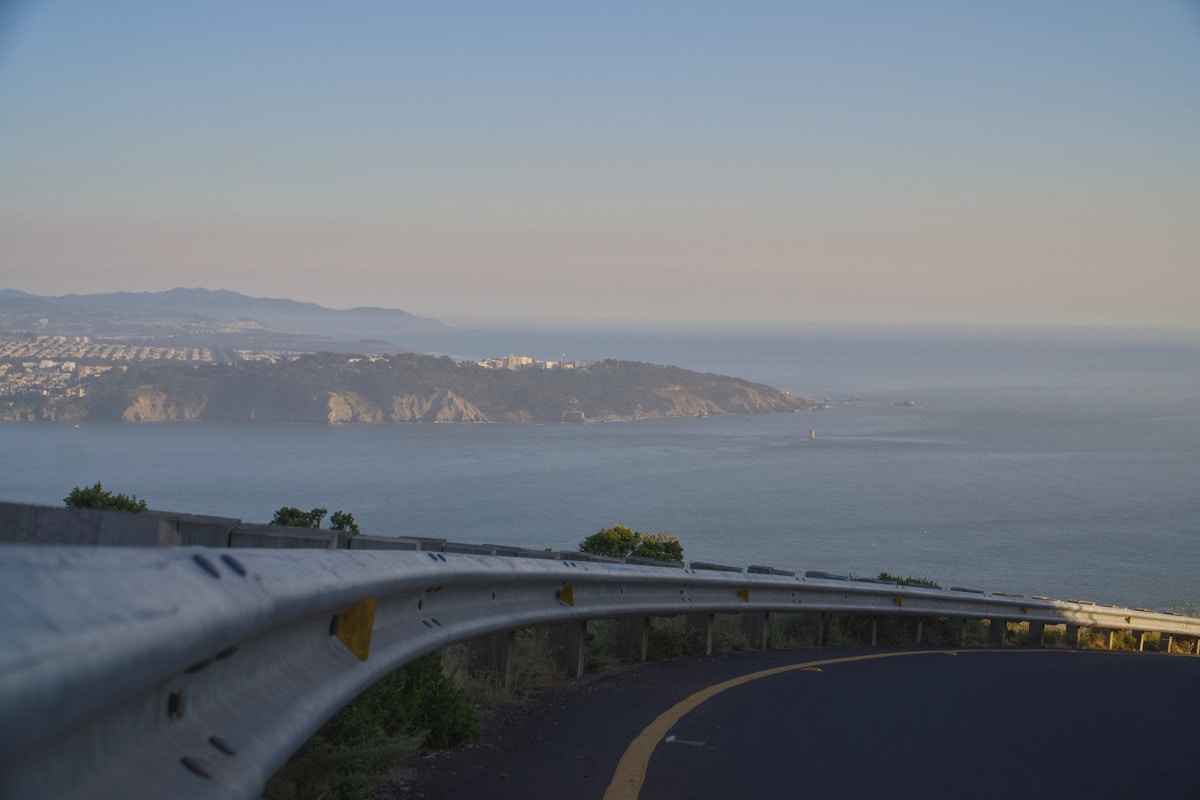
California has the most geographically diverse landscape of any US state - alpine granite in the Sierra Nevada, Mojave Desert in the southeast, temperate redwood forest in the northwest, and nearly 900 miles of Pacific coastline in between. San Francisco and Los Angeles anchor the north and south, but what sits between them - Big Sur, wine country, Central Valley farming communities, and some of the world’s most visited national parks - is where California becomes genuinely extraordinary.
Los Angeles
Los Angeles is a collection of distinct neighbourhoods rather than a conventional city centre. Understanding which area you’re in - and why - is the key to planning a useful LA visit.
Santa Monica and Venice are the Pacific-facing neighbourhoods most visitors gravitate toward: the Santa Monica Pier (with its small amusement park and the Pacific Wheel Ferris ride), the broad flat beach, and the Venice Boardwalk with its open-air market and beach muscle gym. The 22-mile beach bike path connects Santa Monica south to Torrance and north toward Malibu. Accommodation on the Santa Monica strip runs $200–400/night; Venice has a growing boutique hotel scene ($150–280/night) and the neighbourhood feels younger and looser.
Hollywood and Los Feliz give you the Walk of Fame (6801 Hollywood Blvd - the intersection of Hollywood and Highland is the most concentrated section), Griffith Observatory (free entry, $7 parking at the top - or a 2-mile hike from Los Feliz for free), and Runyon Canyon Park for city views with the hiking crowd. The TCL Chinese Theatre shows current films and has celebrity hand and footprints in cement outside.
Downtown LA has transformed significantly over the past decade. The Broad Museum (221 S Grand Ave, free admission on select days, timed tickets otherwise - check thebroad.org) houses contemporary art with pieces by Jeff Koons, Cindy Sherman, and Jean-Michel Basquiat. Grand Central Market (317 S Broadway) is an essential food hall - running since 1917, with vendors selling everything from pupusas to ramen to excellent coffee. The Bradbury Building (304 S Broadway) is a Victorian iron-and-glass atrium used as a film location in Blade Runner.
Malibu sits 21 miles west of Santa Monica along the Pacific Coast Highway. El Matador State Beach (32350 Pacific Coast Hwy) is the most visually dramatic - reached by a steep trail, with sea stacks and arches. Parking is approximately $10. Geoffrey’s Malibu (27400 Pacific Coast Hwy) is the place for a lunch with a view; expect $40–60 per person for food.
San Francisco
San Francisco occupies the northern tip of a peninsula 47 square miles in size. Its neighbourhoods are exceptionally walkable by US standards - if you can tolerate the hills.
The Mission District (16th Street BART station) is the city’s food centre and the place to eat without a reservation. Tartine Manufactory (595 Alabama St) serves bread that people queue for. La Palma Mexicatessen (2884 24th St, running since 1953) makes tortillas by hand. The neighbourhood also has the highest concentration of colourful Victorian painted houses.
The Haight-Ashbury neighbourhood preserved its 1960s counterculture character in its Victorian storefronts and independent record shops. Buena Vista Park provides a good city panorama.
Golden Gate Park (1,017 acres, larger than Central Park) contains the de Young Museum (free on the first Tuesday of each month; $15–20 otherwise), the California Academy of Sciences (55-acre living roof; $35–40 adults), and the Japanese Tea Garden (open since 1894; $9 adults). The Panhandle connects the park east to the Haight.
Alcatraz island and former federal penitentiary sits in the bay, 1.5 miles offshore. Ferry tickets are approximately $41 for adults (day tour with audio guide) as of 2026, sold through Alcatraz Cruises at alcatrazcruises.com - book well ahead, particularly for summer. The night tour ($47) is the more atmospheric option.
The Pacific Coast Highway
CA-1 between Los Angeles and San Francisco is the most celebrated drive in the country. Key stops:
Santa Barbara (90 miles north of LA) has a Spanish mission city centre (Mission Santa Barbara, founded 1786; $15 adults) and a waterfront with beaches and sea kayaking.
Big Sur (the 90-mile stretch between Carmel and San Simeon) is where CA-1 runs along cliffs above the Pacific, occasionally closing after slides. Pfeiffer Big Sur State Park (Big Sur, CA) is the main access point. McWay Falls in Julia Pfeiffer Burns State Park drops 80 feet directly onto a beach - viewed from a short trail above.
Monterey and Carmel sit together at the northern end of Big Sur. Monterey Bay Aquarium (886 Cannery Row; $50–60 adults as of 2026) has world-class marine exhibits. Carmel-by-the-Sea is a small art village with serious galleries and Clint Eastwood’s former local restaurant (Hog’s Breath Inn, now closed, but Mission Ranch is his current establishment at 26270 Dolores St; dinner from approximately $45/person).
Yosemite National Park
Yosemite Valley (7 miles long, 1 mile wide) contains El Capitan (the largest exposed granite face on earth), Half Dome, Bridalveil Fall, and Yosemite Falls - all visible from Valley floor meadows. Entry approximately $35 per vehicle as of 2026. Advance timed-entry reservations are now required for peak season (May–September) via recreation.gov.
The valley gets very crowded June–August. The Tioga Road (CA-120) across the high country - with Tuolumne Meadows, Tenaya Lake, and Olmsted Point - is only open approximately May through November depending on snowpack. If visiting between June and September, book accommodation 6–12 months ahead. The Yosemite Valley Lodge ($200–350/night) and The Ahwahnee ($500–900/night) are the main in-park options.
Wine Country
Napa Valley (30 miles long, north of San Francisco) produces world-famous Cabernet Sauvignon and Chardonnay. Tasting fees have risen sharply - expect $50–150 per person per winery as of 2026. The village of Yountville has the highest concentration of Michelin-starred restaurants in the US including Thomas Keller’s The French Laundry (reservation-only, $350+/person).
Sonoma County is larger, more casual, and 20–40% cheaper for similar wine quality. Healdsburg (in the Dry Creek Valley appellation) is the most pleasant wine country town to stay overnight, with good independent restaurants and boutique accommodation from approximately $180/night.
Where to Stay
| Region | Budget option | Mid-range | High-end |
|---|---|---|---|
| Los Angeles | Freehand LA, Mid-City (~$120) | Hotel Erwin, Venice (~$220) | Shutters on the Beach (~$550) |
| San Francisco | HI San Francisco Fisherman’s Wharf (~$65 dorm) | Hotel Zoe (~$200) | Fairmont SF (~$450) |
| Yosemite | Curry Village tent cabin (~$90) | Yosemite Valley Lodge (~$280) | The Ahwahnee (~$650) |
| Napa/Sonoma | Calistoga Inn (~$150) | Bardessono, Yountville (~$400) | Auberge du Soleil, Rutherford (~$900) |
Search hotels in California on Booking.com
For neighbourhood-by-neighbourhood hotel picks in California’s main cities, see our guides on where to stay in Los Angeles, San Francisco, and San Diego.
Getting Around California
Flying between LA and SF takes 1h15m; the drive is 6 hours with no stops. Amtrak’s Coast Starlight runs overnight from LA to Seattle via the Bay Area - spectacular scenery through the Central Valley and along the coast. The Pacific Surfliner connects LA to San Diego (2.5 hours, $38–70) and Santa Barbara (2.5 hours). Within cities, SF is far better served by public transit than LA (which is improving its Metro system but remains car-centric outside the core).
Driving is essential in wine country, Big Sur, Joshua Tree, and all national parks. Speed limits on CA highways are 65–70mph except in urban areas. Tolls apply on Bay Area bridges (Golden Gate Bridge is toll-northbound, approximately $9 as of 2026) and some LA freeways.
City Guides
- San Francisco travel guide
- Los Angeles travel guide
- Santa Barbara travel guide
- Monterey travel guide
- San Diego travel guide
- Palm Springs travel guide
- Pacific Coast Highway road trip
- 14-day California road trip itinerary
- Yosemite National Park guide
- Joshua Tree National Park guide
- Sequoia National Park guide
- San Francisco vs Los Angeles comparison
- 10-day West Coast itinerary
Exploring California by car gives you the most freedom - compare rental car options in the USA. For guided tours in San Francisco, Los Angeles, and beyond, browse California tours and activities. Compare flights to California and arrange travel insurance before departure.