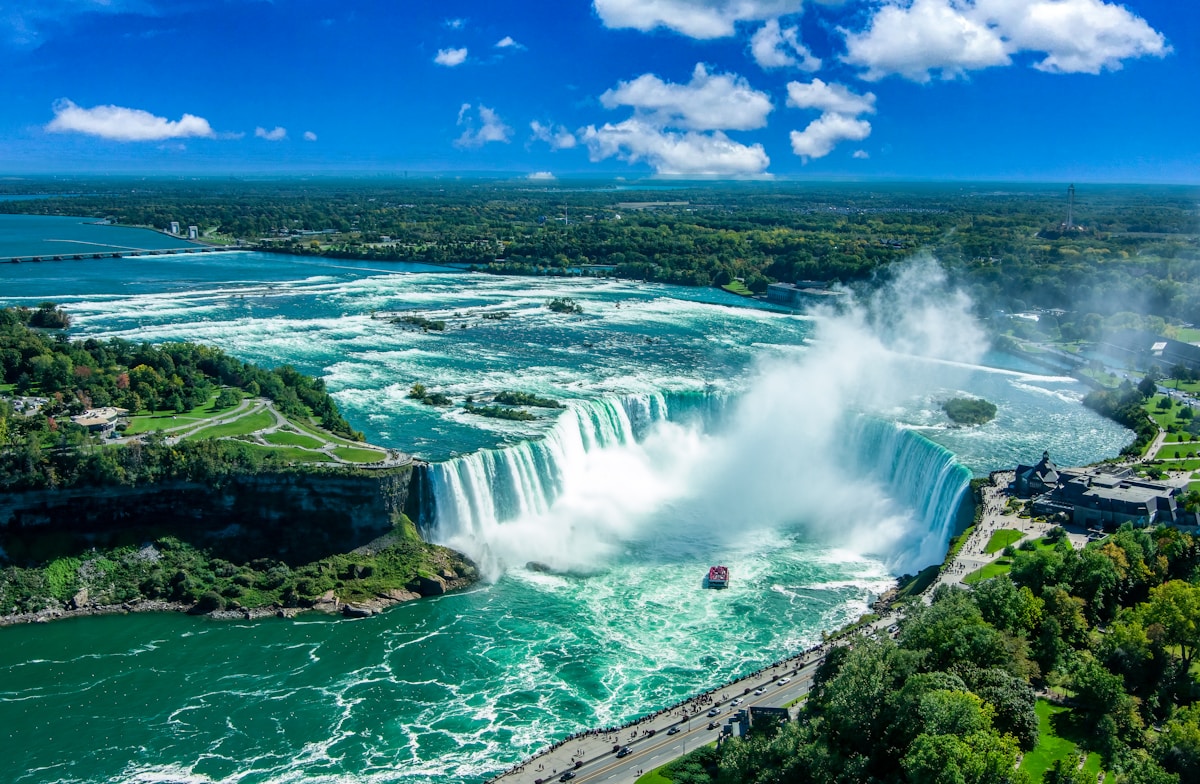
Niagara Falls sits on the border between New York State and Ontario, Canada - two countries sharing one of the most visited natural landmarks in North America. The falls consist of three sections: the massive Horseshoe Falls (on the Canadian side), the American Falls, and the smaller Bridal Veil Falls. Together they carry more water over their edges than any other waterfall system in North America by volume.
Most visitors see only one side. That’s a mistake. The two sides offer genuinely different experiences - the Canadian side gives you the panoramic view, the American side gives you the closest access and better value. A complete Niagara Falls trip uses both.
The Falls: What You’re Actually Seeing
Horseshoe Falls is the showpiece - 2,600 feet wide, 167 feet high, carrying roughly 90% of the total water flow. The horseshoe shape creates a natural amphitheatre that traps mist and spray on a scale that soaks you from 100 feet away. The best unobstructed view of Horseshoe Falls is from the Canadian side, looking directly into the curve from Queen Victoria Park.
American Falls stands 1,060 feet wide and drops 70–110 feet onto a rocky base rather than deep water. It’s visible from both sides but viewed head-on from Prospect Point on the US side.
Bridal Veil Falls, the smallest of the three, is separated from American Falls by a narrow strip of rock called Luna Island. The Cave of the Winds experience on the US side puts you directly alongside it at boardwalk level.
The water volume varies by season and by time of day. At night, Niagara Power Authority reduces flow for hydroelectric generation - in winter, the reduction is significant. Daytime summer flow is the highest and most impressive.
US Side: Niagara Falls State Park
Niagara Falls State Park (established 1885) is the oldest state park in the US. Entry is free; parking runs approximately $5–$10. The park’s main attractions are within walking distance of each other.
Maid of the Mist (US boarding point at Prospect Street) runs from May through late October, departing every 15–20 minutes. The 20-minute boat ride takes you directly into the mist basin below Horseshoe Falls. Everyone gets soaked - the blue ponchos provided are effective but expect wet shoes regardless. Tickets cost approximately $25–$27 per adult as of 2026. Book online to skip the queue; the line for walk-up tickets can reach 45–60 minutes on summer weekends.
Cave of the Winds is the US side’s most immersive experience. An elevator descends to the base of the gorge, where boardwalk trails run to within 20 feet of Bridal Veil Falls. The “Hurricane Deck” platform at the closest point is the wettest spot at Niagara - the ponchos and sandals provided are essential. Open May through October. Tickets cost approximately $20–$22 per adult as of 2026.
Prospect Point Observation Deck is free and gives a solid face-on view of American Falls and Horseshoe Falls. For the money, the Niagara Falls Discovery Pass bundles Maid of the Mist, Cave of the Winds, and a trolley ride for approximately $50–$60 per adult and saves about 15–20% versus individual ticket prices.
Niagara Falls State Park Logistics
- Hours: Park open year-round; attractions seasonal (May–October)
- Address: 332 Prospect St, Niagara Falls, NY 14303
- Parking: Parking lots along Robert Moses Pkwy; approximately $5–$10/day
- From Buffalo: 25 miles / approximately 35–45 minutes by car on I-190 N
Canadian Side: Niagara Parkway
The Canadian side of the falls sits within Niagara Parks, a provincial authority that manages the 35-mile stretch of parkway from Fort Erie to Queenston. Crossing the Rainbow Bridge on foot costs approximately $1 USD or CAD. By car, bridge toll is approximately $4 USD (cash or NEXUS card). Passport required.
The view from Table Rock is the definitive Niagara Falls panorama - standing at the edge of Horseshoe Falls with the full width of the falls in front of you, spray hitting your face from 50 feet away. This is free and open year-round. Table Rock Centre has restaurants and washrooms directly adjacent.
Journey Behind the Falls descends by elevator to tunnels carved into the bedrock behind Horseshoe Falls, then exits onto an outdoor platform with the falls thundering above. Open year-round, though conditions vary by season. Tickets approximately CAD $30–$35 per adult as of 2026 (approximately USD $22–$26 depending on exchange rate).
Niagara City Cruises (formerly Hornblower) is the Canadian equivalent of Maid of the Mist - a larger boat that goes closer to Horseshoe Falls than the US boat. Tickets approximately CAD $30–$35 per adult. Both boat tours get you equally soaked; some visitors find the Canadian boat slightly more impressive for Horseshoe Falls proximity.
Skylon Tower rises 775 feet above the falls with a revolving restaurant and observation deck. The view is better for photography than the falls-level experience - you see the full horseshoe shape clearly from above. Observation deck approximately CAD $20–$25; the revolving restaurant runs approximately CAD $65–$85 per person for dinner.
Niagara Falls, Ontario Logistics
- Niagara Parkway runs alongside the falls; parking available at multiple lots
- Rainbow Bridge (foot/car crossing) connects the US and Canadian sides; passport required
- From Toronto: 80 miles / approximately 90 minutes on the QEW without traffic (Toronto–Niagara corridor has significant congestion on summer weekends)
- Niagara Falls Transit connects the Rainbow Bridge to the main Canadian attractions
When to Visit
June through August is peak season. All attractions operate full schedules, temperatures reach 75–85°F (24–29°C), and the falls run at full daylight flow. The tradeoff: summer weekends bring massive crowds - Maid of the Mist queues, full parking lots, and hotel prices roughly 30–40% above shoulder season rates. Book accommodation 2–3 months in advance for summer stays.
May and September offer the best balance - warm enough for boat rides and outdoor experiences, with noticeably thinner crowds and more reasonable prices. The falls are no less spectacular.
October sees fall foliage along the gorge adding color, and the Niagara Wine Festival runs in late September through early October in the surrounding wine region. Maid of the Mist closes around mid-October.
Winter (November–March) creates dramatic ice formations along the gorge. Some years, ice bridges form below the falls. Journey Behind the Falls operates year-round; other experiences are closed. Hotel prices drop sharply in winter, and the frozen landscape makes for exceptional photography. Temperatures can reach -10°F (-23°C) in January - dress accordingly.
The Illumination: Every evening year-round, powerful LED lights illuminate the falls after dark. The color changes every few minutes and the show runs for several hours. Viewing the illuminated falls from the Canadian side promenade is free and worth the extra evening.
Where to Stay
Niagara Falls, NY (US Side)
- The Giacomo (222 First St) - boutique hotel in a 1920s Art Deco building, 5 minutes’ walk from the park. Approximately $180–$280/night as of 2026.
- Seneca Niagara Resort & Casino (310 Fourth St) - large resort adjacent to the casino, with multiple restaurants on-site. Approximately $150–$250/night.
- Budget motels line Niagara Falls Blvd 2–3 miles from the park at $70–$120/night. They’re a short drive but offer no walkability premium.
Where to stay in Niagara Falls - hotels on both sides of the border
Niagara Falls, Ontario (Canadian Side)
- Marriott Niagara Falls Fallsview (6740 Fallsview Blvd) - the gold standard for falls views; many rooms look directly at Horseshoe Falls. Approximately CAD $280–$500+/night in peak season.
- Embassy Suites by Hilton Niagara Falls (6700 Fallsview Blvd) - suite-style rooms, many with falls views, free breakfast included. Approximately CAD $220–$400/night.
- Budget options exist on Lundy’s Lane (3–4 miles from the falls) at approximately CAD $90–$140/night.
Getting There and Around
By car: The most flexible option. From New York City, the drive is approximately 7 hours (375 miles via I-90 W). From Toronto, approximately 90 minutes via QEW.
By train: Amtrak’s Empire Service runs NYC to Buffalo with a connection to Niagara Falls, NY (approximately 10–11 hours). Via Rail connects Toronto to Niagara Falls, ON (approximately 2.5 hours, limited daily service).
By bus: Megabus and Greyhound serve Buffalo, which connects to Niagara Falls by local transit or taxi (30–45 minutes).
Around the falls: The Niagara Falls Scenic Trolley ($3/ride) connects the US side attractions. Rainbow Bridge crossing on foot or by car links both sides. Uber and Lyft operate on the US side; taxis are the primary option on the Canadian side for short trips.
Browse tours and activities in New York City as a base for exploring the state. For getting around New York State, car hire in the USA is the most practical option outside the city. Compare flights to the USA and arrange travel insurance.