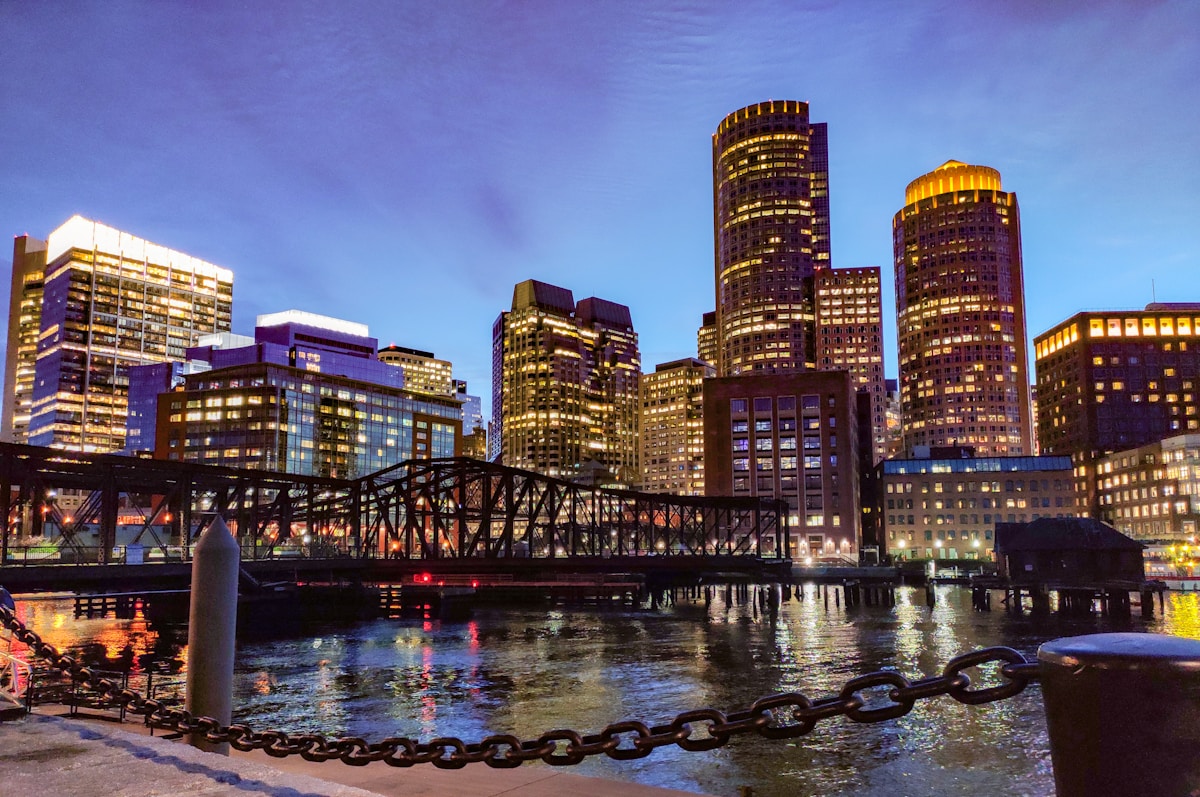
Boston and New York sit 215 miles apart on the Northeast Corridor, connected by one of America’s best train routes. Both are densely historical, food-obsessed, university-heavy, and passionate about sports. But they’re different in almost every way that matters for a visitor: scale, atmosphere, cost, and what they do best.
Quick Verdict
| Category | Boston | New York |
|---|---|---|
| Hotel cost | $180–280/night | $250–400/night |
| Size | Compact, walkable | Vast, subway-dependent |
| History | America’s oldest city | 350+ years, different era |
| Universities | Harvard, MIT | Columbia, NYU, many more |
| Seafood | Outstanding | Good but not a strength |
| Sports rivalry | Intense (Red Sox, Patriots) | Intense (Yankees, Giants) |
| Days needed | 2–4 | 4–6 |
| Train connection | Acela: 3.5h, $120–200 | - |
Search hotels in Boston on Booking.com
Costs
Boston is meaningfully cheaper than New York. In Back Bay - Boston’s most central and upscale neighbourhood - the Newbury Boston (formerly the Taj) runs $260–380/night for a classic property. The Revere Hotel on Stuart Street is solid mid-range at $180–240. Budget options like the HI Boston hostel near Chinatown offer dorm beds from $45 and private rooms from $120. Downtown Boston hotels near Faneuil Hall run $170–250.
New York budget travel is harder - a basic Midtown hotel typically starts at $180–220 for a cramped room, and the better properties run $280–420. For similar comfort and location quality, Boston costs 20–30% less.
Food costs are similar at the mid-range, but Boston’s seafood advantage means you can eat exceptionally well for less money. A proper lobster roll at Neptune Oyster in the North End costs $30–38; a bowl of New England clam chowder at Legal Sea Foods (a Boston institution) runs $12–16. These are among the best versions of these dishes in the USA.
History
Boston is the most historically significant city in American history for the pre-Revolutionary period. The Freedom Trail (2.5 miles, free self-guided walk) connects 16 sites including the Paul Revere House (built 1680, admission $7), the Old North Church (free, $7 for tower access), and the Bunker Hill Monument (free). The USS Constitution - the oldest commissioned warship in the world still afloat - is in the Charlestown Navy Yard and free to tour. The Boston Tea Party Ships & Museum on Congress Street Bridge is a dramatised history museum ($35 adults).
The Freedom Trail takes 2–3 hours at a brisk pace; allow a full day if you want to enter the paid sites and stop for lunch in the North End (Boston’s Italian neighbourhood, excellent pastry at Mike’s Pastry or Modern Pastry).
New York’s history is no less rich but covers a different era and tells it differently - Ellis Island Immigration Museum ($24 ferry + entry), the Tenement Museum on the Lower East Side ($30 guided tour), and the 9/11 Memorial Museum ($33 adults). The history is embedded in the urban fabric rather than marked by a walking trail.
Food
Boston’s food identity centres on New England seafood. The North End - a compact Italian-American neighbourhood - is one of America’s best restaurant streets: Mamma Maria ($55–90/person for dinner) for elegant Italian, Trattoria Il Panino ($35–55) for more casual, and Mike’s Pastry ($3–5) for cannoli that attract queues on weekend afternoons.
For seafood, Row 34 in Fort Point is the city’s most celebrated oyster bar and fish restaurant ($50–80/person with drinks). Yankee Lobster Co. on Northern Avenue is more casual with lobster rolls from $28. Island Creek Oyster Bar in Kenmore Square is outstanding ($45–70/person).
New York’s diversity means you can find nearly any cuisine at a world-class level - but the specific New England traditions of Boston (chowder, lobster, fried clams) are done better at source. New York’s Chinatown, Jackson Heights Indian corridor, and the Jewish deli tradition at Katz’s Delicatessen are unmatched.
Sports Culture
The Boston–New York sports rivalry is one of the most intense in American professional sports, centred on the Yankees–Red Sox baseball rivalry. Fenway Park (built 1912, the oldest active Major League Baseball stadium) is a genuine pilgrimage site for baseball fans - tours available ($25) and game tickets run $40–200 depending on opponent and section. The Patriots (NFL) play at Gillette Stadium in Foxborough, 25 miles south; the Celtics (NBA) and Bruins (NHL) play at TD Garden next to North Station.
New York has more teams (Yankees, Mets, Knicks, Rangers, Jets, Giants, Islanders, Devils) spread across Manhattan, Brooklyn, and New Jersey. For baseball specifically, both stadiums are pilgrimage sites - Fenway for history, Yankee Stadium for sheer scale and atmosphere.
See city guides for Boston and New York City.
Universities
Both cities are defined by their universities, but in different ways. Boston’s academic culture is central to the city’s identity: Harvard (in Cambridge, 20 minutes by Red Line) and MIT (10 minutes by Red Line) have beautiful, open campuses with free public access. Harvard’s campus is one of the most photographed in the world. The Harvard Art Museums ($20 adults) hold a fine European collection including the Busch-Reisinger German collection. Boston University’s campus runs along Commonwealth Avenue.
New York’s Columbia University in Morningside Heights has a compact but elegant campus; NYU is woven into the urban fabric of Greenwich Village rather than occupying a traditional campus. The college town atmosphere of Cambridge across the Charles River from Boston is genuinely different from anything New York offers.
Getting Around
Boston’s MBTA system (called “The T”) covers the central areas well: the Green Line for Back Bay and the Fenway, the Red Line for Cambridge and Harvard Square, the Blue Line for the North End and Aquarium. A CharlieCard fare is $2.40; a 7-day LinkPass is $22.50. The downtown core is small enough to walk - from Faneuil Hall to the South End takes about 30 minutes on foot.
New York’s subway ($2.90/ride, $34/week unlimited) is more comprehensive - 472 stations versus Boston’s 52 - and runs 24/7. Both systems have reliability issues. Boston is more compact so you do less travelling overall; New York requires more rides but covers more ground.
Neither city benefits from a rental car. Driving in Boston is notoriously confusing (many streets follow colonial-era cow paths). Driving in New York is functionally pointless in Midtown.
When to Visit
Both cities follow a similar seasonal pattern: spring (April–June) and fall (September–November) are the best times - mild weather, manageable crowds, pleasant walking. Boston’s fall foliage in October is particularly dramatic when day trips to Cape Cod or the Berkshires are factored in.
Summer is warm and busy in both cities. New England heat and humidity peak in July and August; New York is similar but hotter. Winters are cold: Boston averages 40 inches of snow annually, New York somewhat less. Both cities remain fully functional in winter and hotel rates drop substantially.
The Verdict
New York is the essential American city - there’s nowhere quite like it in scale, diversity, and urban intensity. But Boston offers something different: the best condensed American history experience, exceptional seafood, a manageable scale that rewards walking, and a genuine college-town atmosphere unusual in a major city.
If you’re visiting the Northeast, doing both on the Acela is the obvious move - a weekend is enough for Boston as a companion to a week in New York, or vice versa.
Read about getting around the USA for transport planning tips. The East Coast 10-day itinerary shows how to combine both cities efficiently.
For guided tours in either city, browse the full USA tours selection. Compare flights to the USA and set up travel insurance before your trip.
More City Guides and Comparisons
- Boston travel guide
- New York City travel guide
- New York vs Chicago comparison
- Washington DC vs New York comparison
- New England 7-day itinerary
- 3 days in New York itinerary
- Acadia National Park guide
- Scenic Amtrak routes guide
Plan Your Trip
✈️ Book your flights to the USA 🛡️ Get travel insurance 📱 Stay connected with an eSIM 🚗 Rent a car
Ready to Plan Your Trip?
Here are our top itineraries to help you plan your USA visit:
- 3 Days in New York City: First-Timer’s Itinerary - The best of the city in a long weekend
- 7 Days in New York City: Itinerary - A full week exploring every neighbourhood
- East Coast USA 10-Day Itinerary: NYC, DC, Philadelphia & Boston - The full East Coast circuit