Why Hawaii is Unlike Anywhere Else in the United States
Hawaii is the only US state located entirely outside North America, sitting roughly 2,400 miles southwest of California in the central Pacific. It is also the only state made entirely of islands - eight main islands formed by a chain of volcanoes that continues to grow today. The result is a landscape found nowhere else in the country: active lava fields next to rainforests, ski-able mountain peaks above tropical coasts, coral reefs surrounding beaches of white, black, red, and green sand.
That geological drama translates into genuine variety for travelers. A week on one island can feel completely different from a week on another. Planning which island - or combination of islands - to visit is the single most important decision in any Hawaii trip, and it deserves more attention than most travel planning gives it.
The Four Main Islands
Oahu - The Gateway Island
Oahu is home to roughly 70% of Hawaii’s population and the state capital, Honolulu. It is the most visited island, the most accessible, and the one with the widest range of accommodation prices. Waikiki Beach is the famous two-mile strip facing southwest - reliable surf, warm water year-round, and a dense hotel corridor stretching along its shore. Diamond Head State Monument offers a 1.6-mile crater hike with sweeping views of the coastline for approximately $5 per pedestrian as of 2026.
Search hotels in Hawaii on Booking.com
For hotel recommendations across Honolulu’s neighbourhoods - Waikiki, Ala Moana, and downtown - see our where to stay in Honolulu guide.
Outside Honolulu, Oahu holds Pearl Harbor National Memorial - one of the most significant historic sites in the country - and the North Shore, where Pipeline and Sunset Beach produce the largest rideable waves in the world during winter swells. Our full Oahu guide covers all of this in detail, including neighborhood-by-neighborhood hotel recommendations and restaurant prices.
Best for: First-time visitors, those on tighter budgets, anyone wanting urban convenience alongside beach access.
Maui - The Beach Island
Maui is the second-largest Hawaiian island and the one most associated with the classic Hawaii beach experience. Ka’anapali Beach on the west shore is consistently rated among the best beaches in the United States; Wailea on the south shore is quieter, with calmer water and a higher concentration of luxury resorts.
The Road to Hana - a 64-mile coastal highway with 59 bridges and 620 curves - is one of the great scenic drives in the country, threading through bamboo forests, sea cliffs, and waterfall pools. The Haleakala National Park summit rises to 10,023 feet above sea level; sunrise from the crater rim is a genuine spectacle, though it requires booking a permit in advance at recreation.gov (approximately $1 per vehicle as of 2026).
Maui is also the best base for whale watching. Humpback whales arrive in the Maui Nui Basin - the shallow channel between Maui, Lanai, and Molokai - from approximately December through April, with peak numbers in February and March. Several operators run half-day tours from Ma’alaea Harbor (approximately $45–$80 per adult as of 2026). See our Maui island guide for operators, hotel recommendations, and Road to Hana logistics.
Best for: Beach-focused travelers, honeymooners, whale watching season visitors, anyone wanting classic resort Hawaii.
Big Island - The Adventure Island
The Big Island - officially Hawaii Island - is the largest in the archipelago and the most geologically active. Hawaii Volcanoes National Park sits on the southeastern slope of Kilauea, one of the most continuously active volcanoes on Earth. Visitors can walk across hardened lava fields, peer into the Halema’uma’u crater, and (conditions permitting) watch lava entering the ocean at night. The park charges approximately $35 per vehicle as of 2026 and is open 24 hours. Our full guide to Hawaii Volcanoes National Park covers trail options and timing in detail.
The island’s diversity is extraordinary: Mauna Kea, at 13,796 feet above sea level, is the world’s tallest mountain measured from its oceanic base and hosts some of the best stargazing in the Northern Hemisphere. The Mauna Kea Visitor Information Station at 9,200 feet hosts free public stargazing programs on most clear nights. Kohala Coast on the northwest shore holds some of the finest beaches in Hawaii - Hapuna Beach State Recreation Area is free, uncrowded, and consistently ranks among the best swimming beaches in the islands.
Best for: Adventure travelers, geology and nature enthusiasts, stargazers, those wanting the least-developed feel of any major island.
Kauai - The Garden Island
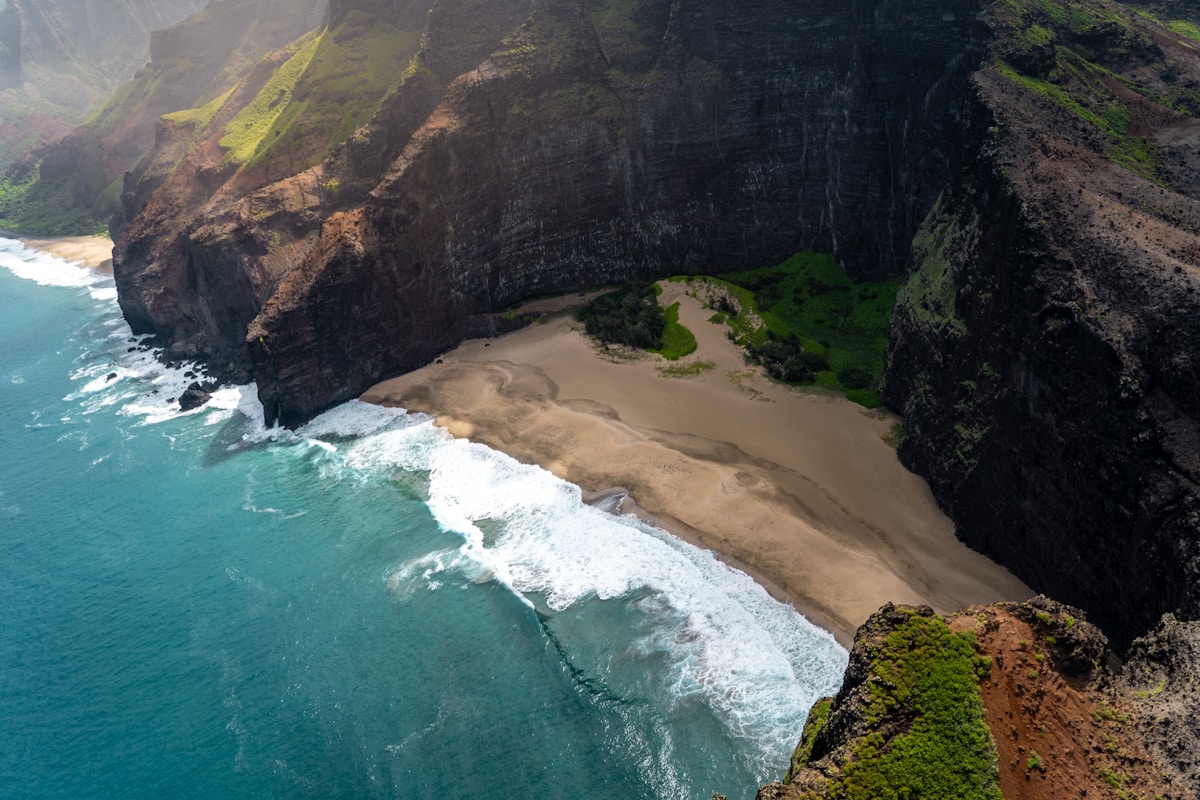
Kauai is the oldest and most heavily eroded of the main islands, and the result is the most dramatic scenery in the archipelago. The Na Pali Coast on the northwest shore - a 17-mile stretch of sea cliffs rising 4,000 feet from the ocean - is accessible only by boat, kayak, or the 11-mile Kalalau Trail. The Waimea Canyon State Park on the west side is called the “Grand Canyon of the Pacific” - a 14-mile canyon reaching 3,600 feet deep.
Kauai has no large city; Lihue is the county seat with a population of roughly 7,000. The island sees more rain than its neighbors - particularly the North Shore around Hanalei - but that rainfall is what keeps it impossibly green. Kauai is quieter, slower, and harder to reach than Oahu or Maui, which is precisely the appeal for many visitors. Our Kauai guide covers the Na Pali Coast access options, North Shore beaches, and accommodation.
Best for: Nature seekers, those wanting dramatic scenery over beach resort atmosphere, experienced Hawaii visitors returning for something different.
Best Time to Visit Hawaii
Hawaii has no bad season, but some periods are meaningfully better than others.
April through early June and September through November are the sweet spots: lower hotel rates than summer, manageable crowds, warm water, and trade-wind weather that keeps temperatures steady in the 80s°F across most islands. These shoulder periods are when we recommend most first-time visitors plan their trip.
December through March brings two competing factors: the lowest rates of the year in late December (outside the Christmas–New Year spike) and the best whale watching on Maui, but also the highest rates on Oahu during the holidays, and the largest North Shore surf on Oahu which closes beaches to swimmers.
July and August are the most expensive months across all islands. School summer holidays bring mainland US families in the largest numbers, hotel rates hit annual highs, and popular hikes and beaches are at peak capacity.
Hurricane season runs June through November, but direct hits on Hawaii are rare - the islands sit south of the typical North Pacific storm track. The main effect is occasional periods of high surf and elevated swell on exposed shores.
Getting to Hawaii and Between Islands
Flights from the Mainland
Honolulu Daniel K. Inouye International Airport (HNL) on Oahu receives the most direct flights from the mainland, with service from Los Angeles (approximately 5 hours), San Francisco (5.5 hours), Seattle (6 hours), and New York (approximately 10–11 hours). Non-stop services also operate direct to Maui (OGG), the Big Island’s Kona airport (KOA), and Kauai’s Lihue airport (LIH) from several mainland hubs - useful for visitors who want to base on a neighbor island without transiting Honolulu.
Budget approximately $400–$700 per person round-trip from the West Coast and $600–$900 from the East Coast for economy class, though fares vary widely with booking window and season.
Inter-Island Travel
Hawaiian Airlines and Southwest Airlines both operate inter-island routes. Flights take 30–55 minutes and cost approximately $80–$150 per person one-way booked in advance; last-minute fares can exceed $200. There is no inter-island ferry service connecting the main islands, with the exception of the Expeditions ferry between Maui and the island of Lanai (approximately $30 each way, roughly 60 minutes).
For a two-island trip, the most common pairing is Oahu and Maui (widest flight frequency), or Maui and Big Island (strongest contrast in scenery). Our 10-day Hawaii itinerary covers a Big Island and Maui combination with day-by-day logistics.
Getting Around Each Island
A rental car is effectively essential on every island except central Honolulu. Oahu’s TheBus covers the whole island for a flat $3 per ride, but journey times are long outside the city. Maui, the Big Island, and Kauai have minimal public transit - without a car, most attractions become inaccessible. Rental rates average approximately $60–$120 per day as of 2026; book well in advance for summer travel, when inventory runs short.
Budget Breakdown
Hawaii is consistently one of the most expensive US travel destinations. Here is a realistic framework:
Budget (approximately $150–$200 per person per day): Hostels exist on Oahu and Maui in limited numbers (dormitory beds from approximately $50–$70 per night as of 2026). Vacation rentals shared between two people can reduce accommodation costs. Plate lunches - the local standard of two scoops rice, macaroni salad, and a protein - cost approximately $12–$15 and provide excellent value. Cooking some meals from supermarkets (Costco, Foodland, Times) brings daily costs down significantly.
Mid-range (approximately $300–$450 per person per day): Expect to pay approximately $180–$350 per night for a standard hotel room at a 3-star or equivalent property. Dining out costs approximately $20–$35 at casual restaurants for lunch, and $40–$70 per person at dinner (excluding drinks). Car rental, fuel, and parking add approximately $80–$120 per day in total.
Luxury (approximately $600+ per person per day): Resort properties on Maui’s Wailea coast and the Big Island’s Kohala Coast charge approximately $500–$1,200 per night. Resort fees - charged separately from the room rate - typically add $40–$80 per night on top. Fine dining runs $80–$150 per person. Helicopter tours (highly recommended for seeing inaccessible coastline and volcano features) cost approximately $200–$400 per person for a 45–60 minute flight.
One consistent extra cost to budget for: Resort fees at Hawaii hotels can be substantial and are charged regardless of whether you use the amenities they claim to cover. Always check the total cost inclusive of resort fees before booking.
Which Island Is Right for You?
| Traveler type | Best island |
|---|---|
| First-timer / widest range of options | Oahu |
| Beach and resort experience | Maui |
| Adventure and geology | Big Island |
| Dramatic scenery, quieter pace | Kauai |
| Two islands in 10 days | Maui + Big Island |
Practical Tips
- Reef-safe sunscreen is required by law in Hawaii. Products containing oxybenzone or octinoxate are banned. Mineral-based SPF 30+ is readily available on the islands.
- The Road to Hana on Maui now requires a permit (free) during peak hours. Book through the Maui Nui Strong programme at mauinowhawaii.com before your visit.
- Book in advance for Hanauma Bay (Oahu), the Haleakala sunrise (Maui), and Hawaii Volcanoes National Park timed entries during peak season - all require reservations and sell out.
- Agricultural inspections on arrival and departure are strict. Do not bring fresh fruit, plants, or soil products onto any island or attempt to take them home.
- Tap water is safe to drink on all the main islands - no need to buy bottled water.
City Guides and Itineraries
- Maui travel guide
- Kauai travel guide
- Honolulu travel guide
- Big Island guide
- 10-day Hawaii itinerary
- Hawaii Volcanoes National Park guide
- Hawaii vs Florida comparison
- Best time to visit the USA
For guided tours on Oahu, browse tours in Honolulu. For Maui experiences, see Maui tours. Travel insurance is strongly recommended for Hawaii - helicopter and boat tours are popular and weather cancellations do happen. Compare flights to Hawaii well in advance as routes sell out.