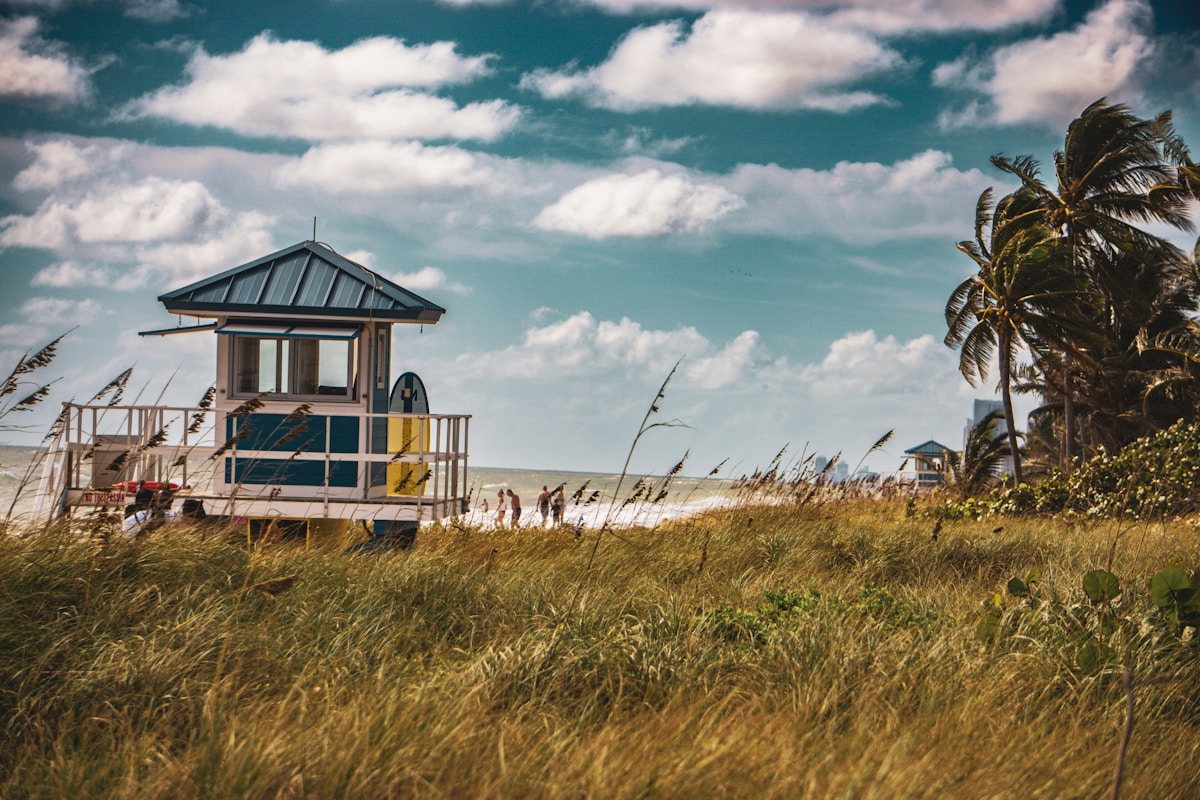
Florida receives more annual visitors than any other US state - over 130 million as of recent years - and most of them arrive in a narrow coastal strip that runs from Miami north to Jacksonville on the Atlantic side, or Pensacola east to Fort Myers on the Gulf. The interior of Florida - lakes, springs, cypress swamps, and the Everglades - is largely unknown to visitors, which makes it genuinely rewarding for those willing to look past the beaches.
Miami
Miami divides cleanly into its neighbourhoods. South Beach (the Art Deco historic district, particularly the 1200–1400 blocks of Ocean Drive) is what most visitors picture. The beach itself is free, wide, and warm - lifeguard towers painted in pastel colours, volleyball nets, and the pedestrian boardwalk extending north. Hotel rates in the Art Deco district run $200–600/night in season (December–April); significantly less June–November.
Wynwood (about 25 minutes north of South Beach) turned abandoned warehouse blocks into one of the world’s most significant outdoor public art destinations. Wynwood Walls, the original outdoor museum (2516 NW 2nd Ave), is free and open daily during daylight hours. The surrounding blocks have galleries, design showrooms, and independent restaurants at every turn. R House (2727 NW 2nd Ave) has weekend drag brunch that’s become a local institution.
Little Havana (SW 8th Street, Calle Ocho) has Versailles restaurant (3555 SW 8th St, open since 1971, mediocre but mandatory) for Cuban coffee and people-watching, better Cuban food nearby at El Cristo (1543 SW 8th St) or El Rey de las Fritas (1821 SW 8th St) for Cuban burgers. Domino Park (Maximo Gomez Park, SW 15th Ave and Calle Ocho) hosts regular domino games among older Cuban men - visitors are welcome to watch.
Orlando Theme Parks
Walt Disney World (Lake Buena Vista) is four major parks on a 27,000-acre property. The Magic Kingdom is the original and most iconic - Cinderella’s Castle, Space Mountain, and the Haunted Mansion. EPCOT has undergone significant transformation since 2020 and now blends its original World Showcase (11 country pavilions with food and cultural exhibits) with newer rides. Hollywood Studios has the two most in-demand experiences: Star Wars: Galaxy’s Edge and the Toy Story rides. Animal Kingdom is genuinely impressive as a wildlife park and easily the best for older kids and adults who find Magic Kingdom’s focus on childhood nostalgia limiting.
Advance Lightning Lane reservations are essential for headliner rides - the Guardians of the Galaxy: Cosmic Rewind at EPCOT and Avatar: Flight of Passage at Animal Kingdom regularly have 90-120 minute standby queues at peak times. Lightning Lane Premier Pass (allowing skip-the-line access to any attraction) costs approximately $29–$119 per person per day as of 2026 depending on date - check prices on the Disney app before arriving.
Universal Orlando (two parks: Universal Studios Florida and Islands of Adventure) is the direct competitor and has, arguably, the stronger ride lineup for adults. The Wizarding World of Harry Potter spans both parks (connected by the Hogwarts Express, which requires a park-to-park ticket). The Epic Universe park opened in 2025, adding a third gate with Nintendo World, additional Wizarding World content, and new horror-themed lands. Multi-day tickets run approximately $109–189/day depending on dates and package as of 2026.
Gulf Coast Beaches
The Gulf Coast west of US-41 from Tampa Bay south to Naples is where Florida’s finest beach swimming sits.
Siesta Key Beach (Sarasota) consistently tops national beach rankings for its quartz sand - ground so fine it stays cool in the sun and squeaks underfoot. Parking fills by 9am on summer weekends. Free trolley from Siesta Key Village. Accommodation on the key: $200–400/night.
Clearwater Beach has the most developed resort infrastructure on the Gulf Coast - hotels, restaurants, and shops directly behind the beach, Pier 60 with its nightly sunset festival. The Clearwater Marine Aquarium is here. Room rates: $200–400/night on the beach in season.
Naples at the southern end of the Gulf Coast is a quieter, more upscale option. Fifth Avenue South and Third Street South are where the restaurants and galleries sit. The beach at Lowdermilk Park and Vanderbilt Beach are the main public access points. This is retirement and snowbird country - calm, well-maintained, expensive ($300–600/night for beachfront accommodation).
The Florida Keys
US-1 from Florida City to Key West passes 42 bridges over 113 miles of open water. The drive itself is the experience.
John Pennekamp Coral Reef State Park (Key Largo) is America’s first undersea park - 70 nautical square miles of living reef accessed by snorkel tours (approximately $30 per person, 3 hours), glass-bottom boat, or dive. Book morning tours to avoid afternoon wind and chop. Kayak rentals available from the park marina.
Bahia Honda State Park (Big Pine Key) has the clearest Gulf water of any Keys beach - Sandspur Beach is the highlight. Book campsites months ahead; they sell out far in advance.
Key West is 2 square miles and extremely walkable. The Hemingway Home (907 Whitehead St; approximately $16 adults) has cats descended from Hemingway’s six-toed cats wandering the property. The Dry Tortugas National Park (70 miles west of Key West, accessible by fast ferry, approximately $185 round trip via Yankee Freedom; or seaplane from approximately $350 one-way) is a Civil War-era fort on a remote Gulf island with exceptional snorkelling.
Everglades National Park
The largest subtropical wilderness in the US at 1.5 million acres. The main entrance is at Ernest Coe Visitor Center (40001 State Hwy 9336, Homestead - 40 miles southwest of Miami). Entry approximately $35 per vehicle as of 2026.
The park’s two most accessible points from Miami: Royal Palm (4 miles from main entrance) for the Anhinga Trail - a 0.8-mile loop where anhinga birds dry their wings on branches 3 feet above the boardwalk, alligators lie in the main channel, and purple gallinules walk on lily pads. Mid-morning birds are most active.
Flamingo (38 miles from the main entrance) at the park’s southern tip has kayak and canoe rentals for backcountry paddling into the mangrove channels.
Where to Stay
| Region | Budget | Mid-range | High-end |
|---|---|---|---|
| Miami Beach | Freehand Miami ($80 dorm/$150 room) | Betsy Hotel, South Beach ($250) | Faena Hotel ($600+) |
| Orlando area | Rosen Inn Closest to Universal ($90) | Hard Rock Hotel at Universal ($200) | Disney’s Grand Floridian ($600+) |
| Gulf Coast | Siesta Key Motel ($130) | Sandpearl Resort, Clearwater ($350) | The Ritz-Carlton Naples ($600+) |
| Key West | Key West Youth Hostel ($45 dorm) | Parrot Key Hotel ($250) | Ocean Key Resort ($450+) |
Search hotels in Florida on Booking.com
For city-specific hotel picks, see our guides on where to stay in Miami, Orlando, and Tampa.
Getting Around Florida
Florida is a driving state. Interstate 95 runs up the Atlantic coast; I-75 runs north-south through the interior. The Florida Turnpike connects Orlando to Miami ($10–15 in tolls). Sunpass (an electronic toll tag, available at gas stations) avoids toll plaza queues. Uber and Lyft operate in all major cities. No viable passenger rail connects Miami to Orlando - the Brightline private rail service (Miami to Orlando, opened 2023) offers an alternative at approximately $79–149 each way depending on schedule and class; check gobrightline.com for current fares.
City & Park Guides
- Miami travel guide
- Orlando travel guide
- Florida Keys island guide
- Everglades National Park guide
- Florida Keys road trip guide
- Florida 10-day itinerary
- Hawaii vs Florida comparison
- Miami vs Los Angeles comparison
- Best time to visit the USA
- USA travel costs guide
Browse tours and experiences in Florida covering Miami, the Keys, and theme parks. A rental car is the most practical way to explore Florida’s spread-out attractions. Compare flights to the USA and sort travel insurance.