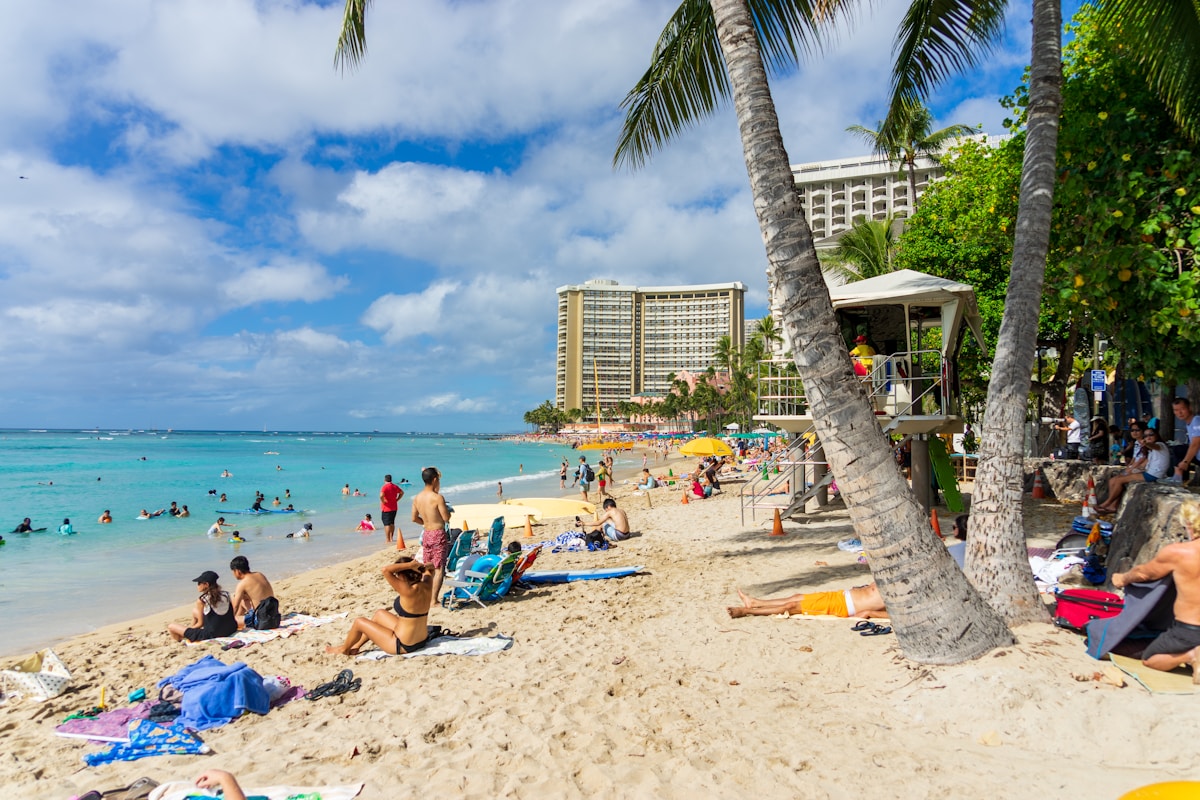
Two sunshine states, two fundamentally different travel experiences. Hawaii is remote, volcanic, and culturally distinct from the continental USA. Florida is accessible, flat, and purpose-built for a certain kind of American holiday. Both have exceptional beaches, but they suit very different travellers.
Quick Verdict
| Category | Hawaii | Florida |
|---|---|---|
| Flight cost from mainland | High ($400–700 RT) | Low ($80–250 RT) |
| Hotels | $280–420/night | $180–320/night |
| Beach quality | Dramatic and varied | Long and pristine (Gulf Coast) |
| Wildlife | Marine life, sea turtles | Manatees, alligators, flamingos |
| Hiking | Exceptional | Limited (flat terrain) |
| Theme parks | No | World-class |
| Snorkelling | Outstanding | Good |
| Best for | Nature, honeymoons | Families, budget beaches |
Best For: Who Should Choose Which
Hawaii for honeymooners and couples: Volcanic scenery, secluded beaches, and a genuinely slower pace create something that’s hard to replicate elsewhere on US soil. A beachfront bungalow on Maui’s Hana coast, a sunset catamaran off the Kona Coast, or a lava-watch at twilight on the Big Island - Hawaii earns its reputation for romance because it’s geologically and culturally unlike anywhere else in the country.
Florida for families with young children: The theme park density around Orlando is unmatched worldwide. Walt Disney World alone spans 27,000 acres with four major parks and two water parks. Add Universal Orlando’s Wizarding World of Harry Potter, SeaWorld, LEGOLAND Florida, and Kennedy Space Center, and you have two full weeks of activity within a 30-minute radius. Gulf Coast beaches at Clearwater and Siesta Key are shallow, calm, and safe for small children. And getting the family there costs a fraction of Hawaii - flights from most US cities run $80–200 return per person.
Hawaii for outdoors and adventure: Kauai’s Na Pali Coast is among the most dramatic hiking landscapes in the USA, accessible only by boat or an 11-mile trail (each way). Maui’s Pipiwai Trail in Haleakala National Park (moderate, 4 miles return through bamboo forest) rewards with a 400-foot waterfall at the end. On the Big Island, Hawaii Volcanoes National Park (entry $35/vehicle, valid 7 days) lets you walk across a hardened lava lake. Oahu has the accessible Diamond Head Summit Trail (1.6 miles return, $5/person entry) with Honolulu views that justify the sweat.
Florida for budget travelers: Round-trips from most US cities run $80–200. Gulf Coast hotels in Clearwater or Fort Myers start around $100–140/night in shoulder months. The Everglades can be done as a full day trip from Miami ($35 vehicle entry plus a $25–40 airboat tour). Free public beaches are the norm; there’s no beach-club access fee culture. Florida isn’t cheap near theme parks or in peak snowbird season (January–March), but the price floor is dramatically lower than Hawaii for every budget category.
Costs
The cost difference is substantial. A round-trip flight from New York to Honolulu averages $500–700; from New York to Miami, $120–250. From Los Angeles, the gap narrows but doesn’t close - Hawaii runs $350–550 versus Florida’s $80–180.
On the ground, Hawaii’s cost of living is the highest of any US state. A decent hotel in Waikiki - say, the Outrigger Reef Waikiki Beach Resort - starts at $280/night. A simple breakfast plate at a Honolulu diner costs $16–22. At the other end, the Royal Hawaiian (the famous “Pink Palace”) on Waikiki Beach runs $550–800/night.
Florida offers genuine range. Miami Beach hotels run $180–320 for a comfortable property; move to the Gulf Coast towns of St. Pete Beach or Fort Myers and rates drop to $140–220. Theme park proximity inflates Orlando hotel prices ($160–280 at Disney-adjacent hotels), but coastal Florida outside peak season can be surprisingly affordable.
Search hotels in Florida on Booking.com
Budget estimate: Hawaii $250–350/person/day all-in; Florida $150–250/person/day.
Beaches
Hawaii has remarkable variety packed into a small geographic footprint. Waikiki Beach on Oahu is the classic: calm, safe swimming, iconic Diamond Head backdrop, and lined with restaurants and bars. Kailua Beach, 30 minutes from Waikiki, is far less crowded with powdery white sand and consistent trade winds ideal for windsurfing. On Maui, Kaanapali Beach is the luxury strip (calm water, resort hotels from $400/night), while Road to Hana reveals remote black sand beaches including Waianapanapa State Park. Kauai’s beaches are the most dramatic - Na Pali Coast is only reachable by boat or a gruelling 11-mile hike each way.
Florida’s best beaches are on the Gulf of Mexico: Siesta Key near Sarasota (consistently ranked among America’s finest for its powdery quartz sand), Caladesi Island State Park, and Grayton Beach in the Florida Panhandle. Gulf Coast water temperatures reach 85°F in summer and rarely drop below 68°F in winter. Atlantic Coast beaches (Miami Beach, Fort Lauderdale) are more urban but offer stronger surf and a livelier beach bar scene.
Wildlife and Nature
Hawaii has no land predators, no snakes, and marine life that’s genuinely extraordinary. Sea turtles (honu) rest on Punaluu Black Sand Beach on the Big Island. Spinner dolphins are visible on morning boat trips off the Kona Coast. Humpback whales migrate to the warm waters off Maui from December through April. The snorkelling at Molokini Crater, an underwater volcanic crater off Maui, is among the best in the USA.
Florida’s wildlife is more terrestrial. Everglades National Park (entry $35/vehicle) is home to American alligators, West Indian manatees, roseate spoonbills, and the endangered Florida panther. The Crystal River area northwest of Tampa is the best place in the USA to swim with manatees (November–March, guided tours from $35). Dry Tortugas National Park, only accessible by boat or seaplane, has exceptional snorkelling and nesting sea turtles.
Activities
Hawaii: Snorkelling at Molokini Crater off Maui stands above almost anything Florida offers - 100-foot visibility, walls of reef fish, and occasional manta ray sightings. Half-day tours depart from Maalaea Harbor and run $80–120 per person. Manta ray night dives off the Kona Coast ($130–160) are among the most memorable underwater experiences on US soil. On land, hiking is the headline activity: Diamond Head on Oahu (easy, 1.6-mile return, $5 entry), the Pipiwai Trail in Haleakala National Park (moderate, 4-mile return through bamboo forest, $30 park entry), and the Kilauea Iki Crater Trail on the Big Island (moderate, 4 miles across a solidified lava lake, $35 park entry). Surfing lessons on Waikiki Beach run $60–80/hour with a certified instructor.
Florida: Theme parks are the obvious draw - a single-day Magic Kingdom ticket runs $109–189 depending on the date, Universal Orlando $109–179. For outdoor experiences, kayaking the 10,000 Islands in the Everglades goes from $40/person and drops you into a mangrove labyrinth with no roads and no crowds. Crystal River manatee snorkel tours run from $35 (November–March only). Kennedy Space Center ($75 adults, $65 children) is one of Florida’s best-value attractions if your timing aligns with a launch. Paddleboarding and kayaking in the Florida Keys, particularly around Bahia Honda State Park, costs $30–50 for a two-hour rental.
Accommodation
Hawaii hotel options are concentrated: Waikiki for Oahu, Kaanapali and Wailea for Maui, Poipu Beach for Kauai. The Andaz Maui at Wailea Resort ($580–900/night) sits on Mokapu Beach with four infinity pools and Morimoto Maui restaurant. The Four Seasons Resort Hualalai on the Big Island ($700–1,100/night) has a private white-sand beach and a Jack Nicklaus golf course. Budget options are limited - most under-$200/night properties in Waikiki are older or in less convenient locations.
Search hotels in Hawaii on Booking.com
Florida has better mid-range options. The Luce, St. Pete Beach (formerly the Postcard Inn) runs $160–220/night with direct beach access and a casual beach-bar atmosphere. In Miami Beach, the Catalina Hotel & Beach Club on Collins Avenue offers Art Deco style from $180–250. Orlando has Disney-adjacent properties at $160–280/night plus the full JW Marriott Orlando Grande Lakes at $280–380, which includes a lazy river, golf course, and theme park shuttle.
See city guides for Honolulu and Miami.
Getting Around
On any Hawaiian island, a rental car is essential outside Waikiki. Rates start at $55–85/day for a compact car; book well ahead as rental stock is limited. Oahu’s TheBus public transit is functional but slow. Inter-island flights run $50–150 each way with Hawaiian Airlines or Southwest.
Florida’s transport varies wildly by region. Miami has reasonable public transit (Metrorail + Metrobus, $2.25/ride). Orlando requires a car unless you stay inside Disney World’s resort system, which has extensive free shuttle transport. The Gulf Coast towns are car-dependent. Florida road tolls are common - budget $5–15/day if driving anywhere meaningful.
When to Visit
Hawaii is pleasant year-round, but month-by-month conditions vary more than people expect. Florida splits into a clear dry and wet season - the wet season is cheaper but brings daily storms and hurricane risk.
| Month | Hawaii | Florida |
|---|---|---|
| Jan | 78°F, dry on west coasts; best whale watching off Maui | 71°F, dry season - mild and clear; snowbird peak |
| Feb | 78°F, some rain on north shores; good humpback season | 73°F, snowbird peak, best weather of the year |
| Mar | 79°F, shoulder rates, minimal rain west coasts | 77°F, Spring Break crowds; prices spike |
| Apr | 80°F, strong trade winds; excellent for water sports | 80°F, warm, mostly dry, crowds thinning |
| May | 82°F, pre-summer calm; good value | 84°F, humidity rising; last quiet month |
| Jun | 84°F, summer peak begins; prices up | 88°F, wet season starts; afternoon storms daily |
| Jul | 86°F, hottest and busiest; book months ahead | 90°F, daily thunderstorms; school holiday crowds |
| Aug | 87°F, peak season, highest hotel rates | 91°F, hottest month; tropical storm risk |
| Sep | 85°F, lower rates, some rain | 89°F, peak hurricane season; lowest hotel prices |
| Oct | 82°F, shoulder - best value month | 84°F, hurricane risk easing; still cheap |
| Nov | 80°F, rain increases north Oahu; large surf begins | 77°F, dry season begins; Gulf Coast wakes up |
| Dec | 78°F, large surf on North Shore; holiday crowds | 73°F, busiest month on Gulf Coast; book ahead |
The North Shore of Oahu gets massive surf (20–40 feet) November through February - spectacular to watch but not for swimming. March–May and September–October offer the best Hawaii value: shoulder rates with minimal rain. Florida’s dry season (November–April) is the wildlife viewing peak; the wet season (May–October) drops hotel prices 20–30% but brings daily afternoon thunderstorms and Atlantic hurricane risk.
How to Book: Hawaii vs Florida
Booking Hawaii: Book flights 3–5 months ahead for the best fares - last-minute Hawaii tickets routinely hit $700–900 from the East Coast. Hawaiian and Southwest offer the most competitive inter-island fares (book separately from your mainland ticket). Hotel availability is tightest on Maui’s Kaanapali and Wailea strips; book those 3–4 months out. For snorkelling tours (Molokini Crater, manta ray night dives), book at least 2 weeks ahead - top operators cap groups at 20–24 passengers and sell out fast. Car rental on Maui and the Big Island must be booked alongside your flight, as rental stock is limited island-wide.
Booking Florida: Florida flights are flexible - fares fluctuate little, and booking 4–8 weeks out is usually sufficient. The exception is Spring Break (mid-March) and New Year’s week, when South Beach hotels spike sharply. Disney World requires planning: park tickets must be reserved in advance with a specific entry date via the Disney Park Pass reservation system; popular parks like Magic Kingdom sell out 60+ days ahead during school holidays. Gulf Coast hotels in Sarasota, Clearwater, and Fort Myers are more bookable last-minute except in February–March (snowbird peak). Everglades airboat tours and Crystal River manatee swims are worth booking 1–2 weeks ahead in peak winter months.
Insurance note: Hawaii is remote - medical evacuation from a remote island can cost $30,000+. Comprehensive travel insurance covering medical evacuation is more important for a Hawaii trip than for most continental US destinations.
The Verdict
If budget is a primary concern, Florida wins easily - cheaper flights, cheaper hotels, more affordable once you’re there, and world-class theme parks for families. If you want a genuinely special, once-in-a-trip destination, Hawaii justifies the premium: the landscapes are extraordinary, the marine life is unforgettable, and the slower pace of island life is hard to replicate elsewhere.
Read the best time to visit the USA for more on seasonal planning. The 10-day Hawaii itinerary and 10-day Florida itinerary provide detailed day-by-day plans for each destination.
Island and City Guides
- Honolulu travel guide
- Maui island guide
- Kauai island guide
- Big Island guide
- Miami travel guide
- Orlando travel guide
- Everglades National Park guide
- Hawaii Volcanoes National Park guide
- Florida Keys road trip guide
- Miami vs Los Angeles comparison
For guided tours in either state, browse the full USA tours selection. Compare flights to the USA and set up travel insurance before your trip.
Plan Your Trip
✈️ Book your flights to the USA 🛡️ Get travel insurance 📱 Stay connected with an eSIM 🚗 Rent a car
Ready to Plan Your Trip?
Here are our top itineraries to help you plan your USA visit:
- 10 Days in Hawaii: Itinerary - Island-hopping across the Pacific