Big Island Guide: Kona vs Hilo, Volcanoes & Getting Around
Big Island visitor guide: where to stay in Kona vs Hilo, best restaurants, getting around by rental car, and planning your Hawaii Island trip.
Guides for Big Island
Hawaii Island - universally called the Big Island to distinguish it from the state - is the largest island in the Hawaiian archipelago by a wide margin. At approximately 4,028 square miles, it is larger than all other Hawaiian islands combined, and it is still growing: Kīlauea volcano has been erupting more or less continuously since 1983, adding new land to the island’s southeast coast. This geological activity is the island’s defining character. Nowhere else in the United States can you stand on a summit above 13,000 feet in the morning, swim in warm Pacific water in the afternoon, and watch lava flow at night.
The Big Island divides into two distinct climatic and cultural halves. The Kona-Kohala coast on the west side is dry, sunny, and dominated by resort hotels, coffee farms, and manta ray snorkeling. The Hilo side on the east is dramatically wetter - annual rainfall in Hilo averages 130 inches - with lush rainforest, waterfalls, the Hawaii Volcanoes National Park (easily the island’s most significant attraction), and the majority of the island’s working farms.
Getting There and Around
The Big Island has two airports: Kona International Airport (KOA) on the west side, serving most resort visitors, and Hilo International Airport (ITO) on the east. Direct mainland flights to KOA operate from Los Angeles, Seattle, San Francisco, and several other West Coast hubs (approximately five to six hours). Most visitors fly into KOA for west-side resorts; the drive between KOA and Hilo via the southern route (passing Hawaii Volcanoes National Park) takes approximately 2.5–3 hours.
A rental car is essential on the Big Island. The island has no meaningful public transport between regions. Inter-city driving distances are significant: KOA to Hilo via the north (through Waimea) approximately 1.5 hours; KOA to Hawaii Volcanoes National Park approximately 2.5 hours; Hilo to Hawaii Volcanoes approximately 45 minutes. Rental cars at KOA run approximately $55–90/day as of 2026; book early, especially for peak winter and summer periods.
Hawaii Volcanoes National Park
The park covers 323,431 acres of active volcanic landscape on the island’s southeast flank, from the Kīlauea summit caldera (4,091 feet) to the coast where lava has historically reached the ocean. Park entry $35/vehicle, valid for seven days. The park is open 24 hours - the Kīlauea Visitor Center (open daily 9am–5pm) has current eruption status information; check nps.gov/havo before arrival, as eruption visibility and accessible viewpoints change frequently.
Kīlauea Caldera - The main caldera is 2.5 miles wide and 400 feet deep. The Kīlauea Overlook and Jaggar Museum area (currently closed for restoration) provides the best rim view. The Crater Rim Drive (partially reopened after 2018 eruption damage) circles the caldera past active steam vents, lava tube entrances, and sulfur banks.
Halema’uma’u Crater - The main lava lake within Kīlauea. When active, it glows intensely at night and is visible from the Kīlauea Overlook. Eruption activity fluctuates; check current status before planning a nighttime visit, which is the most dramatic experience.
Chain of Craters Road - An 18-mile road descending 3,700 feet from the Kīlauea caldera to the coast. Along the road: Mauna Ulu lava shield, Pu’u Loa Petroglyphs (a 2.4-mile round-trip walk to Hawaii’s largest petroglyph field, approximately 23,000 images carved into hardened lava), and the Hōlei Sea Arch - a 90-foot lava arch at the road’s end above the ocean. The road ends where 2018 eruption lava covered the original coastal highway; hiking onto active or recent lava fields requires checking current ranger guidance.
Thurston Lava Tube (Nāhuku) - A 500-year-old lava tube passageway, accessible via a short paved loop trail through tree fern forest. Free with park entry. Open daily; lighting inside allows navigation without a flashlight.
Mauna Kea
At 13,796 feet above sea level, Mauna Kea is the highest point in the state of Hawaii and, measured from its ocean-floor base, the world’s tallest mountain (33,500 feet base to summit). The summit hosts thirteen observatories operated by agencies from eight countries, taking advantage of the altitude, dry air, and minimal light pollution. The Mauna Kea Visitor Information Station (MKVIS) at 9,200 feet is open daily 9am–10pm; free entry.
The summit road requires a 4WD vehicle - standard rental cars are prohibited above the MKVIS (confirm with rental company before attempting). A free ranger-guided summit program (reservation required via ifa.hawaii.edu) operates daily; commercial stargazing tours from Kona and Wailua run approximately $200–250/person for a guided summit sunset and stargazing experience including a 4WD vehicle. The Subaru Telescope Public Open House (free, reservation required) runs monthly.
Altitude caution: Ascending directly to the summit without acclimatization can cause altitude sickness. The standard recommendation is to spend 30 minutes at the MKVIS before continuing. Persons with heart or respiratory conditions should consult a physician before ascending above 9,000 feet.
Black Sand Beaches
Punalu’u Black Sand Beach - South of Pahala, off Highway 11. The most accessible black sand beach on the Big Island, and one of the most reliable places in Hawaii to see Hawaiian green sea turtles (honu) hauled out on the sand. The black basaltic sand is formed from lava cooling rapidly in the ocean. No swimming (strong currents); no entry fee; restrooms and parking on-site. Open daily. Sea turtles are protected - federal law requires a 10-foot distance and no touching.
Kehena Beach - Off Highway 137, Puna. A remote black sand cove accessible via a steep lava cliff trail (approximately 10 minutes down). No facilities; nudity is common and tacitly accepted. Accessible only when the trail is dry and safe - check conditions. Spinner dolphins visit the bay regularly in the morning hours. No entry fee; limited roadside parking.
Snorkeling and Manta Rays
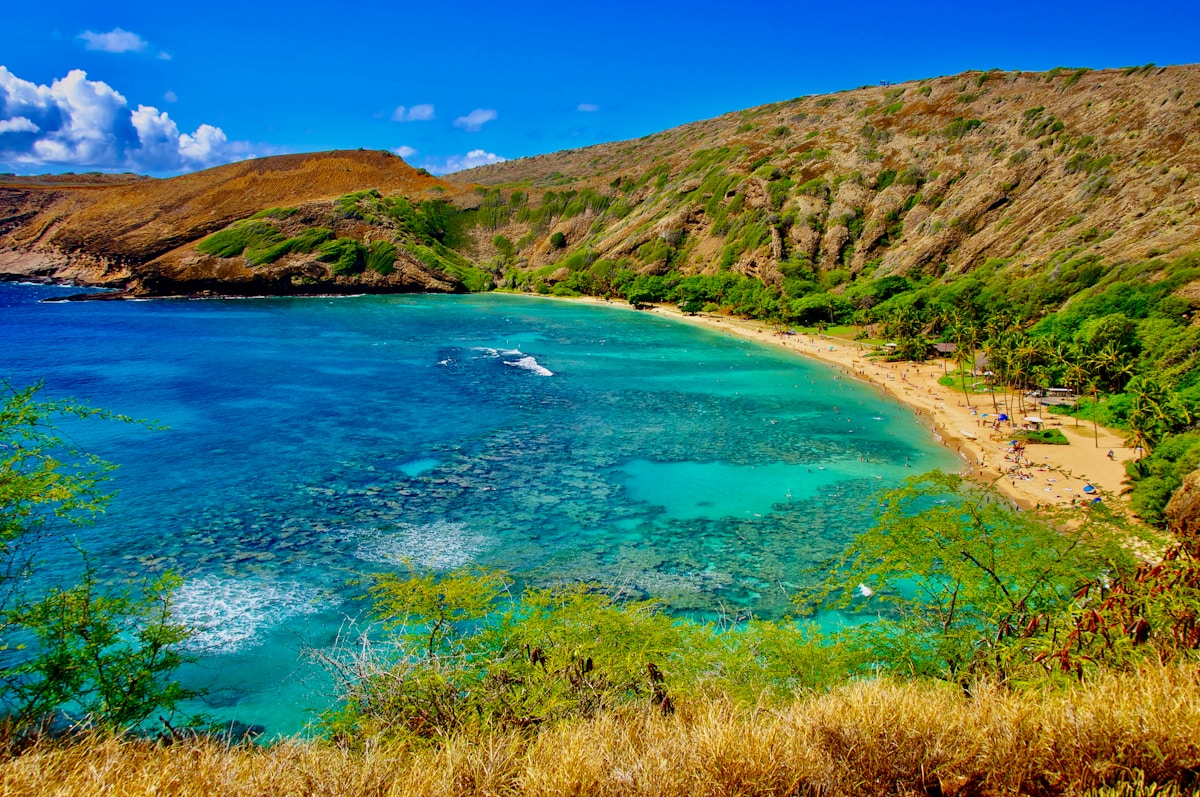
Two-Step / Hōnaunau Bay - Near Pu’uhonua o Hōnaunau National Historical Park (see below), south of Kailua-Kona. A two-step lava rock entry into one of the richest coral reef ecosystems on the Big Island. Spinner dolphins are frequently present in the morning. Free; roadside parking. No facilities.
Manta Ray Night Snorkeling - Keauhou Bay and Garden Eel Cove (both near Kailua-Kona). The Big Island has one of the most reliable manta ray aggregation sites in Hawaii - mantas feed on plankton attracted by dive boat lights at these two sites almost every night of the year. Night snorkel tours run approximately $55–90/person for a two-hour session as of 2026; scuba dive options available. Book in advance through operators including Manta Ray Bay Hotel & Dive Shop, Jack’s Diving Locker, or Sea Paradise Scuba. Mantas here are not guaranteed - sighting rates approach 90% but vary by season and weather.
Pu’uhonua o Hōnaunau National Historical Park
Highway 160, south of Kailua-Kona. A place of refuge (pu’uhonua) where, under ancient Hawaiian law, those who had broken a kapu (sacred law) could escape execution by reaching the sanctuary. The park preserves the remains of the pu’uhonua - a stone platform (heiau), a carved wooden ki’i akua (god figures), and a restored royal ground. Entry approximately $20/vehicle as of 2026. Open daily 7am–sunset. The park also fronts excellent snorkeling at Two-Step (separate, free access from the adjacent parking area).
Kona Coffee Country
The slopes of Mauna Loa and Hualalai above Kailua-Kona, at elevations between 800 and 2,000 feet, produce some of the most expensive and most reviewed coffee in the world. The volcanic soil, cloud cover, and humidity create conditions that produce distinctively smooth, low-acid beans. The Kona coffee region covers approximately 30 miles along Highway 180 (the Mamalahoa Highway) through the communities of Kealakekua, Captain Cook, and Honaunau.
Free farm tours are common along this corridor - most major farms (Greenwell Farms, Mountain Thunder Coffee Plantation, Kona Joe Coffee) offer self-guided walking tours and tasting rooms. The Kona Coffee Living History Farm (near Captain Cook) is the most formal interpretive site: a preserved 1920s-era Kona coffee farm managed by the National Park Service. Entry approximately $5/person. Open Tuesday–Saturday 10am–2pm.
The Kona Coffee Cultural Festival (held each November) includes farm tours, cupping competitions, and events across the region.
Waimea and Parker Ranch
Waimea (also called Kamuela) sits in the highlands between the Kohala Mountains and Mauna Kea at approximately 2,600 feet elevation. It is cattle ranching country - Parker Ranch, founded in 1847, is one of the largest ranches in the United States at approximately 130,000 acres. The town has several of the island’s better restaurants (including Merriman’s Big Island, the original location) and a noticeably cooler climate than the coast. The Parker Ranch Museum (67-1185 Mamalaloa Hwy) covers the ranch’s history; entry approximately $8/adult as of 2026. Open Monday–Saturday 9am–5pm.
Where to Stay
Four Seasons Resort Hualalai - 72-100 Ka’upulehu Dr, Kohala Coast. The most frequently cited luxury resort on the Big Island; 243 bungalow-style rooms. Rates approximately $1,000–1,800/night as of 2026. The resort has its own King’s Pond - a natural anchialine pool (connected to the ocean through lava) used as a snorkeling area with rays and tropical fish. Limited public access; primarily for resort guests.
Search hotels in Big Island Hawaii on Booking.com
Mauna Kea Beach Hotel - 62-100 Mauna Kea Beach Dr, Kohala Coast. Opened in 1965 and is one of the classic resort properties in Hawaii. 252 rooms; rates approximately $600–1,000/night as of 2026. Directly on Kauna’oa Beach, consistently ranked among Hawaii’s best beaches. Extensive art collection displayed throughout the resort - over 1,600 pieces from across the Pacific.
Waikoloa Beach Marriott Resort and Spa - 69-275 Waikoloa Beach Dr, Kohala Coast. A large, well-serviced resort on ‘Anaeho’omalu Bay. 555 rooms; rates approximately $350–600/night as of 2026. More affordable than the Four Seasons or Mauna Kea Beach with comparable beach access. Adjacent to the Waikoloa Village shops and restaurants.
Hilo Hawaiian Hotel - 71 Banyan Dr, Hilo. The main hotel in Hilo, on the Banyan Drive waterfront overlooking Hilo Bay. 285 rooms; rates approximately $170–280/night as of 2026. No resort-style amenities, but a central location for accessing Hawaii Volcanoes National Park and east-side attractions.
Volcano House - 1 Crater Rim Dr, Hawaii Volcanoes National Park. The only accommodation inside the national park, perched on the rim of the Kīlauea caldera. 33 rooms; rates approximately $250–400/night as of 2026. The location allows lava glow observation at night without driving back to Hilo. Book well in advance - particularly popular for weekends and holiday periods.
Sheraton Kona Resort and Spa at Keauhou Bay - 78-128 Ehukai St, Kailua-Kona. A large, well-positioned resort directly above Keauhou Bay - one of the two main manta ray viewing sites. 521 rooms; rates approximately $300–500/night as of 2026. The resort operates its own manta ray tour from the adjacent bay.
Where to Eat
Merriman’s Big Island - 65-1227 Opelo Rd, Waimea. The original location of Peter Merriman’s Hawaii Regional Cuisine restaurants, opened in 1988. Local fish (shutome, kampachi, ono), Waimea beef, and upcountry vegetables. Mains approximately $35–58. Reservations strongly recommended.
Jackie Rey’s Ohana Grill - 75-5995 Kuakini Hwy, Kailua-Kona. A reliable mid-range restaurant in Kona with consistently good fish preparations and reasonable prices by resort-town standards. Mains approximately $22–38.
Café 100 - 969 Kilauea Ave, Hilo. A Hilo institution since 1946, credited with inventing the loco moco (a hamburger patty over rice with a fried egg and brown gravy - now one of the definitive local dishes of Hawaii). Counter service; plates approximately $8–14. Open daily for breakfast and lunch.
Ken’s House of Pancakes - 1730 Kamehameha Ave, Hilo. A 24-hour diner on Banyan Drive that has been operating continuously since 1971. The full American diner menu is available around the clock. Plates approximately $10–18. No reservation needed.
Punalu’u Bake Shop - Highway 11, Naalehu. The southernmost bakery in the USA, famous for sweet bread and malasadas (Portuguese-influenced fried dough pastries). A reliable road stop between Kona and Hawaii Volcanoes National Park. Open daily 9am–5pm.
Practical Notes
- Best time to visit: The Kohala coast is sunny year-round. Hawaii Volcanoes is most dramatic at night when lava glows are visible - plan at least one evening visit.
- Eruption status: Kīlauea’s activity changes. Check nps.gov/havo before visiting the park.
- Driving: Allow more time than map estimates suggest - the road network is large, speed limits are low, and parking at popular sites fills early.
- Altitude acclimatization: Mauna Kea summit visits should follow the standard 30-minute acclimatization stop at 9,200 feet.
Planning your the Big Island trip? Browse guided tours and activities in the Big Island to book tickets and experiences in advance. For getting around the wider region, car hire in the USA gives you the most flexibility. Visitors from outside the USA will also want to sort travel insurance and an eSIM for the USA before departure.
More Big Island Guides
Book an experience
Top experiences in Big Island
Explore the best tours and activities in Big Island , with instant confirmation and free cancellation on most bookings.
Where to stay: Browse hotels in Big Island on Booking.com; filter by dates, budget, and guest rating.