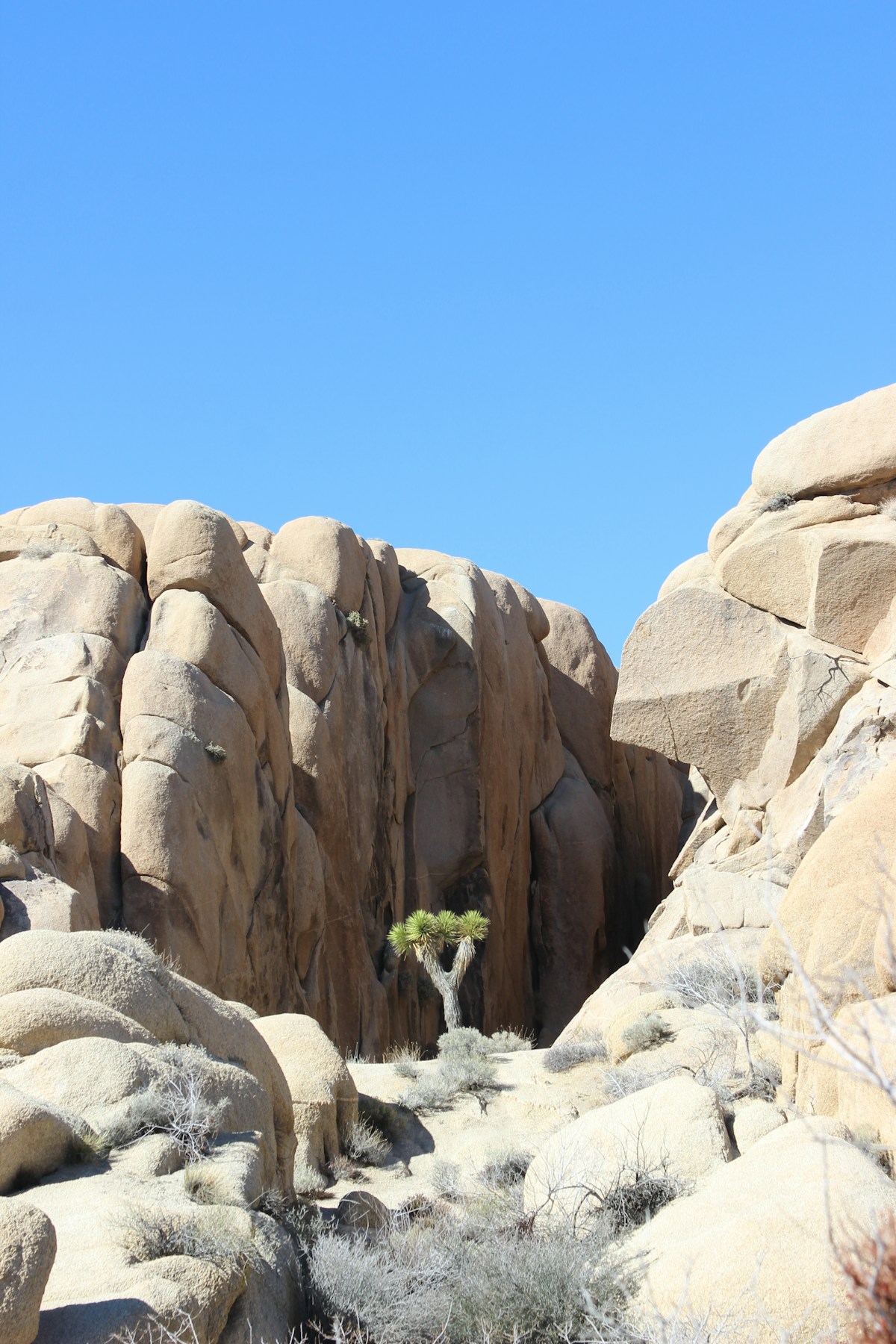
Two deserts meet inside Joshua Tree: the higher, cooler Mojave, where the spiky namesake yuccas grow among piles of monzogranite boulders, and the lower Colorado Desert, all creosote flats and cholla gardens. The result is a landscape closer to a Dr. Seuss illustration than a conventional national park - and at under three hours from Los Angeles, it doubles as one of Southern California’s best stargazing and rock-climbing playgrounds.
Entry Fees and Passes
Entry costs approximately $30 per vehicle as of 2026, valid for seven days. Motorcycles pay approximately $25; walkers and cyclists approximately $15. The America the Beautiful annual pass ($80) covers entry. International (non-US-resident) visitors pay an additional surcharge of approximately $100 per person at this park as of 2026; verify current rates at nps.gov before budgeting. The America the Beautiful pass (approximately $250 for non-residents) waives this surcharge. There is no reservation system, but the West Entrance backs up badly on weekend mornings from February through April - the North Entrance at Twentynine Palms usually has little or no line.
The park is open 24 hours, which matters here: Joshua Tree is a certified International Dark Sky Park, and many visitors come specifically for the night sky.
When to Visit
October–April is the season. Winter days run 55–70°F with cold nights that can dip below freezing - and occasional snow on the Joshua trees, which is spectacular. March–April adds wildflower blooms and the year’s biggest crowds.
May and September are transitional: hot (90s°F) but workable with dawn starts.
June–August: highs of 100–110°F. We do not recommend midday activity of any kind. Sunrise visits, sunset drives, and stargazing remain excellent - the Milky Way core is at its best on summer nights.
Getting There
From Palm Springs (PSP): approximately 45 minutes–1 hour to the West Entrance. The easiest fly-in option, with rental cars from approximately $45/day - compare at /go/car-hire-usa.
From Los Angeles: approximately 2.5 hours (longer with traffic) via I-10 and CA-62.
From Las Vegas: approximately 3.5 hours, entering from the north via Twentynine Palms.
Three entrances: West (Joshua Tree town - busiest), North (Twentynine Palms - visitor center and shortest lines), and South (Cottonwood, off I-10 - convenient if coming from Palm Springs and touring south to north). There is no shuttle, no food, and effectively no water inside the park - fill bottles and tanks before entering.
Top Hikes and Sights
Hidden Valley - 1 mile loop (easy, 45 minutes) through a boulder-ringed valley once used by cattle rustlers. The single best introduction to the park’s rockscape.
Barker Dam - 1.1 mile loop (easy) past a historic water tank that sometimes holds water after winter rains, plus petroglyphs. Bighorn sheep occasionally drink here at dawn.
Ryan Mountain - 3 miles round trip (strenuous, 1,000+ ft gain). The best summit panorama in the park, taking in both deserts. No shade whatsoever - morning only.
Lost Palms Oasis - 7.2 miles round trip (moderate-strenuous, 4 hours) from Cottonwood Spring to the park’s largest fan-palm oasis. Cooler-season hike only.
Skull Rock and Jumbo Rocks - Roadside scrambling among the park’s most photographed boulder formations; the 1.7-mile Skull Rock loop links them.
Keys View - A drive-up overlook at 5,185 feet across the Coachella Valley to the San Andreas Fault, with Mount San Jacinto beyond. Go at sunset.
Cholla Cactus Garden - A 0.25-mile boardwalk through thousands of backlit “teddy bear” chollas where the two deserts meet. Best at first or last light; do not touch the cactus - segments detach and embed on contact.
Keys Ranch - The preserved homestead of Bill Keys, visitable only on ranger-guided tours (approximately $10, book via recreation.gov seasonally).
Rock climbing is world-class, with over 8,000 routes; guided half-day intro sessions with local outfitters run approximately $150–250 per person. Browse Joshua Tree tours on GetYourGuide for guided climbing, stargazing experiences, and sunrise photography tours with small-group operators.
Accommodation
There are no lodges inside the park - you either camp or stay in the highway towns along CA-62.
Search hotels in Joshua Tree on Booking.com
Camping: About 500 sites across eight campgrounds, approximately $15–25/night. Jumbo Rocks (boulder-sheltered sites) and Hidden Valley (first-come, climber central) are the most atmospheric. September–May, book via recreation.gov up to six months ahead - weekends sell out within minutes of release. No hookups; most campgrounds have no water.
Joshua Tree town (West Entrance): Desert-bohemian rentals and small inns, approximately $120–250/night. The Joshua Tree Inn (where Gram Parsons died in 1973) runs approximately $150–200/night.
Twentynine Palms (North Entrance): The practical base - chain hotels from approximately $100–180/night, plus the garden-set 29 Palms Inn with adobe bungalows from approximately $150–250/night and a decent on-site restaurant.
Yucca Valley: Big-box convenience and the area’s best grocery stores; motels from approximately $90/night.
Where to Eat
Crossroads Cafe in Joshua Tree town is the institution for breakfast and post-hike burgers (approximately $12–18). Pappy & Harriet’s in Pioneertown, 20 minutes northwest, pairs barbecue (mains approximately $15–30) with a live-music calendar that has hosted Paul McCartney and Robert Plant - book dinner well ahead. La Copine in Flamingo Heights is the foodie pick (brunch-style mains approximately $18–28; check days open).
Safety Notes
- Heat and water: Carry a minimum of 1 gallon (4 liters) per person per day - there is no water available inside the park. Heat illness is the park’s most common emergency. In summer, finish hikes by 9–10am.
- No cell coverage: Almost none anywhere in the park. Download offline maps and tell someone your plan; people get lost on unmarked boulder detours every year.
- Navigation: The terrain looks repetitive - formations and washes resemble each other. Stay on marked trails; carry a GPS track for longer routes.
- Wildlife and plants: Rattlesnakes are active in warm months - watch where you place hands while scrambling. Cholla segments hook into skin and shoes; carry a comb to flick them off.
- Cold nights: Desert temperature swings of 30–40°F are normal. Campers need warm layers even after 90°F days.