Overview
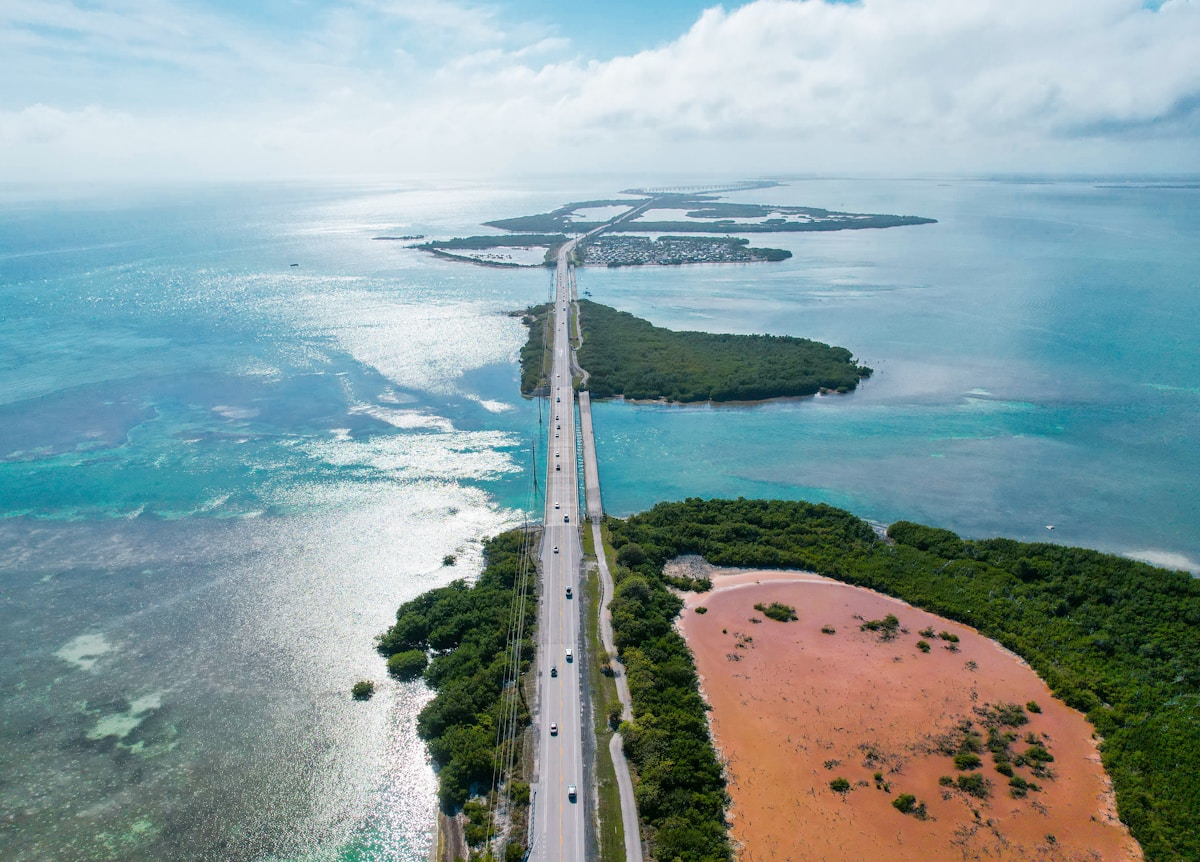
The Florida Keys are a coral cay archipelago extending 125 miles southwest from the southern tip of the Florida peninsula into the Gulf of Mexico and the Atlantic. Over 1,700 islands - most too small to inhabit - are strung together by the Overseas Highway (US 1), a road that crosses 42 bridges including the Seven Mile Bridge, one of the longest in the world. The entire chain is subtropical, lying between 24° and 25° north latitude - the same latitude as the Saharan coast of Morocco.
The Keys divide roughly into four sections: Key Largo and the upper Keys (diving, snorkeling, John Pennekamp park), Islamorada (sportfishing capital of the world), Marathon and the middle Keys, and the lower Keys and Key West. Key West, at the tip, is 90 miles from Havana and has its own distinct character: a one-square-mile walkable historic district, a literary history, a significant LGBTQ+ community, and a tourism economy built on sunsets.
Top Attractions
John Pennekamp Coral Reef State Park
The first undersea state park in the US, established in 1963, protects 178 nautical square miles of reef and seagrass off Key Largo. The park’s Glass Bottom Boat tours run approximately $32 per adult and $25 per child as of 2026; snorkel tours approximately $30 per adult; guided scuba dives approximately $85 per person. The visitor center and park entrance at MM 102.5 (mile marker 102.5 on US 1) is open daily 8:00 am to 5:00 pm. Day-use entry costs approximately $9 per vehicle as of 2026. The Christ of the Abyss statue - a 9-foot bronze submerged in 25 feet of water - is the most photographed dive site in the park. Reef conditions in the Keys have been affected by coral bleaching events; check current conditions with park staff before booking expectations around reef health.
Key West Historic District
The one-square-mile Duval Street area and its surrounding streets contain most of Key West’s famous sights: the Hemingway Home & Museum, the Southernmost Point buoy, Mallory Square and its sunset celebration, the Key West Butterfly and Nature Conservatory, and the Custom House museum. The Hemingway Home & Museum at 907 Whitehead Street is open daily 9:00 am to 5:00 pm; entry approximately $18 per adult as of 2026. The property houses roughly 50 polydactyl (six-toed) cats descended from a cat Hemingway owned, which are now a protected part of the attraction. The Mallory Square sunset celebration is free and runs daily about an hour before sunset - street performers, local vendors, and a reliable crowd.
Walking the full historic district on foot takes half a day. Rental bikes and scooters are the best way to cover more ground; bike rentals run approximately $15–$25 per day as of 2026.
Dry Tortugas National Park
The most remote and least visited national park in the eastern US lies 70 miles west of Key West - unreachable by car. The park’s centerpiece is Fort Jefferson, a massive 19th-century coastal fortification built on Garden Key and never completed. The moat surrounding it contains some of the best snorkeling in Florida; the surrounding waters have near-zero boat traffic and excellent visibility. Entry costs approximately $15 per adult as of 2026. The Yankee Freedom III catamaran ferry from Key West is the standard access method: approximately $215 per adult round trip as of 2026, including park entry and snorkel gear, with a 2-hour crossing each way. The ferry runs daily from late October through mid-April; schedule and availability at yankeefreedom.com. Primitive camping on Garden Key (reservations required in advance) allows 1–3 nights with extraordinary night skies.
Overseas Highway (US Route 1)
The 113-mile drive from Florida City to Key West is one of the most distinctive road trips in the country. The highway runs at sea level for most of its length, flanked by water on both sides through the upper keys and crossing open ocean on the long bridges. The Seven Mile Bridge between Marathon and Bahia Honda Key is the highlight - you are in open water with no land visible in any direction. The old Seven Mile Bridge parallel to the current one is open to pedestrians and cyclists. Bahia Honda State Park (entry approximately $8 per vehicle as of 2026) has the best natural beach in the Keys, with calm Gulf-side water and an Atlantic-facing oceanside beach. The park’s old bridge rail walkway offers good views.
Getting to the Florida Keys
By car: The overwhelming majority of Keys visitors drive. Miami International Airport is the standard gateway, 60 miles north of Key Largo via Florida’s Turnpike and US 1. The full drive from Miami to Key West takes approximately 3.5–4.5 hours depending on traffic. US 1 is a single two-lane road through most of the Keys - there is no bypass, and holiday weekends (especially Memorial Day, July 4th, and Labor Day) can turn the drive into a 5–6+ hour ordeal. Leave early. A traffic update before Key Largo saves significant time on peak weekends.
By ferry: The Key West Express operates high-speed catamaran service from Fort Myers Beach to Key West (3.5 hours); fares approximately $95–$115 each way as of 2026 at keywestexpress.net.
By air: Key West International Airport (EYW) has limited direct service from Miami, Atlanta, Charlotte, and select seasonal routes from Northeast cities. Fares are often high relative to the short distances - check in advance.
Where to Stay
Ocean Key Resort & Spa (Key West) - At the foot of Duval Street on the harbor, with a sunset deck and one of the best locations in Key West. Rooms from approximately $350–$600 per night as of 2026.
Search hotels in Florida Keys on Booking.com
The Gardens Hotel (Key West) - A boutique property built around a tropical garden inside a restored Victorian estate. 17 rooms; quiet by Key West standards. Rooms from approximately $280–$450 per night as of 2026.
Isla Bella Beach Resort (Marathon) - The best resort option in the middle Keys, on a private beach with a water sports center. Rooms from approximately $300–$550 per night as of 2026. Practical midpoint for those exploring both upper and lower keys.
Kona Kai Resort, Gallery & Botanic Garden (Key Largo) - A small, adult-focused boutique resort on a private cove, close to John Pennekamp and the reef. Rooms from approximately $320–$500 per night as of 2026.
Where to Eat
Hogfish Bar & Grill (Stock Island, Key West) - Working waterfront location, straightforward seafood, and the best hogfish sandwich in the Keys. Sandwiches approximately $16–$22 as of 2026. Casual, cash-friendly, worth the short drive from Duval.
Lazy Days Restaurant (Islamorada) - Open-air oceanfront seafood restaurant on the Atlantic side. Good yellowtail snapper. Mains approximately $25–$45 as of 2026.
Morada Bay Beach Cafe (Islamorada) - Tables in the sand, sunset views over Florida Bay, and reliably good fish. A more relaxed and authentic Islamorada experience than the chain hotels along US 1. Mains approximately $28–$50 as of 2026.
Blue Heaven (Key West) - Outdoor dining in a Bahama Village compound where Ernest Hemingway once watched boxing matches. Brunch and dinner; waits at peak times. Mains approximately $20–$38 as of 2026.
Keys Fisheries (Marathon) - A working fishing dock with an attached restaurant. The lobster Reuben sandwich and stone crab claws (in season October–May) are the draws. Plates approximately $15–$30 as of 2026. Eat outside at the dockside picnic tables.
Best Time to Visit
December through April is the dry season and the most comfortable period, with temperatures 65–80°F and low humidity. This is also peak season; expect higher prices and more traffic on US 1. Dry Tortugas is most accessible December through April.
June through September is hot (90°F+), humid, and subject to afternoon thunderstorms and hurricane risk. Hotels are cheaper, and the reef is uncrowded. Stone crab season runs October 15 through May 15.
October and November are a solid shoulder season - rain drops off, temperatures moderate, and prices have not yet returned to winter peaks.
Practical Tips
- Mile markers (MM) are the navigational system throughout the Keys. Addresses and directions reference “MM 98” or “MM 24.5 bayside/oceanside.” Download a MM reference chart or save one on your phone before driving.
- Key West has a severe shortage of parking. The city-operated Duval Street garages are the most reliable option (approximately $4–$5 per hour as of 2026); driving around looking for street parking is a time sink.
- The drinking water in the Keys is imported via a single pipeline from the mainland, which makes it among the most fragile public utilities in the US. It was severed during Hurricane Irma in 2017. Bottled water is worth carrying during hurricane season.
- Florida requires non-motorized vessels (kayaks, paddleboards) to display a state registration in some areas of the Keys. Check current regulations if bringing a personal craft.
- The Keys have no hospitals with trauma centers; serious medical emergencies require air transport or a 90-minute ambulance run to Homestead or Miami. Travel insurance and current prescription medications are practical precautions.
City Guides
For guided boat trips, snorkelling excursions, and island experiences, browse tours and activities in the Florida Keys. Most visitors drive the Overseas Highway from Miami - Key Largo is about 1 hour, Key West roughly 3.5 hours. Arrange travel insurance before departure.