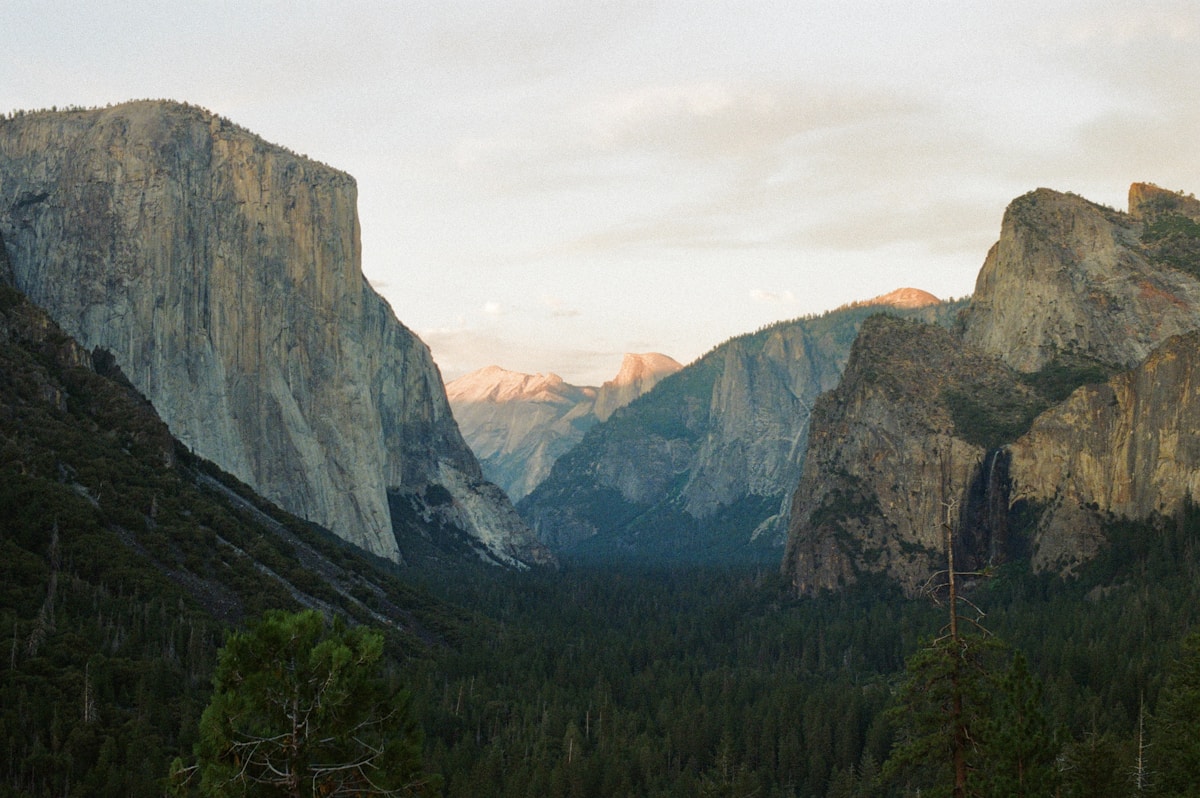
Sequoia and Kings Canyon National Parks are administered jointly and share a single entry fee. Together they protect the Sierra Nevada’s largest concentrations of giant sequoias - trees that are not the tallest, not the oldest, but by volume the largest living organisms on Earth. The General Sherman Tree is estimated at 2,200 years old and contains enough wood to build 40 five-room houses. Kings Canyon, adjacent to the north, contains one of the deepest canyons in North America.
Entry Fees and Passes
Entry costs approximately $35 per vehicle as of 2026, valid for seven days and covering both Sequoia and Kings Canyon. Motorcycles pay approximately $30; individuals on foot or bicycle pay approximately $20. The America the Beautiful annual pass ($80) covers entry.
The Ash Mountain entrance (Highway 198 from Visalia) is the primary south entrance. The Big Stump entrance (Highway 180 from Fresno) provides west access to Kings Canyon. Both are open year-round, though Generals Highway between the two parks closes periodically in winter due to snow and chain requirements.
When to Visit
June through September: Full access. Generals Highway and Kings Canyon Scenic Byway are open; all facilities operate; all trails are snow-free. Temperatures in the Giant Forest (6,400 ft elevation) are 65–80°F. July and August are busy - arrive at the General Sherman Tree trailhead before 9am.
October–November: Crowds thin significantly after Labor Day. Fall color in the mixed-conifer forest and some sequoia groves. Temperatures 50–65°F. Higher roads may close in November.
December–March: Generals Highway often requires chains or 4WD. The Giant Forest and General Sherman Tree remain accessible if the road is clear; check road conditions at nps.gov/seki. Crystal Cave and Moro Rock close. Snowshoeing in the Giant Forest meadows is excellent. The park is quiet and the giant trees in snow are extraordinary.
April–May: Road closures lift progressively. Waterfalls are at maximum from snowmelt. Trails at lower elevations clear by April; high-country routes (Mineral King, Lodgepole area above 8,000 ft) may remain snowy into June.
Getting There
From Visalia, CA (38 miles to the Ash Mountain Entrance, approximately 1 hour via CA-198 E): The most direct approach to Giant Forest and General Sherman Tree. Visalia Municipal Airport (VIS) has limited service; most visitors fly into:
Fresno, CA / Fresno Yosemite International Airport (FAT) (55 miles to Big Stump/Kings Canyon entrance, approximately 1.25 hours): Best option for direct access to Kings Canyon and a reasonable drive to Giant Forest via Generals Highway.
Los Angeles, CA (230 miles to Ash Mountain, approximately 3.5 hours via CA-99 N and CA-198 E): Common for Southern California visitors.
No public transit runs to either park. A car is required. The last 25 miles on CA-198 involves narrow, winding mountain road - large RVs face size restrictions and should use the Generals Highway route maps from the NPS.
Must-See Trails and Attractions
General Sherman Tree - The world’s largest tree by volume (52,500 cubic feet). The timed vehicle reservation system manages the parking area April–November; a free shuttle from Wuksachi Lodge or Dorst Creek Campground eliminates the need for a reservation. The Congress Trail loop (2 miles, easy, 1–1.5 hours) from the General Sherman Tree passes several other massive sequoias including the President and Chief Sequoyah trees.
Moro Rock - 350 steps (0.3 miles, moderate, 30 minutes) from the parking area to the summit of a granite dome at 6,725 ft with 360-degree views of the Great Western Divide. The clearest views are in morning before haze builds. Closes in winter (road condition dependent).
Big Trees Trail - 1 mile loop (easy, 30–45 minutes) around Round Meadow in the Giant Forest. Accessible trail through a concentration of mature sequoias with minimal elevation change. The best option for visitors with limited mobility.
High Sierra Trail - One of the classic long-distance routes in the Sierra Nevada. Begins at Crescent Meadow (Giant Forest) and extends 72 miles to Mount Whitney, the highest point in the contiguous US. Day hikers can walk the first 4 miles to Panther Creek (easy-moderate, 2.5 hours) or continue to Bearpaw Meadow (11 miles one-way, strenuous) for overnight camping.
Zumwalt Meadows (Kings Canyon) - 1.5-mile loop (easy, 1 hour) along the Kings River at the floor of Kings Canyon, surrounded by 8,000-foot granite walls. The meadow is particularly beautiful at dawn. Kings Canyon Scenic Byway ends at Roads End, 6 miles past Zumwalt Meadows.
Rae Lakes Loop (Kings Canyon) - 41-mile loop (strenuous, 4–5 days backpacking) via Kearsarge Pass and the Muir Trail, passing a chain of alpine lakes at 10,000+ feet. One of the Sierra Nevada’s most celebrated backpacking circuits. Permit required (see Permits).
Crystal Cave - A marble cave with stalactites and stalagmites. 45-minute guided tours from approximately May through November. Tickets approximately $15/adult, $8/child as of 2026; purchased online at recreation.gov (not at the cave). Cave is 7 miles from the Giant Forest Museum on a narrow road; no trailers or large RVs.
Permits
Day hiking requires no permit beyond park entry.
Backcountry camping requires a wilderness permit. Quota system per trailhead. Advance reservations available from late February via recreation.gov (approximately $15 reservation fee). Walk-up permits available from visitor centers the day before. Popular trailheads (Lodgepole, Roads End) fill quickly in summer.
High Sierra Trail backpacking (overnight): Same permit system. The Whitney Portal exit requires a separate Mount Whitney overnight permit, which is among the most competitive in the US (lottery in February for the summer season via recreation.gov).
General Sherman Tree parking reservation: Required April–November for driving to the General Sherman parking area. Free shuttle from Wuksachi/Dorst avoids the need for a reservation.
Crystal Cave tour tickets: Book via recreation.gov in advance - cave entrance is limited and walk-ups are rarely available on summer weekends.
Accommodation
In-park:
- Wuksachi Lodge (Giant Forest, 7,200 ft) - The main in-park lodge. Standard rooms from approximately $230/night; deluxe rooms from approximately $280/night. Open year-round. Dining room on-site. Book at visitsequoia.com.
- John Muir Lodge (Grant Grove, Kings Canyon, 6,600 ft) - Rustic lodge atmosphere. Rooms from approximately $200/night. Open year-round.
- Cedar Grove Lodge (Kings Canyon valley floor, 4,600 ft) - Limited rooms in a motel-style building at the bottom of Kings Canyon. From approximately $150/night. Open late May through September. The best base for Kings Canyon hiking.
- Bearpaw High Sierra Camp - A canvas tent camp 11.5 miles from the Giant Forest, reached by hiking the High Sierra Trail. Dinner and breakfast included. From approximately $300/person/night as of 2026. Open June through September. Book at visitsequoia.com - sold out months in advance.
Search hotels in Sequoia on Booking.com
Campgrounds: Lodgepole (260 sites), Dorst Creek (218 sites), and Azalea (110 sites at Grant Grove) accept reservations via recreation.gov. Sites approximately $22–30/night. Moraine Campground at Cedar Grove (first-come-first-served).
Visalia, CA - 38 miles from the south entrance. Best base for early morning drives. Hotels from approximately $80–160/night. Chain hotels are plentiful.
Three Rivers, CA - 7 miles below the Ash Mountain Entrance. Small community with inns, rental cabins, and B&Bs from approximately $100–180/night. Closest town to the park.
Packing and Preparation
- Altitude: The Giant Forest sits at 6,400 ft; Wuksachi Lodge at 7,200 ft. Visitors from sea level may feel mild altitude effects. Lodgepole and high-country trailheads exceed 8,000 ft - hydrate well and allow an acclimatization day.
- Generals Highway: The road from Visalia to Giant Forest is steep, narrow, and winding. RVs over 22 feet are prohibited on portions of the highway. Check vehicle restrictions before driving.
- Food storage: Bear canisters are required for all overnight backcountry trips. Bears are active throughout the park and are attracted to any unattended food - including items in cars. Never leave food in a vehicle overnight.
- Layers: Temperature drops 3–5°F for every 1,000 ft of elevation gain. An early morning at Wuksachi Lodge at 7,200 ft can be near freezing even in summer. Pack a fleece.
- Moro Rock crowds: The parking area fills by 10am in summer. Take the shuttle from Giant Forest Museum if possible, or arrive before 8:30am.
- Shuttle use: Free shuttles connect the main Giant Forest sites (Sherman Tree, Moro Rock, Giant Forest Museum, Lodgepole) from late spring through early fall. Using the shuttle significantly reduces parking and traffic frustration.
For guided ranger-led and private tours of Sequoia National Park, browse available tours and experiences. Most visitors reach national parks by car - compare car hire options in the USA for the best rates. Travel insurance is especially worth having for remote park trips where emergency evacuation can be costly.
Nearby City Guides
Sequoia and Kings Canyon are most accessible from Los Angeles (5 hours via CA-99 and CA-180). They pair naturally with Yosemite on a California road trip - the two parks are in different Sierra Nevada ranges but 4 hours apart. The America the Beautiful pass covers both parks’ entry fees.