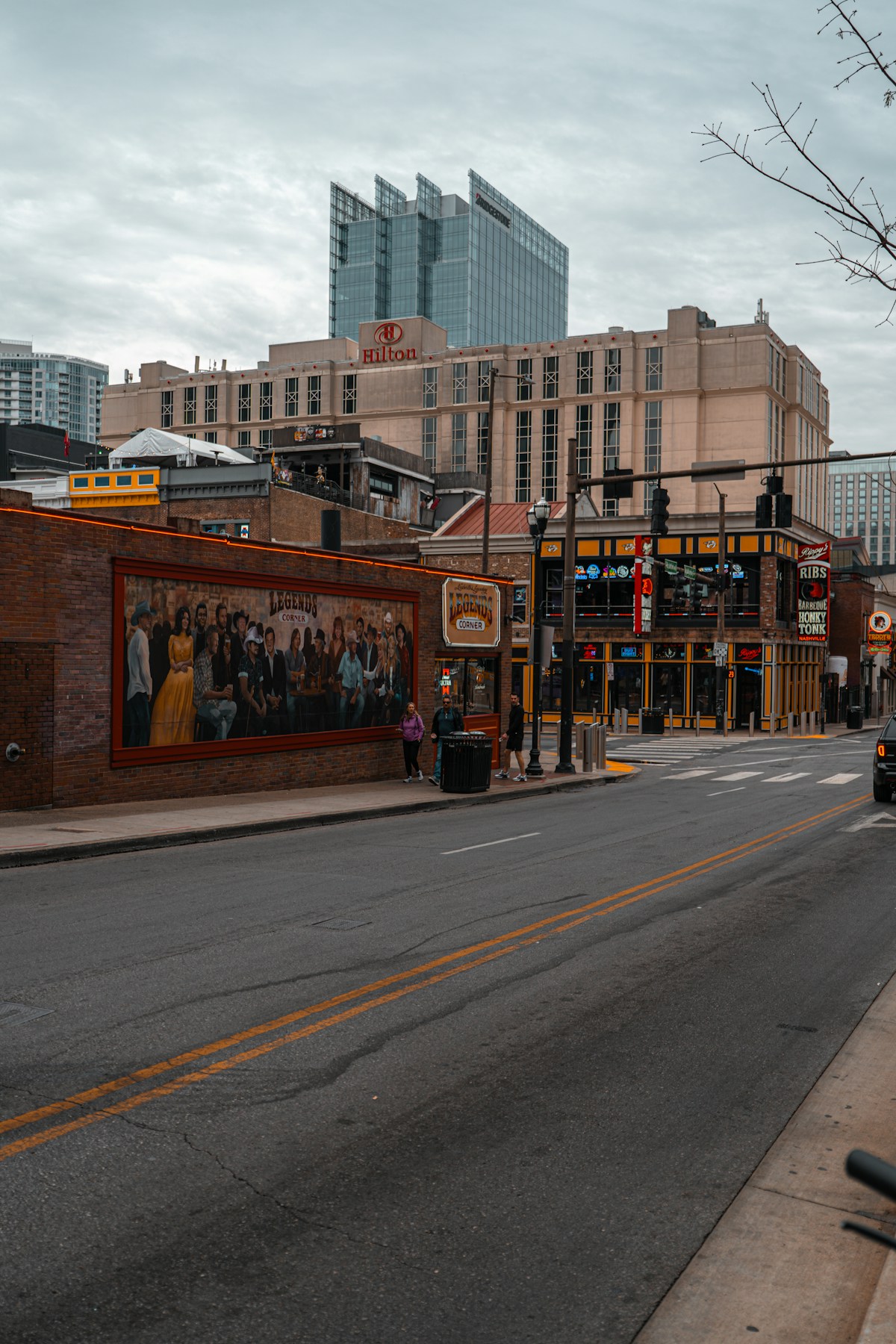
Nashville and Austin are the two cities that most consistently define American music culture, Southern hospitality, and a certain brand of creative, bar-hopping nightlife. Both are fast-growing, increasingly expensive, and beloved by visitors. But they’re musically, culturally, and geographically distinct.
Quick Verdict
| Category | Nashville | Austin |
|---|---|---|
| Music identity | Country, Americana | Everything, but esp. rock/indie |
| Hotel cost | $180–300/night (Broadway area) | $160–280/night |
| BBQ | Good | World-class (Franklin’s) |
| Hot Chicken | Definitive | Available but not native |
| Outdoor access | Limited within city | Greenbelt, Town Lake |
| Bourbon culture | Strong | More beer/cocktail-focused |
| Bachelorette capital | Extremely | Moderately |
| Days needed | 2–4 | 3–5 |
Search hotels in Nashville on Booking.com
Costs
Both cities have become notably more expensive since 2020 as remote workers and music industry growth pushed up accommodation and restaurant prices. Nashville’s Lower Broadway area - the entertainment heart of the city - commands premium hotel rates: the Graduate Nashville on 21st Ave S runs $190–280; the Bobby Hotel on 4th Avenue North is $220–320 with excellent rooftop views. For budget options, properties in Midtown or East Nashville (a 10-minute Uber from Broadway) run $140–190.
Austin’s hotel scene centres on 6th Street and the Congress Avenue corridor. The LINE Austin on Cesar Chavez has excellent design and rates of $170–260; the South Congress Hotel in the SoCo neighbourhood runs $200–300 and is well-placed for the area’s boutique shopping and restaurants. The Carpenter Hotel in South Austin is well-reviewed at $180–250.
Food is where Austin has the edge: a full brisket plate at Franklin Barbecue on East 11th runs $25–35 (budget $35–50 for a full feed) and is worth every cent if you’re willing to queue. Tacos from Juan in a Million on East Cesar Chavez run $3.50–5.50 each. For sit-down dining, Uchi on South Lamar (Japanese-Texas fusion, $90–130/person) is consistently excellent.
Nashville dining: Prince’s Hot Chicken (original Ewing Drive location or the newer airport/Nolensville Road spots) runs $8–14 for a proper plate. Arnold’s Country Kitchen on 8th Avenue South does meat-and-three for $12–15 - genuinely one of America’s great lunch traditions. For fine dining, The Catbird Seat on 1700 Division Street does a $150/person tasting menu and requires advance booking.
Live Music
Nashville’s honky-tonk strip on Lower Broadway is unlike anywhere else in the USA. A half-mile stretch of bars - Tootsie’s Orchid Lounge (the oldest, with Dolly Parton and Kris Kristofferson performing there in their early careers), Robert’s Western World, Layla’s Bluegrass Inn, Nudie’s Honky Tonk - all have live bands on multiple floors from noon until 3am with no cover charge. The musicians are professional (Nashville has a deep pool of session musicians) and the music is constant.
Beyond Broadway: the Bluebird Café in Green Hills ($15 reservation, required) is where Taylor Swift and Garth Brooks were discovered - songwriter rounds in a listening-room format. The Ryman Auditorium (the “Mother Church of Country Music”) has ticketed shows from $30–120. Station Inn in the Gulch is the city’s best small bluegrass venue.
Austin’s music scene is built around the Red River Cultural District and 6th Street. Stubb’s Amphitheater (2,000 capacity outdoor venue on Red River St) is one of the country’s great outdoor concert venues - $20–60 tickets for mid-size touring acts. The Continental Club on South Congress (opened 1955, cover $5–10) is the city’s most beloved live music room. Antone’s on Fifth Street is the temple of Austin blues. The annual South by Southwest (SXSW) festival in March draws 250,000 people and takes over the entire city with ticketed and free shows.
Food and Drink
Austin’s BBQ ecosystem is the best in the USA. Franklin Barbecue ($25–35/plate) sets the national standard for brisket - the queue starts forming around 7am for an 11am opening and sells out by 1pm most days. La Barbecue on East Cesar Chavez and Micklethwait Craft Meats on Cesar Chavez are excellent alternatives with shorter waits. For Tex-Mex, Matt’s El Rancho on South Lamar has been feeding Austin since 1952 ($15–25/plate); Veracruz All Natural on East César Chávez has some of the city’s best breakfast tacos ($3.50–5 each) from a trailer.
Nashville’s food identity is hot chicken and Southern comfort. Hattie B’s Hot Chicken (multiple locations, longest queues at the Midtown flagship) and Prince’s Hot Chicken are the big names - order “hot” or “extra hot” at your peril; “medium” is plenty for most people at $10–16 for a plate. The Pharmacy Burger Parlor & Beer Garden in East Nashville is the place for a proper burger and local craft beer ($15–22 for a full meal). Pinewood Social on Demonbreun Street is a great all-day café and bar with bowling lanes.
See city guides for Nashville and Austin.
Outdoor Life
Austin has meaningfully better in-city outdoor access. Barton Creek Greenbelt - a 12-mile natural area of hiking trails, swimming holes, and rock climbing within city limits - is the city’s backyard and genuinely excellent. Lady Bird Lake (actually a reservoir on the Colorado River) has a 10-mile hike-and-bike trail around its perimeter and kayak/SUP rentals from $20/hour at several spots. Zilker Park hosts ACL Music Festival each October and is a superb urban green space.
Nashville’s outdoor options are more limited within city limits. Radnor Lake State Natural Area in southwest Nashville has pleasant wooded trails. Percy Warner Park (the largest park in Tennessee, 3,400 acres) is a 15-minute drive from downtown with good trail running. For serious hiking or nature, Cumberland Gap National Historical Park and Fall Creek Falls State Park are 2–3 hours drive - Nashville works better as a city destination than an outdoor base.
Getting Around
Nashville has limited public transit. The WeGo bus system is functional but slow - most visitors rely on Uber ($12–20 for most city trips) or walking in the downtown Broadway area. Broadway itself is very walkable - the main honky-tonks, the Ryman, and the Country Music Hall of Fame are all within 10 minutes on foot from each other.
Austin has better transit coverage with the Capital Metro bus system ($1.25/ride) and the new Austin FC rail expansion underway. The Red Line commuter rail runs north from Downtown. The most tourist-relevant areas - Downtown, SoCo, and East 6th Street - are walkable between them or a short Uber. The 6th Street area is genuinely walkable for bar-hopping.
When to Visit
Nashville’s best times are spring (March–May, temperatures 60–75°F) and fall (September–November, 60–72°F). Summer is hot and humid (85–95°F) with occasional thunderstorms. December through February is quiet with lower hotel rates - Broadway is still lively but the crowds thin dramatically.
Austin’s climate is warmer and drier than Nashville. SXSW in March is the city’s biggest event (book accommodation a year ahead; rates triple). Spring (March–May) is beautiful with wildflower season on the Hill Country drives north and west of the city - hire a car to reach the Bluebonnet Trail and Fredericksburg at your own pace. Summer is brutally hot (95–105°F) and is genuinely unpleasant for outdoor activity. Fall (September–November) is excellent. Austin City Limits Music Festival (ACL) runs two October weekends in Zilker Park ($115–325 for weekend passes).
The Verdict
Nashville is the stronger choice if live music (specifically country and Americana) is your primary interest, you want an extremely walkable entertainment district, and you’re drawn to the Southern food traditions of hot chicken and bourbon. The honky-tonk strip is one of the great party streets in the USA.
Austin wins if you want better outdoor access within the city, world-class BBQ, more musical diversity, and a slightly younger, more eclectic creative culture. SXSW in March is a bucket-list experience if crowds don’t deter you.
Both deserve 3–4 days. Many visitors do both on the same Texas/South trip - Austin to Nashville is 1,000 miles by road (a serious drive) or a 2-hour flight for $80–150.
Read USA travel costs for budget planning. The 7-day Texas itinerary covers Austin and other Lone Star highlights in detail.
For guided tours in either city, browse the full USA tours selection. Compare flights to the USA and set up travel insurance before your trip.
More City Guides and Comparisons
- Nashville travel guide
- Austin travel guide
- New Orleans vs Charleston comparison
- Denver vs Salt Lake City comparison
- Vegan guide to Austin
- Digital nomad guide to Austin
- Digital nomad guide to Nashville
Plan Your Trip
✈️ Book your flights to the USA 🛡️ Get travel insurance 📱 Stay connected with an eSIM 🚗 Rent a car
Ready to Plan Your Trip?
Here are our top itineraries to help you plan your USA visit:
- 7 Days in Texas: Itinerary - Austin, San Antonio, and the Hill Country