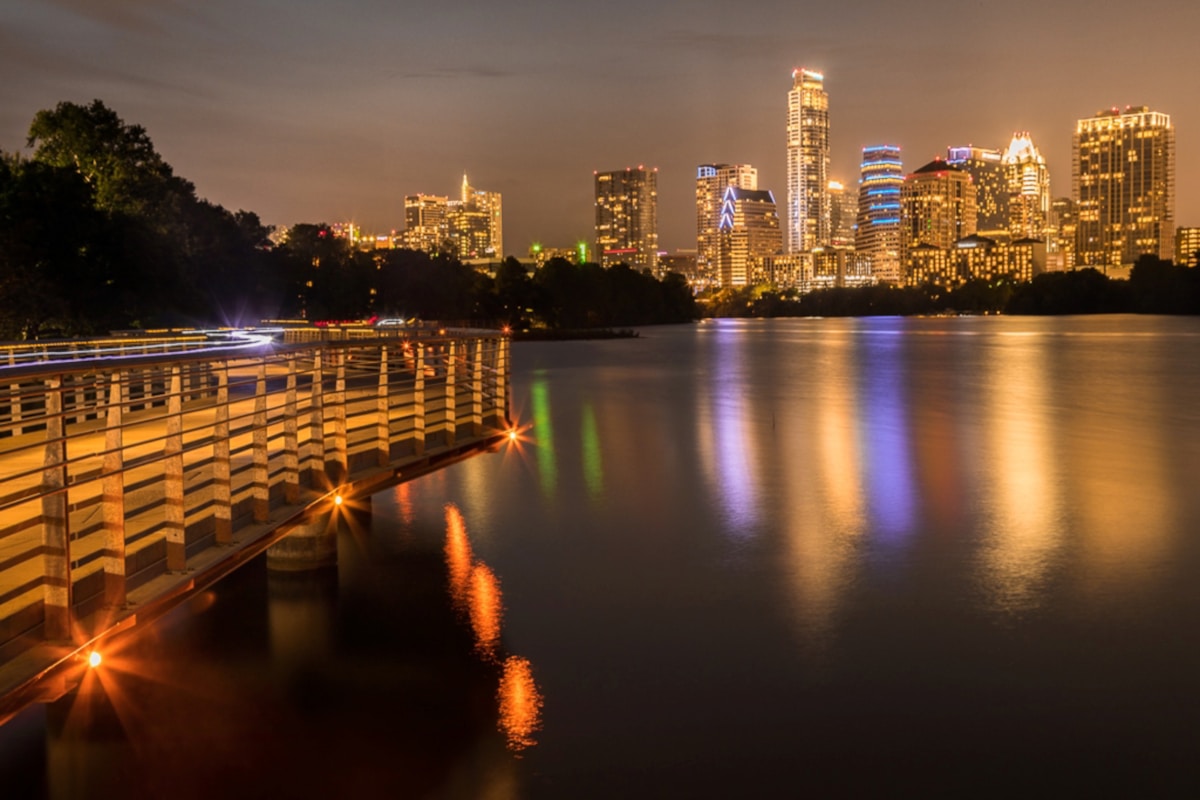
Austin: Live Music, Texas BBQ & 6th Street
Plan your Austin trip: live music on 6th Street, Texas BBQ, the Congress Avenue bat colony, hiking at Barton Springs, and where to stay.
Guides for Austin
Austin is the capital of Texas and its fourth-largest city, with approximately 978,000 residents in the city proper and 2.3 million in the metro area. It sits on the Colorado River (not the Colorado River that carved the Grand Canyon - a different river that shares the name) at the edge of the Texas Hill Country, where the flat Gulf Coastal Plain begins to rise into limestone hills. The city’s identity has been built on live music - particularly blues, country, and the country-rock hybrid that became Americana - technology (Dell, Apple, Tesla, Oracle, and hundreds of smaller companies have major presences here), and the University of Texas, which enrolls approximately 51,000 students.
Austin has grown faster than almost any major American city over the past decade, adding approximately 150–200 new residents per day at its peak. The growth has changed the city substantially, driven up housing and restaurant costs, and produced traffic that rivals Los Angeles on key corridors. It has also produced a hotel and restaurant scene that competes with cities twice its size.
Getting to Austin
By air: Austin-Bergstrom International Airport (AUS) sits 6 miles southeast of downtown. No rail connection exists as of 2026; rideshare to downtown costs approximately $20–$30; taxis approximately $30–$40. The CapMetro 20 Airport Flyer bus runs from the terminal to downtown for approximately $1.25 (as of 2026), with stops at the Republic Square transit hub, and takes approximately 40 minutes.
By car: Austin sits at the intersection of I-35 (north-south, the main arterial) and Highways 183 and 290. I-35 through downtown is consistently among the most congested corridors in the country; the elevated and lower decks both back up during commuting hours and on event days.
By train: Amtrak’s Sunset Limited connects Los Angeles to New Orleans via San Antonio, with a stop at Taylor, Texas (30 miles from Austin) - effectively no useful rail connection to Austin. The city lacks a meaningful intercity rail link.
Getting Around Austin
Austin’s public transit system (CapMetro) operates buses and a single commuter rail line (the MetroRail Red Line) connecting downtown to Leander, 30 miles north. Within central Austin, bus routes cover the main corridors but frequency is inconsistent. The majority of visitors rely on rideshare.
The best areas to navigate on foot: Downtown, the East Sixth Street corridor, South Congress Avenue, and the South Lamar area are all walkable within their zones. Walking between these zones (e.g., from downtown to South Congress) is approximately 1–1.5 miles - manageable in spring and fall, brutal in July and August heat.
CapMetro’s dockless bike-share and electric scooter operations (MetroBike) cover most of central Austin; app-based pricing from approximately $1 to unlock plus per-minute rates.
Where to Stay in Austin
Hotel Saint Cecilia (112 Academy Dr, South Austin) - Austin’s most distinctive hotel, named for the patron saint of music and set in a 1888 Victorian mansion with five bungalows and a pool. 14 rooms and suites total; from approximately $400 per night, rising to approximately $700+ during SXSW and ACL Festival. The vinyl collection, cocktail bar, and pool make it a destination in itself. Adults-only (21+). Book months in advance for festival weekends.
Search hotels in Austin on Booking.com
Hotel San José (1316 S Congress Ave) - a 1939 motor court converted into a 40-room boutique hotel by the same team as Hotel Saint Cecilia. More accessible at approximately $200–$300 per night. On South Congress Avenue, within walking distance of the best stretch of South Austin shops and restaurants. The courtyard bar is a reliable early-evening stop.
The Driskill Hotel (604 Brazos St, Downtown) - Austin’s grande dame, open since 1886 and occupying a full city block in the heart of downtown. The Romanesque stone facade, Tiffany stained-glass dome, and portrait-hung bar make it architecturally compelling. Rooms from approximately $240 per night; suites from approximately $500. Walking distance to the Capitol building and the Sixth Street entertainment district.
Aloft Austin Downtown (708 E 6th St) - a straightforward mid-range option on the east end of Sixth Street. Rooms from approximately $150 per night; convenient for the live music venues on East Sixth and Red River Cultural District. Rooftop bar.
Fairmont Austin (101 Red River St) - a large convention hotel adjacent to the Austin Convention Center. 1,048 rooms from approximately $220 per night. The Fairmont Gold floor (upper-level concierge rooms) is worth the upgrade if your budget allows; the pool deck is one of the best hotel pool areas downtown.
Where to Eat in Austin
Franklin Barbecue (900 E 11th St, East Austin) - the most acclaimed barbecue restaurant in the United States, arguably. The brisket is what national food media writes about; the ribs, pulled pork, and turkey are equally good. Line opens at 9am for 11am service. Bring a folding chair; waits of 2–3 hours on weekdays, 3–4 hours on weekends are standard. The line moves faster than expected once service begins. Plates are priced by weight: brisket approximately $32 per pound, ribs approximately $28 per pound (as of 2026). Sells out; once the meat is gone, service ends.
La Barbecue (2027 E Cesar Chavez St) - shorter waits than Franklin and a legitimate contender for Austin’s best brisket. The beef ribs (approximately $30 per pound) are exceptional. Opens at 11am or when the pit is ready; typically sells out by 1:30–2pm. Covered outdoor seating.
Uchi (801 S Lamar Blvd) - a Japanese-American restaurant that has driven Austin’s upscale dining conversation for two decades. Chef Tyson Cole’s tasting menu is approximately $110–$130 per person; à la carte options from approximately $15–$38. Reservations competitive; book 2–3 weeks ahead.
Torchy’s Tacos (multiple locations - the original is at 2809 S 1st St) - an Austin-born taco chain that remains genuinely good despite expansion. The Democrat (fried avocado, poblano aioli) and Trailer Park (fried chicken) are the signature tacos; approximately $5–$8 each (as of 2026).
Juan in a Million (2300 E Cesar Chavez St) - a Tex-Mex breakfast institution on the east side. The Don Juan migas plate (scrambled eggs with jalapeños, tomatoes, onions, and tortilla chips) is approximately $15. Cash preferred; opens at 7am on weekdays.
What to See in Austin
Texas State Capitol (1100 Congress Ave) - taller than the US Capitol in Washington DC (by 7 feet, a point of Texas pride). Free tours run from the south foyer Monday–Friday 8:30am–4:30pm, Saturday 9:30am–3:30pm. The grounds include monuments and the Bob Bullock Texas State History Museum next door (adults approximately $13, children approximately $8, as of 2026).
Barton Springs Pool (2201 Barton Springs Rd, Zilker Park) - a 3-acre spring-fed swimming pool within Zilker Park, maintained at approximately 68°F (20°C) year-round by natural springs. Adults approximately $9, children approximately $5 (as of 2026). Open daily (closed Thursday mornings for cleaning); lifeguards on duty. The most popular swimming spot in Austin; arrives crowded by 10am in summer.
Congress Avenue Bat Colony (Congress Avenue Bridge) - the largest urban bat colony in North America, approximately 1.5 million Mexican free-tailed bats roost under the Congress Avenue Bridge from March through October. Free to watch from the bridge or the lake banks; emergence typically happens 30–45 minutes after sunset. Bat Fest (August) celebrates the colony with a street festival; approximately $20 admission.
Sixth Street Entertainment District - the main live music corridor covers both the historic “Dirty Sixth” (W 6th St between Lamar and Congress, known for college bars and clubs) and the Red River Cultural District (E 6th St near Red River, with more serious live music venues). Emo’s, Stubb’s W-Amphitheater, and the Parish are the landmark venues. Most shows have a cover from approximately $5–$25.
Major Events
SXSW (South by Southwest) - held annually in March; approximately 300,000 attendees for 10 days of music, film, and technology conferences. Hotel rates increase 3–5x during SXSW; book 6–12 months ahead.
Austin City Limits Music Festival - held in Zilker Park over two weekends in October; approximately 75,000 people per day. Weekend passes from approximately $195; three-day passes from approximately $295 (as of 2026).
Practical Notes
Austin summers are intensely hot: average high in July approximately 98°F (37°C) with humidity. Spring (March–May) and fall (September–November) are the best seasons. Winters are mild with occasional freezing events - the city’s 2021 power crisis during a February freeze revealed infrastructure vulnerabilities that have been partially addressed since.
Sales tax in Austin is approximately 8.25%. Texas has no state income tax, which is a factor in the city’s continued population growth but is not directly relevant to most visitors.
Planning your Austin trip? Browse guided tours and activities in Austin to book tickets and experiences in advance. For getting around the wider region, car hire in the USA gives you the most flexibility. Visitors from outside the USA will also want to sort travel insurance and an eSIM for the USA before departure.
More Austin Guides
Book an experience
Top experiences in Austin
Explore the best tours and activities in Austin , with instant confirmation and free cancellation on most bookings.
Where to stay: Browse hotels in Austin on Booking.com; filter by dates, budget, and guest rating.