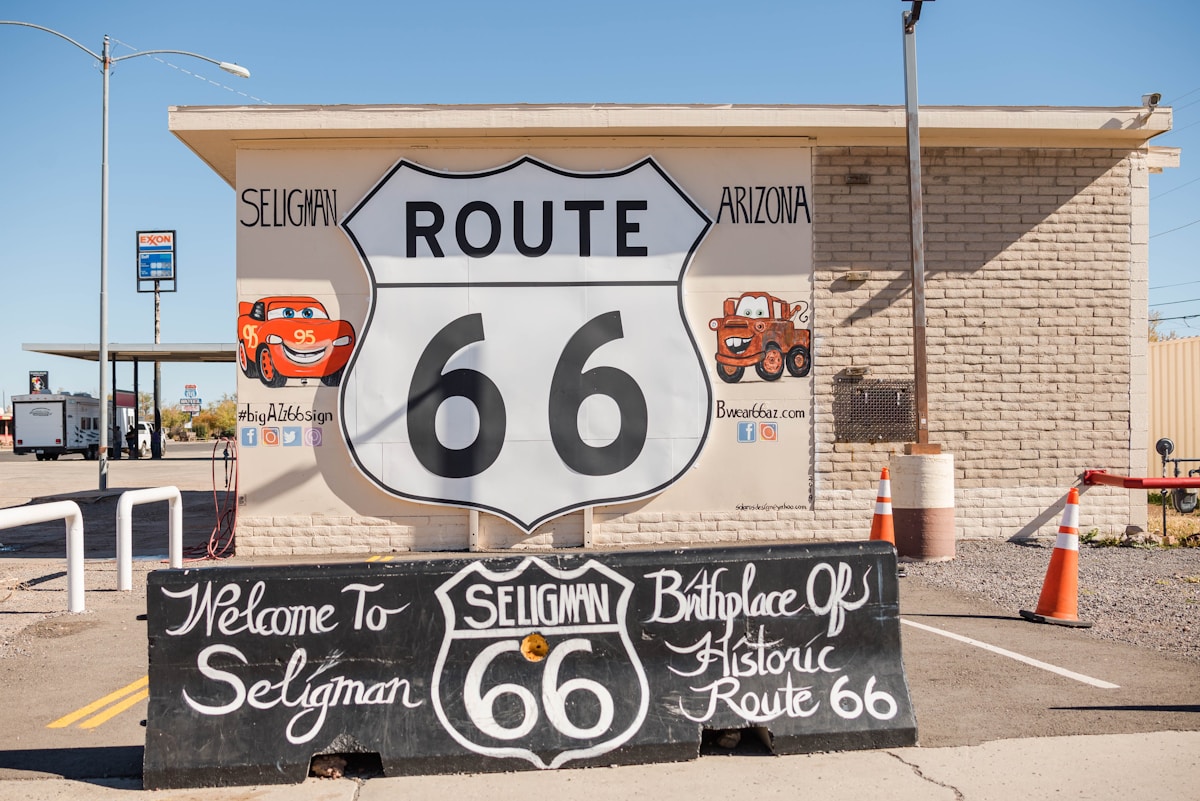
Route 66 turns 100 in November 2026, and this is the itinerary for doing it properly: 14 days, Chicago to Santa Monica, with daily mileage kept low enough to actually stop. The route’s whole value is in the stopping - the neon motels, the museums run by volunteers, the diners that have been frying the same breakfast since the Truman administration.
Search hotels in Chicago on Booking.com
This is the day-by-day plan. For the route’s history and driving logistics see our Route 66 road trip guide, for the full stop catalogue see best stops state by state, and pick up your car via car hire - book one-way Chicago to LA early, as drop fees (approximately $300–500) and availability worsen close to summer dates.
Budget tiers (two people sharing, per day)
- Budget - approximately $150–220/day: chain and independent motels $70–100, diner meals, free roadside attractions
- Mid-range - approximately $250–350/day: the historic neon motels $120–180, one sit-down dinner daily, paid museums
- Comfort - approximately $400+/day: La Posada-class historic hotels, steakhouse dinners, detour add-ons
All prices as of 2026.
Days 1–2: Chicago to Springfield, Illinois (~200 miles)
Start with a day in Chicago - the Art Institute (approximately $32) sits a block from the “Begin Route 66” sign on Adams Street. Breakfast at Lou Mitchell’s (since 1923, approximately $12–18), which has fed road-trippers since the route opened.
Day 2 heads southwest: the Gemini Giant spaceman in Wilmington (free), the Route 66 museum in Pontiac (free, donations), and a corn dog at Cozy Dog Drive In in Springfield (approximately $6) - the dish was invented here. Sleep at the Route 66 Hotel & Conference Center (budget, approximately $85) or the State House Inn (mid, approximately $130).
Days 3–4: St. Louis and the Missouri Ozarks (~320 miles)
Cross the Mississippi via the old Chain of Rocks Bridge (pedestrian only - drive I-270 alongside), then give St. Louis an afternoon: Gateway Arch tram approximately $19–22 (book at gatewayarch.com), frozen custard at Ted Drewes on the original alignment (approximately $6).
Day 4 runs the Ozarks: Meramec Caverns (approximately $30, the route’s oldest tourist trap in the best way), the 1930s Wagon Wheel Motel in Cuba (approximately $95–120 - book direct), or push to the Munger Moss Motel in Lebanon (approximately $80, one of the great neon signs).
Days 5–6: Kansas and Oklahoma (~290 miles)
Kansas keeps just 13 miles of Route 66 - stop at Cars on the Route in Galena (free), the tow truck that inspired Mater. Into Oklahoma: the Blue Whale of Catoosa (donation), then Tulsa’s art-deco downtown and Buck Atom’s neon cowboy. Dinner at Mother Road Market food hall (mains approximately $10–16).
Day 6 to Oklahoma City via the round barn at Arcadia (free) and POPS 66 with its 700 sodas (approximately $3 each). In OKC, the National Cowboy & Western Heritage Museum (approximately $15) is worth the detour; sleep in Bricktown (budget chains approximately $90; the Skirvin Hilton mid/comfort, approximately $160–200).
Days 7–8: Texas Panhandle to Tucumcari (~370 miles)
Day 7 is classic flatland 66: Lucille’s historic gas station near Hydro, the National Route 66 Museum in Elk City (approximately $7), then Texas - Cadillac Ranch outside Amarillo (free; bring spray paint) and dinner at The Big Texan (the free 72 oz steak challenge, or a normal ribeye approximately $35).
Day 8 is short on purpose: the MidPoint Café in Adrian, Texas (exact halfway, approximately $10 for pie and coffee), then into New Mexico to Tucumcari by mid-afternoon for the route’s best motel night - the Blue Swallow Motel (approximately $130–160, book months ahead for 2026) under the finest neon on the Mother Road. Walk the strip at dusk: Tee Pee Curios, the murals, the signs.
Days 9–10: New Mexico (~310 miles)
Day 9 takes the pre-1937 alignment loop north through Santa Fe - adobe plaza, the Palace of the Governors (approximately $12), green-chile lunch at The Shed (approximately $14–18); our Santa Fe guide covers an overnight if you’d rather split the day. Continue to Albuquerque and cruise Central Avenue’s neon. Stay at the restored 1937 El Vado Motel (approximately $140–180) and eat at the food-truck yard on site. → Find hotels in Albuquerque
Day 10 heads west past the Continental Divide to Gallup: the El Rancho Hotel (approximately $120–150) hosted Bogart, Hepburn, and Reagan during the Western-movie years, and its lobby alone justifies the stop.
Days 11–12: Arizona (~350 miles)
Day 11 is the route’s dense stretch: Petrified Forest National Park (approximately $25/vehicle - the only national park Route 66 passes through; book Petrified Forest tours or find hotels near Petrified Forest), the Wigwam Motel in Holbrook if you swap your overnight (approximately $90–120, sleep in a concrete tepee), Standin’ on the Corner in Winslow (free), and Meteor Crater (approximately $29). Comfort tier: La Posada in Winslow (approximately $160–230), the finest hotel on the entire route. Flagstaff for the night otherwise (budget approximately $90–120).
Day 12 runs the longest unbroken stretch of original 66: Williams, Seligman (route-revival ground zero - milkshake at Delgadillo’s Snow Cap, approximately $7), Hackberry General Store, into Kingman.
Days 13–14: The Mojave to the Pier (~350 miles)
Day 13: switchback over Sitgreaves Pass to Oatman, where feral burros own the street, then the desert - Roy’s Motel & Café sign at Amboy, the Bagdad Café of film fame at Newberry Springs. Overnight in Barstow (approximately $80–100) - or the Wigwam Motel in San Bernardino to bookend the tepees.
Day 14: Elmer’s Bottle Tree Ranch (donation), down Cajon Pass, and through Los Angeles traffic to the “End of the Trail” sign on Santa Monica Pier. Dinner overlooking the Pacific - you’ve earned it across 2,400 miles.
Shorter and longer versions
With 10 days, cut the Santa Fe loop (stay on the post-1937 alignment through Albuquerque) and merge days 3–4 and 13–14 - you lose the Ozark motels and the Mojave’s slow stops but keep every icon. With 21 days, add nights in Tulsa, Santa Fe, and Flagstaff, plus a two-day Grand Canyon detour from Williams - the single best add-on the route offers. Book Grand Canyon tours or find hotels near the Grand Canyon when adding this extension.
Booking checklist
- Car hire: one-way Chicago→LA, book 3+ months out - compare here
- Book first, in order: Blue Swallow (blueswallowmotel.com), Wigwam Holbrook, La Posada, El Rancho - then fill the gaps
- Centennial note: expect events and heavier traffic all 2026, peaking around the November 11 anniversary - verify dates at rt66centennial.org
- All prices as of 2026 - confirm before travelling
Route 66 Planning Guides
- Route 66 road trip guide
- Route 66 best stops by state
- Route 66 cost breakdown
- Route 66 motel guide
- Chicago travel guide
- Santa Fe travel guide
- Albuquerque travel guide
- Los Angeles travel guide
- Grand Canyon National Park guide
- Petrified Forest National Park guide
For Route 66 guided experiences - including Chicago architecture tours, Albuquerque balloon flights, and Grand Canyon day trips from Las Vegas - browse tours on GetYourGuide. Many operators pick up from strip motels along the way.
Book Your Trip
- Flights - Find the best fares to the USA · flights guide
- Travel Insurance - Get covered before you go · insurance guide
- eSIM - Stay connected from landing · eSIM guide
- Airport Transfers - Pre-book your transfer from your nearest major airport
- Car Rental - Compare prices across providers · car hire guide
- Tours & Activities - Browse the USA tours on GetYourGuide