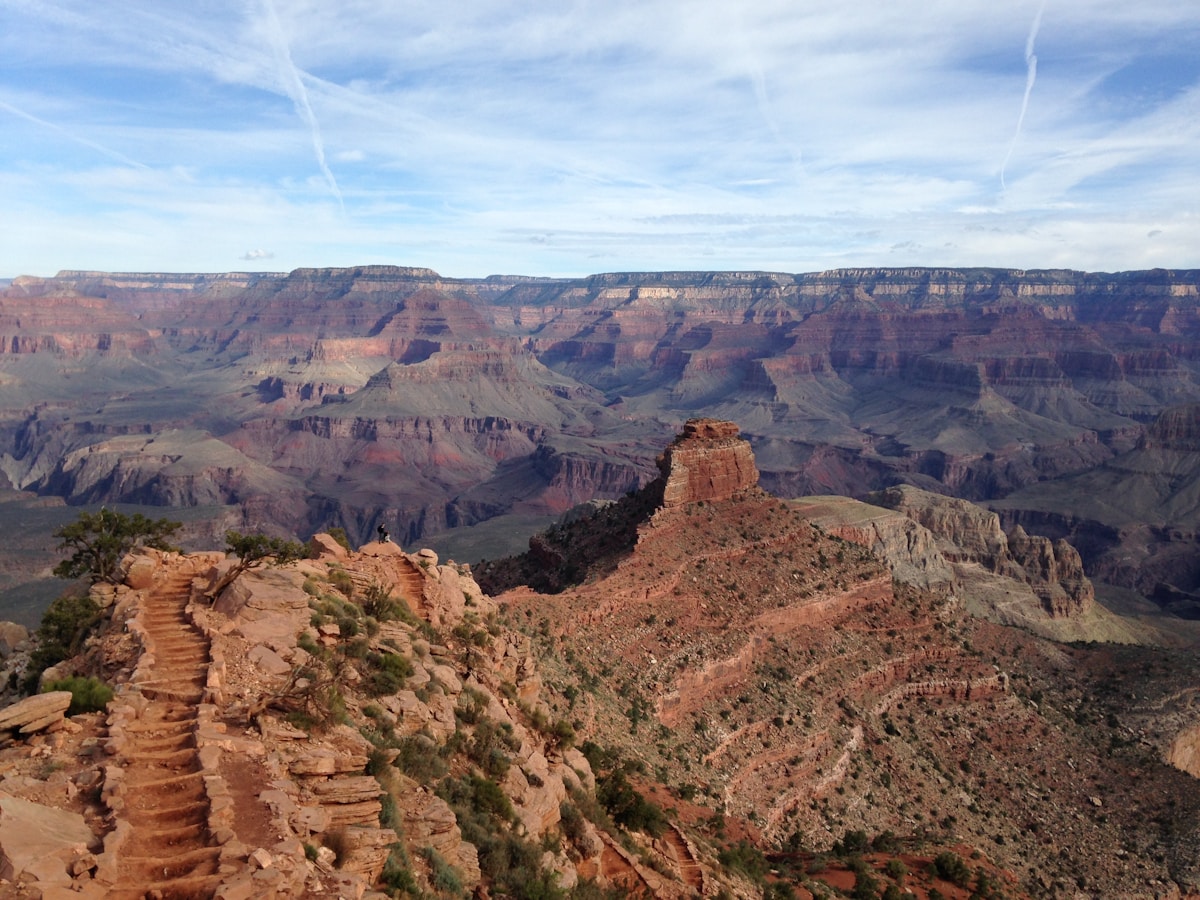
Few landscapes prepare you for the Grand Canyon. One mile deep, 277 miles long, and up to 18 miles wide, it is a geological record spanning nearly two billion years. Most visitors see only the South Rim - but that alone takes days to do properly.
Entry Fees and Passes
Entry to Grand Canyon National Park costs approximately $35 per vehicle as of 2026 (covers all occupants for seven days). Motorcycles pay approximately $30; individuals entering on foot or by bicycle pay approximately $20. An America the Beautiful annual pass ($80) covers entry to all US national parks and is worthwhile if you plan two or more park visits in a year.
The park is open year-round. The South Rim entrance gate operates 24 hours. Fee stations are staffed daily but you can pay online or at automated kiosks.
When to Visit
April through early June is the best window: trails are accessible, temperatures on the rim average 60–70°F, and summer crowds have not yet peaked. The inner canyon is already warm (80–90°F) in May - plan rim hikes or start at 5am for inner canyon descents.
July–August: Monsoon season brings afternoon thunderstorms and flash flood risk in canyon corridors. Rim temperatures are pleasant but the inner canyon exceeds 110°F. Avoid descending below the rim mid-day.
October–November: Excellent. Crowds thin, light is warm, temperatures are moderate. Some facilities reduce hours.
December–March: The South Rim stays open but icy conditions close some viewpoint roads. The North Rim closes mid-October through mid-May due to snow.
Getting There
From Phoenix, AZ (228 miles, approximately 3.5 hours by car via US-89 N and AZ-64 N): The most common approach for fly-in visitors. Rental cars from Phoenix Sky Harbor start from approximately $50/day. No direct scheduled bus service.
From Las Vegas, NV (278 miles, approximately 4.5 hours via US-93 E and AZ-64 N): Many tour operators run day trips from Las Vegas for approximately $80–150 per person, but a single day is barely enough. Self-driving is strongly recommended for a multi-day visit.
Shuttle within the park: Free park shuttles run on several routes along the South Rim year-round. The Hermit Road shuttle reaches viewpoints inaccessible by private car March through November. No shuttle goes to the canyon bottom.
Must-See Trails and Attractions
Bright Angel Trail - The most popular inner-canyon route. Starts at the South Rim (6,860 ft) and descends to the Colorado River (2,480 ft). Round trip to the river is 18 miles with 4,380 ft elevation change - a strenuous full day or overnight. The 3-mile Resthouse is a manageable 6-mile round trip (moderate, 2–3 hours) with emergency water available May–September.
South Kaibab Trail - Steeper and more exposed than Bright Angel, with broader views. The Ooh Aah Point turnaround is 1.8 miles round trip (easy, 1 hour). Cedar Ridge (3 miles round trip, moderate, 2 hours) gives excellent panoramas. No water sources below the rim - carry everything.
Rim Trail - 13 miles along the South Rim, paved in sections. Essentially flat. Walk any segment; the stretch from Mather Point to Bright Angel is 3 miles one way (easy, 1.5 hours) with continuous canyon views. Free shuttle connects the trailheads.
Hermit’s Rest Viewpoints - Eight overlooks along the 7-mile Hermit Road, reached by shuttle March–November. Pima Point and Hermits Rest are the most dramatic. Allow 2–3 hours for the full route.
Desert View Watchtower - 25 miles east of the main visitor area. A 70-foot stone tower built in 1932 with 360-degree views including the Colorado River. Free to enter. Open daily.
North Rim (seasonal) - A quieter, higher alternative (8,000+ ft). The North Kaibab Trail descends 14 miles to the river. Open mid-May to mid-October. The drive from the South Rim is 215 miles by road (4.5 hours).
Permits
Day hiking the South Rim and established trails requires no permit beyond park entry.
Overnight inner-canyon camping requires a backcountry permit from the Grand Canyon Backcountry Information Center. Applications open four months in advance on the first of each month via a lottery. Permits are competitive - apply as soon as the window opens. Booking: nps.gov/grca/planyourvisit/backcountrymain.htm. Permit fee: approximately $10 plus $8 per person per night as of 2026.
Rim-to-Rim hikes (South Rim to North Rim or reverse) require a backcountry permit for any overnight camps. The most common route is 21–24 miles over two to three days.
Mule trips to Phantom Ranch (canyon floor lodge) require separate reservations, often booked 12–15 months in advance: grandcanyonlodges.com.
Visitor Centers
Grand Canyon Visitor Center (South Rim, open daily 8am–6pm, extended hours in summer): Located near Mather Point, 0.5 miles from the south entrance station. This is the main orientation hub - pick up trail maps, speak to rangers, watch the 20-minute orientation film, and check backcountry permit availability. Free to enter with park admission.
Yavapai Geology Museum (open daily 8am–7pm in peak season): 1 mile east of the Visitor Center on Yavapai Point. Best views of the inner canyon from an enclosed observation room. Interactive geology panels explain the canyon’s 1.84 billion-year rock record. Operated by the Grand Canyon Conservancy; no extra charge.
Desert View Information Station (seasonal, typically May–October): 25 miles east of the main visitor area near the East Entrance. Small ranger station with limited exhibits but excellent canyon rim views. Combined visit with the Desert View Watchtower makes sense.
Backcountry Information Center (open daily 8am–noon, 1pm–5pm, adjacent to the Visitor Center): If you are planning overnight inner-canyon camping, this is where walk-up permits are issued on the day and permit application packages can be submitted in person.
Accommodation
In-park (South Rim):
- Bright Angel Lodge - Historic 1935 lodge directly on the rim. Rooms from approximately $120/night as of 2026; rim-facing cabins from approximately $225/night. Book 6–12 months ahead.
- El Tovar Hotel - The park’s premier lodge, built in 1905. Rooms from approximately $215/night; suites from approximately $425/night. Reservations open 13 months in advance.
- Phantom Ranch (canyon floor) - The only lodging below the rim. Hiker dorms approximately $60/person/night; private cabins approximately $165/night. Reached by hiking (9 miles) or mule. Must book a year or more ahead.
- Mather Campground (South Rim) - 327 sites, approximately $18–36/night. Reservations via recreation.gov.
Search hotels in Grand Canyon on Booking.com
Nearest town: Tusayan, AZ - 1 mile south of the south entrance. Several mid-range hotels (Best Western, Red Feather Lodge) from approximately $150–220/night in peak season. Cheaper than in-park rates but identical driving access.
Williams, AZ - 60 miles south. Historic Route 66 town with motels from approximately $80/night. The Grand Canyon Railway runs from Williams to the South Rim (approximately $67–230/person round trip as of 2026).
Packing and Preparation
The canyon’s biggest risk is heat and dehydration. The NPS “Turn Around, Don’t Drown” rule is real: more rescues happen on the inner-canyon trails than anywhere else in the park system.
- Carry 1 liter of water per hour of hiking; do not rely solely on hydration reservoirs (they can fail)
- Pack salty snacks - electrolyte loss causes hyponatremia, not just thirst
- Wear sun protection: hat, UV-blocking shirt, sunscreen SPF 50+
- Wear ankle-supporting footwear - trail runners minimum; the rocky descent is uneven
- Start inner-canyon hikes before sunrise in summer; return before 10am
- Download the NPS Grand Canyon app for offline maps - cell coverage is limited below the rim
- Check weather at weather.gov/fgz before any backcountry trip; monsoon flash floods can trap hikers in side canyons within minutes
Rangers recommend the “two-hour rule”: turn around at two hours regardless of how good you feel going down. Going down is easy; coming back up in heat is where emergencies happen.
For guided ranger-led and private tours of the Grand Canyon, browse available tours and experiences. Most visitors reach national parks by car - compare car hire options in the USA for the best rates. Travel insurance is especially worth having for remote park trips where emergency evacuation can be costly.
Nearby City Guides
The Grand Canyon is part of the Southwest road trip corridor - Phoenix to Sedona to the South Rim to Page (Horseshoe Bend) and on to Zion. For a direct comparison with Utah’s canyon parks, see our Grand Canyon vs Zion breakdown. The America the Beautiful pass covers South Rim entry and all other national park fees.