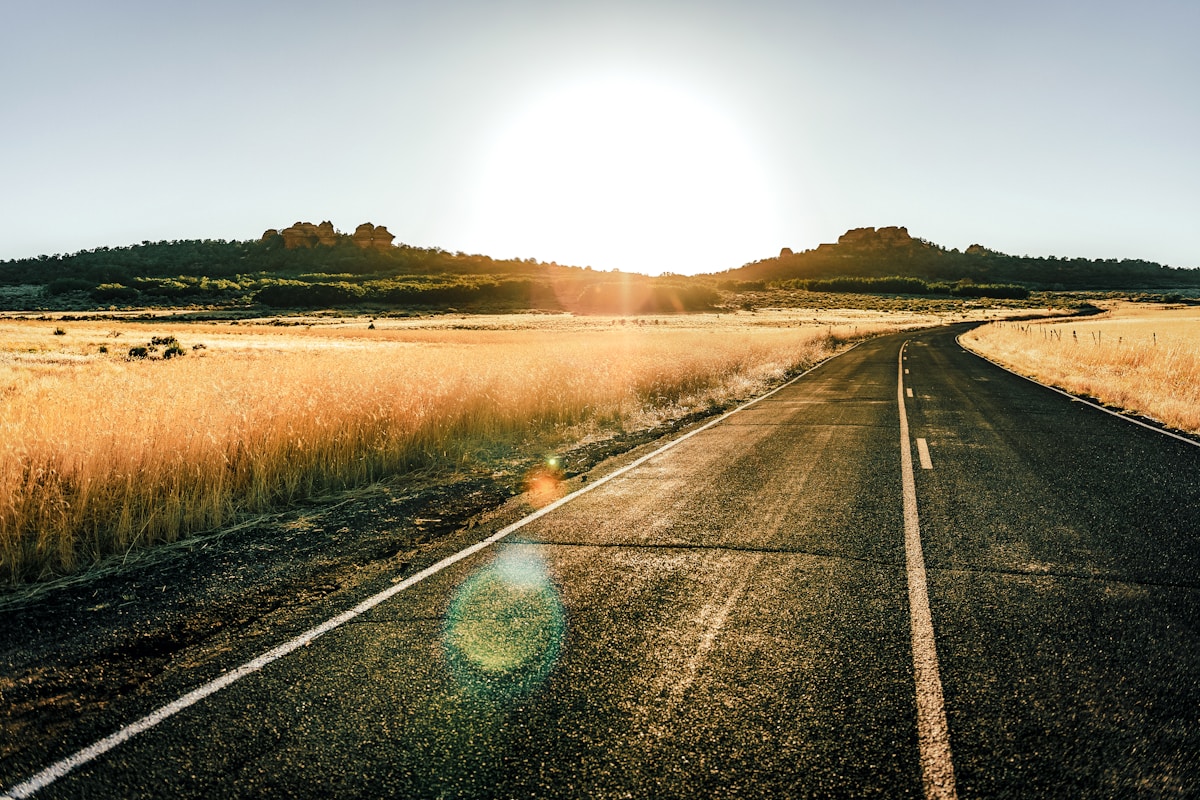
Route 66 Road Trip Guide
Total distance: approximately 2,400 miles (3,862 km) Driving time: 40–50 hours behind the wheel; most travellers allow 14–21 days Best season: April–May and September–October - temperatures are mild across all regions, summer heat in the Mojave can exceed 110°F (43°C)
You’ll need a car for the entire journey - hire a car in the USA and pick up at Chicago O’Hare or Midway, then drop off at Los Angeles or Santa Monica on the return.
Route 66 runs from Chicago’s Grant Park on Lake Michigan to the Santa Monica Pier in California. Opened in 1926, it crossed eight states - Illinois, Missouri, Kansas, Oklahoma, Texas, New Mexico, Arizona, and California - before being officially decommissioned in 1985. Large sections survive as frontage roads and historic byways, and the full journey remains one of the most culturally rich drives in the country.
Key Stops
Chicago, Illinois
The trip begins at the intersection of East Adams Street and South Michigan Avenue, a block from Millennium Park. Allow one or two nights in the city before heading west. The Art Institute of Chicago charges approximately $25 per adult (as of 2026), and the 360 Chicago observation deck on the Magnificent Mile charges approximately $22.
Where to stay: The Kinzie Hotel near the River North neighbourhood charges from approximately $180/night (as of 2026). Budget travellers find reliable options along suburban stretches of the original alignment in Joliet for under $90/night.
Search hotels in Chicago on Booking.com
Springfield, Illinois
Abraham Lincoln’s home city and the midpoint of the Illinois segment. The Abraham Lincoln Presidential Library and Museum charges approximately $15/adult (as of 2026). The Cozy Dog Drive In on South Sixth Street claims to be the birthplace of the corn dog and remains a Route 66 institution - lunch runs approximately $10–$15.
Where to stay: The Inn at 835, a restored 1909 arts-and-crafts building, charges from approximately $150/night (as of 2026).
St. Louis, Missouri
The Gateway Arch National Park charges approximately $15 for the tram ride to the top (as of 2026); the park grounds are free. Ted Drewes Frozen Custard on Chippewa Street, open since 1929, is a mandatory stop - concretes (thick frozen custard sundaes) cost approximately $5–$8.
Where to stay: The Moonrise Hotel in the Delmar Loop neighbourhood charges from approximately $160/night (as of 2026). → Search hotels in St. Louis
Tulsa and Oklahoma City, Oklahoma
The Cyrus Avery Centennial Plaza in Tulsa has the famous east-meets-west Route 66 bronze sculpture. Oklahoma City’s Bricktown district offers waterfront dining and the First Americans Museum, which charges approximately $15/adult (as of 2026).
Where to stay: Both cities have chain hotels along historic alignment roads from approximately $80–$120/night (as of 2026).
Amarillo, Texas
The Cadillac Ranch - ten Cadillacs half-buried nose-first in a wheat field west of Amarillo - is free to visit and open every day. The Big Texan Steak Ranch offers its famous 72-oz steak challenge: free if you finish in under an hour, otherwise approximately $72 (as of 2026).
Where to stay: Chain motels along I-40 from approximately $70/night (as of 2026).
Santa Fe and Albuquerque, New Mexico
Santa Fe sits slightly off the main alignment but is worth the detour. The Palace of the Governors on the Plaza charges approximately $12/adult (as of 2026). Albuquerque’s Old Town is free to walk; the Indian Pueblo Cultural Center charges approximately $12/adult (as of 2026). Green chile cheeseburgers at the Owl Bar in San Antonio, New Mexico - a small detour south - are a regional classic at approximately $10.
Where to stay: Santa Fe has historic inns from approximately $180/night; Albuquerque chains along Central Avenue from approximately $80/night (as of 2026).
Williams and Grand Canyon, Arizona
Williams is the last town on Route 66 before the Grand Canyon South Rim (approximately 60 miles north). The Grand Canyon National Park entrance fee is approximately $35/vehicle (as of 2026), valid for seven days. Book Grand Canyon tours from Williams or the South Rim - a popular add-on for Route 66 travelers. The historic Havasu Falls hike within the Havasupai reservation requires advance permits, typically booked out months ahead.
Where to stay: Williams has several Route 66-era motor courts from approximately $90/night. Grand Canyon Village lodges inside the park start from approximately $130/night for Bright Angel Lodge but book out many months in advance (as of 2026). → Find hotels near the Grand Canyon
Flagstaff, Arizona
Flagstaff sits at 7,000 feet and is one of the most pleasant stops on the western segment. Lowell Observatory, where Pluto was discovered, charges approximately $20/adult (as of 2026). The historic downtown along Route 66 has independent restaurants and microbreweries.
Where to stay: The Hotel Monte Vista, open since 1927, charges from approximately $120/night (as of 2026). → Search hotels in Flagstaff
Kingman and the Mojave, Arizona and California
The stretch from Kingman through Oatman to the California border is one of the most intact segments of original road - including the twisting climb through the Black Mountains to the old gold-mining town of Oatman, where feral burros roam the main street. Summer temperatures here regularly exceed 100°F (38°C); plan to cross in morning hours if travelling June–August.
Los Angeles and Santa Monica, California
The route ends at the Santa Monica Pier, where a small Route 66 End of the Trail sign marks the terminus. Santa Monica State Beach is free; parking at the pier charges approximately $2–$3/hour (as of 2026).
Road Conditions and Permits
No special permits are required to drive Route 66. Navigation requires attention: the historic alignment is not a continuous highway and frequently diverges from I-40 and I-44. Paper maps from the Route 66 Association of Illinois or a GPS-loaded offline map (MAPS.ME or Gaia GPS) is strongly recommended for sections through eastern Arizona and New Mexico where signage is sparse. Some original pavement sections in eastern New Mexico are unpaved for short stretches and passable in a standard 2WD vehicle in dry conditions but muddy after rain.
The Oatman road in Arizona (National Old Trails Highway) is paved but narrow with sharp switchbacks - not suitable for large RVs or vehicles over 40 feet.
Fuel Cost Estimate
Fuel prices vary significantly across the route - California prices run approximately $0.40–$0.70/gallon higher than Midwest prices (as of 2026). A vehicle averaging 25 mpg over 2,400 miles uses approximately 96 gallons. At a blended average of approximately $3.60/gallon (as of 2026), total fuel cost runs approximately $345. Larger trucks and RVs averaging 14–18 mpg should budget approximately $480–$620 for fuel.
Carry extra fuel between Seligman and Kingman in Arizona and through stretches of New Mexico and Oklahoma where gas stations are 30–50 miles apart.
Budget Summary (per person, two sharing)
| Category | Estimate |
|---|---|
| Accommodation (14 nights) | approximately $700–$1,400 |
| Fuel (half-share, 2,400 miles) | approximately $175 |
| Food | approximately $40–$60/day |
| Attractions and park fees | approximately $100–$150 |
| Total (14 days) | approximately $1,500–$2,400 |
Practical Notes
- Fill the tank whenever it drops below half in rural sections of Oklahoma, Texas, and New Mexico.
- The National Parks Annual Pass (approximately $80 as of 2026) covers Grand Canyon entry and pays for itself if you plan to visit multiple parks on the same trip.
- Cell coverage is unreliable between Amarillo and Kingman - download offline maps before leaving each major city.
Route 66 Guides
- Route 66 14-day itinerary - Chicago to Santa Monica
- Best Route 66 stops by state
- Route 66 cost guide
- Route 66 motel guide
- Chicago travel guide
- Albuquerque travel guide
- Los Angeles travel guide
- Many Route 66-specific motels and diners are cash-only; carry small bills.
Nearby City Guides
Plan Your Trip
✈️ Book your flights to the USA 🛡️ Get travel insurance 📱 Stay connected with an eSIM 🚗 Rent a car