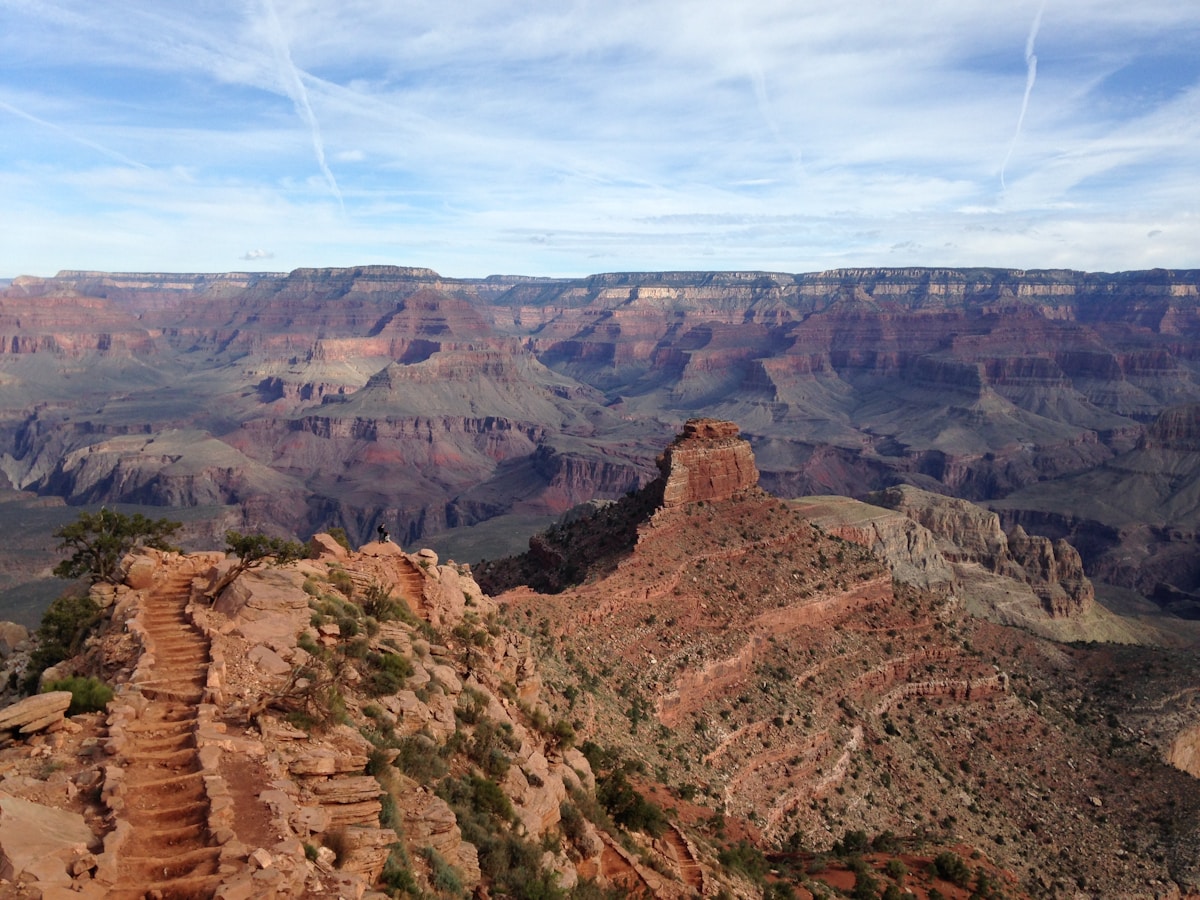
The Colorado Plateau contains the highest concentration of national parks and monuments in the United States. This 14-day itinerary covers the six major Utah/Arizona parks from Arches south to the Grand Canyon, with enough time at each to hike beyond the most crowded viewpoints. Total driving distance is approximately 1,100 miles.
Essential Logistics
America the Beautiful Pass: Approximately $80 as of 2026. Covers all six park entrances on this route (total without the pass: approximately $210). Buy online at store.usgs.gov before you leave.
Rental car: A standard 4-door sedan handles all paved roads on this route. An AWD or high-clearance vehicle opens access to the Needles District dirt roads in Canyonlands and the Island in the Sky’s White Rim Road (requires high clearance or 4WD). Hire a car in the USA - pick up at Salt Lake City or Grand Junction and plan a one-way drop in Phoenix or Las Vegas to avoid backtracking.
Base logic: Moab is the best base for Arches and Canyonlands. Torrey for Capitol Reef. Bryce Canyon City (Tropic) for Bryce. Springdale for Zion. Kanab bridges Zion and the North Rim. Tusayan or Williams for the South Rim.
Reservations: Arches National Park requires a timed entry permit April–October (approximately $2, at recreation.gov). Reserve as soon as your dates are set - these fill.
Budget Tiers
Budget: Under Canvas Moab (glamping, 10 minutes from Arches) ~$200–$280/night. Bryce View Lodge ~$100–$140/night. Zion Park Motel (Springdale) ~$130–$170/night. Yavapai Lodge Grand Canyon South Rim ~$180–$240/night.
Search hotels in Moab on Booking.com
Mid-range: Hoodoo Moab Curio Collection ~$200–$270/night. The Lodge at Bryce Canyon ~$220–$280/night. Desert Pearl Inn Springdale ~$180–$240/night. El Tovar Hotel Grand Canyon ~$220–$350/night.
Luxury: Amangiri (Canyon Point, near Lake Powell) ~$2,000–$3,500/night - extraordinary. Zion Lodge (inside the park) ~$250–$380/night. The Canyon Suites Grand Canyon ~$350–$500/night.
Days 1–3: Arches National Park (Moab, Utah)
Book Arches tours for guided hikes to Delicate Arch and the Fiery Furnace. Find hotels near Arches in Moab. Fly into Grand Junction, Colorado (~1.5 hours from Moab) or Salt Lake City (~4 hours). Moab is the base.
Day 1: Enter Arches and drive the 36-mile round-trip scenic drive to the Windows Section. The North and South Windows, Turret Arch, and Double Arch are all within a 2-mile radius. The Balanced Rock pull-off is a 5-minute walk from the road. Sunset at the Fiery Furnace viewpoint.
Day 2: Delicate Arch - the 3-mile round-trip trail climbs 480 feet to the most recognizable arch in the park. Allow 2.5–3 hours. Arrive before 8am in summer to beat the heat and crowds. Go at sunset for photography; the arch glows orange-red as the La Sal Mountains appear snow-capped behind it.
Day 3: Devil’s Garden Trail at the north end of the park - the full 7.8-mile loop passes Landscape Arch (the longest natural arch in North America at 306 feet), Partition Arch, and Double O Arch. The primitive route between Double O and the trailhead requires scrambling over sandstone slickrock with cairn navigation. Highly recommended.
Evening in Moab: Dinner at Moab Brewery (Main Street) - approximately $16–$24 for mains. Eddie McStiff’s for a more relaxed option, approximately $14–$22.
Days 4–5: Canyonlands National Park (Moab base, 35 miles from town)
Book Canyonlands tours for 4WD White Rim tours and Needles hiking. Find hotels near Canyonlands in Moab. Canyonlands has three districts accessible by road (Island in the Sky, Needles, The Maze) and a fourth accessible only by river or very long foot travel. Island in the Sky is most accessible.
Day 4 - Island in the Sky: Mesa Arch (0.5-mile loop) is the classic sunrise photograph - the arch frames the canyon 1,000 feet below. Arrive 30 minutes before sunrise. Grand View Point Trail (1.8 miles round trip) has the broadest view of the canyons. Upheaval Dome (1.8 miles round trip to the first viewpoint) is either an ancient meteor impact or a collapsed salt dome - geologists still debate it.
Day 5 - Needles District (75 miles from Moab): More remote than Island in the Sky. The Chesler Park/Joint Trail Loop (11 miles, strenuous) passes through a large meadow ringed by striped spires and through Joint Trail - a narrow slot in the rock barely wide enough to squeeze through with a daypack. Alternatively, the Confluence Overlook Trail (10 miles round trip) looks down at the confluence of the Green and Colorado Rivers, 1,000 feet below.
Day 6: Moab to Capitol Reef (120 miles, ~2 hours)
Drive west on US-191 and UT-24 through the San Rafael Swell to Torrey. Book Capitol Reef tours or find hotels near Capitol Reef in Torrey. Capitol Reef is an undervisited park that deserves more attention. The Waterpocket Fold - a nearly 100-mile warp in the earth’s crust - runs the length of the park.
Afternoon: The Scenic Drive (UT-24 through the park is free; the 9-mile Capitol Reef Scenic Drive inside the park costs the standard park entrance fee). Orchards in the Fruita area grow apples, peaches, and cherries - during harvest season (summer and fall), the NPS allows visitors to pick fruit for personal consumption at approximately $1.75/lb. The Capitol Gorge Trail (2 miles round trip) through a narrow canyon to the Pioneer Register - names carved by Mormon settlers on sandstone in the 1880s.
Sleep in Torrey: Capitol Reef Resort ~$200–$280/night, or the Rim Rock Inn ~$130–$160/night.
Days 7–8: Bryce Canyon National Park (95 miles from Torrey, ~1.5 hours)
Book Bryce Canyon tours for guided hoodoo hikes and astronomy programs. Find hotels near Bryce Canyon.
Day 7: The Rim Trail connects all major viewpoints. Sunrise Point, Sunset Point, Inspiration Point, and Bryce Point are the four main amphitheater viewpoints, each slightly different. Sunset at Bryce Point is extraordinary. The Queens Garden / Navajo Loop combination (5.5 miles) descends into the hoodoos from Sunrise Point and returns via the switchbacks at Wall Street - the standard 3–4 hour loop that most visitors come to do. Worth every step.
Day 8: Rainbow Point (end of the 17-mile park road, 9,105 feet) for a different perspective - the hoodoos below are more spread out and the view extends 100 miles on a clear day. The Riggs Spring Loop (8.8 miles from Rainbow Point) is the best all-day hike in the park, dropping from the plateau rim through forests of ponderosa pine and meadow to springs and back. Essentially no crowds compared to the main amphitheater.
Night sky: Bryce Canyon is designated as a Dark Sky Park. The Milky Way is visible most nights from April–November from any of the main viewpoints - no special equipment needed.
Days 9–10: Zion National Park (86 miles from Bryce, ~1.5 hours)
Book Zion tours for guided Angels Landing and Narrows experiences. Find hotels near Zion in Springdale.
Day 9: Take the shuttle from the Visitor Center to the Temple of Sinawava for The Narrows. Enter the Virgin River canyon and walk upstream for 1–2 miles depending on water levels. Water shoes or rented neoprene boots from Springdale outfitters (approximately $35–$45) are essential from October to May and valuable the rest of the year. The depth of the narrows blocks direct sunlight except at midday - the light on the canyon walls is best in morning or late afternoon.
Day 10: Angels Landing via the West Rim Trail. The permit system (approximately $6/person) requires advance lottery at recreation.gov - reserve 60+ days ahead for peak season. Scout Lookout (4.4 miles from the canyon floor) is accessible without a permit and gives equivalent views across Zion Canyon. The Emerald Pools trails (Lower, Middle, and Upper - 0.6, 1.7, and 3 miles respectively) are gentler options for a half-day.
Canyon Overlook Trail (1 mile round trip, no permit) starts just east of the Zion-Mt. Carmel Tunnel for views over the slickrock terrain.
Days 11–12: Kanab and Grand Canyon North Rim
Day 11 - Kanab (60 miles from Springdale): Kanab is a small town that serves as the hub for Utah’s “Grand Staircase” - the geological layers exposed from Bryce at the top down to the Grand Canyon at the bottom. White Pocket and Coyote Buttes are nearby for photographers. Coral Pink Sand Dunes State Park (approximately $15/vehicle) is 12 miles north of Kanab.
The Grand Canyon North Rim is 80 miles south of Kanab (approximately 1.5 hours) via US-89A and AZ-67. Note: The North Rim is open mid-May through October only (road closes for winter). If visiting outside these months, skip the North Rim and proceed directly to the South Rim from Kanab via US-89.
North Rim Lodge (approximately $200–$300/night - book months ahead) sits on the rim with canyon views from the dining room. The Bright Angel Point trail (0.5 miles from the lodge) is a paved walk to a promontory. The North Kaibab Trail descends 14 miles to the Colorado River - day hikers are advised to go no more than 4.7 miles to Roaring Springs for a strenuous but manageable round trip (allow 5–6 hours).
Day 12: Spend a full day at the North Rim. The Cape Royal Road (23 miles from the lodge) is a scenic drive to the eastern end of the North Rim with multiple pull-offs and the Angels Window arch.
Days 13–14: Grand Canyon South Rim (215 miles from the North Rim, ~4 hours)
Book Grand Canyon tours for helicopter flights, mule rides, and guided rim walks. Find hotels near the Grand Canyon - El Tovar and Bright Angel Lodge book out months ahead.
Drive south on AZ-67, east on US-89, and west on AZ-64. The South Rim (more accessible, more visited) has more facilities and more viewpoints than the North Rim.
Day 13: The South Rim Visitor Center and Mather Point for orientation. Walk the Rim Trail west to Hermit’s Rest (7 miles one way - free shuttle back) or east to Desert View (25 miles by car). The Yavapai Geology Museum at Yavapai Point (free) has the best geological explanation of canyon formation.
Day 14: Partial descent on the Bright Angel Trail or South Kaibab Trail. The 3-mile Resthouse on the Bright Angel Trail (1,100 feet descent, with two water and shade stops) is the recommended day hike turnaround. The South Kaibab is steeper and has no water - go early, descend only as far as Skeleton Point (6 miles round trip, 2,040 feet descent) if attempting it.
Fly home from Las Vegas (280 miles west, ~4 hours) or Phoenix (230 miles south, ~3.5 hours).
What to Skip
The Maze (Canyonlands): The most remote district requires a high-clearance 4WD, experience with technical navigation, and multiple days of backcountry camping. It is magnificent but not viable within this 14-day timeline.
Grand Canyon mule rides: Approximately $200–$600 per person depending on length as of 2026. Comfortable but expensive, and requires advance booking of 6+ months for overnight trips.
Zion Helicopters and aerial tours: Added over-flight noise is actively resented by other visitors and the fee ($200–$300 per person) is high relative to what you see.
Booking Tips
- Arches timed entry permit: available at recreation.gov. Buy as soon as dates are set - they release 3 days in advance as well, but demand is high.
- Zion Angels Landing permit: lottery opens 60 days ahead. Apply for multiple days to increase chances.
- Haleakala and Zion Lodge/El Tovar: book 6–12 months ahead for peak summer.
- North Rim Lodge and Kaibab Lodge: book when the reservation system opens (usually in January for the full season). Walk-ins rarely work.
- April–May and September–October offer the best parks experience: snow has cleared from higher elevations, temperatures are comfortable for hiking, and the peak summer crowds (July–August) are absent.
- For guided day tours from Las Vegas into the Grand Canyon, or small-group van tours of the Utah parks, browse options on GetYourGuide - particularly useful if you want to cover multiple parks without a rental car.
Related Guides
- Utah’s Mighty 5 road trip guide
- American Southwest road trip guide
- 10 days in the American Southwest itinerary
- Grand Canyon National Park guide
- Zion National Park guide
- Arches National Park guide
- America the Beautiful Pass guide
- Hiking in the USA
- Moab travel guide
- Las Vegas travel guide
- Phoenix travel guide
- Salt Lake City travel guide
Book Your Trip
- Flights - Find the best fares to the USA · flights guide
- Travel Insurance - Get covered before you go · insurance guide
- eSIM - Stay connected from landing · eSIM guide
- Airport Transfers - Pre-book your transfer from your nearest major airport
- Car Rental - Compare prices across providers · car hire guide
- Tours & Activities - Browse the USA tours on GetYourGuide