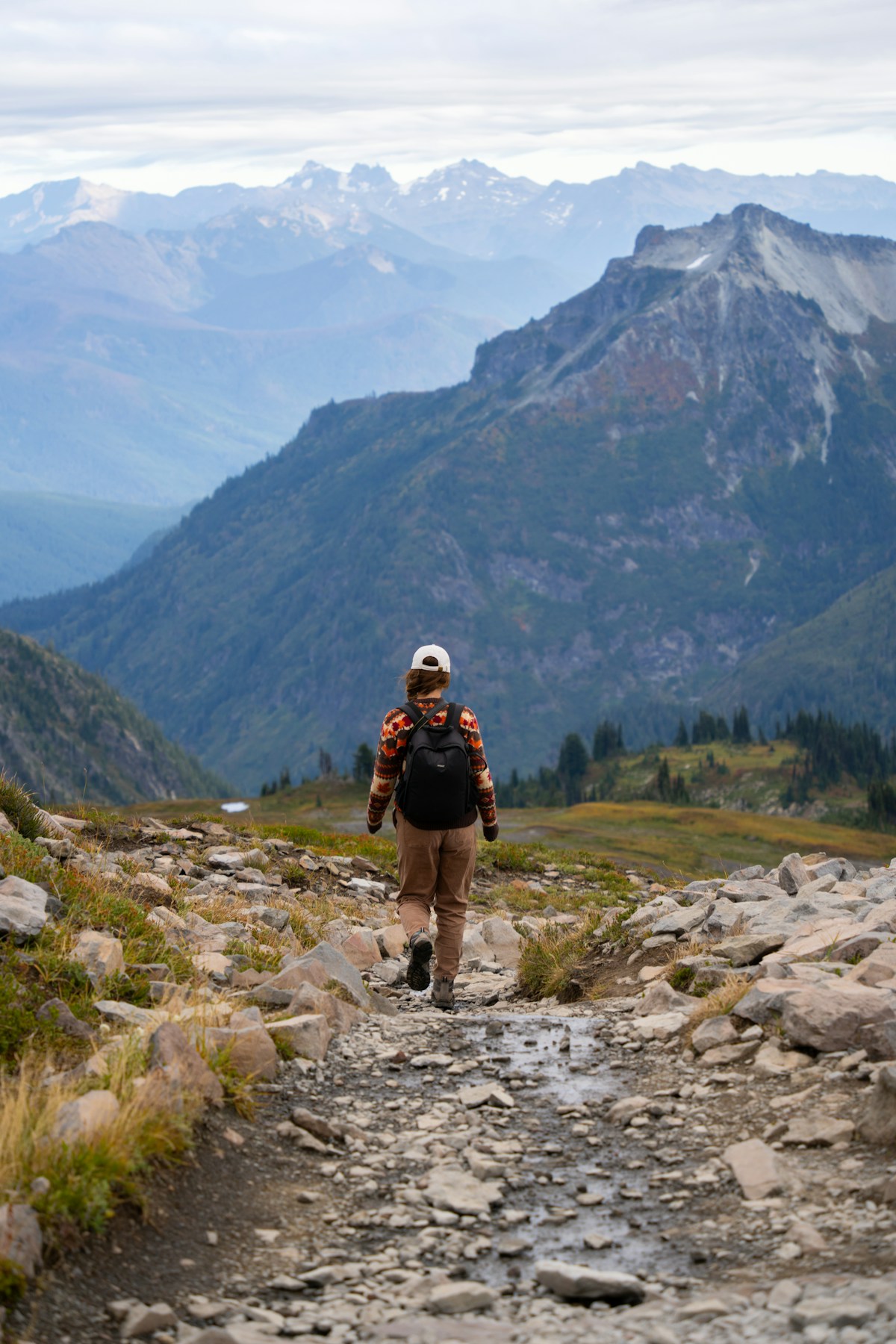
The US trail system is one of the most extensive in the world, spanning desert canyon, alpine tundra, Pacific coast, and Appalachian hardwood forest. The scale makes planning essential - the right preparation varies significantly between a Grand Canyon day hike in July and a White Mountains traverse in October. This guide covers the major trail systems, permit requirements, and practical logistics for planning serious hikes across the country.
Appalachian Trail
The Appalachian Trail (AT) runs approximately 2,190 miles from Springer Mountain, Georgia, to Mount Katahdin, Maine. A complete thru-hike takes 5–7 months. Most hikers approach it as day sections or weekend trips.
Best accessible sections:
The White Mountains, New Hampshire - The Presidential Traverse crosses Mount Washington (6,288 ft) and several other 4,000-foot peaks in 20–25 miles. It is the most challenging and rewarding section of the AT accessible as a multi-day backpacking trip. Mount Washington’s summit weather changes with exceptional speed - plan for all conditions year-round. Best season: late June through September.
Shenandoah National Park, Virginia - Book Shenandoah tours for guided hikes along the AT. The AT runs 101 miles through Shenandoah, largely along Skyline Drive with manageable elevation changes. The Hawksbill Summit section (4 miles round trip) is the highest point in the park at 4,050 feet. Front Royal entrance to the park is approximately 75 miles from Washington DC, making Shenandoah accessible for East Coast weekend hikers. No AT permit required; Shenandoah backcountry permits are free.
Great Smoky Mountains, Tennessee/North Carolina - Book Great Smoky Mountains tours for guided AT hikes and waterfall walks. The AT traverses the spine of the Smokies for 71 miles. Clingmans Dome (6,643 ft) is the highest point on the entire AT. The Smokies section requires a backcountry permit for overnight camping - approximately $4/night as of 2026, booked through the park’s reservation system.
Pacific Crest Trail
The PCT runs 2,650 miles from the Mexican border at Campo, California, to the Canadian border at Manning Park, British Columbia. Section hiking is common given the trail’s length.
Best accessible sections:
John Muir Trail, Sierra Nevada, California - The JMT covers 211 miles from Yosemite Valley to Mount Whitney, overlapping with the PCT for much of its length. This is arguably the finest long-distance trail in the US - granite peaks, alpine lakes, and sustained elevation above 10,000 feet. JMT permits are highly competitive; the Yosemite Valley to Mount Whitney direction requires a wilderness permit for the Yosemite section, applied for via lottery beginning in February for the following summer season. Apply early.
Cascade Range, Washington - The PCT through Washington’s North Cascades is technically demanding and scenically exceptional. The Goat Rocks Wilderness section (approximately 35 miles through the southern Cascades) is accessible as a 3–4 day backpacking trip with permit requirements through the Gifford Pinchot National Forest.
Mount Hood, Oregon - Section hikes around Mount Hood (11,249 ft) offer PCT access without the permit competition of California sections. The Timberline Lodge to Ramona Falls section (approximately 12 miles) is well-maintained and accessible to fit day hikers.
Grand Canyon: Rim-to-Rim
Book Grand Canyon tours for guided rim-to-rim and inner canyon hikes. Find hotels near the Grand Canyon for rim accommodation.
The Grand Canyon Rim-to-Rim traverse (approximately 21–24 miles depending on route) is one of the most iconic multi-day hikes in the US. The standard route descends from the South Rim via the South Kaibab Trail, crosses the canyon floor, and ascends to the North Rim via the North Kaibab Trail.
Critical logistics:
- Permits required: Backcountry permits for camping at Bright Angel Campground and Cottonwood Campground are required and highly competitive. The permit lottery opens 4 months before the intended trip date. Apply on the first of the month, 4 months out. Permits run approximately $10 base fee plus $10/person/night as of 2026.
- Best season: April–May and September–October. July and August inner canyon temperatures regularly exceed 110°F (43°C) - hiking to the bottom in summer is dangerous and the Park Service actively discourages it.
- Water: Water is available at Bright Angel, Indian Garden, and the Phantom Ranch area. Carry 3–4 liters and treat or filter all backcountry water sources.
- Phantom Ranch: The historic lodge at the canyon bottom offers bunkhouse accommodation and meals by advance reservation. Beds at approximately $60–$75/night as of 2026. Lotteries open 15 months in advance; competition is intense.
One-day Rim-to-Rim is physically possible but inadvisable and not recommended by the Park Service. Plan for at least 2 nights (3 days) at the canyon floor.
Half Dome, Yosemite
Book Yosemite tours for guided Half Dome and valley hikes. Find hotels near Yosemite for valley accommodation.
Half Dome (8,839 ft) in Yosemite National Park is the most famous single-day hike in the US. The standard route from Yosemite Valley is approximately 14–16 miles round trip with approximately 4,800 feet of elevation gain. The final 400 feet ascends near-vertical granite on steel cables.
Permit requirements:
- Day hike permits are required for the final cable section during cable season (typically late May through mid-October, weather dependent).
- Permits are allocated by pre-season lottery (applications in March) and daily lottery (applications two days before the hike date).
- Pre-season lottery: 225 permits/day released, apply in March via recreation.gov. Competition is intense.
- Daily lottery: 50 permits/day released two days before. Less competitive but requires flexibility.
- Cost: approximately $10/permit plus the Yosemite park entrance fee (approximately $35/vehicle as of 2026).
Half Dome cables are closed outside the permitted season. Off-season attempts on the bare granite are extremely dangerous and several fatalities have occurred.
Operator Recommendations and Guided Hiking
For those new to backcountry hiking or uncomfortable with self-navigation, guided options include:
REI Adventures offers guided backpacking trips to the Grand Canyon (3–5 days, approximately $1,500–$2,200/person as of 2026), John Muir Trail sections, and other major routes. Includes guides, camp setup, and trip logistics.
Wildland Trekking (wildlandtrekking.com) specializes in guided Grand Canyon rim-to-rim trips (approximately $1,200–$1,800/person for 3-day guided version) and Appalachian Trail sections. Good reputation for logistics and safety management.
What to Bring
Regardless of trail, backcountry essentials include: navigation (downloaded offline maps via Gaia GPS or AllTrails), sun protection (above treeline UV exposure is significant), layers (temperatures vary 30–40°F from canyon floor to rim or valley to summit), water treatment (Sawyer Squeeze or SteriPen for backcountry sources), and a permit confirmation.
Bear canisters are required in Yosemite backcountry, GSMNP, and several other parks - check permit conditions for each specific route.
Top US Hiking Destinations at a Glance
Prices as of 2026. Permit costs do not include park entrance fees (~$35/vehicle at most national parks). Browse guided hiking tours across the USA on GetYourGuide.
| Destination | Signature Hike | Distance | Permit Required | Guided Option From |
|---|---|---|---|---|
| Grand Canyon, AZ | Rim-to-Rim | 21–24 mi | Yes (~$10 + $10/night camping) | ~$1,200 (Wildland Trekking) |
| Yosemite, CA | Half Dome | 14–16 mi RT | Yes (~$10 day hike permit) | Book on GYG |
| Shenandoah, VA | AT sections / Hawksbill | 4–25 mi | No | Book on GYG |
| Great Smoky Mountains, TN/NC | AT spine / Alum Cave | 4–70 mi | No (overnight fee ~$4/night) | Book on GYG |
| John Muir Trail, CA | Sierra Nevada thru-hike | 211 mi | Yes (Yosemite lottery) | ~$2,000+ (REI Adventures) |
For guided hikes with local experts - particularly useful in technical or remote terrain - browse hiking tours and outdoor activities across the USA. Most trailheads require a car; compare rental car options in the USA. Arrange travel insurance that covers wilderness rescue.
Related Guides
- Grand Canyon National Park guide
- Yosemite National Park guide
- Zion National Park guide - book Zion tours | stay near Zion
- Rocky Mountain National Park guide - book Rocky Mountain tours | stay near Rocky Mountain
- Shenandoah National Park guide
- Great Smoky Mountains National Park guide
- National Parks 14-day road trip itinerary
- America the Beautiful Pass guide
- Camping in US National Parks
- USA travel costs guide