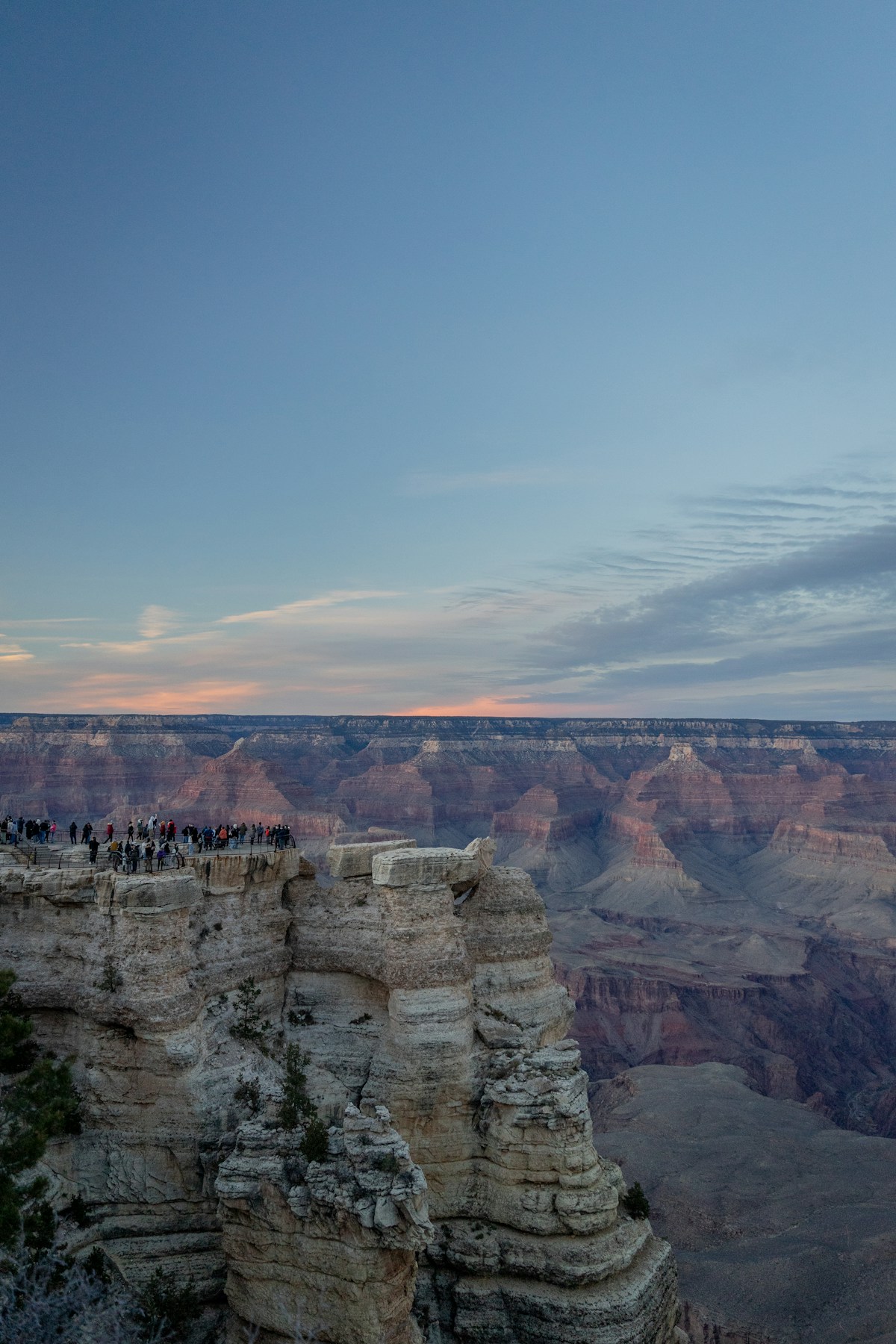
The Grand Canyon receives approximately 6 million visitors annually, almost all of them at the South Rim - which is open 365 days a year. The South Rim’s elevation (around 7,000 feet) means the rim itself stays cool year-round. The inner canyon is a separate environment entirely: hot, dry, and genuinely hazardous in summer below a certain elevation.
Understanding this distinction - rim experience vs. canyon experience - determines the right time to visit for your goals.
South Rim: Month-by-Month
March and April are the best spring months. Winter crowds have dropped but summer crowds haven’t arrived. Temperatures at the rim are 50–65°F - comfortable for hiking and viewpoint visits. Inner canyon temperatures are 70–85°F at the Colorado River, making these the best months for canyon hiking: cool enough to descend safely, warm enough to swim in the Colorado. Book accommodation 3–6 months ahead.
Search hotels near Grand Canyon on Booking.com
May is excellent early in the month but gets busy and hot as the month progresses. By late May, inner canyon temperatures at river level reach 90–95°F - still manageable for experienced hikers with dawn starts, but approaching the edge of safe conditions for casual visitors. The South Rim itself is pleasant (65–80°F).
June is the hottest, driest month. The South Rim is crowded and pleasant (75–90°F). The inner canyon approaches its extreme: 105–115°F at the Colorado River in afternoon. Hiking below the Tonto Plateau level is not advisable for most visitors in June. Summer crowds pack every viewpoint; Mather Point at sunrise and sunset has standing-room-only conditions.
July and August (Monsoon Season) bring the most reliable afternoon thunderstorms, typically building after noon and producing dramatic light on the canyon walls at 3–5pm. Lightning is a real hazard on rim trails and exposed canyon positions. The rain cools things briefly and can trigger flash floods in the side canyons - check weather before any inner canyon travel. The canyon at these times is genuinely spectacular despite the heat.
September and October are the best fall months and among the best months of the year overall. Temperatures at the rim are 60–80°F; inner canyon drops below 100°F by September and to a manageable 80–90°F by October. The cottonwood trees along Bright Angel Creek turn gold in October. Visitor numbers decline significantly after Labor Day. October weekdays at the South Rim feel almost like a different park from July weekends.
November through February brings quiet, occasional snow at the rim, and dramatically reduced crowds. The canyon in snow is one of the most visually stunning versions of itself - red rock, white snow, intense light. Inner canyon temperatures are cool (50–65°F at river level), making this the safest hiking season. Phantom Ranch overnight reservations (a historic lodge at the bottom of the canyon; prices approximately $100–170/person for dormitory or cabin as of 2026) are actually easier to get in winter.
South Rim Month Snapshot
| Month | Rim Temp | Inner Canyon | Crowd Level | Notes |
|---|---|---|---|---|
| January | 40°F (4°C) | 50°F (10°C) | Low | Snow possible, serene |
| February | 45°F (7°C) | 55°F (13°C) | Low | Quiet; photography excellent |
| March | 53°F (12°C) | 65°F (18°C) | Medium | Good hiking window |
| April | 62°F (17°C) | 75°F (24°C) | Medium-High | Best spring month |
| May | 71°F (22°C) | 88°F (31°C) | High | Good early month; hot late |
| June | 82°F (28°C) | 100°F (38°C) | Very High | Avoid inner canyon midday |
| July | 84°F (29°C) | 105°F (41°C) | Peak | Monsoons; extreme heat below |
| August | 82°F (28°C) | 103°F (39°C) | Peak | Monsoons; crowd peak |
| September | 74°F (23°C) | 93°F (34°C) | High-Med | Better than summer |
| October | 63°F (17°C) | 80°F (27°C) | Medium | Excellent - foliage, moderate heat |
| November | 51°F (11°C) | 65°F (18°C) | Low-Med | Great hiking; rim can snow |
| December | 41°F (5°C) | 53°F (12°C) | Low | Quiet; inner canyon safe |
The North Rim
The North Rim sits 1,000 feet higher than the South Rim and is 10 miles away across the canyon but 215 miles by road. It’s quieter (approximately 500,000 visitors per year vs. 5.5 million to the South Rim), more forested, and offers different canyon perspectives - you can see the South Rim from certain viewpoints.
Open mid-May through November 30. The Grand Canyon Lodge North Rim has a dining room open for breakfast, lunch, and dinner during the season. Room reservations for August should be made 12 months in advance; May, September, and October have more availability. The North Rim has a campground (approximately $18/night, reserve via recreation.gov).
Point Imperial (the highest point on any Grand Canyon rim at 8,803 feet) and Cape Royal (with views of the Colorado River and a natural stone arch called Angels Window) are the North Rim’s signature viewpoints. The Cape Royal road (12 miles from the North Rim visitor area) is paved and accessible to regular vehicles.
Canyon Hiking Safety
The Grand Canyon inverts normal hiking logic: going down is easy and going up in heat is where people get into trouble. The Park Service records dozens of heat-related rescues each summer, most involving hikers who went down Bright Angel Trail intending to turn back but kept going.
Bright Angel Trail is 9.5 miles from South Rim to the Colorado River, dropping 4,460 feet. The 1.5-Mile Resthouse and 3-Mile Resthouse have water and emergency phones (water available May–September only). Going to the river and back in a day is approximately 19 miles - not recommended June–August for most visitors.
South Kaibab Trail is 6.3 miles to the river, steeper and more exposed than Bright Angel, with no water along the route. Skeleton Point (3 miles in, 2,000 feet below the rim) is a safe turnaround point for day hikers in any season.
Rule of thumb: Hike down in the morning (5–8am), turn around before 10am in summer, carry 1 litre of water per hour of hiking, eat salty snacks regularly, and know where your water resupply points are.
Practical Information
Entry fees: Approximately $35 per vehicle as of 2026, valid for 7 days. The America the Beautiful annual pass ($80) covers all national parks. International (non-US-resident) visitors pay an additional surcharge of approximately $100 per person at this park as of 2026; verify current rates at nps.gov before budgeting. The America the Beautiful pass (approximately $250 for non-residents) waives this surcharge.
Shuttles: Free shuttle buses connect viewpoints and trailheads along both the Hermit Road (west of Grand Canyon Village, closed to private vehicles March–November) and Village Route year-round.
Getting there: The South Rim is 80 miles from Williams, AZ (on I-40) - about 1.5 hours. From Las Vegas, it’s 277 miles (approximately 4.5 hours). Flagstaff is 77 miles (1.5 hours). Most visitors drive - compare rental car prices across major US suppliers to find the best rate from Las Vegas or Phoenix. The Grand Canyon Railway (Williams to South Rim; round-trip approximately $65–230/person depending on car class) is a tourist train that runs daily.
Accommodation: The South Rim has six lodges within the park (El Tovar at $220–400/night is the most historic). Tusayan, AZ (just outside the south entrance) has additional motel options from approximately $120/night. Flagstaff, 77 miles south, is the nearest city with broad accommodation.
Related Guides
- Las Vegas travel guide
- Grand Canyon National Park guide
- Grand Canyon vs Zion - which to visit?
- 10 days in the American Southwest
Plan Your Trip
✈️ Book your flights to the USA 🛡️ Get travel insurance 📱 Stay connected with an eSIM 🚗 Rent a car
Ready to Plan Your Trip?
Here are our top itineraries to help you plan your USA visit:
- 10 Days in the American Southwest: Itinerary - Grand Canyon, Zion, Bryce, and more
- 14 Days in Utah & Arizona National Parks: Itinerary - America’s greatest canyon country