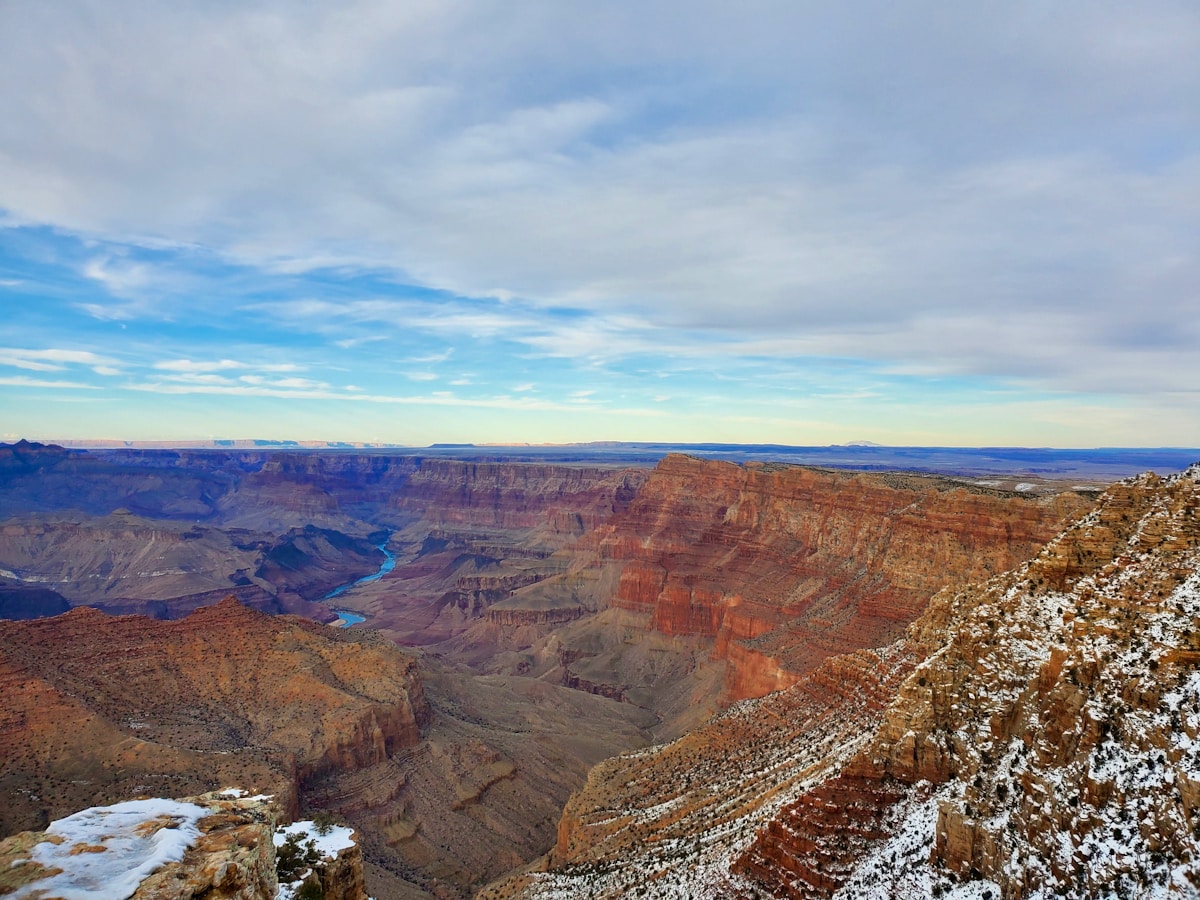
Our verdict up front: choose the Grand Canyon for the view of a lifetime; choose Zion for the hike of a lifetime. The Grand Canyon is the single most overwhelming natural panorama in North America - but most visitors experience it standing still at the rim. Zion flips the perspective: you stand at the bottom of a 2,000-foot canyon and climb into it, wade through it, and grip chains along its ridgelines. Standers should pick the Grand Canyon; doers should pick Zion.
Full park details are in our Grand Canyon guide and Zion guide. Here is the direct comparison.
Grand Canyon vs Zion at a Glance
| Factor | Grand Canyon (South Rim) | Zion |
|---|---|---|
| Signature scenery | Mile-deep canyon panorama | Sandstone walls from the canyon floor |
| Crowds | Heavy at rim viewpoints | Severe; mandatory shuttle Mar–Nov |
| Entry fee (as of 2026) | Approximately $35/vehicle | Approximately $35/vehicle |
| Best season | Mar–May, Sep–Nov | Apr–May, Sep–Oct |
| Lodging cost | Approx. $150–400/night | Approx. $100–300/night |
| Nearest airport | Phoenix (PHX) 3.5 hrs; Flagstaff 1.5 hrs | Las Vegas (LAS), 2.5 hrs |
| Days needed | 1–2 | 2–3 |
Scenery: Two Very Different Canyons
The Grand Canyon’s numbers still stagger: 277 miles long, up to 18 miles wide, over a mile deep. From Mather Point or Hopi Point at sunset, you look across a gulf of layered rock recording nearly two billion years. The scale is the point - and it is genuinely impossible to photograph adequately.
Zion is intimate where the Grand Canyon is vast. The Virgin River carved a slot through Navajo sandstone narrow enough that in The Narrows the walls stand 20 feet apart and 2,000 feet tall. You feel Zion physically - cold water around your knees, warm stone under your hands - in a way the Grand Canyon rarely allows from the rim.
Hiking Compared
Zion is the stronger hiking park. Angels Landing (5.4 miles round trip, permit lottery via recreation.gov) follows a chained ridgeline above 1,200-foot drops. The Narrows lets day-hikers wade upriver as far as time allows with no permit. Emerald Pools and Canyon Overlook give easier wins. Everything starts from the valley shuttle - no long approach drives.
Grand Canyon hiking is inverted and unforgiving: down first, then a brutal climb out in heat that intensifies with depth. The South Kaibab Trail to Ooh Aah Point (1.8 miles round trip) or Cedar Ridge (3 miles round trip) is our pick for a taste of going below the rim. The full rim-to-river round trip should never be attempted in one summer day - rangers carry out hikers who try every year. The flat Rim Trail, however, is superb for non-hikers.
Lodging and Towns Compared
Grand Canyon South Rim: El Tovar, the 1905 landmark on the rim, runs approximately $350–500/night and books up nearly a year out. Bright Angel Lodge offers simpler rooms from approximately $150–250/night. Tusayan, 7 miles south, has chain hotels at approximately $200–300/night in season; Williams or Flagstaff (60–90 minutes) drop to approximately $100–180/night.
Search hotels in Grand Canyon on Booking.com
Zion: Zion Lodge is the only in-park option (approximately $225–250/night). Springdale, immediately outside the South Entrance, is a far better gateway than anything at the Grand Canyon - walkable, with outfitters and restaurants, from budget motels at approximately $100/night to the Desert Pearl Inn and Cable Mountain Lodge at approximately $200–300/night. Hurricane, 20 miles west, has chain hotels from approximately $80/night.
Crowds and Logistics
Both parks are crowded, but the friction differs. At the Grand Canyon, crowding means full viewpoint parking lots - arrive before 9am or use the free rim shuttles. At Zion, private cars are banned from Zion Canyon roughly March through November; everyone rides the shuttle, and peak-season waits reach 30–60 minutes. Zion also requires a permit lottery for its most famous hike, so spontaneity suffers.
From Las Vegas, Zion is the easy choice at 2.5 hours; the South Rim is a 4.5-hour drive. From Phoenix, the Grand Canyon wins at 3.5 hours. A rental car is essential for either - compare options at /go/car-hire-usa. Combining both is realistic: the route between them via Kanab and the Cameron Trading Post is itself a highlight. For helicopter tours, guided rim walks, and Las Vegas day trips to both parks, browse Grand Canyon and Zion tours on GetYourGuide.
Which Park Should You Choose?
- Once-in-a-lifetime view, minimal walking: Grand Canyon. Nothing else compares.
- Active travelers and hikers: Zion - more rewarding trail miles per day.
- Families with kids 8+: Zion - wading The Narrows is the best family adventure in the Southwest.
- Mobility-limited travelers: Grand Canyon - paved Rim Trail and shuttle-served overlooks.
- Short trip from Vegas: Zion, on drive time alone.
- Photographers: Grand Canyon at sunrise/sunset; Zion for slot-canyon light beams in The Narrows.
- Summer heat-avoiders: Grand Canyon South Rim - at 7,000 feet it runs 20°F cooler than Zion’s canyon floor, which exceeds 105°F in July.
With 5–7 days, do both and add Bryce Canyon between them - the classic Southwest loop exists for good reason.