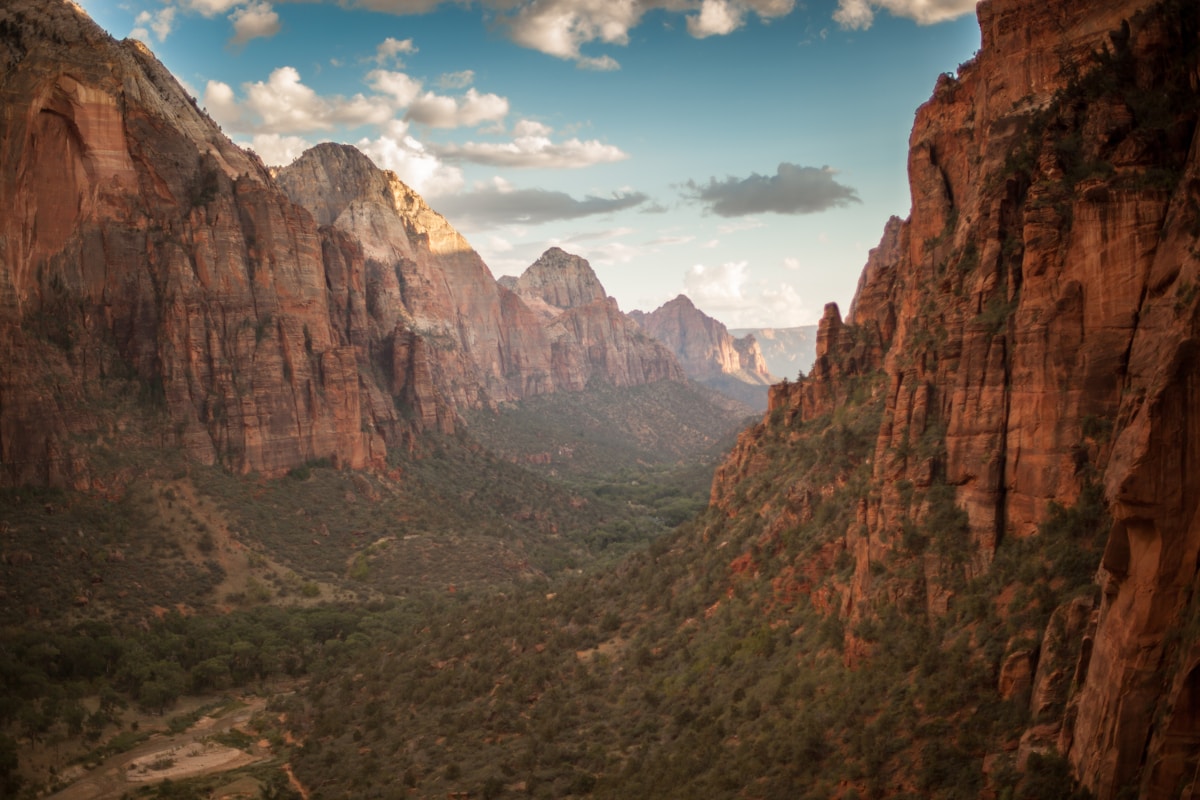
Zion National Park receives approximately 5 million visitors per year - more than Yellowstone, Grand Canyon, or Yosemite - concentrated into a single canyon 15 miles long. The scale of visitor volume relative to park geography creates real pressure on the shuttle system, popular trailheads, and the overall experience. Timing your visit well matters more at Zion than at most other national parks.
The park’s two most famous hikes - Angels Landing and The Narrows - both require specific conditions to be at their best, which determines ideal visiting windows.
Spring: March–May
Spring brings the highest water levels in the Virgin River, peak wildflower displays, and one of the more complex risk profiles of any Zion season.
March can see ice on shaded trails at higher elevations (particularly the Angels Landing chain section and the West Rim Trail). The Narrows is at its highest and coldest - water levels often exceed knee-height, temperatures hover around 40–45°F, and flash flood risk from upstream snowmelt events is elevated. Crowds are building but manageable on weekdays.
April is one of the most popular months: wildflowers on the canyon floor and mesa tops, comfortable temperatures (65–80°F in the canyon), and the canyon walls beginning to show their warm red-orange at their best. The Virgin River is still high but starting to moderate. Flash flood risk remains - always check the Zion NPS website (nps.gov/zion) or call the visitor centre for Narrows conditions before entering. Crowds hit their spring peak over spring break (third and fourth weeks of March, most of April depending on school calendars).
May offers some of the park’s best light: clear skies, low humidity, and the canyon walls fully lit by midday sun. The river moderates. Upper slot canyons become more accessible. Temperatures in the canyon reach 90°F by late May. Start any serious hiking by 7am.
Summer: June–August
Summer is peak crowd season and the most physically demanding period for hiking.
June is a transitional month: crowds at summer maximum, temperatures in the canyon reaching 100°F or above on the canyon floor by afternoon. The shuttle queue at the visitor centre can involve 30–45 minute waits. Hiking the exposed ridgeline of Angels Landing or the mesa trails in full afternoon sun is genuinely uncomfortable. Dawn hiking (starting at first light, 5–5:30am in June) is the only comfortable approach to difficult trails in summer.
July and August (Monsoon Season) bring afternoon thunderstorms, dramatic canyon light, cooler temperatures post-rain, and flash flood risk. The Narrows flash flood alert system is at its most important July–September - storms miles away in the watershed can send a flood wave through without warning. The park posts Narrows status (Green/Yellow/Red) at the visitor centre and online; do not enter if status is anything other than Green. Summer is also the most popular time for slot canyons: Subway (permit required, approximately $15 per person) and Mystery Canyon (permit required; accessed by rappel). Apply via recreation.gov 3 months ahead.
Fall: September–October
The park’s best two months for most visitors.
September sees crowds dropping sharply after Labor Day. Temperatures moderate to 80–90°F in the canyon, 60–70°F on the mesas. Flash flood risk from monsoons persists through September but diminishes toward October. The Virgin River clears after summer sediment. Angels Landing permit lottery remains competitive but slightly easier to win than July weekends.
October is the consensus best month: cottonwood trees along the canyon floor turn gold and yellow (peak typically second–third week of October), temperatures are ideal for all-day hiking (65–80°F), The Narrows is at its lowest and warmest (water temperatures 60–65°F), and crowds are significantly below summer. Weekends in peak foliage are busy - arrive Thursday–Sunday and extend through the following week for the best of both crowds and colour. The shuttle system still operates in October; private vehicles remain restricted on the Scenic Drive.
November transitions to lower water levels in The Narrows but also to falling temperatures. The shuttle system typically transitions to a shorter schedule. Upper canyon trails can see ice and frost by late November. Permits for Angels Landing remain available.
Winter: December–February
Winter is the quietest season with full access but significant trail conditions.
Private vehicles are allowed on the Zion Canyon Scenic Drive when the shuttle isn’t operating (winter hours). The canyon floor stays relatively clear (1,000–1,200 feet elevation keeps temperatures above freezing most days), but upper trails including Angels Landing chains and the West Rim can be icy and dangerous without microspikes. The Narrows in winter is extremely cold (water temperatures 35–40°F) and not recommended for general visitors without dry suit and wetsuit insulation.
The reward for winter visits: solitude, the canyon in occasional dusting of snow, and zero shuttle queues. Zion Lodge ($200–350/night, the only in-park accommodation) has rooms available on short notice in January–February.
Search hotels near Zion on Booking.com
Month-by-Month Reference
| Month | Canyon Temp | Narrows Status | Crowds | Shuttle |
|---|---|---|---|---|
| January | 52°F/29°F (11°C/-2°C) | Cold, possible ice | Very Low | Limited hours |
| February | 57°F/32°F (14°C/0°C) | Cold | Very Low | Limited |
| March | 63°F/38°F (17°C/3°C) | High flow, cold | Low-Medium | Full |
| April | 72°F/44°F (22°C/7°C) | High flow | High | Full |
| May | 83°F/52°F (28°C/11°C) | Moderating | High | Full |
| June | 93°F/61°F (34°C/16°C) | Moderate | Very High | Full |
| July | 100°F/68°F (38°C/20°C) | Monsoon risk | Peak | Full |
| August | 97°F/67°F (36°C/19°C) | Monsoon risk | Peak | Full |
| September | 89°F/57°F (32°C/14°C) | Easing | High | Full |
| October | 76°F/44°F (24°C/7°C) | Ideal | Medium | Full |
| November | 61°F/34°F (16°C/1°C) | Cool | Low | Reduced |
| December | 51°F/27°F (11°C/-3°C) | Very cold | Very Low | Limited |
Practical Information
Entry fees: Approximately $35 per vehicle as of 2026, valid for 7 days. America the Beautiful annual pass ($80) covers all national parks. International (non-US-resident) visitors pay an additional surcharge of approximately $100 per person at this park as of 2026; verify current rates at nps.gov before budgeting. The America the Beautiful pass (approximately $250 for non-residents) waives this surcharge.
Shuttle system: Free shuttle buses run March–November from the visitor centre through the canyon to Temple of Sinawava (the Narrows trailhead). Frequency is every 5–7 minutes at peak. The shuttle from Springdale (the gateway town) to the visitor centre is also free.
Springdale, Utah is the gateway town immediately outside the park’s south entrance (the main entrance used by most visitors). Springdale has approximately 15 restaurants, multiple gear rental shops for Narrows equipment (neoprene socks, walking sticks, water shorts; rental packages approximately $15–25 per person), and accommodation ranging from budget motels ($90–130/night) to upscale lodges ($250–450/night). Book Springdale accommodation 4–6 months ahead for May through October.
Getting there: Zion is 160 miles from Las Vegas (2.5 hours via I-15 and UT-9). From Salt Lake City, 310 miles (4.5 hours). St. George, Utah (45 miles west) has the nearest commercial airport with direct flights from several western cities.
Other entrances: The Kolob Canyon section (off I-15 at exit 40) is in the same park but a completely separate area, less visited, with excellent canyon views and the Kolob Arch trailhead (14-mile round-trip to one of the world’s largest natural arches at 290 feet).
Plan Your Visit
- Zion National Park guide
- Grand Canyon vs Zion - which to visit?
- Utah’s Mighty 5 road trip
- America the Beautiful Pass - is it worth it?
Most national parks are only accessible by car - compare car hire options in the USA. For guided park tours, browse available tours and activities. Travel insurance is especially important for remote backcountry trips.
Plan Your Trip
✈️ Book your flights to the USA 🛡️ Get travel insurance 📱 Stay connected with an eSIM 🚗 Rent a car
Ready to Plan Your Trip?
Here are our top itineraries to help you plan your USA visit:
- 10 Days in the American Southwest: Itinerary - Grand Canyon, Zion, Bryce, and more
- 14 Days in Utah & Arizona National Parks: Itinerary - America’s greatest canyon country