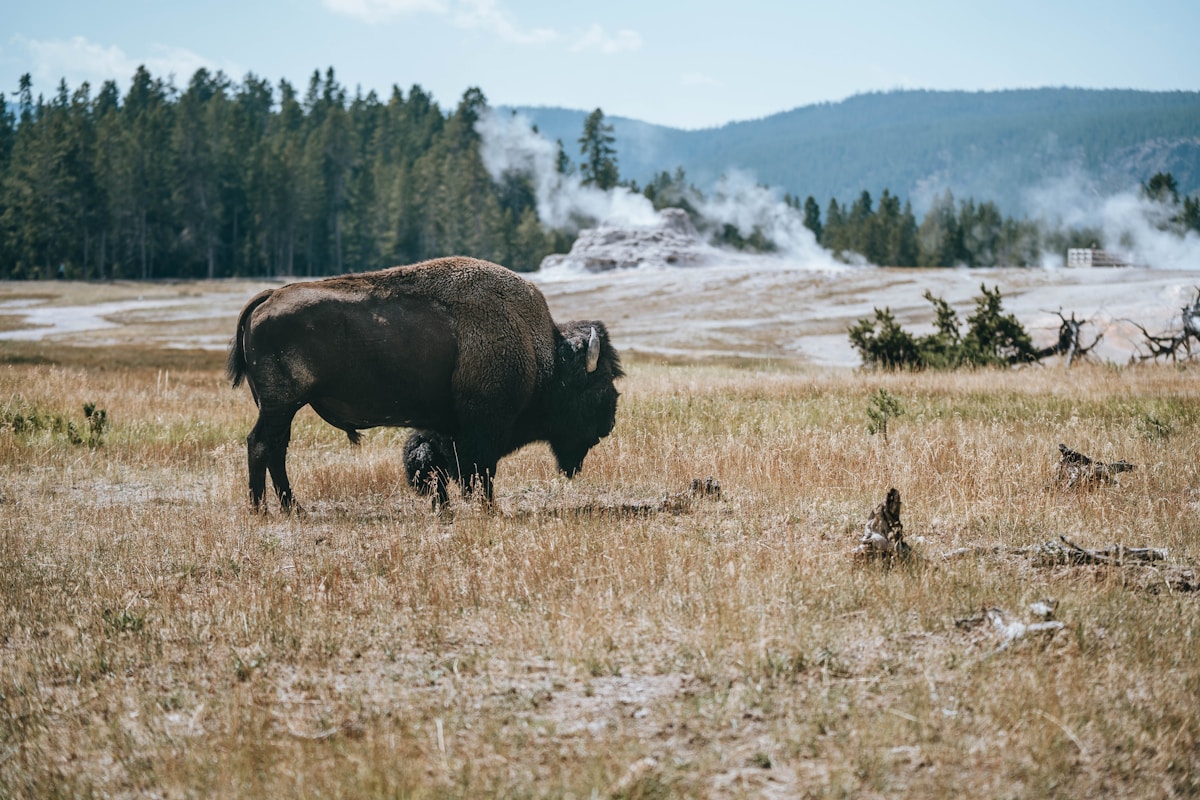
Yellowstone’s 3,472 square miles contain more hydrothermal features than anywhere else on earth, and a wildlife density that rivals East Africa - but visitor experience varies enormously by season. Summer brings full access and crowds that can turn the Midway Geyser Basin boardwalk into a bottleneck. Winter brings near-solitude and some of the most dramatic wildlife watching available in North America, but requires a snowcoach for interior access. The shoulder seasons - late April and October - are where Yellowstone’s best value sits.
Peak Season: June–August
Summer is when the full road loop (about 140 miles) is open to all vehicles, all in-park lodges are operating, and every attraction is accessible. It is also when the park sees 2–3 million of its 4.5 million annual visitors, concentrated into 13 weeks.
Search hotels near Yellowstone on Booking.com
June is the most pleasant month: snowpack has melted from the main roads by early June (though higher-elevation areas and some campgrounds may still have snow), bison calves are visible in the valleys, and wildflower meadows are at their best. Temperatures in the valley average 65–75°F during the day, dropping to 35–45°F at night. Visitor numbers are high but not yet at peak.
July and August are the busiest months. The Grand Prismatic Spring overlook trail, Old Faithful, and the Midway Geyser Basin see queues from 9am. Parking at Old Faithful can take 30–45 minutes to secure on peak days (weekends in July). The strategy for these months: arrive at key sites before 8am or after 5pm, drive the Lamar Valley at dawn, and accept that the Grand Canyon of the Yellowstone (from Artist Point) will have people but remains worth it.
In-park lodging (Old Faithful Inn, Lake Yellowstone Hotel, Canyon Lodge) books out 6–12 months ahead for July and August. Gateway towns - West Yellowstone, MT ($150–300/night); Gardiner, MT ($120–220/night); Cody, WY ($120–250/night); and Jackson, WY ($200–500/night) - have more availability but require driving into the park each day.
Shoulder Season: May and September–October
Late April to mid-May is the spring sweet spot. Interior roads are reopening, grizzly bears with cubs are visible along park road shoulders, and bison calves (born April–May) are in the valleys. The west and south entrance roads typically open in late April. Snow is possible on any day, but temperatures are pleasant midday (55–65°F). Lodging availability is high, gateway town rates are 30–40% below summer peak, and the crowds at Old Faithful are a fraction of summer size.
September overlaps with the end of peak season: visitor numbers decline sharply after Labor Day (early September), but all facilities remain open. Daytime temperatures drop to 60–70°F in the valleys, nights to 30–40°F. The elk rut begins in mid-September - bulls bugling across Hayden Valley and Madison River meadows at dawn and dusk. This is arguably the most dramatic wildlife period in the park.
October is the best underrated month. Most visitor facilities close by mid-October, but the roads are generally still open until early November. The park is nearly empty. Bull elk are actively rutting, wolves hunt visibly, and the landscape transitions from green to amber. Snow becomes increasingly likely above 7,000 feet. The Lamar Valley road (one of the best wolf-watching drives anywhere) is typically open through October. Come with warm clothing and flexible plans.
Month-by-Month Snapshot
| Month | Visitors | Avg High (Valley) | Roads | Notable |
|---|---|---|---|---|
| January | Very low | 26°F (-3°C) | North only; interior by snowcoach | Wolf watching, winter silence |
| February | Very low | 30°F (-1°C) | Same as January | Best wolf visibility |
| March | Low | 37°F (3°C) | North open; thawing begins | Bear emergence late March |
| April | Low-medium | 48°F (9°C) | Opening progressively | Bison calving, waterfowl |
| May | Medium | 59°F (15°C) | Most roads open by late May | Bear cubs, wildflowers |
| June | High | 69°F (21°C) | All roads open | Full access; manageable |
| July | Peak | 79°F (26°C) | All open | Maximum crowds |
| August | Peak | 77°F (25°C) | All open | Busy; wildfire smoke possible |
| September | Medium-high | 66°F (19°C) | All open | Elk rut begins |
| October | Low-medium | 50°F (10°C) | Closing late month | Rut peak; fewest crowds |
| November | Very low | 33°F (1°C) | Closing to interior | Transitional; snowcoach season beginning |
| December | Very low | 21°F (-6°C) | North only | Winter wildlife tours |
Wildlife Timing
Wolves: Best visibility is November through March in Lamar Valley. Winter snow makes tracking packs easier and their activity patterns concentrate along river corridors. Dawn and dusk are the most active periods. Binoculars or a spotting scope are essential - packs are often 300–500 yards from the road. The Yellowstone Association (yellowstoneforever.org) runs guided wolf-watching expeditions from approximately $89/person.
Grizzly bears: Active from late March or April through October. Most roadside sightings occur when bears are foraging along slopes. The area around Dunraven Pass and the east side of the park has strong bear activity in July–August when whitebark pine nuts are ripening. Sows with cubs are most visible in May on open slopes above the roads.
Bison: Year-round in the Lamar Valley, Hayden Valley, and Madison River corridor. Winter concentrations in thermal areas (Fountain Flats, Midway Geyser Basin) are particularly impressive - hundreds of bison in steam.
Elk: Lamar Valley and Madison River areas hold large herds. Rut (mid-September through mid-October) is the most dramatic time: bulls bugling at dawn, sparring in meadows.
Practical Tips
Entry fees: Approximately $35 per vehicle as of 2026, valid for 7 days and covering all passengers. The America the Beautiful annual pass ($80) covers all US national parks. International (non-US-resident) visitors pay an additional surcharge of approximately $100 per person at this park as of 2026; verify current rates at nps.gov before budgeting. The America the Beautiful pass (approximately $250 for non-residents) waives this surcharge.
Reservations: In-park camping requires advance reservation via recreation.gov (competitive). Campgrounds at Canyon, Bridge Bay, and Madison are the most popular; Slough Creek (first-come, first-served) is worth the 5am queue for Lamar Valley access.
Altitude: Yellowstone sits between 5,300 and 11,000 feet. Allow a day to acclimatise if arriving from sea level. Headaches and reduced exercise capacity are common on arrival.
Road conditions: Check the NPS Yellowstone road status page (nps.gov/yell) before departing. Roads close unexpectedly for weather events, bison herds, and maintenance throughout the season.
Plan Your Visit
- Yellowstone National Park guide
- National Parks 14-day road trip itinerary
- America the Beautiful Pass - is it worth it?
- Best time to visit Yosemite National Park
Most national parks are only accessible by car - compare car hire options in the USA. For guided park tours, browse available tours and activities. Travel insurance is especially important for remote backcountry trips.
Plan Your Trip
✈️ Book your flights to the USA 🛡️ Get travel insurance 📱 Stay connected with an eSIM 🚗 Rent a car
Ready to Plan Your Trip?
Here are our top itineraries to help you plan your USA visit:
- 10 Days in the American Southwest: Itinerary - Grand Canyon, Zion, Bryce, and more
- 14 Days in Utah & Arizona National Parks: Itinerary - America’s greatest canyon country