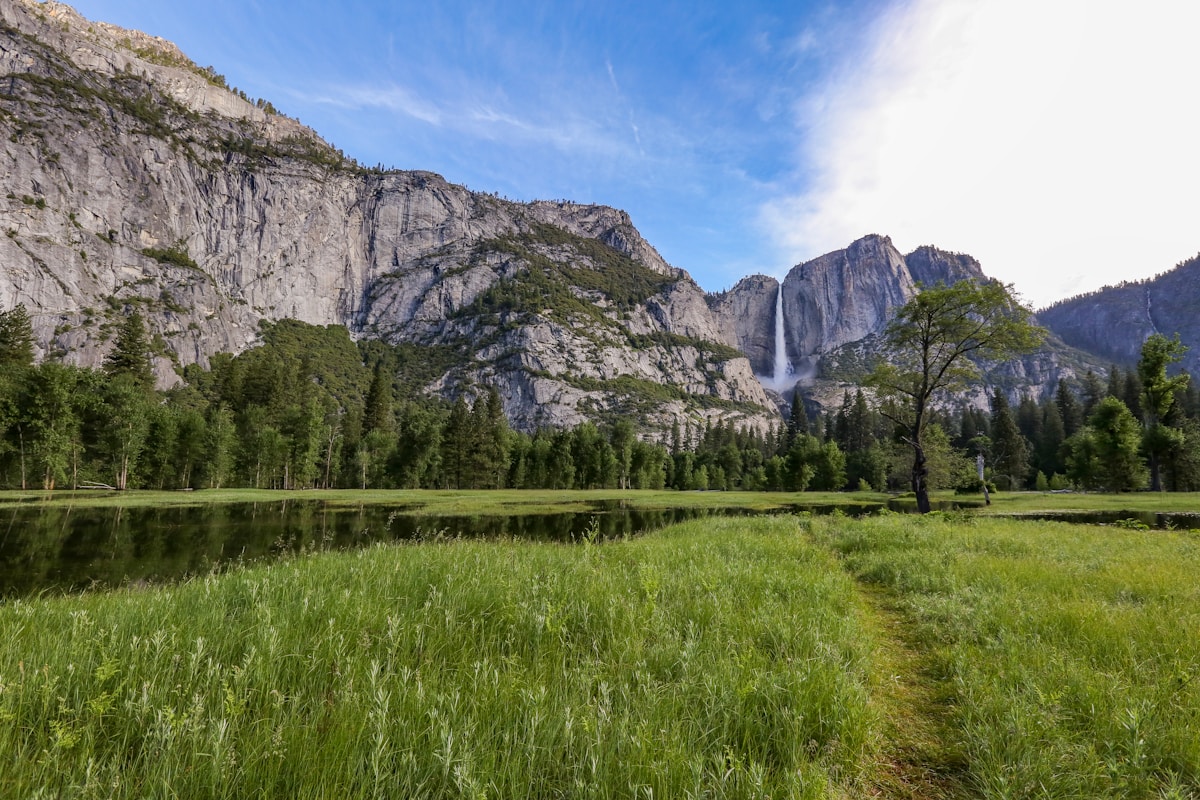
Yosemite National Park draws approximately 4–4.5 million visitors per year into a valley that is 7 miles long and 1 mile wide. That concentration - Half Dome, El Capitan, Yosemite Falls, Mirror Lake, and Bridalveil Fall all within a small valley floor - makes Yosemite one of the most visually extraordinary places on earth and one of the most logistically challenging in summer.
The park has three distinct zones: Yosemite Valley (the most visited, 4,000 feet), the Wawona and Mariposa Grove area (the giant sequoias, to the south), and the Tioga Road high country including Tuolumne Meadows (8,600 feet, only accessible late spring through fall). The right time to visit depends on which experience you’re prioritising.
Spring: April–June
Spring is the most spectacular season for first-time visitors. Waterfalls are at maximum flow (particularly April and May), meadows are green, and the valley walls are at their most dramatic - granite faces streaked white with snowmelt.
April is the transition month: snow is still possible but increasingly unlikely below 6,000 feet. Yosemite Valley is accessible; Tioga Road is closed. The waterfalls are beginning to build - Bridalveil Fall is flowing strongly, Yosemite Falls is impressive. Crowds are lower than summer but rising. Timed-entry requirements may or may not apply in April depending on NPS decisions; check before visiting.
May is typically the best single month in Yosemite. Peak waterfall season, warming temperatures (60–75°F in the valley), lower crowds than summer, and good trail conditions at valley elevation. Tioga Road usually opens in late May (date varies significantly by snowpack year - it opened in May in 2022 but was delayed to June in high-snow years). Timed-entry reservations are required and competitive.
June brings maximum visitor numbers but also maximum waterfall flow earlier in the month (they slow by late June). Tioga Road opens in June most years, giving access to Tuolumne Meadows. The valley floor gets busy but before 8am and after 6pm it’s manageable. Summer temperatures in the valley reach 85–92°F by midday.
Summer: July–August
Peak season. The valley is at maximum capacity on weekends - parking at Yosemite Valley Lodge fills before 9am; the shuttle bus system from the park’s transit hub is the practical way to move around. The waterfalls slow significantly: Yosemite Falls is often partially or completely dry by August. El Capitan and Half Dome are fully visible and the granite light in late afternoon (5–7pm) is extraordinary.
Search hotels near Yosemite on Booking.com
Summer is best for high-country activities: Tuolumne Meadows (9,600 feet) has wildflowers in July, excellent day hiking, and temperatures 10–15°F cooler than the valley. The John Muir Trail, which begins at Happy Isles in Yosemite Valley, sees most of its through-hiking traffic from mid-July through September.
Accommodation: The Ahwahnee (formerly the Ahwahnee Hotel; from approximately $550/night in summer) and Yosemite Valley Lodge (from $220/night) are the main in-valley options; both book out 12 months ahead for July–August dates. Curry Village (tent cabins from approximately $100/night) provides an alternative. Camping at valley campgrounds (Upper Pines, Lower Pines, North Pines, Camp 4) is competitive on recreation.gov - release dates 5 months ahead.
Fall: September–October
September is the best underrated month: most of summer’s visitors have left after Labor Day, temperatures are still warm (75–85°F in the valley), and the light quality improves. The Merced River is at its lowest, making valley meadow walks and river access calm and easy. Tioga Road is still open (usually through October or early November).
October is the most atmospheric month. Fall colour from black oaks turns the valley floor gold - peak timing is usually mid-to-late October. Morning fog in the valley creates mirror-still reflections in the Merced River in early morning. Temperatures drop to 55–70°F in the valley; nighttime temperatures can reach freezing. Timed-entry reservations may not be required in October depending on the year. Check the NPS website.
Winter: November–April
Winter brings Yosemite at its most elemental. Snow transforms the valley into a monochrome landscape of black granite and white - Half Dome and El Capitan in snow are as dramatic as they are in any season.
No timed-entry reservations required November through April. Traffic is minimal on weekdays. Chain control (or 4WD requirement) on CA-140 at times. The valley floor itself is often free of snow even when the surrounding walls are white. Visitor numbers in January and February are 10–15% of July peak.
Badger Pass Ski Area (20 miles from Yosemite Valley via Glacier Point Road; lift tickets approximately $42–64/day as of 2026) is a modest but historically significant ski area - it opened in 1935 and has a family-friendly atmosphere with no lift lines on weekdays.
Month-by-Month Reference
| Month | Valley Temp | Waterfalls | Tioga Road | Reservations | Crowd Level |
|---|---|---|---|---|---|
| January | 47°F/27°F (8°C/-3°C) | Low-moderate | Closed | None | Very Low |
| February | 52°F/29°F (11°C/-2°C) | Moderate | Closed | None | Very Low |
| March | 57°F/33°F (14°C/1°C) | Building | Closed | None | Low |
| April | 63°F/37°F (17°C/3°C) | Peak building | Closed | Check NPS | Low-Medium |
| May | 72°F/43°F (22°C/6°C) | Peak | Opening | Required | Medium-High |
| June | 82°F/50°F (28°C/10°C) | Slowing | Open | Required | Very High |
| July | 90°F/55°F (32°C/13°C) | Low | Open | Required | Peak |
| August | 89°F/54°F (32°C/12°C) | Very low | Open | Required | Peak |
| September | 82°F/48°F (28°C/9°C) | Very low | Open | Required | High |
| October | 68°F/38°F (20°C/3°C) | Very low | Open (closing) | Check NPS | Medium |
| November | 55°F/30°F (13°C/-1°C) | Low | Closed | None | Low |
| December | 47°F/26°F (8°C/-3°C) | Low | Closed | None | Very Low |
Key Viewpoints and When to Visit Them
Tunnel View (end of Wawona Tunnel on CA-41 entering Yosemite Valley): Best in spring when waterfalls are visible on the valley walls. At sunrise before 7am to avoid vehicle crowds at the pullout. Year-round access.
Valley View (El Portal Road, near Merced River): Morning light on El Capitan. Best April–June with waterfalls. Accessible year-round by vehicle.
Glacier Point (accessible by road May–November; 32 miles from Yosemite Valley): The best viewpoint for Half Dome’s profile and the full Yosemite Valley floor. The road closes after first snow. The hike from the valley (Panorama Trail from Happy Isles, 8.5 miles one-way with 3,200 feet of gain) is possible year-round to those willing to hike in snow.
El Capitan Meadow: The best ground-level view of El Capitan’s 3,000-foot face. Climbers (Yosemite is a global rock climbing destination) are visible from here most of the year with binoculars.
Practical Information
Entry fees: Approximately $35 per vehicle as of 2026, valid for 7 days. America the Beautiful annual pass ($80) covers all national parks.
Getting there: Yosemite is a driving destination - public transport options are limited and most visitors arrive by car. From San Francisco (190 miles), take I-580/I-205 to CA-120 or CA-140. From Los Angeles (330 miles), take CA-99 N to CA-140 E - the El Portal road (CA-140) is the least snow-prone winter access route. Compare rental car prices from San Francisco or LA to find the best rate for your dates. Do not plan driving CA-120 over Tioga Pass before confirming it’s open in spring.
Cell service: Limited to spotty in Yosemite Valley (AT&T has the best coverage; Verizon works partially). No service in most of the high country. Download offline maps and park guides before entering.
Related Guides
- San Francisco travel guide
- Yosemite National Park guide
- Yosemite vs Yellowstone - which to visit?
- 10 days on the West Coast
Plan Your Trip
✈️ Book your flights to the USA 🛡️ Get travel insurance 📱 Stay connected with an eSIM 🚗 Rent a car
Ready to Plan Your Trip?
Here are our top itineraries to help you plan your USA visit:
- 14 Days in California: Road Trip Itinerary - Two weeks driving the Golden State
- 10 Days on the West Coast: LA, San Francisco and Beyond - Pacific Coast highlights