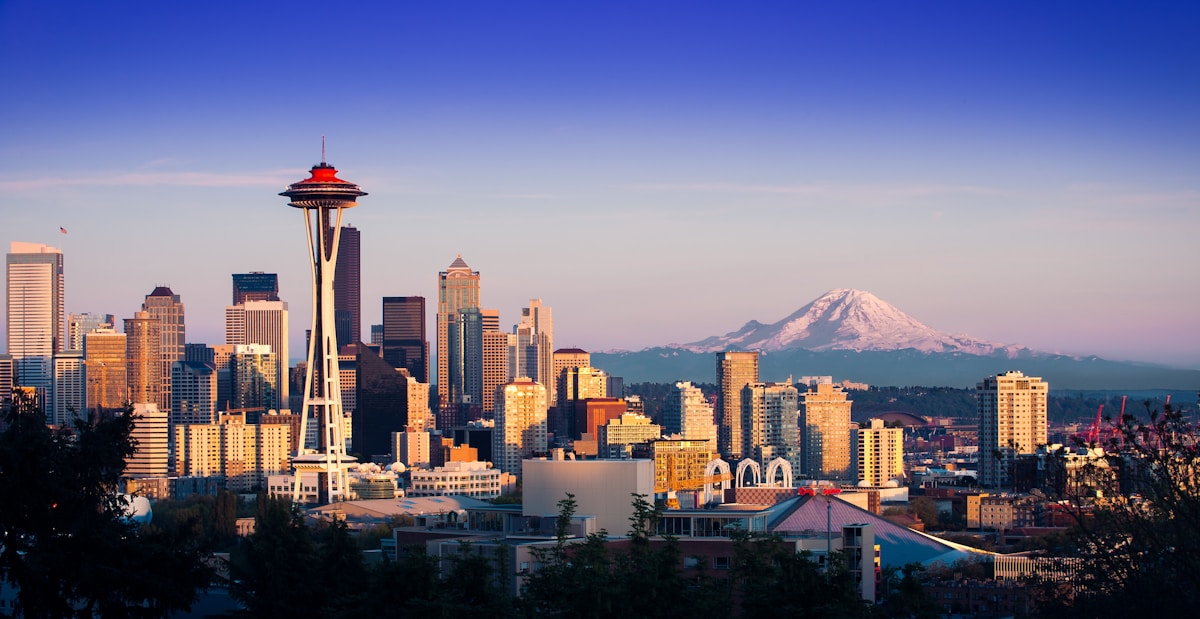
Seattle and Portland are the Pacific Northwest’s twin cities - 174 miles apart, connected by I-5, and defined by rain, coffee, craft beer, outdoor culture, and a strong progressive character. Both are excellent destinations. But they attract different kinds of travellers and offer meaningfully different experiences.
Quick Verdict
| Category | Seattle | Portland |
|---|---|---|
| Hotel cost | $180–280/night | $140–220/night |
| Sales tax | 10.4% (Washington) | 0% (Oregon) |
| Coffee culture | Birthplace of Starbucks | World-class indie scene |
| Craft beer | Excellent | Outstanding |
| Mountain access | Mt. Rainier, Olympics | Mt. Hood, Columbia Gorge |
| Music scene | Strong (grunge heritage) | Excellent indie/folk |
| Getting around | Solid transit | Good light rail + walkable |
| Days needed | 3–4 | 3–4 |
Search hotels in Seattle on Booking.com
Costs
Portland is the better value destination. Oregon’s zero sales tax is the biggest practical advantage - a $90 restaurant bill in Portland costs $90; the equivalent in Seattle adds $9.36 in tax (Seattle’s combined sales tax is 10.4%). Over a week’s stay, this difference on hotels, meals, and shopping adds up significantly.
Portland hotel rates in the Pearl District - the upscale arts and restaurant neighbourhood northwest of Downtown: the Hotel Lucia on Southwest Broadway runs $160–220/night with excellent service. The Ace Hotel Portland on Southwest Stark ($140–200) is the indie design choice. The Kimpton Hotel Vintage ($170–240) has a good wine program.
Seattle hotels cost more. The Kimpton Hotel Vintage Seattle is $200–300/night; the boutique Alexis Hotel near Pike Place is $180–260. For a splash, the Fairmont Olympic Hotel on University Street is $320–450 - one of the great Pacific Northwest grand hotels. Budget hotels in both cities are limited - most sub-$120 options are dated or poorly located.
Both cities are affordable for food: a proper bowl of pho in Seattle’s International District runs $14–18; a Voodoo Doughnut in Portland is $1.50–3.50 (the tourist experience is the queue - the actual doughnut is average). Serious meals: Canlis in Seattle (tasting menu, $150–175/person) is the most impressive dining room in the Pacific Northwest; Le Pigeon in Portland ($85–115/person for a seasonal menu) is the creative alternative.
Coffee Culture
Seattle’s coffee mythology is real. The original Starbucks location on Pike Place (no drive-through, no major modifications) has queues most of the morning - worth joining once for the history. But the city’s independent scene is strong: Victrola Coffee Roasters on Capitol Hill, Caffe Vita on Pike Street, and the outstanding Lighthouse Coffee in Columbia City. The term “Seattle coffee” carries genuine weight in the industry.
Portland’s coffee scene has produced Stumptown Coffee Roasters (now national, but Portland-born and headquartered on SW 3rd Ave - worth a visit to the roastery). Water Avenue Coffee on SE Water Avenue, Coava Coffee in a 1905 warehouse on SE Grand ($5 pour-overs in a stunning space), and Courier Coffee near Powell’s Books represent the city’s excellent indie end. The truth: Portland’s scene may be more interesting today for the coffee nerd; Seattle has the mythology.
Food and Drink
Seattle’s Pike Place Market is the city’s food soul - fish throwers at Pike Place Fish Co. (famous but tourist-heavy), fresh oysters at Pike Place Chowder ($12–16 for a bowl), and DeLaurenti Food & Wine for Italian imports and charcuterie. The international food scene in the International District (Chinatown/Japantown) is outstanding: Jade Garden for dim sum ($15–20/person), Ramen Danbo for tonkotsu ($16–18 bowl). Craft cocktails at the Zig Zag Café on Western Avenue are worth the pilgrimage.
Portland’s food truck culture is exceptional - the city has over 700 food carts, concentrated in “pods” like the Cartlandia complex on SE 82nd and the Downtown pod on SW Alder. Ethnic food is diverse and affordable: $8–14 gets you serious Thai, Vietnamese, Ethiopian, or Mexican from a cart. The craft beer scene (Deschutes Brewery Portland pub, Ecliptic Brewing, Base Camp Brewing) is arguably the best in the USA per capita. The Clyde Common cocktail bar on SW Stark is one of the country’s best.
Outdoors
Both cities are gateways to extraordinary Pacific Northwest wilderness. From Seattle, Mt. Rainier National Park (entry $35/vehicle) is 90 miles south - the Skyline Trail at Paradise offers high-alpine walking with Rainier’s 14,411-foot summit looming overhead. The Olympic Peninsula (Hood Canal Bridge, 90 miles west) has the Hoh Rainforest (one of the few temperate rainforests in the USA), and the coast at Rialto Beach is dramatic and remote. Ferry services from downtown Seattle to Bainbridge Island ($8.50 each way on foot) offer a genuine island experience 35 minutes from Pike Place Market.
Portland’s outdoor access is faster in terms of proximity. The Columbia River Gorge National Scenic Area begins 30 miles east of Downtown - Multnomah Falls (167 metres, the tallest waterfall in Oregon, free entry) is 20 minutes from the Columbia River Highway. Mt. Hood (11,239 feet) is 50 miles east and has year-round skiing at Timberline Lodge ($95–120/day lift tickets as of 2025). The Oregon Coast is 90 minutes west - Cannon Beach with Haystack Rock is one of the most photographed spots in the Pacific Northwest.
Culture and Sights
Seattle’s Space Needle (built for the 1962 World’s Fair, $37–42 admission for the observation deck) is the city’s icon, but the Seattle Art Museum ($25 adults) and the Museum of Pop Culture (MoPOP, $32 adults) - designed by Frank Gehry and covering rock, sci-fi, and gaming - are more rewarding. The Chihuly Garden and Glass ($36 adults) adjacent to the Space Needle is outstanding if you appreciate Dale Chihuly’s large-scale glass sculpture.
Portland’s cultural scene centres on Powell’s Books on W Burnside - the largest independent bookshop in the world (3 floors, entire city block) with a café inside. The Portland Art Museum on SW Park Avenue ($20 adults) is strong on Native American art and Pacific Northwest artists. The Lan Su Chinese Garden in Old Town ($15 adults) is a genuine Song Dynasty reproduction transported to Portland. The First Thursday Gallery Walk in the Pearl District (first Thursday of every month, most galleries free) is a sociable way to experience the local art community.
See city guides for Seattle and Portland.
Getting Around
Seattle’s transit has improved significantly. The Link Light Rail runs from SeaTac Airport to Capitol Hill and the University District (ORCA card fare $2.25–3.50 depending on distance). The streetcar connects Capitol Hill to South Lake Union (the Amazon campus area). For the waterfront and Ferry Terminal, walking or the water taxi to West Seattle ($5.75) are pleasant. Pike Place to Capitol Hill is 20 minutes on foot uphill or 10 minutes on the Link.
Portland’s MAX Light Rail runs from the airport to Downtown in 45 minutes ($2.50 - one of the cheapest airport connections in the USA). The MAX Yellow and Green lines serve North Portland and the suburbs; the streetcar covers the Pearl District and NW 23rd Avenue shopping strip. Downtown Portland is remarkably compact - most of the Pearl District, Old Town, and the South Park Blocks are walkable in combination.
When to Visit
Both cities have the same general pattern: pleasant summers (July–September), grey and rainy autumns and winters, and variable springs. The Pacific Northwest stereotype of constant rain is overstated - Seattle averages 38 inches per year, less than New York or Miami - but overcast skies are common from November through May.
The best time to visit either city is July through September: Mount Rainier’s trails are snow-free, outdoor dining and markets are in full swing, and the long Pacific Northwest summer evenings are genuinely magical. August temperatures in both cities hover around 75–80°F with low humidity.
For Mt. Hood skiing (Portland) or Snoqualmie Pass skiing (Seattle), visit January–March.
The Verdict
Seattle delivers more geographic variety - the waterfront, ferry crossings, and extraordinary mountain access - and has a stronger international food scene. Portland offers better value (zero sales tax is significant), a more walkable and compact city centre, and the most interesting craft beer and coffee scene on the West Coast.
If you can only choose one, Seattle edges ahead for first-time Pacific Northwest visitors thanks to the sheer range of day trips available. But Portland is the better budget choice and rewards visitors who want to immerse in neighbourhood culture rather than tick off sights.
Many people do both - an easy 3-hour drive or Amtrak Cascades train ride ($30–55) connects them.
Plan your trip with getting around the USA for transport options. The Pacific Northwest 7-day itinerary covers both cities in one trip with day trips to Mount Rainier and the Columbia River Gorge.
For guided tours in either city, browse the full USA tours selection. Compare flights to the USA and set up travel insurance before your trip.
More City Guides and Comparisons
- Seattle travel guide
- Portland travel guide
- Mount Rainier National Park guide
- Olympic National Park guide
- Coast Starlight: Seattle to LA by train
- Empire Builder: Chicago to Seattle by train
- Vegan guide to Portland
Plan Your Trip
✈️ Book your flights to the USA 🛡️ Get travel insurance 📱 Stay connected with an eSIM 🚗 Rent a car
Ready to Plan Your Trip?
Here are our top itineraries to help you plan your USA visit:
- 10 Days on the West Coast: LA, San Francisco and Beyond - Pacific Coast highlights
- 7 Days in the Pacific Northwest: Itinerary - Seattle, Oregon, and volcanic landscapes