Seattle: Pike Place Market, Space Needle & Coffee
Plan your Seattle trip with our guide to Pike Place Market, the Space Needle, Mount Rainier day trips, and where to eat and stay in the Pacific Northwest.
Guides for Seattle
Seattle sits on a narrow stretch of land between Puget Sound to the west and Lake Washington to the east, with the Cascade Range visible on clear days to the east and the Olympic Mountains across the water to the west. The city has a reputation for rain that is partly justified-Seattle receives approximately 38 inches of precipitation per year, spread across many grey, drizzly days rather than concentrated downpours-and a food scene built on Pacific seafood (Dungeness crab, Pacific oysters, geoduck, salmon), excellent coffee (Seattle is the headquarters of Starbucks and the origin of much of the third-wave coffee movement), and produce from the Skagit Valley and the broader Pacific Northwest region.
Population: approximately 750,000 in the city; 4.2 million in the metropolitan area. Primary industries are technology (Amazon, Microsoft, Boeing), maritime trade, and tourism.
Getting There and Around
Seattle-Tacoma International Airport (SEA) is approximately 14 miles south of downtown. The Link Light Rail (1 Line) connects the airport to downtown Seattle (Westlake station) in approximately 38–45 minutes; fare approximately $3.50 as of 2026. Trains run every 8–10 minutes. Taxis from SEA to downtown cost approximately $45–$60; rideshares approximately $30–$50 depending on traffic.
Within Seattle, the transit network includes King County Metro buses, the Link Light Rail (running through downtown and to the University District), the Seattle Center Monorail (running from downtown to Seattle Center, approximately $3.50 as of 2026), and the First Hill Streetcar. A one-day ORCA card for unlimited transit rides costs approximately $8 as of 2026. Downtown is compact and walkable, though the hills are steep in places (Capitol Hill and First Hill literally sit on an elevated ridge above the downtown core).
Cycling is practical on the flat parts of the city; bike-share (Lime, Jump) costs approximately $1 to unlock plus approximately $0.15/minute as of 2026. The Burke-Gilman Trail connects the University District to Ballard along a waterfront route.
Pike Place Market and the Waterfront
Pike Place Market (1st Ave and Pike St, Pike Place) - A working farmers’ and fishmongers’ market in continuous operation since 1907. Open Monday–Saturday 9am–6pm, Sunday 9am–5pm; free to enter. The fish-throwing at Pike Place Fish Company is the famous set piece; the real reason to come is the produce, the flowers, and the bakeries. Piroshky Piroshky (Russian pastries, approximately $5–$7 each as of 2026) and Pike Place Chowder (clam chowder in a bread bowl, approximately $14–$16 as of 2026) are the queue-worthy food stops.
The market sits above the Seattle waterfront. Walkable from the market along the waterfront Promenade to the Seattle Aquarium (1483 Alaskan Way), which has a strong focus on Puget Sound marine life. Admission approximately $35 as of 2026; open daily 9:30am–5pm.
The Seattle Center
The 1962 World’s Fair campus, approximately 1 mile north of Pike Place. Free to enter the grounds; individual attractions have their own fees.
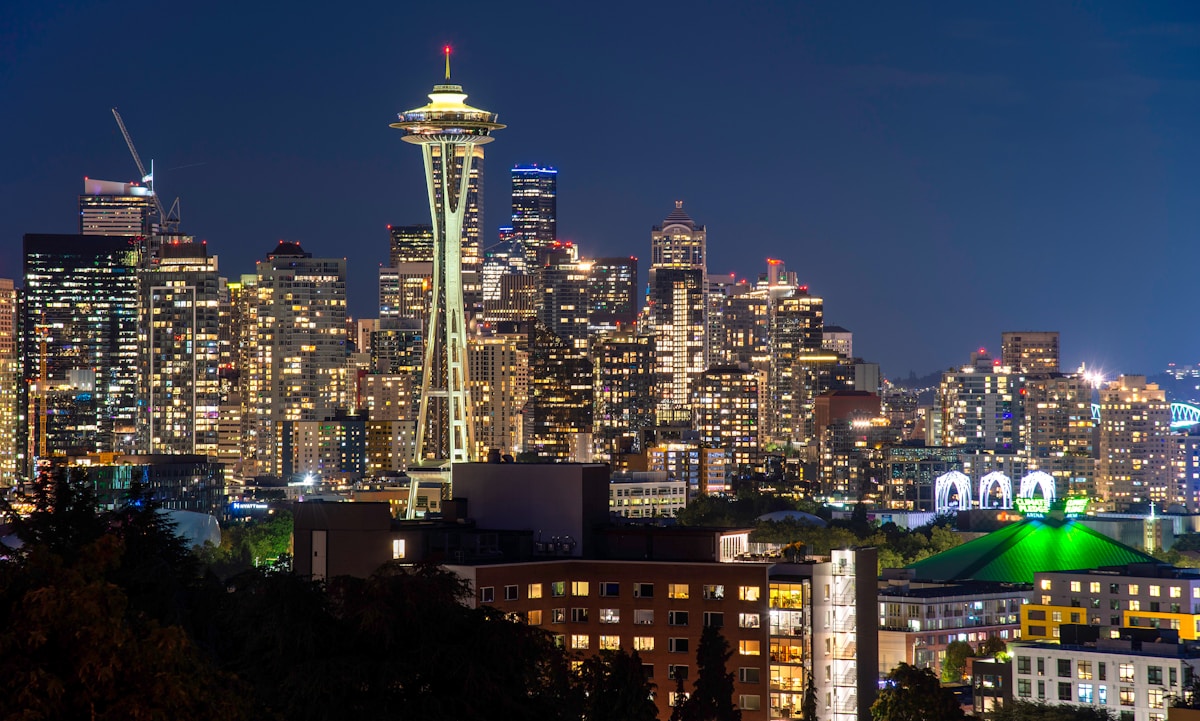
Space Needle (400 Broad St) - The 605-foot observation tower built for the 1962 World’s Fair. Admission approximately $40 as of 2026 for the main observation deck; the rotating glass floor on the upper deck is an additional $8. Open daily 10am–7pm (later on weekends). Book online to avoid queues and save approximately $5.
Chihuly Garden and Glass (305 Harrison St) - An indoor and outdoor exhibition of Dale Chihuly’s glass sculpture, in a dedicated museum adjacent to the Space Needle. Admission approximately $32 as of 2026; open daily 10am–6pm. One of the most consistently impressive art museum experiences in the Pacific Northwest; the large-scale installations in the Glasshouse are the centerpiece. A combined Space Needle + Chihuly ticket is approximately $62.
Museum of Pop Culture (MoPOP) (325 Fifth Ave N) - Frank Gehry–designed building housing exhibitions on rock and roll, science fiction, horror cinema, and video games. Admission approximately $32 as of 2026; open daily 10am–5pm. The permanent Jimi Hendrix and Nirvana galleries are the most substantive components.
Neighbourhoods
Capitol Hill - The city’s primary neighbourhood for independent restaurants, bars, coffee shops, and nightlife. Pike Street and Broadway are the main arteries. Link Light Rail serves Capitol Hill station.
Ballard - The former Scandinavian fishing village is now the city’s most active neighbourhood for craft breweries and independent restaurants. The Ballard Locks (access to Puget Sound) are free to visit and worth the trip in summer when salmon are running.
Fremont - The self-styled “Center of the Universe”; eclectic neighbourhood with the Fremont Troll (a large sculpture under the Aurora Bridge), the Sunday Market (open-air flea and craft market, Sundays 10am–4pm, April–October), and good independent restaurants.
Pioneer Square - The historic district on the southern edge of downtown; late 19th-century brick buildings, galleries, and underground tour access. The Bill Speidel’s Underground Tour (614 First Ave) explores the original street level of Seattle before the city was regraded after the 1889 fire; approximately $26 as of 2026.
South Lake Union - Amazon’s headquarters neighbourhood; the fastest-changing part of the city over the past decade. The Museum of History and Industry (MOHAI) is here; admission approximately $22 as of 2026; open daily 10am–5pm.
Mount Rainier and Day Trips
Mount Rainier National Park - approximately 90 miles southeast by car (allow 2–2.5 hours). The mountain (14,411 feet) is one of the most massive volcanic peaks in the contiguous US. The Nisqually entrance gives the most direct access to Paradise (5,400 feet elevation), where wildflower meadows and glaciers are accessible via day hikes. Entry fee approximately $35 per vehicle as of 2026; valid for 7 days.
Olympic National Park - approximately 2.5 hours west (including the ferry across Puget Sound from Seattle to Kingston, then drive). The park spans three distinct ecosystems-ocean coast, temperate rainforest, and alpine wilderness. Entry approximately $35 per vehicle as of 2026.
Where to Eat
The Walrus and the Carpenter (4743 Ballard Ave NW, Ballard) - The city’s most in-demand oyster bar; no reservations, and lines form before the 4pm opening. Pacific oysters approximately $3.50–$5 each as of 2026; the crudo and the sourdough toast are strong supporting options. Go on a weekday or arrive 30 minutes early.
Canlis (2576 Aurora Ave N, Queen Anne) - Seattle’s grand dame fine dining restaurant since 1950; glass and cedar building cantilevered over Lake Union. Tasting menu approximately $165–$195 per person as of 2026. Reservations book weeks out; the lake views at sunset are the best table in the city.
Salumi Artisan Cured Meats (309 Third Ave S, Pioneer Square) - The cured meat shop opened by Armandino Batali (father of Mario Batali) in 1999; sandwiches and charcuterie at lunch only. Porchetta sandwich approximately $14–$16 as of 2026. Cash only; long lines; closes when sold out.
Paseo (4225 Fremont Ave N, Fremont; and Seattle locations) - A Caribbean sandwich counter that has achieved cult status. The Cuban roast sandwich approximately $13–$15 as of 2026; one of the city’s most iconic lunches.
Where to Stay
The Edgewater Hotel (2411 Alaskan Way, Waterfront) - Built on a pier over Puget Sound in 1962; rooms have views directly over the water. From approximately $300/night as of 2026. The most distinctively Seattle hotel experience.
Search hotels in Seattle on Booking.com
Fairmont Olympic Hotel (411 University St, Downtown) - The city’s landmark grand hotel since 1924; rooms from approximately $350/night as of 2026. The Georgian Restaurant has been a Seattle institution for a century.
Hotel Theodore (1531 7th Ave, Downtown) - Boutique Autograph Collection property with rooms from approximately $220/night as of 2026. Well-placed for both Pike Place and Capitol Hill.
Ace Hotel Seattle (2423 First Ave, Belltown) - The original Ace Hotel property; compact, design-forward rooms from approximately $180/night as of 2026. The Belltown location is walkable to Pike Place and Seattle Center.
Green Tortoise Hostel (105 Pike St, Pike Place) - Steps from Pike Place Market; dormitory beds from approximately $45/night; private rooms from approximately $100/night as of 2026. The most central budget option.
Practical Notes
- Rain: The reputation is deserved but manageable. Bring a waterproof jacket; don’t bring an umbrella (locals don’t use them). The dry season is approximately July through September.
- Coffee: Drip coffee is taken more seriously here than anywhere else in the US. Avoid Starbucks and try Espresso Vivace, Victrola, or Lighthouse Coffee.
- Parking: Downtown Seattle parking is approximately $25–$45/day in a garage; free parking is scarce. The Link Light Rail from the airport eliminates the need to drive downtown.
- Sales tax in Seattle is 10.25% as of 2026; hotel tax is approximately 15.6%.
Planning your Seattle trip? Browse guided tours and activities in Seattle to book tickets and experiences in advance. For getting around the wider region, car hire in the USA gives you the most flexibility. Visitors from outside the USA will also want to sort travel insurance and an eSIM for the USA before departure.
More Seattle Guides
Book an experience
Top experiences in Seattle
Explore the best tours and activities in Seattle , with instant confirmation and free cancellation on most bookings.
Where to stay: Browse hotels in Seattle on Booking.com; filter by dates, budget, and guest rating.