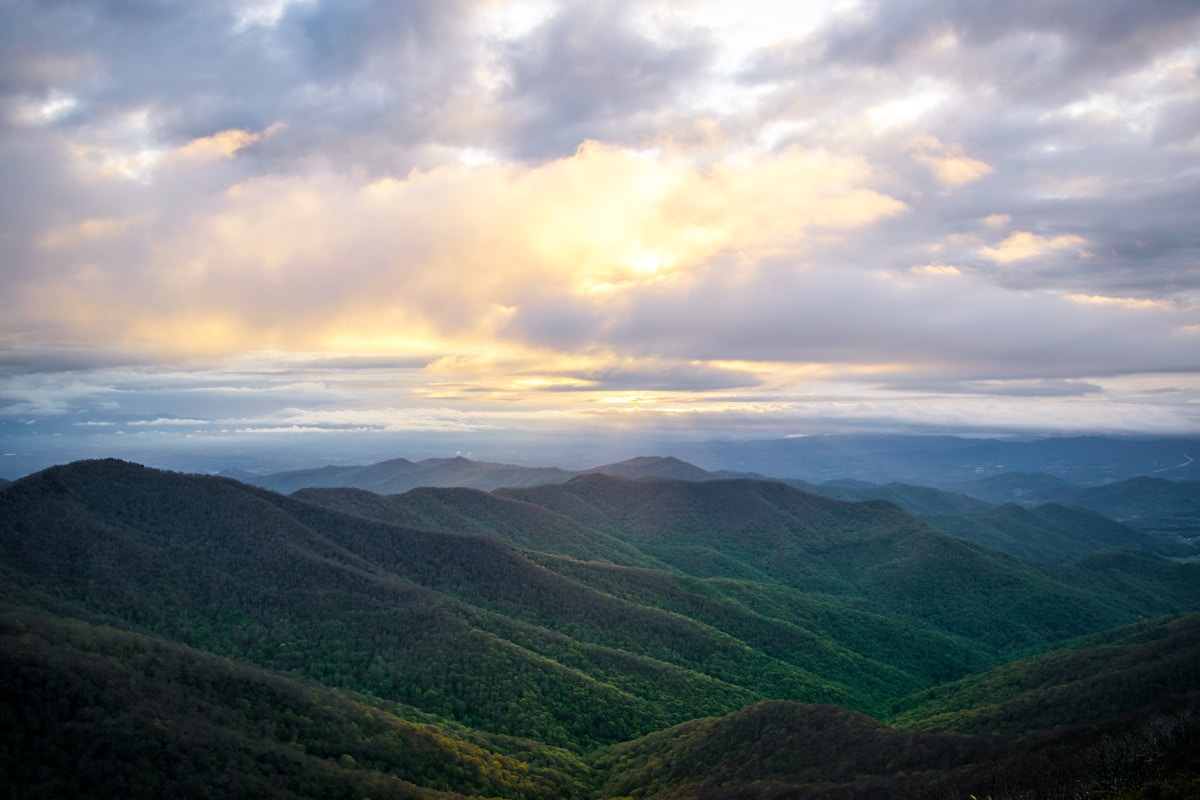
Shenandoah is the national park built around a road. Skyline Drive runs 105 miles along the crest of Virginia’s Blue Ridge, with 75 overlooks, 500+ miles of trails dropping into the hollows on either side, and the Appalachian Trail threading the whole length. It’s the easiest park to reach from Washington DC - 75 miles from the northern entrance - and in late October it’s one of the great fall-colour drives anywhere.
Why Visit
Shenandoah does long green views, waterfalls, and black bears - the park has one of the densest black bear populations in the country (sightings are common and almost always uneventful). It’s a park of mood rather than single monuments: morning fog filling the valley, hawks riding the ridge, stone walls and cemetery plots from the mountain communities displaced when the park was created in 1935. And it has, in Old Rag, the best scramble-hike on the East Coast.
Skyline Drive
The drive is the spine of every visit - 35 mph limit, mile markers counting south from Front Royal (MP 0) to Rockfish Gap (MP 105), where it hands over to the Blue Ridge Parkway. Four entrances: Front Royal (north, closest to DC), Thornton Gap (US 211, near Luray), Swift Run Gap (US 33), and Rockfish Gap (south, near Waynesboro and Charlottesville).
Driving the full length takes about three hours without stops - but the stops are the point. The overlooks worth pulling in for: Range View (MP 17), Stony Man (MP 38.6), Crescent Rock (MP 44, the Hawksbill view), and Big Run (MP 81, the wildest panorama in the park, looking over roadless backcountry).
The Best Hikes
- Old Rag (9.4 miles, 800 m gain) - the famous one: a granite summit reached by a genuine rock scramble through boulder fields and crevices. Day-use ticket required March–November (approximately $2 on Recreation.gov, on top of entry); allow 6–8 hours; not for small children or bad weather. The trailhead is outside the park boundary on the east side, not off Skyline Drive.
- Hawksbill Loop (2.9 miles) - the park’s highest summit (1,235 m) for modest effort; the summit platform faces three directions.
- Stony Man (1.6 miles) - the best view-per-step ratio in the park, from the Skyland area.
- Dark Hollow Falls (1.4 miles, steep return climb) - the most popular waterfall, a 21 m cascade near Big Meadows.
- Whiteoak Canyon (4.6–7.3 miles) - six waterfalls stacked in one gorge; swim holes in summer.
- Bearfence Mountain (1.2 miles) - a mini rock scramble to a true 360° viewpoint.
When to Go
| Season | What to expect |
|---|---|
| Mid–late Oct | Peak foliage; the park’s superlative weeks - and its busiest |
| May–Jun | Mountain laurel bloom, full waterfalls, green everything |
| Jul–Aug | Hazy and warm (cooler than DC by ~6°C); best for waterfall swims |
| Nov–Mar | Quiet and stark; Skyline Drive closes temporarily in ice/snow |
For foliage, aim for the third week of October and go midweek if you possibly can - fall weekends bring entrance queues at Front Royal and Thornton Gap. Check the park’s foliage reports on nps.gov/shen from late September.
Fees and Practicalities
Entry is $30 per vehicle as of 2026 (seven days). Shenandoah is not on the 11-park non-resident surcharge list - for international visitors comparing East Coast options, it’s $100-per-person cheaper than Acadia at the gate (see our full Acadia vs Shenandoah comparison). The America the Beautiful pass covers entry.
There’s no public transport - you need a car. Fuel is available seasonally at Big Meadows only; fill up in Front Royal or Luray. Mobile signal is patchy along the drive; download maps offline.
Where to Stay
Inside the park (both open roughly March–November, book well ahead for October):
- Skyland (MP 41.7, the highest lodging on the drive) - rooms and cabins from approximately $150–280/night, with the Pollock Dining Room’s blackberry ice cream pie a park institution (mains approximately $18–30).
- Big Meadows Lodge (MP 51) - stone-and-timber lodge from approximately $140–260/night; the adjacent Big Meadows area is the park’s hub, with visitor centre, campground (approximately $30/night, Recreation.gov), and the best bear-spotting meadow at dusk.
- Lewis Mountain Cabins - simple cabins from approximately $130/night.
Search hotels in Shenandoah on Booking.com
Gateway towns: Luray (15 minutes from Thornton Gap) is the most useful base - motels and inns approximately $110–200/night, plus Luray Caverns (the East’s largest cave system, approximately $34 as of 2026). Front Royal suits a DC-side overnight; Charlottesville (30 minutes from Rockfish Gap) adds Monticello and a serious food scene for the southern end.
Practical Tips
- Combine with DC: Shenandoah is the natural escape from the capital - our Day Trips From Washington DC Guide covers how it fits alongside Harpers Ferry and Gettysburg.
- Bears: store food properly and keep 50+ metres’ distance; the park’s bears are habituated to people but not food-conditioned - keep it that way.
- Continue south: Rockfish Gap flows straight onto the Blue Ridge Parkway - the combined drive to Great Smoky Mountains is one of the East’s classic road trips.
- Old Rag logistics: book the ticket, start before 8am, and check the weather - the scramble is genuinely dangerous wet.
For trip budgeting see our USA travel costs guide.
For guided ranger-led and private tours of Shenandoah National Park, browse available tours and experiences. Most visitors reach national parks by car - compare car hire options in the USA for the best rates. Travel insurance is especially worth having for remote park trips where emergency evacuation can be costly.