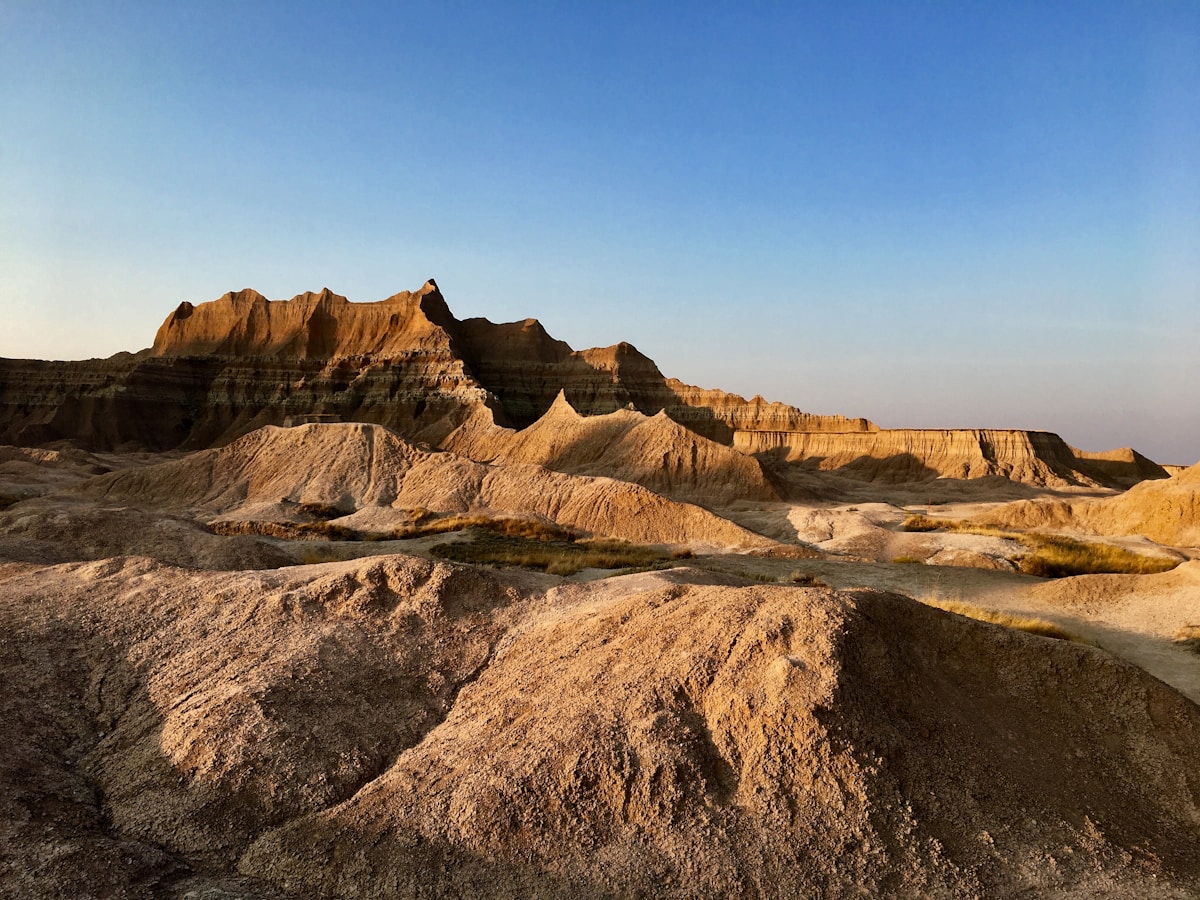
The Badlands of South Dakota are 244,000 acres of eroded buttes, pinnacles, and spires - the visual result of thirty million years of sediment followed by half a million years of relentless wind and water carving it away. The formations change color through the day: gray and buff in flat light, burning ochre and red at sunset, white-striped and luminous at dawn. Embedded in the layers are the fossilized remains of three-toed horses, saber-toothed cats, and titanotheres - the Badlands are among the richest Eocene fossil beds in the world. The surrounding mixed-grass prairie is the most intact in North America, roamed by a bison herd re-established after the animals were hunted nearly to extinction.
Entry Fees and Passes
Entry costs approximately $35 per vehicle as of 2026, valid for seven days. Motorcycles pay approximately $30; pedestrians and cyclists approximately $20. The America the Beautiful annual pass ($80) covers Badlands plus Wind Cave National Park, Jewel Cave National Monument, and Mount Rushmore National Memorial - all within 90 minutes. If you’re doing a Black Hills loop, the pass pays for itself immediately.
No timed-entry vehicle reservation system exists for Badlands as of 2026. Summer weekends are busy but the park rarely feels overcrowded compared to more famous western parks.
When to Visit
May–June and September–October are the best months. Spring brings green prairie grass against the formations - the sharpest color contrast of any season - plus newborn bison calves from April onward. September delivers warm days, cold nights, and rut-season bison activity. Wildflowers peak in June.
July–August: hot (85–100°F midday), thunderstorm-prone in afternoons, and busiest for crowds. The formations are still stunning but midday hikes in direct sun are punishing. Start before 8am.
Winter: the park is open year-round. Formations under snow are exceptional for photography, and the bison herd is often the most visible from the roads. Facilities at Cedar Pass are closed but the roads and trails are accessible. Dress for extreme cold.
Getting There
Rapid City Regional Airport (RAP) is the main gateway, 75 miles west of the park entrance via I-90. Rapid City has major car rental agencies at approximately $50–100/day - compare at /go/car-hire-usa. The park’s main entrance is at the Interior exit (Exit 131) off I-90; a second entrance is at the Wall exit (Exit 110), near Wall Drug.
Wall, SD is 8 miles north of the park’s Pinnacles entrance and is the last fuel and grocery stop before entering the western part of the park - and home to the legendary Wall Drug, a roadside attraction that has been advertising on billboards across South Dakota since 1931 (free ice water, $.05 coffee as of their long-standing prices - worth the stop).
Badlands Loop Road (SD-240)
The 31-mile Badlands Loop Road is the primary scenic route, with 14 numbered overlooks plus multiple roadside pullouts. Key stops:
- Big Badlands Overlook (near the northeast entrance) - the first and widest panorama of the formations stretching to the horizon.
- Pinnacles Overlook - arguably the most dramatic viewpoint, looking north over a jumble of spires.
- Yellow Mounds Overlook - pastel-colored clay deposits in yellows, purples, and pinks; a completely different palette from the white and gray spires elsewhere.
- Conata Picnic Area - mid-loop picnic ground, good rest stop with prairie dog town nearby.
- Ben Reifel Visitor Center - the main visitor center near Cedar Pass; fossils on display, ranger programs, the only in-park restaurant.
Allow 2–3 hours for the full loop with stops.
Hikes
Notch Trail - 1.5 miles round trip (moderate). Climbs a log ladder up the cliff face, traverses a canyon ledge, then opens to a wide vista. The exposed log-ladder section is the main challenge; the payoff is immediate.
Door and Window Trails - 0.75 miles each (easy to moderate). Two out-and-back trails through gaps in the Wall formation. The Door Trail enters the eroded badlands interior via a natural doorway; the Window Trail looks through a rock arch to the formations beyond.
Castle Trail - 5 miles one way (easy-moderate). The longest marked trail in the park, crossing mixed-grass prairie between the Door Trail and Fossil Exhibit trailhead. Combined with the Medicine Root Loop it makes a classic 8-mile day.
Saddle Pass - 0.25 miles (strenuous, 200-foot near-vertical scramble). Short but intense - a direct climb up the Wall face used by hikers connecting to Castle Trail and Medicine Root Loop. Not for those uncomfortable with loose footing.
Sage Creek Basin (unmarked, backcountry) - the northwest area of the park around Sage Creek Road and Campground is bison territory with no marked trails. Navigation by GPS, permission-free day hiking in this area, and outstanding wildlife viewing on foot. Do not approach bison.
Wildlife Viewing
Bison: the Sage Creek Road (a gravel loop off the main road) is the best corridor. Herds of 50–200 animals frequently graze roadside, especially morning and evening. Keep 25 yards minimum; bison are far faster than they look.
Bighorn sheep: frequently seen on the rocky formations between the Pinnacles entrance and the Ben Reifel Visitor Center. The rock formations near Bighorn Overlook are well-named.
Prairie dogs: the Sage Creek prairie dog town covers several hundred acres and is one of the largest in the national park system. Their warning-bark system means they’ll alert you to other predators nearby - watch for coyotes and hawks hunting the edges.
Campgrounds
Cedar Pass Campground (near Ben Reifel Visitor Center) - 94 sites, electric hookups available, approximately $25–40/night. Open year-round. Most accessible option, reservable at recreation.gov.
Sage Creek Primitive Campground - free, first-come, no water, no facilities, in the heart of the bison range. For self-sufficient tent campers only. Close encounters with the herd are common overnight.
Accommodation
In-park:
- Cedar Pass Lodge - Renovated cabins with AC and heating, open April through October. Rates from approximately $170–280/night. On-site restaurant (Cedar Pass Restaurant, mains approximately $14–25, buffalo burger is the local recommendation). Book well ahead for August weekends.
Search hotels in Badlands on Booking.com
Nearby:
- Wall, SD (8 miles north of the Pinnacles entrance) - Budget motels approximately $80–150/night. The Sunshine Inn and Best Western are the main options.
- Interior, SD (at the southeast entrance) - Very small town, limited options.
- Rapid City (75 miles west) - Full range from budget chains at approximately $80/night to the Hotel Alex Johnson (historic downtown, approximately $180–280/night).
Combining with Nearby Attractions
Most Badlands visitors build a 3–4 day Black Hills loop from Rapid City:
- Day 1: Badlands Loop Road and Cedar Pass
- Day 2: Wind Cave National Park (70 miles southwest) - stalactite cave tours from approximately $12/person; bison and elk on the surface
- Day 3: Mount Rushmore (90 minutes west of Badlands) and Crazy Horse Memorial; Custer State Park
The 14-day national parks itinerary covers this Black Hills circuit in detail. Route 66 travelers heading east can also combine Badlands with Mount Rushmore and the Great River Road for a broader Midwest loop.
Safety
- Rattlesnakes: common on rocky trails and in grasslands. Watch where you step, particularly when climbing over rocks. Prairie rattlesnakes blend perfectly with the ground.
- Lightning: the open prairie and exposed formations are extreme lightning hazards during the frequent summer thunderstorms. Get off all trails and ridges by early afternoon.
- Heat and water: the park has no reliable water sources on trails. Carry at least 2 liters per person; more in July–August.
- Bison: the most underestimated hazard. Keep 25 yards minimum; they charge with no warning. Multiple visitors are injured annually at Badlands by approaching bison for photos.
- Getting lost in the backcountry: the Sage Creek area has no trails and looks identical in every direction. GPS with downloaded offline maps is essential.
For guided ranger-led and private tours of Badlands National Park, browse available tours and experiences on GetYourGuide - from wildlife and photography excursions to multi-day adventures in and around the park.