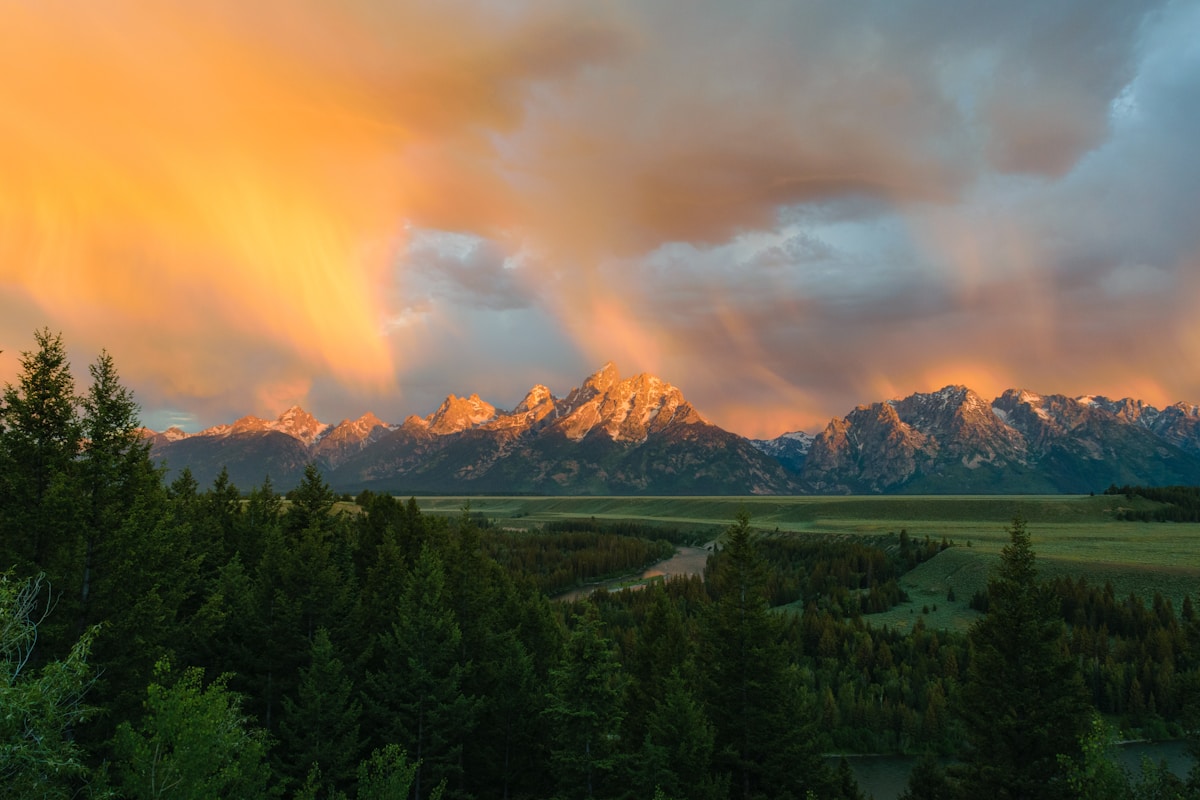
The Teton Range does something almost no other American mountain range does: it rises straight off the valley floor with no foothills. The Grand Teton itself tops out at 13,775 feet, roughly 7,000 feet above Jackson Hole, and the entire wall of peaks reflects in a chain of glacial lakes at its base. Combined with the Snake River, resident grizzlies, moose, and the most photogenic barns in America at Mormon Row, Grand Teton condenses the best of the Rockies into a park you can drive end to end in an hour.
Entry Fees and Passes
Entry costs approximately $35 per vehicle as of 2026, valid for seven days. Motorcycles pay approximately $30; pedestrians and cyclists approximately $20. Note that Grand Teton (along with Yellowstone) is among the flagship parks adding a surcharge of approximately $100 per person for non-US-resident visitors beginning in 2026 - verify current rules at nps.gov/grte before budgeting. The America the Beautiful annual pass ($80) covers standard entry here and at Yellowstone.
Grand Teton and Yellowstone charge separate entrance fees - one does not cover the other.
When to Visit
June–September is the main season. July and August bring wildflowers in the canyons, warm days (75–85°F), and peak crowds - book lodging six months or more ahead. Mosquitoes are notable near water in early July.
Mid-September–early October is our pick: golden aspens, elk bugling at dawn, thinner crowds, and crisp 60s°F days. Snow can dust the peaks any time after Labor Day.
November–April: Teton Park Road closes to vehicles between Taggart Lake and Signal Mountain (typically November 1 to about May 1) and becomes a ski and snowshoe trail. The highway through the park stays open. Winter is beautiful but services are minimal; nearby Jackson stays lively thanks to the ski resort.
Getting There
Jackson Hole Airport (JAC) sits inside the park boundary - the only commercial airport in a US national park - 15 minutes from the Moose entrance. Fares run high; many travelers fly into Salt Lake City (about 4.5–5 hours’ drive) or Idaho Falls (about 2 hours) for cheaper flights and rental cars from approximately $50/day - compare at /go/car-hire-usa.
The town of Jackson, WY is 20 minutes south of Moose and serves as the main base. Yellowstone’s South Entrance is about 30 minutes north of Colter Bay via the Rockefeller Parkway.
Top Hikes
Cascade Canyon via Jenny Lake - The signature hike. Take the Jenny Lake boat shuttle (approximately $20 round trip) across the lake, climb to Hidden Falls and Inspiration Point (2 miles round trip from the boat dock, moderate), then continue into Cascade Canyon beneath the Grand Teton for as long as you like - the full canyon to the forks is about 9 miles round trip with the boat. Moose sightings are common along the creek.
Taggart Lake Loop - 3.8 miles round trip (easy-moderate, 2 hours). The best effort-to-view ratio in the park: a forested climb to a lake directly beneath the Grand.
Delta Lake - 7.4 miles round trip (strenuous, 4–6 hours) via an unmaintained spur off the Amphitheater Lake trail, including a boulder field. The reward is a turquoise lake at the foot of the Grand Teton. Start by 7am for parking at Lupine Meadows.
Paintbrush Canyon–Cascade Canyon Loop - 19+ miles (very strenuous) over 10,700-foot Paintbrush Divide. One of the great single-day or overnight loops in the Rockies; an ice axe may be needed on the divide into mid-July.
Phelps Lake Loop (Laurance S. Rockefeller Preserve) - 7 miles round trip (moderate). The preserve parking lot is capped and fills by 8am.
For drive-up views: Schwabacher Landing and Oxbow Bend at sunrise, Snake River Overlook (the Ansel Adams view), and the Mormon Row barns off Antelope Flats Road.
Wildlife Watching
Dawn and dusk along Moose-Wilson Road (moose, bears - note seasonal closures), Oxbow Bend (moose, otters, eagles), and Antelope Flats (bison, pronghorn) are the reliable circuits. Grizzlies frequent the Pilgrim Creek and Willow Flats areas. Keep 100 yards from bears and wolves, 25 yards from everything else. Bear spray is sold in Jackson and at park stores for approximately $50; rentals are available in town.
Accommodation
In-park:
- Jackson Lake Lodge - The park’s flagship, with 60-foot lobby windows framing the range. Rooms from approximately $350–450/night, late May–early October.
- Jenny Lake Lodge - Cabin luxury with breakfast and dinner included, from approximately $700+/night. Books out far ahead.
- Signal Mountain Lodge - Lakefront rooms and cabins from approximately $250–400/night; the marina rents boats.
- Colter Bay Village - Log cabins from approximately $200–300/night and tent cabins from approximately $90/night; the budget pick inside the park.
Search hotels in Grand Teton on Booking.com
Camping: Six campgrounds, all reservable via recreation.gov, approximately $40–60/night. Jenny Lake Campground (tents only) is the most sought-after and releases sites months ahead.
Jackson, WY: Full range from motels at approximately $150–250/night to The Wort Hotel and Hotel Jackson at approximately $400–700/night in summer. Prices drop sharply in shoulder seasons.
Where to Eat
The Pioneer Grill at Jackson Lake Lodge is a 1950s soda-fountain counter (huckleberry milkshakes, approximately $9; mains $15–25). Dornan’s Pizza Pasta Company in Moose has a rooftop deck facing the entire range (pizzas approximately $16–22). In Jackson, Snake River Grill is the splurge (mains approximately $35–60) and Persephone Bakery the breakfast stop.
Safety Notes
- Bears and moose: Carry bear spray on every trail and know how to use it. Moose near willows and creeks injure more visitors here than bears do - back away if one pins its ears.
- Afternoon storms: Summer thunderstorms build over the peaks by early afternoon. Be off exposed terrain like Paintbrush Divide by noon.
- Altitude: The valley sits at 6,800 feet; trails climb past 10,000. Hydrate and expect to move slower on day one.
- Cold water: The lakes are snowmelt-fed and dangerously cold for swimmers even in August.
- Lingering snow: High passes hold snow into mid-July - check trail conditions at the Jenny Lake or Craig Thomas visitor centers.
For guided ranger-led and private tours of Grand Teton National Park, browse available tours and experiences on GetYourGuide - from wildlife and photography excursions to multi-day adventures in and around the park.