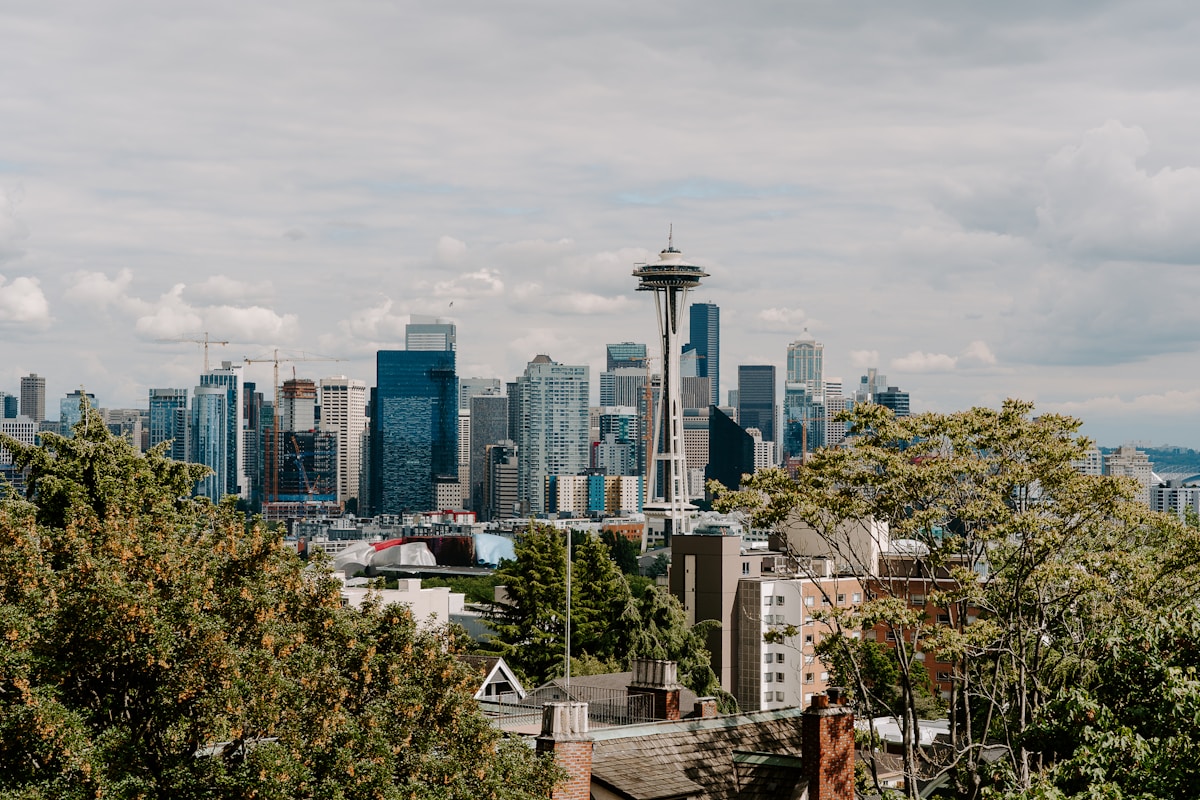
Seattle sits at an interesting crossroads for digital nomads: the Pacific Northwest lifestyle appeal (mountains, water, outdoor culture), a tech industry that brings highly paid remote workers from across the country, and Washington State’s no income tax policy create a compelling combination. The city also has one of the best coffee cultures in the US - Seattle is where modern specialty coffee largely began.
The counterpoint is cost. Seattle’s housing market has been pushed up significantly by tech sector growth over the past decade. It’s still cheaper than San Francisco, but the gap has narrowed. Rain from October through April is also a genuine lifestyle factor - not a dealbreaker, but something to go in knowing.
Coworking Spaces
WeWork operates in South Lake Union (1201 3rd Ave) and Belltown (600 1st Ave N). Hot desks run approximately $300–$500/month as of 2026. The South Lake Union location is the strongest for tech-adjacent workers - surrounded by Amazon offices and tech company campuses.
Galvanize Seattle (Pioneer Square, various addresses post-2024) is Seattle’s tech and startup-focused coworking hub. Community memberships from approximately $200–$400/month, with a curriculum of events, talks, and startup programming. If your work intersects with the tech industry, this is the community to be in.
Spaces by IWG (601 Union St, downtown) offers hot desks from approximately $200–$350/month, often with new-member promotions. Central location within walking distance of Pike Place Market.
Mod3rn (in the Eastlake / Capitol Hill border area) is a boutique option popular with creative freelancers and remote workers. Memberships from approximately $150–$300/month with a community feel that larger coworking chains lack.
WeWork Kirkland and Bellevue locations are worth noting for nomads considering the Eastside - Bellevue has grown substantially as Amazon and Microsoft offices have expanded there, and coworking supply has followed.
Best Cafes for Remote Work
Victrola Coffee Roasters (310 E Pike St, Capitol Hill - the flagship location) is the benchmark Seattle specialty coffee shop for laptop work. The Capitol Hill location has good seating layout, reliable wifi, and a neighborhood community of remote workers who make it feel natural to work here all morning. Budget approximately $6–$12 per visit.
Lighthouse Coffee (1535 10th Ave, Capitol Hill) is quieter than Victrola and slightly better for focused work - fewer tourists, faster wifi, and excellent espresso. The friendly neighborhood feel makes it easy to become a regular.
Slate Coffee (multiple Capitol Hill and Queen Anne locations) roasts on-site and offers a more boutique experience. The wifi is reliable at the Capitol Hill location; the Queen Anne location (449 W Bertona St) is the quieter option.
Fremont Coffee Company (459 N 36th St, Fremont) anchors the Fremont neighborhood for nomads working in the northwest. The relaxed atmosphere, dog-friendly patio, and strong wifi make it a weekend and weekday staple for locals.
Cloud City Coffee (8801 Roosevelt Way NE, Roosevelt) suits nomads based in the north Seattle neighborhoods - Ravenna, Roosevelt, Green Lake. Reliable wifi, generous seating, and a neighborhood feel that national chains don’t replicate.
Average Rent (1-Bedroom)
Seattle rents have increased substantially over the past decade but are stabilizing. As of 2026:
- Capitol Hill / First Hill: approximately $1,900–$2,500/month
- South Lake Union / Belltown: approximately $2,100–$2,800/month
- Fremont / Wallingford: approximately $1,700–$2,300/month
- Ballard: approximately $1,800–$2,400/month
- Beacon Hill / Columbia City: approximately $1,400–$1,900/month
- West Seattle: approximately $1,500–$2,100/month
Beacon Hill and Columbia City offer the best value for nomads who can tolerate a slightly longer commute. West Seattle requires either a water taxi or bridge crossing, which adds time but offers a waterfront setting.
Cost of Living Breakdown (Monthly Estimate)
| Category | Approximate Monthly Cost |
|---|---|
| 1-bed rent (Capitol Hill) | $1,900–$2,500 |
| Groceries | $350–$550 |
| Eating out (3–4x/week) | $350–$600 |
| Coworking (hot desk) | $200–$450 |
| ORCA transit pass | $100 |
| Utilities + internet | $130–$200 |
| Total estimate | $3,030–$4,400 |
Washington State has no income tax - a significant advantage over California. The city has a 3.6% B&O tax on business revenue that applies to self-employed individuals, which nomads should factor into their tax planning.
Internet Quality
Seattle has strong internet infrastructure via Comcast Xfinity, CenturyLink Fiber (now Brightspeed), and Wave Broadband. CenturyLink / Quantum Fiber reaches gigabit speeds in most Seattle zip codes for approximately $70–$90/month. 5G from Verizon and T-Mobile covers most of the city core and adjacent neighborhoods. Coworking spaces universally offer gigabit connections. Capitol Hill cafe wifi is generally reliable - test Fast.com before committing to a video call from a new spot.
Visa and Entry
US citizens require no visa to work anywhere in Washington State. Washington has no state income tax - a meaningful advantage for high earners. The self-employment B&O tax applies at 3.6% of gross receipts for most service businesses. Foreign nationals on B1/B2 visas cannot legally work for US clients.
Best Neighborhoods for Nomads
Capitol Hill is the top pick for most nomads - walkable, the best cafe density in the city, strong transit links to downtown, and a neighborhood culture that welcomes the creative class. The Cal Anderson Park area is the social hub.
Fremont is the alternative for nomads who want a more relaxed, slightly quirky neighborhood feel. Known for the Sunday market, the Lenin statue, and a tech-adjacent community (Google has offices in Fremont). Good cafe scene and lower rents than Capitol Hill.
Ballard is a slightly more family-oriented neighborhood in the northwest, with a Scandinavian heritage and an increasingly good food and coffee scene along Ballard Avenue. Rents are comparable to Capitol Hill.
South Lake Union suits tech nomads who want to be at the center of Seattle’s tech industry. Amazon’s HQ2 developments dominate the neighborhood - good for networking if you work in tech, sterile otherwise.
The Link Light Rail connects Capitol Hill to downtown in under 10 minutes and continues north to the University District and south to the airport. For most Capitol Hill nomads, a car is optional.
Best Time to Visit
July, August, and September are Seattle’s golden months - low rain, warm temperatures (70–80°F / 21–27°C), and the outdoor culture comes fully alive. The mountains are accessible, the sound is beautiful, and the city energy is highest. May and June are mild but variable. October through April brings consistent grey skies and rain, which drives some nomads away but gives the city a productive, heads-down atmosphere that many writers and developers actually prefer.
City Guides
Search hotels in United States on Booking.com
Stay connected with an eSIM for the USA - useful for working from Discovery Park, the waterfront, or ferry rides to Bainbridge Island. Compare flights to Seattle and arrange travel insurance that covers extended stays.