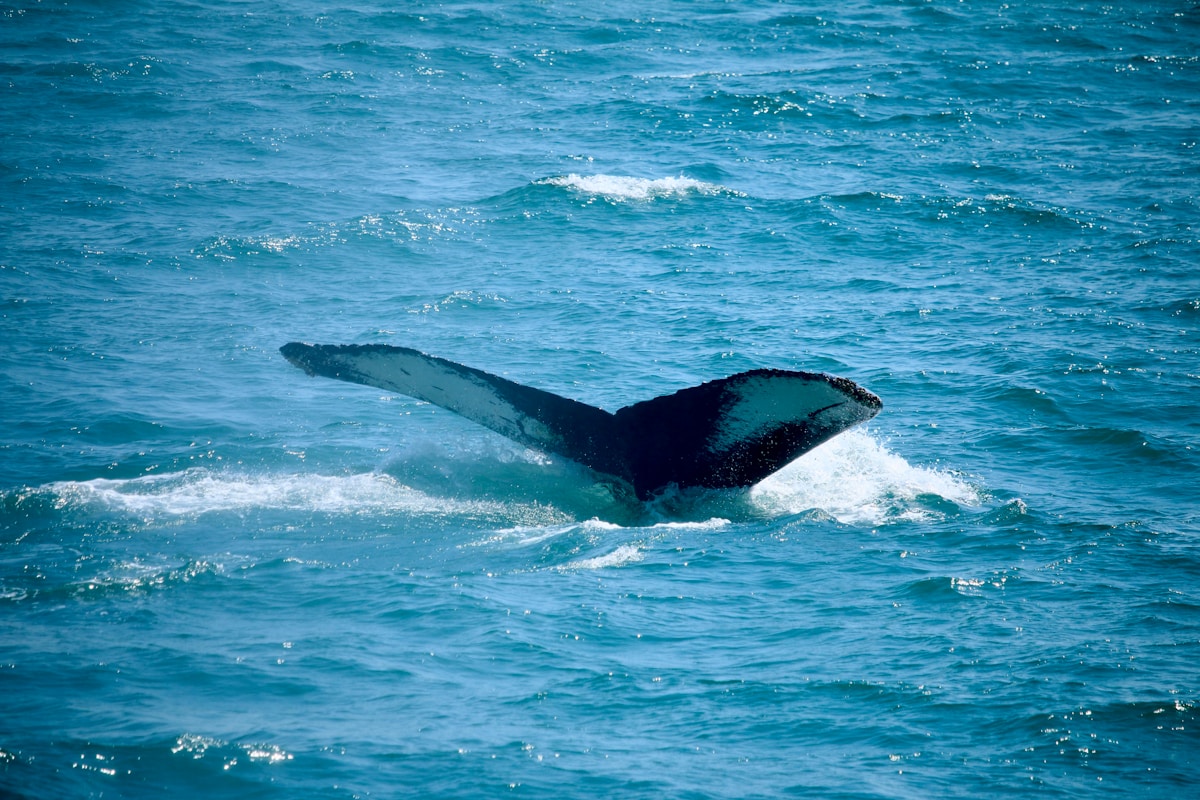
The US coastline spans three ocean systems - the Pacific, Atlantic, and Gulf of Mexico - plus Alaska’s extensive interior waterways, and each hosts distinct whale species at predictable seasonal windows. No country offers the combination of humpback, blue, orca, gray, and right whale viewing across such varied environments. Planning requires matching location to season: showing up in Monterey Bay in March and expecting blue whales, or visiting Cape Cod in February, will result in an empty ocean.
Monterey Bay, California
Monterey Bay is widely considered the best year-round whale watching destination on the US mainland. The underwater Monterey Canyon - deeper than the Grand Canyon - creates upwelling that fuels massive marine food chains, attracting large concentrations of marine mammals throughout the year.
Species and seasons:
- Gray whales: December–April (southbound migration November–February; northbound with calves March–April)
- Humpback whales: April–November (peak May–October)
- Blue whales: May–October (the largest animal on Earth; Monterey Bay is one of the most reliable blue whale destinations in the world)
- Orca (killer whales): Year-round opportunistic sightings; transient orcas hunt gray whale calves March–May
- Pacific white-sided dolphins and Risso’s dolphins: Year-round
Operators:
- Monterey Bay Whale Watch (montereybaywhalewatching.com) - the most experienced operator, founded by marine biologist Nancy Black. Half-day trips run approximately $45–$65/person as of 2026; full-day trips approximately $85–$110.
- Princess Monterey Whale Watching (montereywhalewatching.com) - larger boats with covered viewing areas. Half-day trips approximately $50–$70.
- Trips depart from Fisherman’s Wharf. Book at least a day in advance in summer; weekends require earlier booking.
San Juan Islands, Washington
The San Juan Islands in Puget Sound host one of the world’s most studied orca populations - the Southern Resident Killer Whales, a genetically distinct population of approximately 70 individuals as of 2026. Whale watching in the San Juans is distinct from other destinations: these are familiar, well-documented individuals with known family histories.
Species and seasons:
- Southern Resident Orcas: Best June–September; the pods follow Chinook salmon runs through the islands
- Transient (Bigg’s) Orcas: Year-round; hunt harbor seals and porpoises
- Minke whales: Summer and fall
- Harbor porpoises and Dall’s porpoises: Year-round
Operators:
- San Juan Excursions (watchwhales.com) - Departures from Friday Harbor, San Juan Island. 3–4 hour trips run approximately $80–$110/person as of 2026.
- Western Prince Cruises (westernprincecruises.com) - Departures from Friday Harbor. Similar pricing.
- Puget Sound Express (pugetsoundexpress.com) - Departures from Port Townsend and Port Angeles on the mainland, eliminating the need to take the San Juan Islands ferry. 4–5 hour trips approximately $95–$130.
- Hydrophone equipment on most vessels allows passengers to listen to orca vocalizations underwater.
Important context: Southern Resident Orca sightings cannot be guaranteed. In recent years, reduced Chinook salmon availability has resulted in some July and August departures without orca encounters. Most operators guarantee a minimum of wildlife sighting (harbor seals, eagles, porpoises) regardless.
Cape Cod, Massachusetts
Cape Cod’s Stellwagen Bank National Marine Sanctuary - a productive feeding ground 25 miles north of Provincetown - is the center of New England whale watching. The concentration of humpback whales in summer is exceptional; researchers have catalogued individual humpbacks returning to Stellwagen Bank for decades.
Species and seasons:
- Humpback whales: April–October (peak June–September); feeding behavior including breaching, lunge feeding, and bubble net feeding is commonly observed
- Fin whales: April–October
- Minke whales: April–October
- North Atlantic Right Whales: Spring calving season (February–April off Florida/Georgia coast; migrate north through spring)
Operators:
- Dolphin Fleet of Provincetown (whalewatch.com) - The most established operator, running trips since 1975 from MacMillan Pier in Provincetown. Half-day trips run approximately $60–$80/person as of 2026. Naturalists from the Center for Coastal Studies accompany every trip.
- Hyannis Whale Watcher Cruises (whales.net) - Departures from Barnstable Harbor; more central Cape Cod location. Approximately $55–$75/person.
Hawaii (Maui)
The Hawaiian Islands are the primary North Pacific humpback whale breeding and calving ground. From December through April, approximately 10,000 humpback whales congregate in the warm shallow waters of the Hawaiian Islands - the largest population of humpbacks anywhere in the world.
Species and seasons:
- Humpback whales: Mid-December through mid-April (peak January–March); males sing continuously during this period - their songs are audible underwater without equipment
- Spinner dolphins: Year-round in Hawaiian coastal waters
Best departure point: Maui - specifically Lahaina (when accessible) and Maalaea Harbor. The waters between Maui, Lanai, and Kahoolawe (the Au’au Channel) have the highest concentration of humpbacks.
Operators:
- Pacific Whale Foundation (pacificwhale.org) - Non-profit operator with research-informed naturalist interpretation. 2–3 hour trips approximately $45–$65/person as of 2026. Proceeds support conservation research.
- Trilogy Excursions (sailtrilogy.com) - Sailing catamaran whale watching; quieter, more immersive experience. Morning trips approximately $55–$75.
- Maui Adventure Cruises - Smaller rigid-hull inflatable vessels for closer encounters. Approximately $50–$65.
Note: Maui wildfires in 2023 significantly impacted Lahaina. Verify current harbor and operator status before booking, as infrastructure recovery was ongoing as of 2026.
Alaska (Kenai Fjords / Southeast)
Alaska offers the most spectacular whale watching in the US in terms of scenery and species diversity. Humpback whales feed in productive glacial waters alongside orcas, Dall’s porpoises, Steller sea lions, and bald eagles - all in sight of tidewater glaciers.
Key locations:
- Kenai Fjords National Park (Seward, Alaska): Half-day and full-day boat tours into the fjords. Full-day trips see Resurrection Bay glaciers and regular humpback whale encounters. Approximately $200–$280/person for full-day trips as of 2026. Kenai Fjords Tours (kenaifjords.com) is the primary operator.
- Inside Passage / Southeast Alaska: Cruises and small-vessel tours from Juneau and Sitka encounter humpbacks regularly June–August. Allen Marine Tours (allenmarinetours.com) in Sitka runs excellent naturalist-guided marine wildlife trips.
Season: May–September, with peak humpback feeding activity in July–August.
General Tips
- Seasickness: Ocean swell affects all whale watching trips. Take medication (Dramamine, Bonine) 30–60 minutes before departure regardless of sea conditions. Eat beforehand.
- Layers: Sea temperatures are 10–15°F cooler than shore temperatures even in summer. Bring a windproof layer to all Pacific and New England departures.
- Binoculars: Useful for spotting distant blows, though encounters vary in proximity.
- Photography: Use a fast shutter speed (1/1000s+) for breach shots - whale behavior is unpredictable and fast.
- Guarantee policies: Most reputable operators offer a return trip or refund if no whales are sighted. Confirm this policy before booking.
City Guides
- Monterey travel guide
- Maui travel guide
- Anchorage travel guide
- Alaska itinerary - Denali, glaciers and Southeast
- Seattle travel guide
- Juneau travel guide
- Pacific Coast Highway road trip
- Olympic National Park guide
- Best beaches in the USA
- Wildlife watching in the USA
Whale Watching USA at a Glance
Prices as of 2026. Book whale watching tours in the USA on GetYourGuide - peak-season departures sell out weeks ahead.
| Location | Best Species | Peak Season | Half-Day From | Book |
|---|---|---|---|---|
| Monterey Bay, CA | Blue whale, humpback, gray whale | May–Oct | ~$45 | Book on GYG |
| San Juan Islands, WA | Southern Resident orca | Jun–Sep | ~$80 | Book on GYG |
| Cape Cod, MA | Humpback whale | Jun–Sep | ~$60 | Book on GYG |
| Maui, HI | Humpback whale | Dec–Apr | ~$45 | Book on GYG |
| Kenai Fjords, AK | Humpback + orca | May–Sep | ~$200 (full day) | Book on GYG |
If you’re flexible on timing, check our last-minute tours page - coastal departure slots occasionally open when groups cancel, especially outside peak weekends.
Book whale watching tours in the USA in advance - peak-season departures sell out weeks ahead. Compare flights to the USA for your coastal destination and arrange travel insurance before departure.