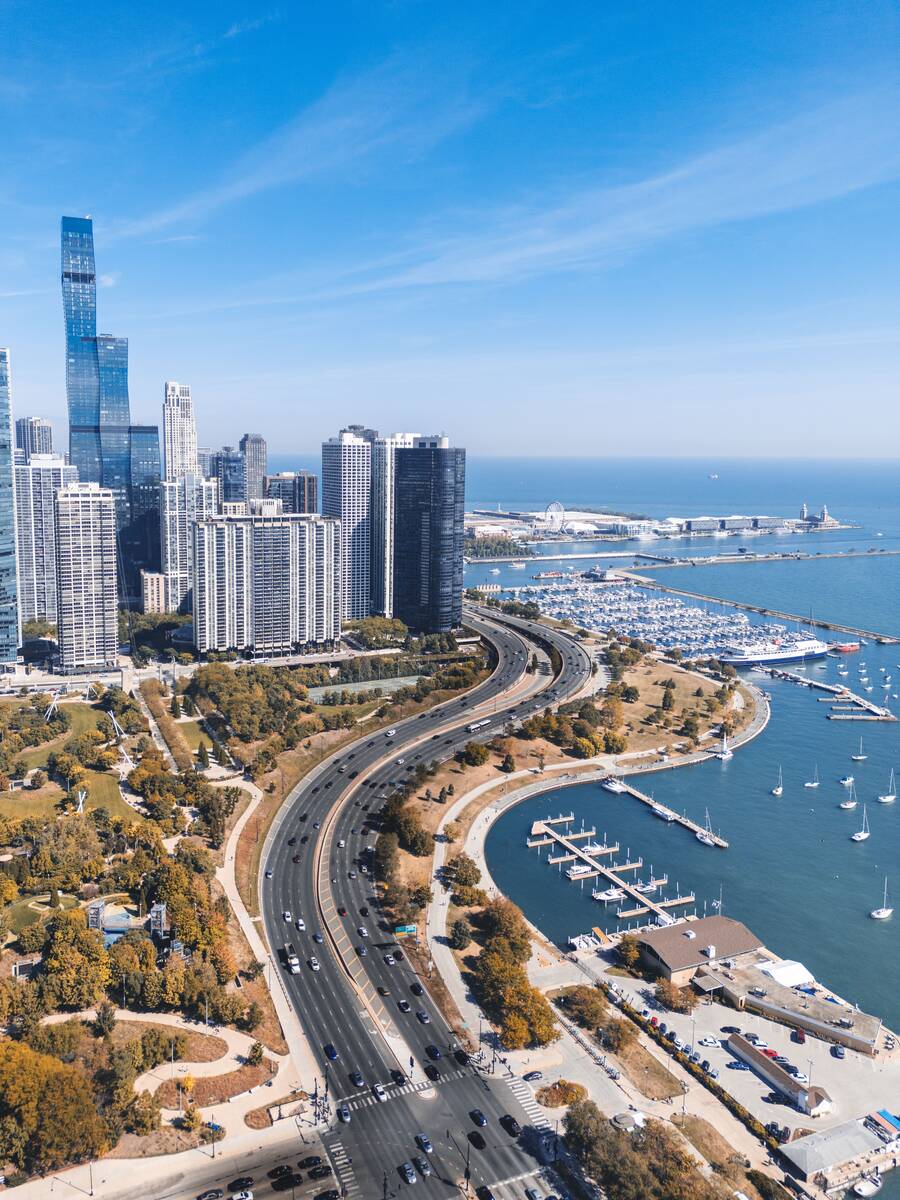
Chicago and Miami sit at opposite ends of the American weather spectrum - one defined by dramatic seasons and Midwest architecture, the other by year-round sun and a culture shaped by the Caribbean and Latin America. Both are exceptional cities, but they serve different travellers and reward different priorities.
Quick Verdict
| Category | Chicago | Miami |
|---|---|---|
| Hotel cost (mid-range) | $160–250/night | $160–330/night |
| Overall daily budget | $100–270 | $120–320 |
| Winter weather | Frigid (avg 26°F) | Warm (avg 75°F) |
| Summer weather | Excellent (avg 83°F) | Hot and humid (avg 91°F) |
| Beaches | Lake Michigan (cold) | Atlantic Ocean (warm, year-round) |
| Food scene | Deep-dish, steak, blues bars | Cuban, Haitian, Latin American, seafood |
| Nightlife | Jazz and blues clubs, cocktail bars | Electronic and Latin clubs, rooftop bars |
| Architecture | World-class | Art Deco + modern high-rises |
| Best for | Culture, food, summer lakefront | Beaches, nightlife, winter sun |
Weather: The Biggest Difference
This is the central factor in any Chicago vs Miami comparison. Chicago has one of the most dramatic seasonal swings of any major US city. Summer (June–August) is genuinely spectacular - warm days averaging 83°F, lakefront breezes, Millennium Park, outdoor festivals, and beaches along Lake Shore Drive. It’s one of the best urban summer experiences in America.
Winter is the trade-off. Chicago’s lakefront wind in January and February is not merely cold - it’s physically aggressive. Average temperatures of 26°F, combined with gusts off Lake Michigan, regularly produce feels-like temperatures of 0°F or below. Outdoor sightseeing becomes difficult and uncomfortable.
Miami flips this equation. Winter (December–March) is Miami’s peak season precisely because the weather is perfect - highs around 75–78°F, low humidity, blue skies. Summer is hot and muggy, with highs around 90°F and afternoon thunderstorms almost daily. Hurricane season runs June through November, though actual hurricane landfalls are far rarer than the season designation implies.
Rule of thumb: visiting between December and March, Miami is the obvious choice. Visiting between June and September, Chicago is arguably the more pleasant city.
Cost Comparison
Chicago is the better-value city overall - with one significant caveat. Chicago’s hotel tax rate of approximately 17.4% is one of the highest in the United States, and the city’s 10.25% combined sales tax inflates every restaurant and shopping bill. A 3-star hotel in the Loop or River North listed at $180/night becomes $210+ after tax and fees.
Miami’s South Beach carries a resort premium that Chicago can’t match in peak season. During winter (December–March), a 3-star South Beach hotel runs $240–330/night all-in. The same property drops to $120–170/night in summer. Miami Beach also adds a 7% resort tax on top of Florida’s standard 6% hotel tax - always check the all-in total when booking.
Accommodation comparison (per night, all-in):
- Chicago 3-star Loop/River North: $200–290 (summer peak), $110–160 (winter off-peak)
- Miami 3-star South Beach: $240–330 (winter peak), $130–180 (summer)
- Miami 3-star Brickell/Downtown: $140–200 year-round - the best-value base in Miami
Search hotels in Chicago on Booking.com
Search hotels in Miami on Booking.com
Food costs are broadly similar between the two cities. A Chicago deep-dish pizza for two with beers at Lou Malnati’s runs around $40–55. A Cuban sandwich at a Little Havana counter in Miami costs $10–15. Sit-down dinner for two with drinks: $75–120 in Chicago, $80–130 at South Beach (slightly higher for the location premium). Both cities have a strong tradition of cheap street food - Chicago-style hot dogs from $4 a stand; Cuban coffee and pastelitos in Miami for $3–5.
Activity costs:
- Chicago Architecture Foundation river cruise: $50/person - one of the best city tours in the USA
- Millennium Park and Chicago lakefront: free
- Art Institute of Chicago: $25/adult
- Miami Beach (swimming, sunset walks, Art Deco District): free
- Everglades airboat tour: $30–55/person
- Wynwood Walls (street art district): free to view from outside; $10–15 for gallery entry
Our full Chicago trip cost guide and Miami trip cost guide have complete budget breakdowns by travel style.
Food and Drink
Chicago has one of the most distinctive food cultures in America. Deep-dish pizza at Lou Malnati’s or Giordano’s is mandatory - a full deep-dish for two costs $30–40. Chicago-style hot dogs (no ketchup, by local law of social custom) from a Portillo’s or a street stand cost $4–6. The West Loop restaurant scene is nationally significant, with some of the best steakhouses in the country and a farm-to-table scene anchored by acclaimed restaurants in Fulton Market.
Miami’s food scene is shaped by its geography and population - a majority-Hispanic city with deep Cuban, Haitian, Colombian, and Caribbean roots. Little Havana’s Calle Ocho is the starting point: Cuban pressed sandwiches, ropa vieja, lechón asado, and café cubano from walk-up windows. Wynwood and Brickell have added a layer of modern restaurants and craft cocktail bars that rival any American city. Seafood is excellent and fresher than most inland cities - stone crab season (October–May) is a Miami institution.
For deeper dives: Chicago food guide and Miami food guide.
Nightlife and Music
Chicago is the birthplace of urban blues and house music - two genres that shaped global popular music. Buddy Guy’s Legends on South Michigan Avenue is the flagship blues club ($10–20 cover on weekends). The jazz scene in Hyde Park and Wicker Park runs most nights. Second City, the legendary comedy theatre, produces some of the best live comedy in America ($35–55/ticket).
Miami’s nightlife is loud, late, and heavily influenced by Latin America and Europe. South Beach clubs (LIV at Fontainebleau, Story on Washington Avenue) operate on a different scale - capacity of 1,000+, international DJ bookings, and tickets or table minimums that can run $30–100+ per person. Latin clubs in Little Havana and Westchester offer salsa and reggaeton at much more accessible prices ($15–25 cover). Rooftop bars in Brickell are strong for a sophisticated drinks scene.
Beaches
This is not a close comparison. Miami’s beaches - South Beach, Crandon Park, Sunny Isles - are world-class: warm Atlantic water, wide sand, year-round access, and the South Beach backdrop of Art Deco hotels and lifeguard towers. The water temperature hovers around 78–80°F in summer and rarely drops below 72°F in winter.
Chicago’s 26 miles of Lake Michigan shoreline are beautiful, and Montrose Beach, North Avenue Beach, and Oak Street Beach are genuinely enjoyable in July and August. But Lake Michigan water temperature peaks at around 70–72°F in August, and the beach season effectively runs late June to early September. If you arrive in May or October, the lake will be cold and the beaches largely empty.
Sports
Both cities are passionate sports towns. Chicago’s six major sports franchises include the Bears (NFL), Bulls (NBA), Blackhawks (NHL), Cubs and White Sox (MLB). Cubs games at Wrigley Field, opened in 1914, are one of the best sports experiences in America - tickets from $25 in the bleachers, $80–150 for good infield seats.
Miami has the Heat (NBA), Dolphins (NFL), Marlins (MLB), Inter Miami CF (MLS), and co-hosted the 2026 FIFA World Cup at Hard Rock Stadium. Inter Miami games bring a major soccer following and are increasingly popular with international visitors - tickets from $30.
Who Should Go Where
Choose Chicago if: you’re visiting in summer, you care deeply about food and architecture, you want a city with world-class museums and live music roots, or you’re travelling on a budget in any season other than summer.
Choose Miami if: you want warm weather year-round, beach access is a priority, you’re visiting between December and March, or you want Latin-influenced food, nightlife, and culture.
For first-time USA visitors: both reward exploration, but Chicago is slightly easier to navigate without a car. Miami’s neighbourhoods (South Beach, Wynwood, Little Havana, Brickell, Coconut Grove) are spread out enough that rideshares add up - budget $15–25/day for transport.
For couples: Miami has the romance factor in winter - sunset walks on South Beach, rooftop drinks in Brickell. Chicago in summer, with riverboat architecture tours and evening concerts in Millennium Park, is a rival for any city in America.
For broader context, see our Chicago city guide and Miami city guide, or the budget travel USA guide if you’re choosing between multiple American destinations.
Plan Your Trip
✈️ Book your flights to the USA 🛡️ Get travel insurance 📱 Stay connected with an eSIM 🚗 Rent a car