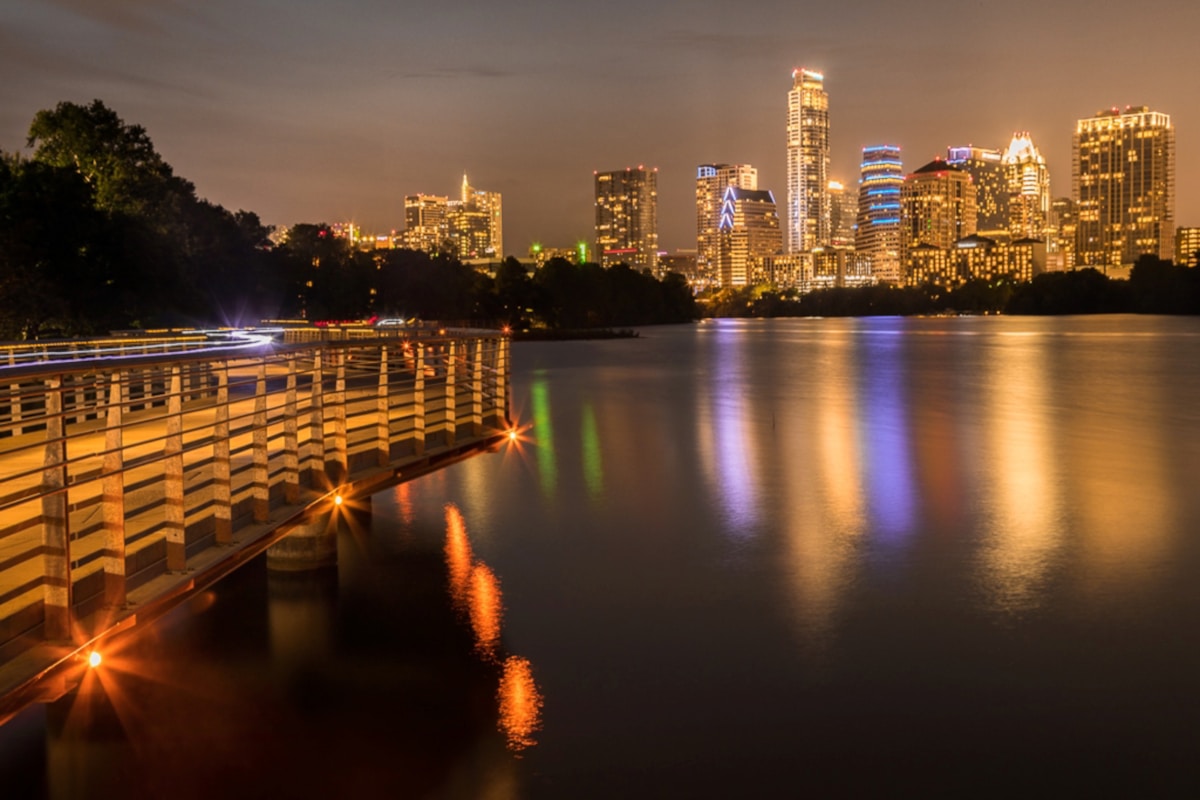
Texas has a reputation for doing things big, but Austin and Dallas represent two distinct versions of big. Austin is a mid-sized city with an outsized cultural identity - live music, tech start-ups, outdoor swimming, and a self-conscious weirdness that the locals have been trying to protect for decades. Dallas is a genuine major American city: skyscrapers, luxury retail, professional sports franchises, a world-class arts district, and an airport that handles more passengers than most countries. Both reward visitors, but they suit different travellers.
Quick Verdict
| Category | Austin | Dallas |
|---|---|---|
| Size and scale | Compact, manageable | Large metro |
| Overall cost | Mid-to-high | Mid-range |
| Getting around | Rideshare/bike | Car essential |
| Food and drink | BBQ and breakfast tacos | More diverse, fine dining |
| Nightlife | Live music on 6th St | Deep Ellum, Uptown |
| Outdoors | Excellent (rivers, parks) | Limited in-city |
| Best for | Music, culture, weekend trips | Sports, art, business |
| Days needed | 3 | 4–5 |
Costs
Austin’s hospitality costs have risen sharply since 2020. A mid-range hotel on South Congress Avenue - somewhere like the South Congress Hotel - runs $220–340/night. More budget-friendly options near the University of Texas area sit at $130–180/night. Boutique properties like Hotel Saint Cecilia, a music-themed property on Academy Drive, charge $350–600/night.
Search hotels in Austin on Booking.com
Dallas has more cost variation. The Rosewood Mansion on Turtle Creek, one of the city’s most storied addresses, charges $400–700/night. The Joule Hotel in downtown runs $250–380. Near the Arts District or Uptown, mid-range hotels cost $150–240/night. Budget travellers can find solid options in Oak Lawn or along I-35 for $100–150/night.
Search hotels in Dallas on Booking.com
Food costs are broadly similar. Austin’s restaurant prices have caught up with bigger cities: a sit-down dinner for two with drinks runs $85–130 in most South Congress or East Austin spots. The famous Uchi sushi restaurant on South Lamar has omakase from $95 per person. At the budget end, a breakfast taco from Veracruz All Natural runs $4–5; a full plate at Juan in a Million on East César Chávez costs $12–16.
Dallas has more price range. Lunch at a Deep Ellum food hall costs $12–18; dinner at Knife Steakhouse in Uptown runs $55–90 for a main. For BBQ, Pecan Lodge in Deep Ellum is a Dallas institution - a full tray with sides runs $25–35 per person.
Food and Drink
Austin’s food identity rests on two pillars: barbecue and breakfast tacos. Franklin Barbecue on East 11th Street is the most celebrated in the country - brisket, ribs, and pulled pork sold until it runs out, typically by 11am, with lines forming from 7am. La Barbecue on East Cesar Chavez is another top-tier option with shorter waits. Both charge $22–28/pound of brisket. For a faster fix, Terry Black’s Barbecue on Barton Springs Road does high-quality BBQ without the lines.
Beyond BBQ, East Austin has become serious restaurant territory: Launderette on East 6th Street does exceptional pasta and wood-fired dishes ($18–32); Emmer & Rye on Rainey Street has a rotating menu built on heritage grains ($25–40 for mains). The breakfast taco scene deserves its reputation - Tyson’s Tacos and Tacodeli both operate on a $3–5 per taco model that beats any airport.
Dallas eats are more varied. The Vietnamese community in nearby Richardson and Garland produces outstanding pho and banh mi within 30 minutes of downtown. Oak Cliff has excellent Mexican food - Lucia on Bishop Avenue is a James Beard-nominated neighbourhood Italian but the taquerias on Jefferson Boulevard are equally compelling at $10–15 per person. For steaks, which Texas takes seriously, Al Biernat’s on Oak Lawn has been a Dallas institution for decades with cuts from $45–85. The food hall culture in Dallas is strong: The Market at Dallas Farmers Market has 20+ vendors in a smart covered space.
Nightlife and Live Music
Austin’s claim to being the Live Music Capital of the World is backed by real volume. On any given weekend night, Sixth Street hosts 50–80 live acts simultaneously across bars from blues to country to indie rock. The Rainey Street Historic District offers a more relaxed bar-hopping experience in converted bungalows. Stubbs Outdoor Amphitheater on Red River Street is one of the best outdoor music venues in the United States, hosting major touring acts from April through October (tickets $25–85). Parish, 3TEN ACL Live, and Emo’s are other respected venues.
Dallas’s nightlife is centred on Deep Ellum - a historic warehouse district east of downtown with live music bars, cocktail lounges, and late-night restaurants. Clubs are concentrated in Uptown. The scene is genuine but narrower than Austin’s; Dallas is more of a dining and sports city than a live music one. Trees on Commerce Street and Granada Theater in Lower Greenville are the city’s best mid-size music venues.
Outdoors
Austin has a significant outdoor advantage for a Texas city. Barton Springs Pool - a natural limestone spring pool in Zilker Park - is open year-round and free to enter most mornings ($5 afternoons). The Colorado River (Town Lake) runs through the city centre with miles of hike-and-bike trails and kayak rentals ($15–25/hour). Hamilton Pool Preserve, a stunning collapsed grotto swimming hole 45 minutes west, requires a reservation ($25/vehicle).
Dallas has Lake Lewisville and Lake Ray Hubbard for water recreation within 30–45 minutes, but the in-city outdoor offering is limited. Klyde Warren Park, a deck park built over the highway between downtown and Uptown, is a pleasant green space for lunch but not a destination in the way Barton Springs is.
Arts and Culture
Dallas has a stronger arts infrastructure. The Dallas Arts District is the largest contiguous urban arts district in the United States. The Dallas Museum of Art is free to enter (general admission) and holds a significant permanent collection including American Modernism and pre-Columbian works. The Perot Museum of Nature and Science is excellent for families ($25 adults). The AT&T Performing Arts Center and Dallas Symphony Orchestra give the city a serious classical and performing arts calendar.
Austin has the Blanton Museum of Art at UT Austin (free admission, $12 suggested donation) and the Bullock Texas State History Museum ($13 adults), but the arts scene is more scattered and emerging than Dallas’s established institutions. Austin compensates with SXSW (March) and Austin City Limits Music Festival (October), two of North America’s most significant annual events.
Getting Around
Austin is more manageable on rideshare and e-scooter than Dallas. The compact downtown, South Congress, and East Austin triangle can be covered by scooter ($1 unlock + $0.25/min) or short Uber rides ($8–14 across central Austin). However, a car becomes necessary for North Austin or day trips.
Dallas is a car city. The DART light rail covers major corridors including the Arts District, Deep Ellum, and Uptown, but the metro area sprawls in a way that makes car ownership or regular rideshare essentially mandatory. Uber from Love Field airport to Uptown runs $18–25; from Dallas Fort Worth International to downtown is $40–55.
The Verdict
Austin and Dallas are not really competing for the same traveller. Austin is the choice for those who want live music immersion, outdoor swimming, a walkable and bikeable urban core, and the best BBQ in the country. It works best as a three or four day trip. Dallas rewards visitors who want a full-scale American city: world-class museums, outstanding fine dining across multiple cuisines, professional sports, and a nightlife scene in Deep Ellum that punches above its reputation.
For a Texas trip, they pair naturally - three hours apart on I-35, different enough to feel like two distinct experiences. Fly into Austin, spend three days, then drive north to Dallas for two more. The highway cuts through Waco and past the George W. Bush Presidential Library; stop at Vitek’s BBQ in Waco for a Texas gut-check lunch.