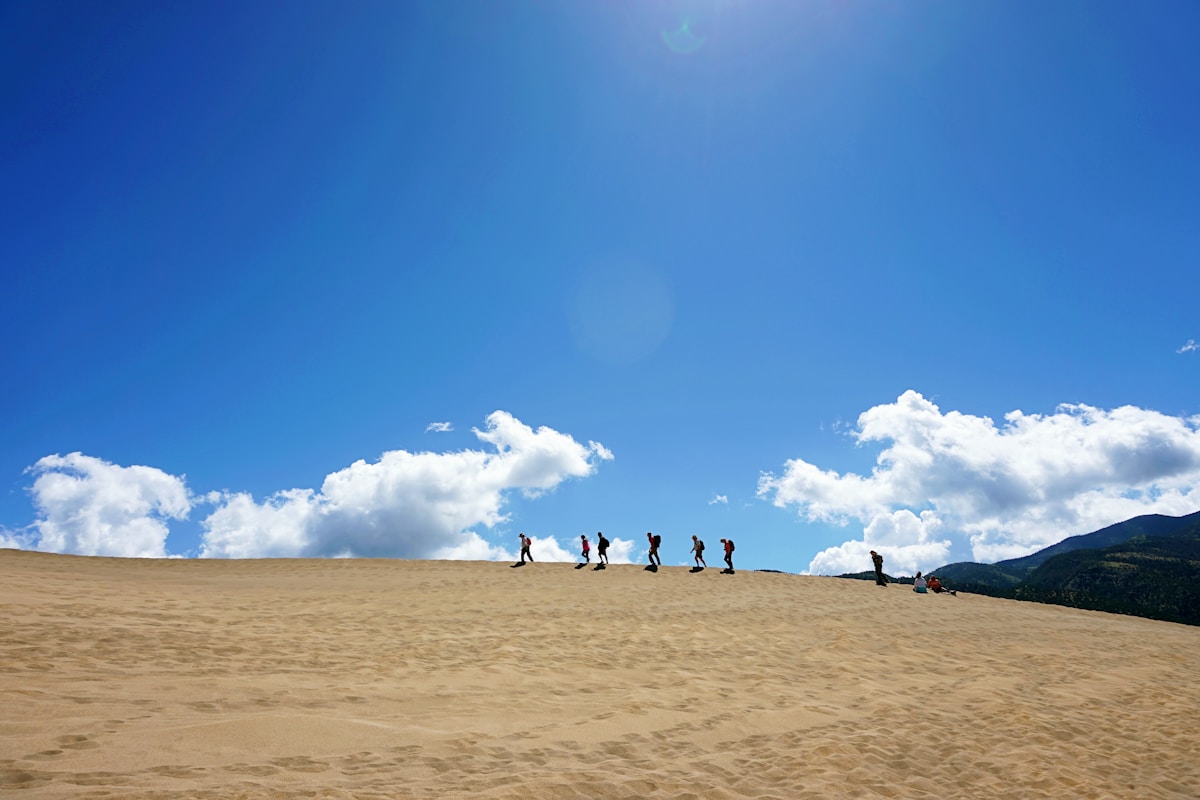
Great Sand Dunes National Park contains what should not exist: the tallest dunes in North America sitting at the base of the 14,000-foot Sangre de Cristo Mountains in southern Colorado. The tallest dune - Star Dune - rises 750 feet above the valley floor, almost as tall as the Transamerica Pyramid in San Francisco. The dunes formed over 440,000 years from sand blown off the floor of the San Luis Valley, trapped by the mountain wall, and recycled back by Medano and Medano creeks. The result is 30 square miles of sand that looks genuinely surreal against a backdrop of snow-capped peaks and subalpine forest.
Entry Fees and Passes
Entry costs approximately $25 per vehicle as of 2026, valid for seven days. Motorcycles pay approximately $20; pedestrians and cyclists approximately $15. The America the Beautiful annual pass ($80) covers all vehicle occupants and is excellent value for any Colorado or Southwest itinerary. No timed entry reservations are currently required - confirm at nps.gov/grsa before your visit.
The park’s main area (dunes and Medano Creek) is free to walk once you’re inside. The adjacent Baca National Wildlife Refuge and Zapata Falls (about 4 miles south on CO-150) are both free.
When to Visit
Late May–early June is the sweet spot: Medano Creek flows at its peak surge, temperatures are moderate (60–75°F at the park), and the dunes are still climbable before the punishing summer heat sets in. Wildflowers bloom in the montane areas above the park.
September–October is the other strong window: cooler temperatures (50–70°F), golden aspens in the Sangre de Cristos, and smaller crowds. The creek will have dried up but the dune hiking is comfortable.
July–August is doable but brutal. The sand surface temperature regularly exceeds 140–150°F - enough to burn bare feet through sandals. All dune hiking should happen before 10am or after 5pm. Afternoon thunderstorms build quickly; the open dune field is one of the worst places to be in a lightning storm.
November–March: the park stays open year-round. Snow on the dunes is spectacular and oddly beautiful; cross-country skiing and snowshoeing are popular on the dunes in winter.
Getting There
Great Sand Dunes sits on CO-150, about 35 miles northeast of Alamosa and 240 miles south of Denver (approximately 4 hours). The nearest commercial airport is Denver International (DEN); regional Alamosa Municipal Airport (ALS) has limited service. A car is essential - there’s no public transit to the park. Compare rental options at /go/car-hire-usa.
From Denver, the most scenic route takes US-285 south through the South Park basin and over La Veta Pass, arriving in Alamosa from the west.
On the Dunes
There are no trails on the dunes - routes are entirely self-directed along ridgelines and slopes.
Star Dune (750 feet above valley floor) - The highest dune in North America, about 1.5 miles from the parking area. Most hikers take 2–4 hours round trip depending on conditions. The sand is loose and exhausting; every step forward involves sliding back slightly. The summit views extend across the entire San Luis Valley to distant mountain ranges.
High Dune (650 feet) - The most prominent dune as seen from the parking lot, and the most popular destination. About 1.5 miles round trip. A good conditioning goal before attempting Star Dune.
Medano Creek crossing - Before starting any dune hike in late May–June, wade Medano Creek at the dune base. It’s only a few inches deep at most, fun for families, and gives you a natural cooling stop on the return. Watch for the surge waves - they come every 20–40 seconds.
Sandboarding and sledding - No marked runs; any steep northeast-facing slope works. Bring a sand sled or waxed sandboard from Alamosa. The park’s rental concession is outside the boundary; ask your accommodation for current recommendations. Sleds work for almost everyone; boards take practice.
Search hotels in Great Sand Dunes on Booking.com
Camping
Pinyon Flats Campground - The only in-park campground, 88 sites with water and flush toilets (no hookups). Approximately $20/night. Reservable at recreation.gov from late May through October; often booked 2–3 months ahead. Located at the dune base, 0.5 miles from the main parking lot.
Backcountry camping - Permitted in the dune field (free) and in the Sangre de Cristo Wilderness adjacent to the park. Permits required; pick up at the visitor center. Water sources are limited in the dune field - all water must be carried in.
Nearby private campgrounds - Several RV parks and tent campgrounds operate near Mosca and on Great Sand Dunes Road outside the park boundary. Colorado Rio Grande del Norte National Monument (about an hour west) has additional primitive camping.
Nearby Lodging
The closest towns are Mosca (3 miles west) and Alamosa (35 miles south via CO-150 and US-160):
- Great Sand Dunes Lodge (Mosca) - The nearest full-service lodging to the park. Rooms from approximately $150–220/night in peak season.
- Alamosa has a range of motels and chain hotels from approximately $90–160/night.
- Monte Vista (23 miles west) offers additional budget motel options.
Beyond the Dunes
The park encompasses much more than the sand field:
- Mosca Pass Trail - 7 miles round trip, climbing through aspen and spruce to a 9,737-foot saddle on the Sangre de Cristo range. Moderate-strenuous.
- Zapata Falls - Not inside the park but 4 miles south on CO-150: a short 0.5-mile hike to a 30-foot waterfall in a narrow slot canyon. Free. Worth the stop.
- Baca National Wildlife Refuge - Adjoins the park to the west; gravel roads through wetlands and grasslands. Bison and pronghorn are resident.
- Hooper, CO - About 25 miles north on CO-17: a hot springs pool and UFO Watchtower (genuinely worth a quick stop), catnip for the quirky-roadside-America collector.
Safety
- Sand surface temperature: measured up to 150°F on summer afternoons. Bare feet on the sand = burns. Wear shoes or sandals with thick soles. Do not let children run barefoot on the dunes after 10am in summer.
- Lightning: the flat dune field offers zero shelter. Check forecasts and retreat to the parking area if clouds build by noon.
- Dehydration: elevation is 8,175 feet at the visitor center. Dry air and altitude accelerate fluid loss. Carry at least 2 liters per person.
- Flash floods: Medano Creek can rise suddenly after afternoon storms. Stay out of the creek bed if you see or hear a storm upstream.
For a wider southern Colorado road trip combining Great Sand Dunes with Mesa Verde and Black Canyon of the Gunnison, see our Colorado national parks itinerary.
For guided ranger-led and private tours of Great Sand Dunes National Park, browse available tours and experiences on GetYourGuide - from wildlife and photography excursions to multi-day adventures in and around the park.