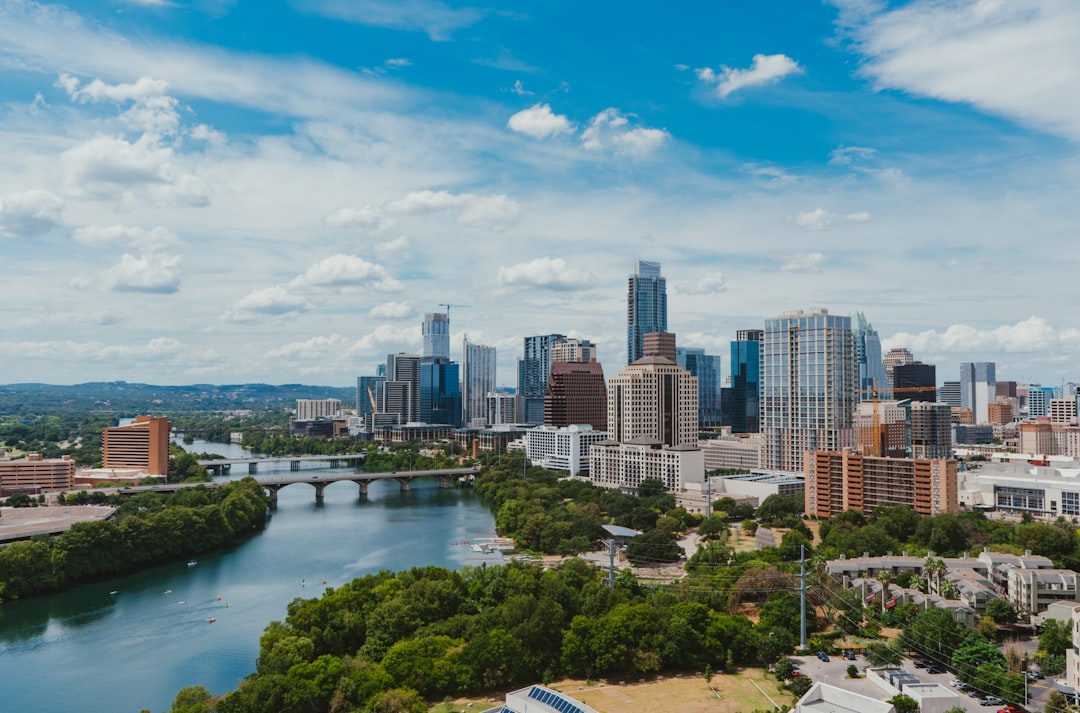
Austin’s day-trip radius runs almost entirely through the Texas Hill Country - a landscape of limestone plateaus, spring-fed rivers, granite outcrops, and German immigrant towns that feels completely different from the urban density of the city itself. Seven destinations cover everything from swimming holes and granite domes to Pacific War history and Blue Bell ice cream. For what to do in the city, see our Austin things to do guide.
Nearly every trip on this list benefits from an early start - Texas heat between June and September means trails and swimming holes hit capacity before 10am, and several parks enforce timed reservations. Compare car hire rates before committing to a rental; rates from the airport and downtown Austin differ considerably.
Hamilton Pool Preserve - 45 minutes west
Hamilton Pool is a jade-green natural swimming hole formed where Hamilton Creek falls 50 feet over an overhanging limestone ledge into a collapsed grotto pool. The combination of waterfall, overhang, and emerald water makes it one of the most photographed natural sites in Texas - and also one of the most heavily managed.
Timed reservations are required year-round and are available through the Travis County Parks website. Entry is approximately $10 per vehicle as of 2026; reservation slots open 30 days in advance and sell out within hours for weekends between April and September. Midweek slots are easier to secure. Weekday visits from November through February often don’t require advance booking, though the water temperature (around 68°F year-round) makes swimming less appealing in winter.
The trail from the parking area to the pool is approximately 0.25 miles on a flat dirt path through a canyon corridor of sycamore and juniper. Swimming is allowed when bacteria counts are within safe limits - the county posts daily water quality results on the reservation page. On closure days, the pool area is still accessible for viewing, just not swimming.
The Pedernales Falls State Park (entry approximately $7 as of 2026) sits 10 miles east of Hamilton Pool on the same route and makes a logical add-on - the Pedernales River runs over a broad limestone shelf in a series of cascades best viewed after rain.
Book Austin outdoor tours and experiences
Enchanted Rock State Natural Area - 2 hours west
Enchanted Rock is a 425-foot pink granite batholith rising from the Hill Country floor north of Fredericksburg - one of the largest exposed granite domes in the United States and the most striking geological feature in central Texas. The Summit Trail (0.6 miles to the top, steep but not technical) ascends the main dome’s bare granite face, with views across 30+ miles of Hill Country on a clear day. The approach is completely exposed - the dome surface can exceed 130°F in summer, so bring water regardless of the temperature at the trailhead.
Entry is approximately $8 per person as of 2026 (no vehicle rate - per-person). The park reaches capacity on most weekend mornings between March and October and temporarily closes to new vehicles - gates are sometimes shut by 8am. The park recommends arriving before 7am on weekends. Timed entry reservations are available through the Texas Parks and Wildlife website; securing one in advance is strongly recommended from spring through autumn.
Beyond the summit hike, the Loop Trail (4 miles, moderate) circles the base of the dome through Live Oak and Lost Creek drainages, with several smaller exfoliation domes visible from the path. Echo Canyon Trail (4.5 miles) passes through a boulder field with scrambling sections that require hands; it’s the most technical route in the park and one of the most interesting.
The Enchanted Rock Ice Cream stand at the park entrance is a useful post-hike stop - Hill Country Homemade ice cream, approximately $5–$7 per serving as of 2026.
Fredericksburg, Texas - 1.5 hours west
Fredericksburg was founded in 1846 by German immigrants from Westphalia and retains its character in architecture, food culture, and place names more than most Texas Hill Country towns. The downtown grid along East Main Street runs half a mile of German-style storefronts with independent bakeries, wine tasting rooms, and antique shops.
The National Museum of the Pacific War (entry approximately $18 as of 2026) is the best reason to drive to Fredericksburg beyond the wine trail - it’s the only museum in the continental US dedicated exclusively to the Pacific theater of World War II, located here because Admiral Chester Nimitz, Supreme Commander Pacific, was born in Fredericksburg. The George H.W. Bush Gallery alone takes 2–3 hours; the outdoor Japanese Garden of Peace and the reproduction PT boat are included in admission. Allow a full afternoon.
Fredericksburg sits at the centre of the Texas Hill Country wine region - roughly 50 bonded wineries operate within 25 miles. Becker Vineyards on Jenschke Lane is among the most established, producing Viognier and Tempranillo from its own estate vines; tastings are approximately $15–$20 per person as of 2026. William Chris Vineyards in nearby Hye focuses on 100% Texas-grown wines; their Sunday Funday sessions book out quickly.
Opa’s Smoked Meats on US-87 produces the Hill Country standard of smoked sausage and brisket; plates run approximately $12–$22 as of 2026. Altdorf Biergarten, open since 1977 on the Vereins Kirche grounds, serves German plates and Hill Country beer under live oaks; lunch entrées approximately $16–$26 as of 2026.
Book Hill Country tours from Austin
San Antonio - 1.5 hours south
San Antonio is the most culturally dense day trip from Austin - a city of 1.4 million with a colonial Spanish core, a UNESCO-recognised mission district, and one of the most visited urban waterfronts in the country. Driving 1-35 south takes around 80 minutes without traffic; leaving before 8am or after 9am avoids the worst of the Austin–San Antonio corridor congestion.
The Alamo (free entry, suggested donation approximately $10 as of 2026) is a 2.5-acre complex on the northeast edge of downtown San Antonio - the site of the 1836 battle where fewer than 200 Texian defenders held a Mexican army of approximately 1,800 for 13 days. The original 1724 church and a portion of the Long Barrack survive; the Alamo Exhibit Hall and museum clarify the archaeology and dispute the mythology. The surrounding Alamo Plaza has been under contested redesign for years - visit before further changes alter the approach.
The San Antonio River Walk (Paseo del Río) runs 15 miles along the channelised San Antonio River, but the 2.5-mile downtown loop and the 1.3-mile Museum Reach north to the Pearl District are the most useful sections. The River Walk sits 20–30 feet below street level, creating a shaded corridor despite the Texas heat. The Pearl District anchors the Museum Reach’s north end - the redeveloped 1881 Pearl Brewery complex now houses Hotel Emma, a Saturday farmers market, and restaurants including Larder (Texas charcuterie and cheese boards, approximately $15–$30 as of 2026).
Search hotels in Austin on Booking.com
Mission San José (free entry, 3 miles south of downtown) is the most complete of San Antonio’s five Spanish Colonial missions - founded 1720, with intact granary, mill, and decorated stone church. The four missions together form the San Antonio Missions National Historical Park (collectively free) and are a UNESCO World Heritage Site since 2015.
Bastrop State Park - 30 minutes east
Bastrop State Park occupies one of the isolated stands of loblolly pine that grow in the sandy soils of Bastrop County - called the “Lost Pines” because they exist roughly 100 miles west of the main East Texas pine belt, separated by the Pineywoods biome gap. The park covers 6,600 acres with 14 miles of hiking trails and a swimming pool (open summers, approximately $4 per person as of 2026).
Entry is approximately $7 per person as of 2026. The Lost Pines Trail (9-mile loop, moderate) traverses the densest section of pine woodland and crosses Buescher State Park in a contiguous system - one of the few multi-park trail connections in Texas. The shorter Canyon Trail (1.8 miles, moderate) follows a creek drainage through pines and cedar elms with several crossing points.
Bastrop State Park was severely damaged by wildfire in 2011, which burned 96% of the park’s trees. The active reforestation program is visible throughout - younger pines mixed with surviving mature specimens create an ecologically interesting patchwork. Several interpretive signs along the trails explain the fire ecology and recovery process.
The town of Bastrop (2 miles from the park gate) has a well-preserved Main Street with independent cafes and the 1889 Bastrop County Courthouse. Maxine’s Cafe on Main Street is the local standard for breakfast; plates run approximately $10–$16 as of 2026.
New Braunfels and Gruene - 1 hour south
New Braunfels straddles the Guadalupe and Comal rivers 45 miles south of Austin and has built its identity around river tubing. The Guadalupe River section from Canyon Lake to New Braunfels runs Class I–II rapids through limestone canyon walls; tubing outfitters including Rockin’ R River Rides and Texas Tubes rent tubes with shuttle service for approximately $25–$35 per person as of 2026. Full river trips run 3–5 hours; the busiest season is Memorial Day through Labor Day, when the river corridor can get crowded on weekends.
The Comal River, which runs entirely through New Braunfels on a spring-fed 2.5-mile course, is shorter and calmer - an alternative for families with younger children, accessible through Hinman Island Park and Landa Park. Water temperature holds around 72°F year-round because it originates from Comal Springs.
Gruene (pronounced “Green”) sits 2 miles northwest of New Braunfels downtown - a 19th-century cotton market town that was largely abandoned by the 1920s and preserved by that neglect. Gruene Hall, built in 1878, is the oldest continually operating dance hall in Texas. Cover charges run approximately $10–$20 as of 2026 depending on the act; the hall books Texas country, Americana, and swing acts on weekends. Arriving early is recommended - it fills to standing room before headline acts.
Mozie’s Bar and Grill on Hunter Road beside the river serves tubing-crowd food (tacos, burgers, cold beer) at approximately $10–$18 as of 2026 and has a riverside patio that works well for post-float eating.
Book New Braunfels and Hill Country tours
Brenham and Chappell Hill - 1.5 hours east
Brenham and its smaller neighbour Chappell Hill sit in Washington County on the rolling prairie east of Austin - the area is known for three things: Blue Bell Creameries, antique shops, and bluebonnet season in spring.
Blue Bell Creameries in Brenham operates the most visited ice cream factory in Texas. Tours (approximately $5 per person as of 2026, cash only) run Monday through Friday at 10am and 2pm and include a 15-minute video, a factory viewing area, and a sample of two flavours. The factory shop sells flavours unavailable in retail distribution; the banana pudding and homemade vanilla in a fresh waffle cone are the standards. Book via the Blue Bell website - tours sell out on peak weekends.
Chappell Hill, 8 miles east of Brenham on FM-1155, is a crossroads town with a preserved 19th-century streetscape and a concentration of antique dealers operating out of former commercial buildings. The Chappell Hill Museum Society documents the early German and Czech settlement of Washington County; admission is donation-based. The Brazos Valley Maize, a farm attraction in autumn (approximately $12–$16 as of 2026), is a popular harvest-season addition.
Washington-on-the-Brazos State Historic Site (25 minutes north of Brenham near Navasota) is where the Texas Declaration of Independence was signed on March 2, 1836. The Star of the Republic Museum (free entry) covers the Republic of Texas period with good primary source material.
Veldekens Bakery in Brenham on South Day Street produces kolaches, cream pies, and fruit breads in a German-Czech tradition; breakfast items run approximately $3–$7 as of 2026. For a full lunch, Must Be Heaven on East Main Street serves sandwiches and soups in a converted 1880s building; plates run approximately $11–$16 as of 2026.
Bluebonnet season in Washington County peaks in mid-March to mid-April - the FM roads between Brenham and Chappell Hill are particularly good for the Texas state flower in bloom. Washington County Wildflower Trails publishes current bloom maps each spring.
Waco - 1.5 hours north on I-35
Waco is the destination for anyone following the HGTV Fixer Upper phenomenon or interested in one of Texas’s most unusual NPS sites. Magnolia Market at the Silos (601 Webster Ave; free admission) is the retail flagship of Chip and Joanna Gaines - outdoor market, garden centre, food trucks, and the original grain silos. The complex is larger and more sincere than sceptics expect; the grounds are pleasant even for non-fans.
Waco Mammoth National Monument (6220 Steinbeck Bend Dr; approximately $8 per person as of 2026) preserves a nursery herd of Columbian mammoths discovered in 1978 - approximately 24 individuals died in the same flood event around 67,000 years ago. Ranger-led tours enter the sheltered excavation site where bones remain in situ. It is one of the most unusual NPS sites in Texas and rarely crowded.
The stretch of US-290 between Waco and Fredericksburg also passes through LBJ country: LBJ Ranch (Stonewall; free for grounds and cemetery, approximately $5 for the ranch tour as of 2026) is the Lyndon Johnson birthplace, boyhood home, and presidential ranch - all in the same small Hill Country valley.
Book Austin area tours and experiences