Miami and Orlando both sit in Florida, both draw millions of visitors a year, and both have international airports - but they serve almost completely different types of traveller. Miami is a coastal metropolis built on beaches, nightlife, Latin American culture, and Art Deco architecture. Orlando is a purpose-built entertainment destination anchored by the world’s most visited theme parks. Choosing between them depends almost entirely on what you want from a Florida trip.
Quick Verdict
| Category | Miami | Orlando |
|---|---|---|
| Overall cost | Higher | Moderate |
| Getting around | Rideshare/walk (Beach) | Car essential |
| Weather | Hot year-round | Hot, frequent afternoon storms |
| Best for | Beaches, nightlife, culture | Theme parks, families |
| Food scene | Outstanding, diverse | Good near parks, limited otherwise |
| Nightlife | World-class | Limited outside Disney Springs |
| Days needed | 3–5 | 5–7 |
| Ideal traveller | Adults, couples | Families, Disney fans |
Costs
Miami is the more expensive city, particularly if you’re staying near South Beach or Brickell. The Catalina Hotel & Beach Club on Collins Avenue, a mid-range South Beach option, runs $190–280/night. Step up to the Faena Hotel on Collins - one of Miami’s most celebrated properties - and you’re looking at $500–900/night. Budget travellers staying in Wynwood or Little Havana can find decent hotels for $120–170/night, but that adds Uber time to the beach.
Search hotels in Miami on Booking.com
Orlando’s hotel market is shaped entirely by the parks. On-site Disney resort hotels range from All-Star Movies at $120–180/night to the Grand Floridian at $700–1,200/night. Off-site options like the Hyatt Place Orlando/Lake Buena Vista run $110–160/night with shuttle access. For non-park visitors, downtown Orlando hotels near Dr. Phillips Center cost $130–200/night with a far calmer atmosphere.
Search hotels in Orlando on Booking.com
Park tickets represent Orlando’s biggest cost: a single-day ticket to Walt Disney World starts at $109 (on low-demand dates) and rises to $189+ for peak days. Add park hopper, Genie+ planning system, and Lightning Lane passes and a family of four can spend $800–1,200 on tickets alone for two parks. Miami has no admission fees to match - its major draws (South Beach, Little Havana, Wynwood murals, Biscayne Bay) are free.
Budget estimate per person per day: Miami $130–200 (accommodation + food + activities); Orlando $180–280 (accommodation + tickets + food).
Food and Drink
Miami has one of the most genuinely exciting food cities in the United States. Little Havana produces the best Cuban food outside Havana itself - a café con leche and a media noche sandwich at Versailles Restaurant on Calle Ocho costs around $14. Wynwood’s food hall scene is excellent: Wynwood Marketplace has 20+ vendors serving Korean tacos, Venezuelan arepas, and birria. For sit-down dining, Coya Miami in Brickell serves outstanding Peruvian-Japanese fusion with mains at $28–48. La Mar by Gastón Acurio at the Mandarin Oriental does ceviches and tiraditos that rival Lima.
Miami’s drinking culture is serious. The rooftop bar at the EAST Miami hotel in Brickell, Quinto La Huella, pairs natural wine and pintxos from $15–22 per glass. Broken Shaker at the Freehand Miami hostel - counterintuitively one of the city’s best cocktail bars - keeps prices at $14–18.
Orlando’s food scene is concentrated around the parks and International Drive, which can feel predictable. Disney’s Disney Springs complex has genuinely good options: The BOATHOUSE does steaks and seafood with mains at $28–55; Jaleo by José Andrés brings proper Spanish tapas from $12–24 per dish. Beyond the tourist corridor, Milk District and College Park have independent restaurants that locals use - like Se7en Bites on Virginia Drive for Southern brunch at $14–22 per plate.
Beaches
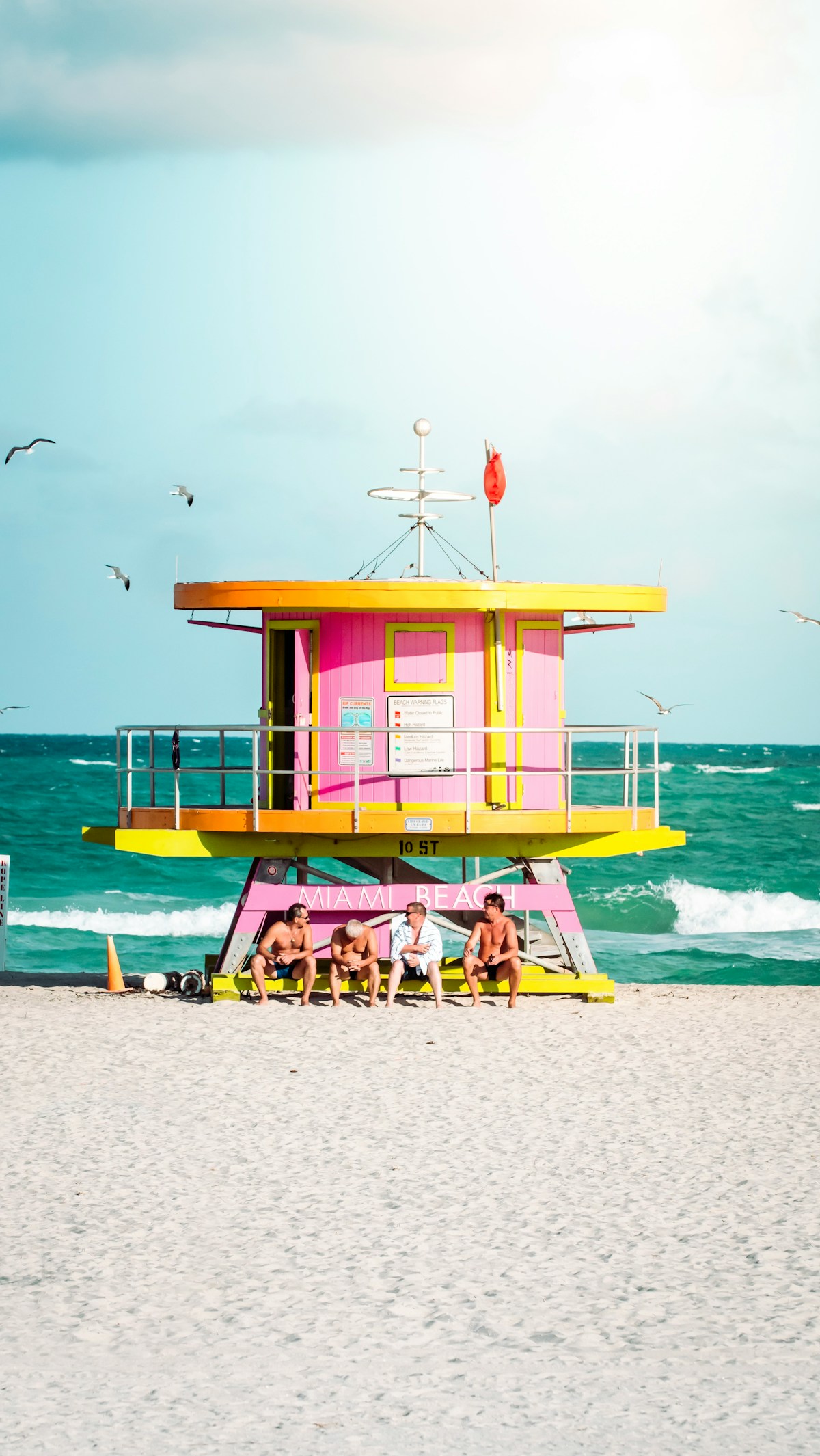
Miami wins this category outright. South Beach is one of the world’s iconic urban beaches: white sand, turquoise water, Art Deco buildings on the landward side, and lifeguard stands painted in pastel colours. Lummus Park beach between 5th and 15th Streets is free and well-maintained. The water temperature rarely drops below 22°C (72°F) in winter. Further north, Surfside and Bal Harbour offer calmer atmospheres for families.
Orlando has no beaches. The nearest coastline is Cocoa Beach on the Atlantic, roughly 60 miles east - a 60-minute drive. The Gulf Coast beaches (Clearwater, St. Pete Beach) are about 90 minutes west. Both are worth a day trip but neither is walkable from your hotel.
Things to Do
Miami’s non-beach attractions are substantial. The Pérez Art Museum Miami (PAMM) on Biscayne Bay houses an impressive contemporary Latin American and Caribbean collection (admission $16). The Wynwood Walls - a neighbourhood of commissioned murals - are free to walk and permanently changing. Biscayne National Park south of the city offers snorkelling and kayaking (boat tours from $35–65). The Everglades are a 90-minute drive and best experienced via airboat tour ($45–75 per person).
Orlando’s attraction list is dominated by theme parks. Walt Disney World’s four parks (Magic Kingdom, EPCOT, Hollywood Studios, Animal Kingdom) represent the most extensive single-site entertainment complex on Earth. Universal Studios and Islands of Adventure - the latter home to The Wizarding World of Harry Potter - are excellent alternatives, with single-day tickets from $109. For something calmer, Wekiwa Springs State Park has clear spring-fed swimming 30 minutes from downtown ($6/vehicle entry).
Getting Around
Miami is navigable without a car if you base yourself in South Beach or Brickell. The free Miami Trolley connects major districts; Metromover is a free elevated rail covering downtown and Brickell. Rideshare is cheap within the city - South Beach to Wynwood runs $10–15. Renting a car makes sense for day trips to Everglades or Key West.
Orlando is essentially car-dependent. Disney’s internal Monorail and ferry systems move guests between on-site resorts, but getting from your hotel to Universal, then to dinner downtown, then back, requires a car or significant Uber costs. A week-long rental typically runs $300–450 including insurance.
Weather
Both cities are hot and humid, but with differences. Miami has a genuine dry season (November–April) when temperatures sit at a comfortable 22–27°C (72–80°F) and rain is infrequent. June–October brings heat and humidity with daily highs around 32°C (90°F) and afternoon thunderstorms.
Orlando follows a similar pattern but with more intense afternoon storms from June through September - you can almost set your watch by the 3pm downpour inside theme parks. The upside: storms pass quickly and evenings are pleasant. Winter in Orlando (December–February) is the most comfortable time to visit, with highs of 20–24°C (68–75°F).
The Verdict
Miami and Orlando are genuinely different destinations. Miami is the choice for travellers who want beaches, nightlife, exceptional food, art, and Latin American culture - it works best for adults, couples, and cultural travellers with three to five days. Orlando is the choice for families with children, Disney devotees, and anyone whose primary reason for visiting Florida involves a theme park. Budget travellers will find Orlando offers more structured value for activities; Miami offers more free experiences but higher baseline costs.
If you have 10 days and are considering both: fly into Orlando, spend three or four days in the parks, then drive three and a half hours south on Florida’s Turnpike to Miami for the final stretch. It’s a natural two-centre trip that captures both versions of Florida.