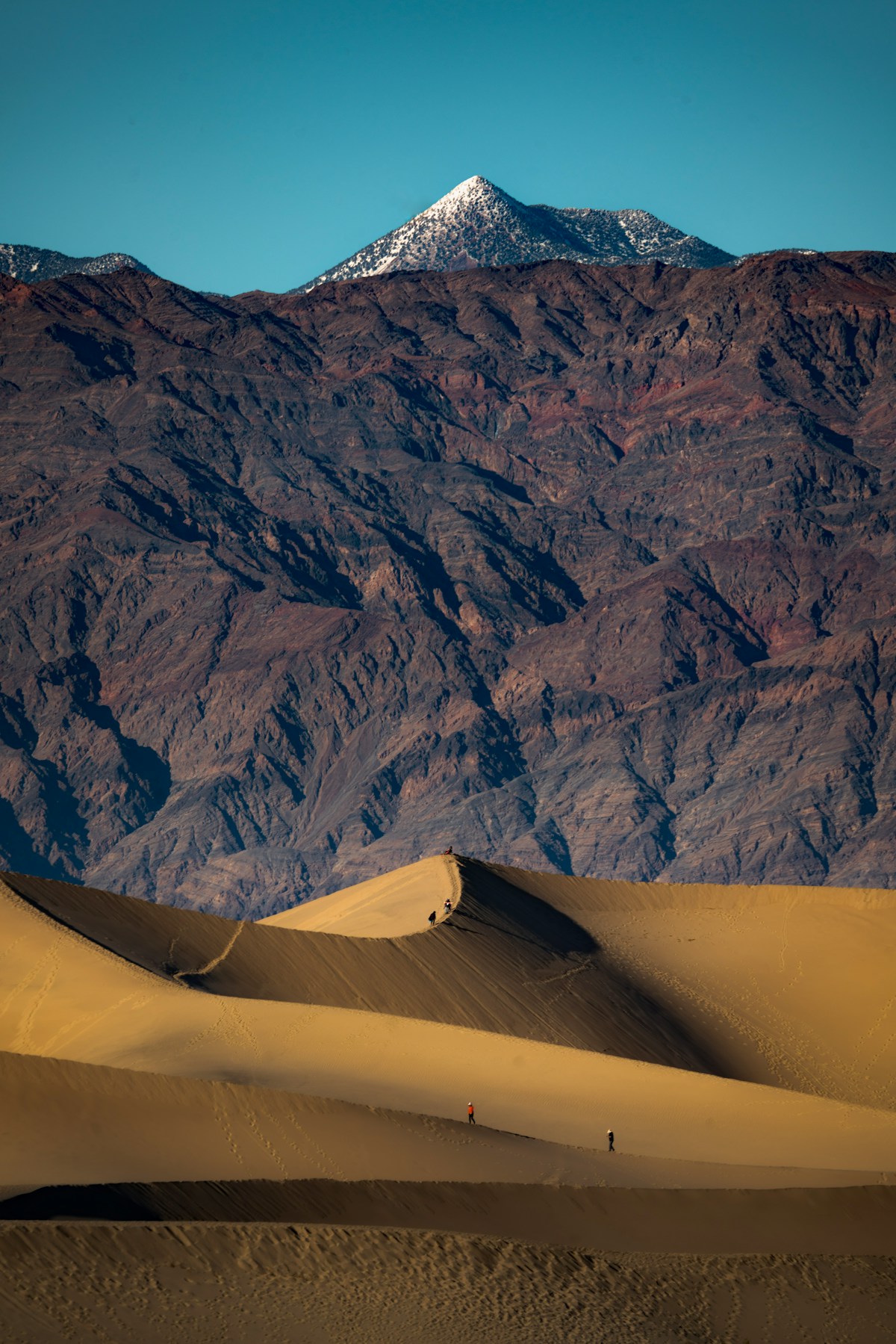
Death Valley is the hottest, driest, and lowest national park in the United States - and in the cool season, one of the most rewarding. Below-sea-level salt flats, golden badlands, painted hills, and dune fields all sit within a short drive of each other, with some of the darkest night skies in the country overhead. It’s also one of the easiest “remote” parks to reach: Las Vegas is barely two hours away.
Why Visit
Nowhere else in North America packs this much geological strangeness into one drive. Badwater Basin is the lowest point in the hemisphere at 86 m (282 ft) below sea level - a white salt flat crunching underfoot. Zabriskie Point at sunrise is one of the great views in the park system, golden badlands rippling toward the Panamint Range. The park is vast - the largest national park in the Lower 48 at 3.4 million acres - but the headline sights cluster conveniently around Furnace Creek.
The Essential Sights
- Zabriskie Point - five minutes’ walk from the car park; come at sunrise when the badlands light up.
- Badwater Basin - walk 10–15 minutes onto the salt polygons; the “Sea Level” sign high on the cliff behind the car park puts the depth in perspective.
- Artists Drive & Artists Palette - a 9-mile one-way scenic loop past oxidised hills in pinks, greens, and purples; best in late-afternoon light.
- Mesquite Flat Sand Dunes - the classic dune field near Stovepipe Wells; sunrise or sunset for shadows and bearable temperatures.
- Dante’s View - 1,670 m above Badwater, an hour’s drive up, with the whole valley floor below; often 15°C cooler than the valley.
- Golden Canyon - the best short hike, 3 miles round-trip through golden narrows to Red Cathedral; cool-season mornings only.
- Ubehebe Crater - a 180-m-deep volcanic crater in the park’s north, worth it if you’re continuing toward the Racetrack (4WD-only beyond here).
When to Go
| Season | Furnace Creek temps | Verdict |
|---|---|---|
| Nov–Feb | 18–22°C days, cold nights | Ideal - hiking weather all day |
| Mar–Apr | 27–33°C | Very good; possible wildflowers |
| May & Oct | 38–40°C | Sights-from-the-car only by late morning |
| Jun–Sep | 45–50°C+ | Dangerous; dawn sightseeing only |
Summer visits happen - the park stays open - but treat them as a drive-through with short stops. Rangers advise no hiking after 10am in summer, and the park records heat deaths most years. Whatever the season, carry at least 4 litres of water per person per day and never rely on phone signal, which is absent across most of the park.
Getting There and Around
From Las Vegas: approximately 120 miles / 2–2.5 hours to Furnace Creek via Pahrump and Death Valley Junction. From Los Angeles: approximately 4.5 hours via Baker or Lone Pine. There is no public transport and no park shuttle - you need a car, and a standard 2WD car covers all the headline sights on paved roads. Hire from Las Vegas is the standard play (see our car hire options); fill the tank in Pahrump or Beatty before entering.
Entry is $30 per vehicle as of 2026 (seven days), paid at self-service kiosks or the Furnace Creek Visitor Center (open daily, approximately 8am–5pm) - there are no entry gates, but rangers do check passes at popular stops.
Where to Stay
Inside the park:
- The Oasis at Death Valley - The Inn (Furnace Creek): the historic luxury option, from approximately $450–600/night in season.
- The Ranch at Death Valley: family-friendly resort with pool, from approximately $250–350/night.
- Stovepipe Wells Village Hotel: simpler and cheaper, from approximately $150–220/night, well placed for the dunes.
- Camping: Furnace Creek Campground (approximately $22–36/night, reservable October–April on Recreation.gov); Texas Springs and Stovepipe Wells are first-come.
Search hotels in Death Valley on Booking.com
Outside the park: Pahrump (45 min east, chain motels approximately $90–140) and Beatty (40 min north, motels approximately $80–120) are the budget bases. Many visitors simply day-trip from Las Vegas, where rooms are cheaper still.
Eating options inside the park are limited to the Oasis properties’ restaurants, the Stovepipe Wells saloon (burgers approximately $16–20), and Panamint Springs. Carry picnic supplies from Las Vegas.
Practical Tips
- Fuel discipline: stations exist at Furnace Creek, Stovepipe Wells, and Panamint Springs but charge a heavy premium. Enter with a full tank.
- The night sky is a headline attraction - Death Valley is a Gold Tier International Dark Sky Park. New-moon nights at Harmony Borax Works or Mesquite Dunes are extraordinary.
- Check road conditions at the visitor centre or nps.gov before chasing remote sights - flash floods regularly close unpaved roads, and the Racetrack requires a high-clearance 4WD with proper tyres.
- Combine it: Death Valley pairs naturally with a Las Vegas base, or slots into a longer Southwest road trip between Vegas and the Sierra.
For trip-wide budgeting, see our USA travel costs guide, and if you’re hitting multiple parks, the America the Beautiful pass breaks even at three.
For guided ranger-led and private tours of Death Valley National Park, browse available tours and experiences on GetYourGuide - from wildlife and photography excursions to multi-day adventures in and around the park.