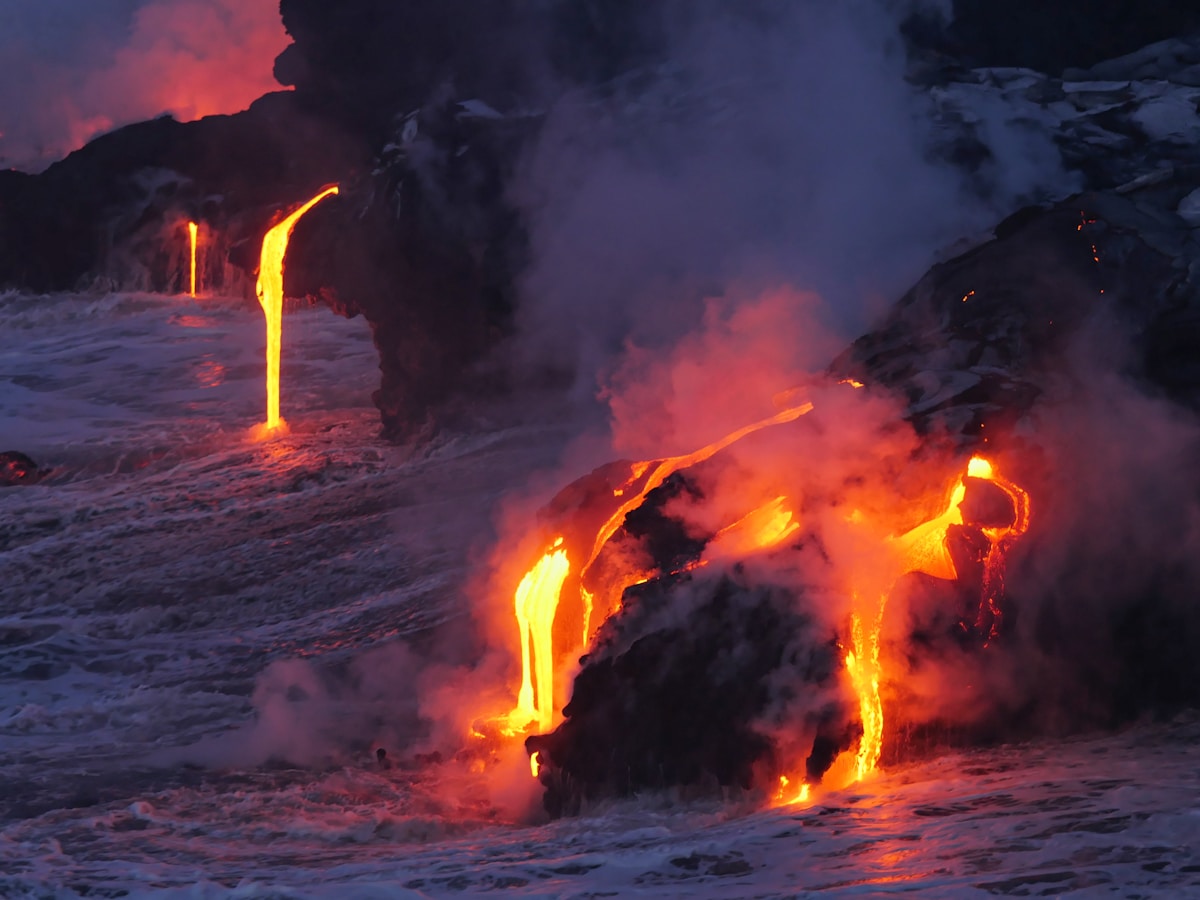
The Big Island of Hawaii is bigger than all the other Hawaiian islands combined, which means a “day trip” here often means crossing dramatically different climate zones, landscapes, and ecosystems in a single drive. From the humid rainforest around Hilo to the lunar lava fields of the Kona coast, the volcanic summit above the clouds, and the lush valleys of the Kohala district - a day on the road here covers a lot of ground.
Hawaii Volcanoes National Park - 45 minutes from Hilo, 2.5 hours from Kona
Hawaii Volcanoes National Park is the Big Island’s most essential attraction. The park covers two active volcanoes - Kīlauea and Mauna Loa - and the ongoing volcanic activity has added roughly 500 acres to the island’s coastline over recent decades.
Entry: Approximately $35 per vehicle as of 2026, valid 7 days. The Rim Drive around Kīlauea caldera is 11 miles and takes about 2 hours to drive with stops. The Thurston Lava Tube Trail (0.4 miles loop, free with park entry) passes through a 500-year-old lava tube.
Lava viewing: Whether active surface flows are visible depends on current eruption conditions - check the NPS Kīlauea update page before visiting. The Jaggar Museum overlook (currently closed for restoration as of 2026 - check nps.gov/havo for updates) and the Steam Vents area along the crater rim are accessible regardless.
Drive from Hilo: HI-11 south and west, about 30 miles, 45 minutes.
Best season: Year-round. The park is always open (with some trail closures during high gas emissions). Eruption activity is unpredictable - check the HVO website before going.
Mauna Kea Summit - 2.5 hours from Hilo
The summit of Mauna Kea at 13,796 feet is the highest point in Hawaii and home to the world’s largest collection of astronomical observatories. The drive from the coast to the summit is one of the most dramatic altitude changes you can make by car anywhere on Earth.
Visitor Center (9,200 feet): The Onizuka Center for International Astronomy (free entry) is the acclimatization point - spend at least 30 minutes here before attempting the summit. The center runs free stargazing programs nightly starting around 6pm.
Summit road: The upper road to the summit (13,796 feet) requires a 4WD vehicle. Rental cars are not permitted above the visitor center per most rental agreements. Guided Mauna Kea summit tours from Kona and Hilo (approximately $220–250 per person as of 2026) provide transport, acclimatization, and sunset/stargazing programs.
Drive to Visitor Center: HI-200 (Saddle Road) west from Hilo to Mauna Kea Access Road, about 35 miles, 1 hour. Summit access adds approximately 1.5 hours more.
Best season: Year-round, but summit is frequently closed in winter due to snow and ice. Check the Mauna Kea Observatories weather page before departing.
Waipio Valley - 1.5 hours from Hilo, 2 hours from Kona
Waipio (“Curved Water”) is the largest of the seven valleys on the Hamakua Coast and one of the most culturally significant sites in Hawaiian history. The valley floor - 2,000 feet below the rim lookout - is accessed by a road with a 25% grade; 4WD is required for vehicles and the road is closed to most rental cars.
What to see: The lookout at the valley rim (free, open daily) provides the iconic view down to the black-sand beach and the valley floor, with the 1,200-foot Hi’ilawe Falls visible in the distance when it’s running. Waipio Valley Wagon Tours ($75 per adult as of 2026) run mule-drawn wagon tours from the valley floor - book well in advance.
Drive from Hilo: HI-19 north to Honoka’a, then HI-240 to the Waipio Lookout, about 50 miles, 1 hour.
Pololu Valley - 2 hours from Hilo, 1.5 hours from Kona
Pololu is the northernmost and most remote of the Kohala valleys, reached by a steep 20-minute trail down to a wild black-sand beach backed by sea cliffs. The trail (0.5 miles each way, free) is well-maintained but muddy after rain. There are no facilities in the valley - bring water.
The drive along the Kohala Mountain Road (HI-250) from Waimea is itself stunning, cutting through cattle ranch land with views over both sides of the peninsula.
Drive from Kona: HI-19 north to Hawi, then HI-270 north to the road’s end, about 60 miles, 1.5 hours.
Kealakekua Bay and Captain Cook Monument - 30 minutes from Kona
Kealakekua Bay is a state marine conservation district with some of the best snorkeling on the island - visibility exceeds 100 feet on calm days, and spinner dolphins are frequently encountered in the bay. The Captain Cook Monument at the north end of the bay marks the site where Captain James Cook was killed in 1779.
Access: The bay’s south end (Napoopoo Beach Park, free) has shallow entry. The monument at the north end is accessible by kayak and snorkel tours (from approximately $55/half-day as of 2026) or by a 4-mile round-trip hike down the Ka’awaloa Trail (steep, no facilities - bring water).
Drive from Kona: HI-11 south about 15 miles, 30 minutes.
Best season: Year-round. Morning is calmer for snorkeling; afternoon winds can build chop.
Akaka Falls State Park - 15 minutes from Hilo
Akaka Falls is one of the most accessible waterfall experiences on the island - a 0.4-mile paved loop through a lush rainforest canyon leads to two waterfalls: Kahuna Falls (100 feet) and Akaka Falls (442 feet), one of Hawaii’s tallest free-falling waterfalls.
Entry: Approximately $5 per vehicle as of 2026. Open daily 8:30am–6pm. The loop takes about 30–45 minutes at an easy pace.
Drive from Hilo: HI-19 north to Honomu, then HI-220, about 11 miles, 15 minutes.
South Point (Ka Lae) - 1.5 hours from Kona
South Point is the southernmost point of the United States, sitting at the tip of the Ka’u district on a windswept plateau. The approach road (about 12 miles of narrow one-lane road) passes by the Green Sand Beach trailhead.
Green Sand Beach (Papakolea): One of only four green-sand beaches in the world, the beach gets its color from olivine crystals eroded from the surrounding cinder cone. The beach requires a 2.5-mile walk each way (free) - no vehicles permitted. It’s spectacular and feels genuinely remote.
Drive from Kona: HI-11 south about 70 miles, 1.5 hours.
Mauna Loa Observatory Road and Pu’u Huluhulu - 1.5 hours from Hilo
Saddle Road (HI-200/Daniel K. Inouye Highway) crosses the saddle between Mauna Loa and Mauna Kea and passes through some of the most otherworldly terrain in the Pacific. Pu’u Huluhulu is a small kipuka (an island of older vegetation surrounded by lava flows) with a 1-mile loop trail giving views across the lava field - free, no facilities.
Drive from Hilo: HI-200 west, about 30 miles, 1 hour to Pu’u Huluhulu.
For more on exploring the island, see our guides to things to do on the Big Island, where to stay on the Big Island, and where to eat on the Big Island.