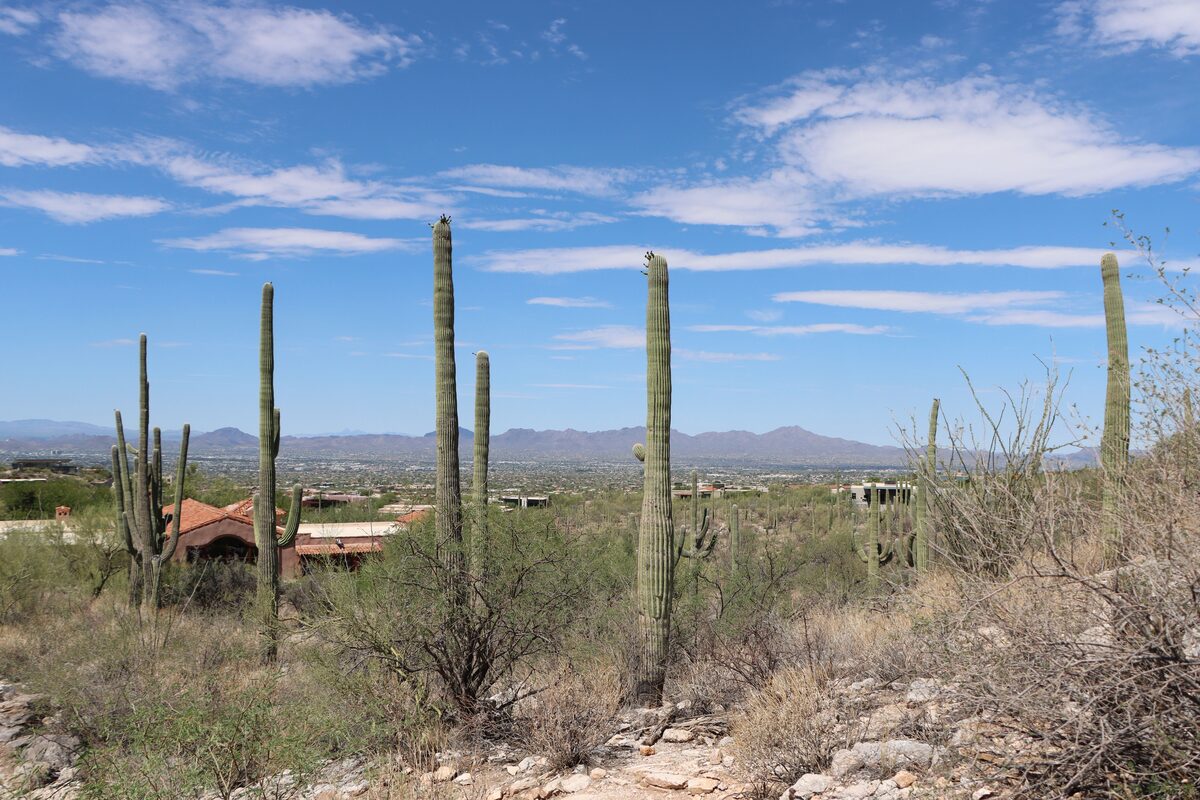
Tucson: Saguaro Park, Desert Museum & Mexican Food
Tucson travel guide: Saguaro National Park, Arizona-Sonora Desert Museum, Mission San Xavier del Bac, Biosphere 2, and the best Mexican food in Arizona.
Guides for Tucson
Tucson is Arizona’s second-largest city, sitting in the Sonoran Desert at approximately 2,400 feet elevation, surrounded on four sides by mountain ranges - the Santa Catalinas to the north, the Rincons to the east, the Tucson Mountains to the west, and the Santa Ritas to the south. The population is approximately 550,000 in the city proper, around 1 million in the metro area. The University of Arizona (founded 1885) anchors the urban character and keeps the city considerably younger and more economically diverse than Phoenix.
The core appeal is the Sonoran Desert landscape - the only place in the world where the giant saguaro cactus grows - combined with a borderlands culture shaped by centuries of Spanish colonial, Mexican, and O’odham indigenous influence. UNESCO designated Tucson a City of Gastronomy in 2015, the first in the United States, recognizing its food traditions rather than its high-end restaurant scene.
Getting There and Around
Tucson International Airport (TUS) is approximately 9 miles south of downtown, with direct service from most major US hubs including Los Angeles, San Francisco, Dallas, Denver, Phoenix, and Chicago. Taxi from airport to downtown approximately $20–30; rideshare approximately $12–20 as of 2026. For a pre-booked private transfer, Welcome Pickups covers TUS.
A car is strongly recommended for exploring Tucson and the surrounding desert. The city has a Sun Link streetcar connecting the University of Arizona campus to downtown (fare approximately $1.50), but most major attractions - Saguaro National Park districts, the Arizona-Sonora Desert Museum, Biosphere 2 - require driving. Rideshares work within the city but distances are significant.
Things to Do
See our full guide to things to do in Tucson for a complete activity list. Below are the top highlights.
Top Attractions
Saguaro National Park (Rincon Mountain District - East) - 3693 S. Old Spanish Trail. The larger of the two park districts, with the 8-mile Cactus Forest Loop Drive and access to backcountry trails into the Rincon Mountains. The Mica View picnic area and Freeman Homestead trail (1.6 miles round trip) offer accessible saguaro forest walking. Entry approximately $25 per vehicle; the America the Beautiful pass is accepted. Open daily.
Saguaro National Park (Tucson Mountain District - West) - 2700 N. Kinney Rd. Denser saguaro forest, access to Signal Hill Petroglyphs (prehistoric rock carvings, short walk from the parking area), and the Bajada Loop Drive (6-mile unpaved loop). Immediately adjacent to the Arizona-Sonora Desert Museum. Same entry fee and pass as the east district.
Arizona-Sonora Desert Museum - 2021 N. Kinney Rd, adjacent to the west Saguaro district. A 98-acre outdoor zoo, botanical garden, and natural history museum combining desert plant collections with living animals - mountain lions, Mexican wolves, javelinas, roadrunners, and two raptor free-flight demonstrations daily. Admission approximately $25 adults, $10 children (ages 3–12) as of 2026. One of the most compelling natural history institutions in the Southwest.
Mission San Xavier del Bac - 1950 W. San Xavier Rd, on the Tohono O’odham San Xavier District, 9 miles south of downtown. A late 18th-century Spanish Baroque mission church still in active use, called “the White Dove of the Desert” for its whitewashed exterior. One of the finest examples of Spanish Colonial architecture in North America. Free admission; donations requested. Open daily.
Biosphere 2 - 32540 S. Biosphere Rd, Oracle (approximately 35 miles north of Tucson). The University of Arizona research facility where scientists sealed themselves inside for two years in 1991–1993. Guided tours take visitors through the five distinct biomes - tropical rainforest, ocean, savanna, mangrove, and desert. Tours approximately $25 adults; book in advance. Open daily.
Mount Lemmon and the Santa Catalina Mountains - accessed via the Catalina Highway (Sky Island Scenic Byway) from the northeast edge of the city. A 25-mile drive climbs from Sonoran Desert to pine forest, rising 6,000 feet to the summit at 9,157 feet. The small Mount Lemmon Ski Valley operates in winter ($20–35 lift tickets) - the southernmost ski resort in the continental USA. The road passes Windy Point Vista (spectacular views) and Summerhaven village at the top.
Neighbourhoods
Downtown Tucson - the historic core along Congress Street, with the Hotel Congress (scene of John Dillinger’s 1934 arrest), arts venues, bars, and a cluster of independent restaurants. The Mercado San Agustín (100 S. Avenida del Convento) is a marketplace with local food vendors and a taqueria courtyard.
4th Avenue - a walkable strip of independent shops, vintage stores, and casual restaurants connecting downtown to the University area. The 4th Avenue Street Fair (twice yearly, December and March) draws large crowds.
University of Arizona district - the campus and surrounding blocks, with the UA Museum of Art (1031 N. Olive Rd, free admission for Tucson residents), the Flandrau Science Center and Planetarium, and the main student restaurant and café corridor along University Boulevard.
Where to Eat
For a full rundown of Tucson’s restaurants and food traditions, see our Tucson food guide.
El Charro Café - 311 N. Court Ave, downtown. Claims to be the oldest Mexican restaurant continuously operated by the same family in the USA (since 1922). The carne seca (air-dried beef) is the signature dish. Lunch and dinner daily; mains approximately $14–26.
Guadalajara Original Grill - 1830 S. Alvernon Way. Sonoran street food at its most direct - the Tucson-style bacon-wrapped Sonoran hot dog is the draw, served from a cart operation expanded into a full restaurant. Approximately $5–8 per item.
Penca - 50 E. Broadway Blvd, downtown. Mexican craft beer and elevated Mexican food from chef Rene Andrade; focused on Sonoran and regional Mexican preparations. Mains approximately $14–24. Dinner Tuesday–Saturday.
Boca Tacos y Tequila - 828 E. Speedway Blvd. Creative taco operation with a rotating menu; the Sonoran ingredients are consistent but preparations vary. Mains approximately $12–18.
Cup Café - Hotel Congress, 311 E. Congress St. Art Deco café in the historic 1919 Hotel Congress; solid American breakfast and lunch in one of Tucson’s most atmospheric rooms. Mains approximately $12–18.
Where to Stay
For hotel picks across all budgets, see our guide to the best hotels in Tucson.
The Ritz-Carlton, Dove Mountain - 15000 N. Secret Springs Dr, Marana (northwest of Tucson). A 250-room desert resort in the Tortolita Mountains with a Jack Nicklaus golf course, three pools, and spa. Rooms from approximately $350–700 per night as of 2026.
Search hotels in Tucson on Booking.com
Loews Ventana Canyon Resort - 7000 N. Resort Dr, in the Santa Catalina foothills. A 398-room resort adjacent to Ventana Canyon with hiking trails directly from the property. Rooms from approximately $200–450 per night.
Hotel Congress - 311 E. Congress St, downtown. A 40-room historic 1919 hotel - the most characterful place to stay in the city. Rooms from approximately $90–150 per night. The attached bar and restaurant are Tucson institutions.
Graduate Tucson - 711 E. University Blvd, adjacent to the university campus. A 160-room hotel aimed at university visitors with local-themed design. Rooms from approximately $120–200 per night.
Budget: Casa Blanca Guest House and several independent B&Bs near 4th Avenue run approximately $70–110 per night. The Arizona Inn (2200 E. Elm St), a 1930 historic property with large grounds, is a mid-range option at approximately $180–280 per night - exceptional for the price.
Practical Notes
Tucson’s monsoon season (roughly July 1 to September 30) brings dramatic afternoon and evening thunderstorms - flash flood warnings require staying out of dry washes. The Sonoran Desert is most vibrant in March and April when wildflowers bloom across the landscape and temperatures are ideal for hiking. Carry at least 2 liters of water per person on any desert trail, even in cool weather. The Tucson Gem and Mineral Show (late January to mid-February) is the world’s largest gem and mineral show, drawing 65,000 visitors and transforming the city.
Planning your Tucson trip? Browse guided tours and activities in Tucson to book tickets and experiences in advance. For getting around the wider region, car hire in the USA gives you the most flexibility. Visitors from outside the USA will also want to sort travel insurance and an eSIM for the USA before departure.
More Arizona and Southwest Guides
Book an experience
Top experiences in Tucson
Explore the best tours and activities in Tucson , with instant confirmation and free cancellation on most bookings.
Where to stay: Browse hotels in Tucson on Booking.com; filter by dates, budget, and guest rating.