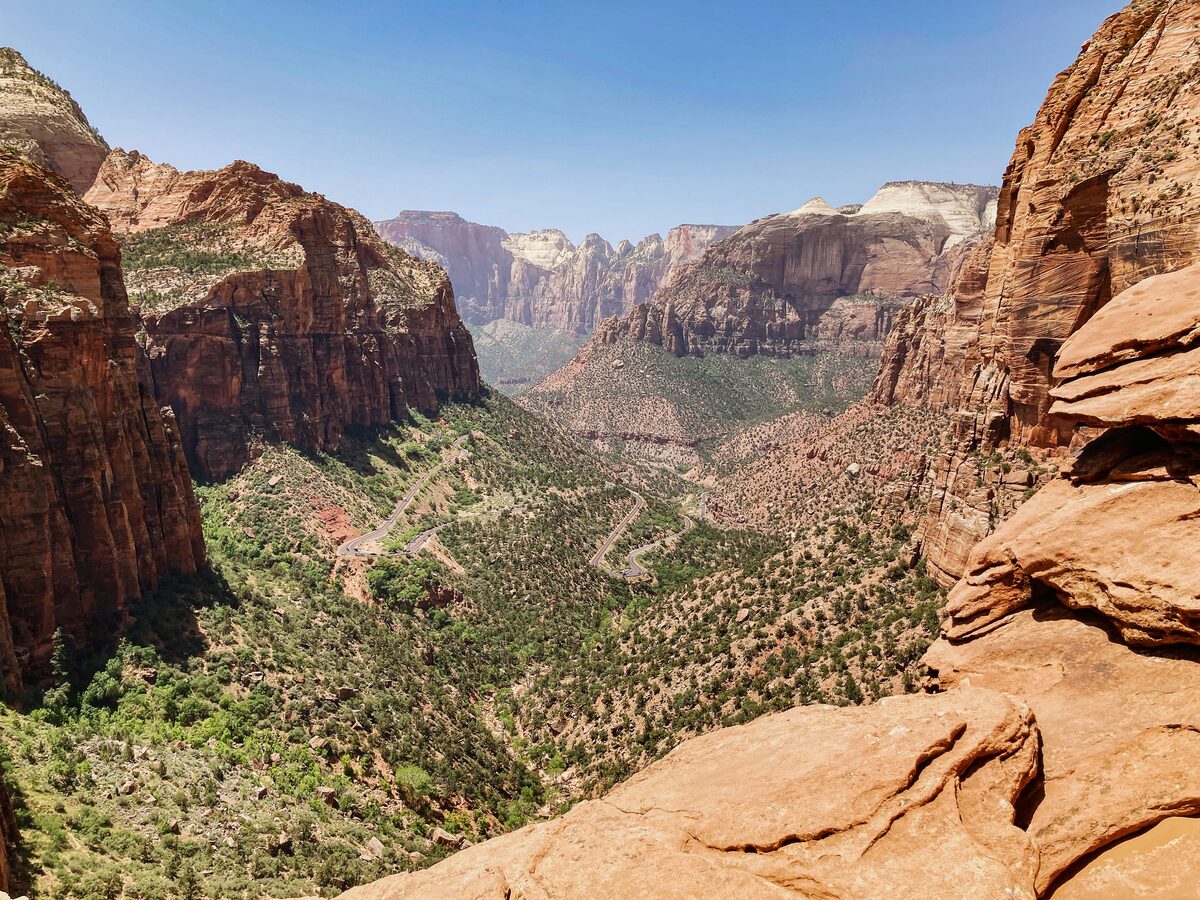
Zion National Park receives approximately five million visitors per year, making it one of the most visited national parks in the United States. The sandstone canyon walls, slot canyons, and signature hikes draw visitors from around the world - and the planning requirements have grown accordingly. Entry fees are straightforward; the Angel’s Landing permit lottery is not. This guide explains every ticket, permit, and booking step you need before arriving in Springdale.
Park Entry: What It Costs
Zion National Park is managed by the National Park Service. Entry fees as of 2026:
| Pass Type | Price | Coverage |
|---|---|---|
| Private vehicle (7 days) | $35 | All passengers |
| Motorcycle (7 days) | $30 | All passengers |
| Per person on foot or bicycle | $20 | Individual, 7 days |
| America the Beautiful annual pass | $80 | All NPS sites, 12 months |
| America the Beautiful Senior pass | $80 (lifetime) or $20/year | All NPS sites |
The America the Beautiful Pass is almost always the right call if you plan to visit more than one national park in a year. At $80 for unlimited 12-month access to over 2,000 federal sites, it covers Zion’s $35 entry fee more than twice over. Buy it online at recreation.gov, at any NPS entrance station, or at Tiqets where some combined experiences are bundled.
As of 2026, Zion does not require timed-entry permits for private vehicles (unlike some other popular parks). However, the parking situation at the south entrance visitor centre effectively creates a natural bottleneck - see the tips section below.
Angel’s Landing Permit: How the Lottery Works
The Angel’s Landing permit is the most discussed planning challenge for Zion visitors. The hike is 5.4 miles round trip with 1,488 feet of elevation gain - the final half-mile involves chains bolted into the rock face with significant exposure. Fatalities have occurred here; the permit system reflects the genuine danger of overcrowding on the narrow ridge.
The permit process:
- Go to recreation.gov and search “Angels Landing.”
- Two types of lottery exist:
- Seasonal lottery (held in January for spring season, and in May for summer/autumn) - larger permit allocations
- Daily lottery (opens at midnight Mountain Time, 2 days before the desired hike date) - smaller allocation, for last-minute planning
- Enter the lottery for your desired date. You can list multiple dates to increase chances.
- Cost: approximately $6 per group plus $2 per person in the group.
- If selected, you’ll receive a confirmation email and the permit appears in your recreation.gov account.
- Show the permit at the checkpoint at Scout Lookout. Rangers check permits on the trail.
Realistic odds: the seasonal lottery for peak summer dates (June–August) is very competitive. Daily lottery odds are better than many expect - particularly for weekdays and shoulder-season dates. If you’re flexible on date and willing to try the daily lottery, securing a permit within 3–5 days is achievable for most visitors outside of peak summer.
No permit? No problem for most of Zion. Angel’s Landing is one hike. The park has dozens of others without permit requirements, including some that are equally spectacular.
The Narrows: No Permit, Free With Entry
The Narrows is arguably the park’s other signature experience, and it requires no separate permit for the bottom-up day route. From the Temple of Sinawava shuttle stop (the last stop on the main canyon shuttle), a 1-mile paved walk leads to the river entry point. From there, the hike follows the Virgin River upstream through a slot canyon that narrows to as little as 20 feet wide.
Practical considerations:
- The river is cold (typically 50–60°F / 10–16°C) year-round. Neoprene socks and Zion-specific waterproof boots are strongly recommended in spring and autumn - gear rental runs approximately $30–$45 per day from outfitters in Springdale (Zion Outfitter, Zion Adventure Company, and others).
- Flash flooding is a genuine hazard. Check the forecast at the Zion Canyon Visitor Center before entering. Rangers will close the Narrows to entry when upstream precipitation makes flooding likely.
- Hiking poles or a walking stick significantly improve stability on the uneven riverbed.
- There is no fee beyond park entry. You can hike as far upstream as you like and turn around whenever you choose.
The Shuttle System
Between approximately March and November, private vehicles cannot drive the Zion Canyon Scenic Drive (the main canyon road). The Zion Canyon Shuttle is mandatory for accessing the main canyon trailheads. It runs every 5–7 minutes on a loop between the visitor centre and the Temple of Sinawava at the canyon’s end, with nine stops including Zion Lodge.
The shuttle is free once you’re in the park. The issue is parking.
The parking problem: the south entrance visitor centre has approximately 500 parking spaces, which fill by 8–9 am on peak summer days. Options:
- Arrive before 7:30 am (the most reliable solution)
- Park in Springdale (the town immediately outside the park gates) and take the Springdale Town Shuttle to the park - $2 per person round trip, runs during shuttle season
- Stay in Springdale and walk to the park entrance - most hotel properties are within a 5–15 minute walk
In winter (December–February): private vehicles can drive the canyon road, the shuttle doesn’t run, and the park is dramatically quieter. Many experienced visitors consider off-season Zion the best version of the park.
Guided Tours From Springdale
If you’d prefer a structured visit with a local guide, GetYourGuide lists Zion Canyon half-day and full-day guided hikes - useful for first-timers who want an expert navigating the permit system or for canyoneering experiences like Slot Canyon tours that require technical equipment and local knowledge. Tiqets also lists Zion combo experiences.
Best Time to Visit
Spring (March–May): wildflowers, waterfalls, and full Virgin River flow. The Narrows is at its most photogenic but water levels can be high. Crowds build through April and May as school spring breaks arrive.
Autumn (September–October): the park’s sweet spot. Temperatures are comfortable for strenuous hiking (summer heat in the canyon can exceed 100°F / 38°C), crowds ease after Labour Day, and cottonwood trees along the canyon floor turn golden in October.
Summer (June–August): peak crowds, peak heat. Plan all strenuous hikes before 10 am. The park is still spectacular but requires early starts and patient planning.
Winter (December–February): cold but rarely icy at canyon level. Snow on the red rock walls is genuinely beautiful. The Narrows is typically closed or restricted due to cold water temperatures. Angel’s Landing permits are easy to obtain. The canyon is quiet enough to feel genuinely remote.
Getting to Zion
Zion National Park’s south entrance (the main entrance) is just outside Springdale, Utah, on UT-9.
- From Las Vegas: approximately 2.5 hours (158 miles) via I-15 N and UT-9. The most common gateway.
- From Salt Lake City: approximately 4.5 hours (310 miles) via I-15 S.
- From Bryce Canyon: approximately 1.5 hours (86 miles) via UT-12 and US-89 - a common multi-park itinerary pairing.
There is no commercial air service to Springdale. Rental cars from Las Vegas or Salt Lake City are the standard approach. For a multi-park Utah road trip, our Grand Canyon vs Zion comparison covers how to prioritise between the two parks, and our Zion National Park guide has a full visitor overview including where to stay in Springdale. For the Grand Canyon, see our Grand Canyon tickets guide.
Tips for a Better Visit
- Recreation.gov is the only legitimate booking platform for Angel’s Landing permits and America the Beautiful passes. Avoid third-party reseller sites claiming to sell permits.
- Download the NPS Zion app before you arrive - it has current shuttle wait times, trail conditions, and ranger programme schedules.
- Early starts beat everything else. The difference between arriving at 7 am and 10 am on a summer day is dramatic - both in parking availability and trail crowding.
- Check flash flood forecasts before the Narrows. The forecast at the visitor centre is updated daily; rangers will close the river to hikers when conditions are dangerous.
- Don’t skip Emerald Pools if hiking with families or less experienced walkers. The lower and middle pools are accessible, beautiful, and give a genuine sense of the canyon without technical challenges.