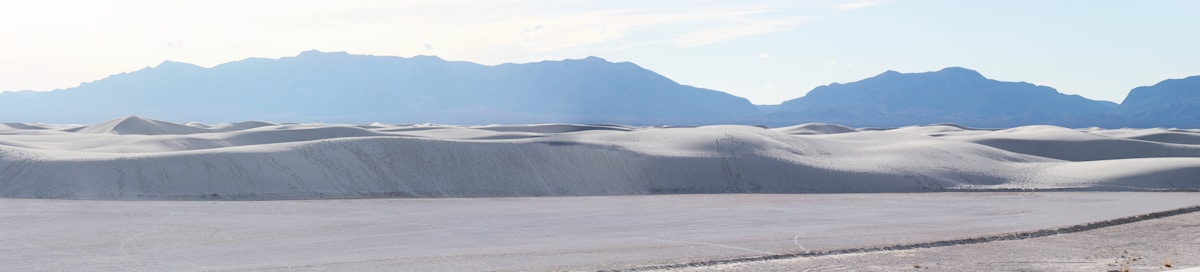
White Sands National Park protects 275 square miles of the world’s largest gypsum dune field - a landscape so otherworldly it has served as a backdrop for science fiction films and a testing ground for the world’s first atomic bomb at Trinity Site, 60 miles northeast. The dunes are blindingly white, cool to the touch even in desert heat, and formed from gypsum crystals dissolved from the surrounding mountains and re-deposited by wind and evaporation on the floor of the Tularosa Basin. Unlike silica sand dunes, these don’t burn bare feet, don’t absorb heat, and crunch distinctively underfoot - evidence of their different mineral composition.
Entry Fees and Passes
Entry costs approximately $25 per vehicle as of 2026, valid for seven days. Motorcycles pay approximately $20; pedestrians and cyclists approximately $15. The America the Beautiful annual pass ($80) covers all vehicle occupants.
Missile range closures: White Sands National Park sits adjacent to White Sands Missile Range, an active military testing facility. The park closes periodically for missile testing - typically announced 24 hours in advance on nps.gov/whsa and via a recorded phone line (575-479-6124). Closures usually last 1–3 hours. Always check before driving out, especially if you’re traveling more than an hour to get there.
When to Visit
October–March is the most comfortable season: temperatures range 50–75°F, the white dunes contrast dramatically with blue winter sky, and the park is never busy by national park standards. January–February bring the cleanest light for photography.
April–May and September: pleasant temperatures with wildflower blooms (yucca, desert marigold) adding color along the Dunes Drive. Spring can have strong winds that create blowing sand; check forecasts.
June–August: temperatures exceed 100°F regularly but the gypsum stays cooler than quartz sand. Midsummer sunsets over the dunes are exceptional - late afternoon arrivals at 4–5pm catch the best light and avoid peak heat. Full moon nights in summer draw visitors for ranger-led moonlit walks (check the schedule at nps.gov/whsa).
Getting There
White Sands is on US-70, approximately 15 miles southwest of Alamogordo, New Mexico and 85 miles northeast of El Paso, Texas. The nearest major airport is El Paso International (ELP); small regional airports serve Alamogordo (ALM) with limited service. A car is essential. Compare rentals at /go/car-hire-usa.
From Albuquerque: US-25 south to US-70 east, approximately 3.5 hours. From Tucson: I-10 east to US-70, approximately 3.5 hours.
Dunes Drive and Trails
The 8-mile paved Dunes Drive penetrates the heart of the dune field. Beyond the 5-mile mark the road is surrounded entirely by white gypsum - no brown desert visible, just pure white in every direction. Trailers and RVs over 30 feet are not permitted past the 5-mile picnic area.
Interdune Boardwalk (0.4 miles round trip, accessible) - A flat, paved trail through the interdune area showing the ecological transition from desert plants to dune-adapted species (bleached earless lizards, Apache pocket mice). Good for families and anyone with mobility limitations. Wildlife interpretive signage.
Desert Nature Trail (1 mile round trip, easy) - Self-guided walk through the dune transition zone with labeled plants. Yucca, soaptree, Apache plume, and cottonwood adapt uniquely to the shifting gypsum substrate - some develop extraordinarily long root systems to anchor in the sand.
Playa Trail (5 miles round trip, moderate) - The best hiking loop for experiencing the full dune landscape. Marked by posts (the dunes shift and no permanent trail is possible). Includes the steepest sledding faces.
Alkali Flat Trail (4.6 miles round trip, moderate-strenuous) - The park’s most remote day hike, crossing to the flat lakebed (playa) that once held ancient Lake Otero. Completely exposed; carry 3+ liters of water per person. The flat section at the far end has a silence and desolation unlike anything else in the Southwest.
Backcountry Campsite Trail (2 miles from trailhead to sites) - The only way to stay overnight inside the dune field.
Sledding
The park sells and rents plastic sleds and discs at the Visitor Center gift shop and at a kiosk at the 4.5-mile point. Rentals start at approximately $20; purchase starts at approximately $15–20. The gypsum sand is naturally more compact than quartz, making sledding productive on almost any steep dune face. The steeper slopes along the Playa Trail area (4–5 miles from the entrance) are faster.
Peak sledding times are March–May and September–October weekend mornings.
Backcountry Camping
White Sands offers 10 backcountry campsites in the dune field - the only opportunity to sleep in the dunes. Sites are primitive: no water (carry all water in), no toilets (carry waste out), no shade. Located approximately 2 miles from the backcountry trailhead via the Backcountry Campsite Trail. Permits required; maximum 2 nights. Reserve at recreation.gov or at the visitor center on the day of arrival (walk-ins available if sites are open).
Camping fees are approximately $3/person/night above the park entry fee.
A night in the dunes is one of the most extraordinary camping experiences in the US - the white landscape glows in moonlight and the star field overhead is spectacular.
Nearby Accommodation
Alamogordo (15 miles northeast) is the main gateway with the widest range of options:
- Budget motels from approximately $70–100/night
- Mid-range hotels from approximately $120–160/night
Search hotels in White Sands on Booking.com
Las Cruces (60 miles south) has more choices including chain hotels from approximately $90–150/night.
Trinity Site and Other Nearby Attractions
White Sands is less than an hour’s drive from several historically significant sites:
- Trinity Site - Where the world’s first atomic bomb was detonated on July 16, 1945, on the White Sands Missile Range. Open to the public twice yearly (first Saturday in April and October); check wsmr.army.mil for dates.
- Valley of Fires Recreation Area - 55 miles north of Alamogordo: a 5,000-year-old lava flow that creates a black rock landscape contrasting dramatically with the surrounding white gypsum.
- Lincoln Historic Site - 75 miles northeast: the town where Billy the Kid made his famous jailbreak.
Safety
- Disorientation: the dune field looks identical in every direction, especially from the interior. All trails beyond the Dunes Drive are marked by posts - follow them carefully, as “cutting cross-country” leads to rapid disorientation. If you lose the posts, return the way you came.
- Water: no water sources exist in the park beyond the visitor center. Carry minimum 2 liters per person per mile for any trail beyond the boardwalk; 3+ liters for the Alkali Flat.
- Sunscreen: gypsum reflects UV radiation in addition to visible light. Sunburn on the dunes happens faster than on a beach.
- Missile closures: if the park closes due to testing while you’re inside, rangers will direct you to a waiting area along Dunes Drive - stays are typically 1–3 hours.
For guided ranger-led and private tours of White Sands National Park, browse available tours and experiences on GetYourGuide - from wildlife and photography excursions to multi-day adventures in and around the park.