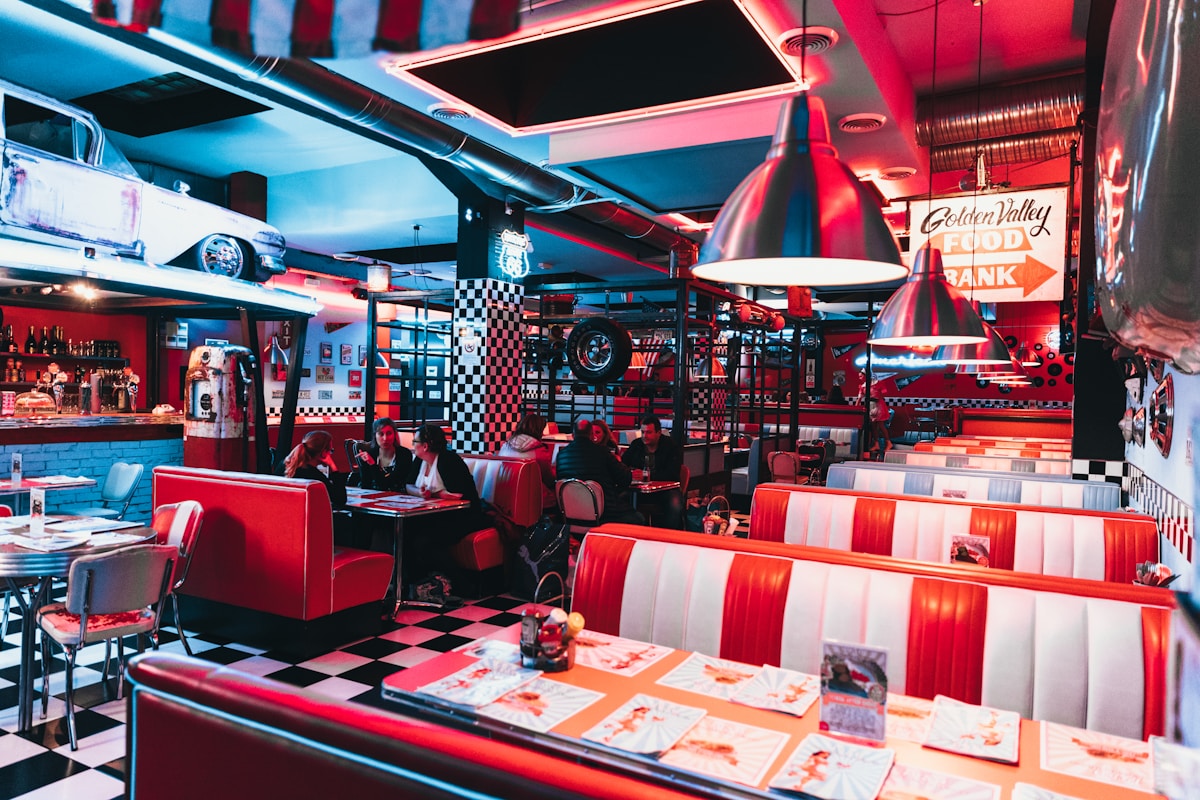
The American diner is an institution that international visitors often don’t know how to read. It looks simple - a counter, some booths, laminated menus, a coffee pot that appears to refill itself - but there are cultural codes at work that, once understood, make the experience considerably more satisfying.
This guide is for visitors who have never eaten in one and want to do it properly.
What a Diner Is (and Isn’t)
A classic American diner is an informal sit-down restaurant, typically open long hours (many run 24 hours), serving a broad menu of American comfort food at moderate prices. The word “diner” originally referred to a type of prefabricated stainless steel restaurant building modelled on a railway dining car - many of the most iconic examples in New Jersey, Pennsylvania, and New England still have that distinctive shape.
Today, “diner” refers more broadly to any informal all-day restaurant serving breakfast, lunch, and dinner from a large laminated menu. The atmosphere is casual, service is fast and direct, and the expectation is that you’ll eat well without dressing up, making a reservation, or spending a lot of money.
A diner is not a deli (which focuses on cured meats and sandwiches), not a cafeteria (where you serve yourself), and not a fast food restaurant (where you order at a counter). It’s a table-service restaurant with an unusually extensive menu and an extremely unfussy atmosphere.
The Physical Layout
Most diners follow a predictable format:
The counter: A long counter with stools running along the front, facing the open kitchen or the pass-through window. Sitting at the counter is faster service and gives you a view of the kitchen action. Solo diners often prefer it.
Booths: Bench seating along the walls, typically upholstered in red vinyl in classic diners. Booths are the default for groups and families.
Tables: Some diners have freestanding tables in the centre of the room.
The coffee station: A server with a glass carafe of filter coffee will appear almost immediately after you sit down. The question “coffee?” is not a formality - they’ll pour it without waiting for a full response. Refills are free and constant. If you don’t want coffee, say so clearly, or you’ll have a cup in front of you before you’ve opened the menu.
How to Order
-
Sit wherever you like. Unless there’s a sign saying “wait to be seated,” choose your own booth or counter seat. A server will find you.
-
Coffee first. Accept or decline immediately. American diner coffee is typically filter/drip coffee - not espresso-based. It’s weak by European standards but deeply comforting in context. It arrives in a ceramic mug, refilled throughout your meal.
-
The menu is large. A typical diner menu has 80–150 items across breakfast, lunch, and dinner, plus a separate page for specials. Don’t feel obligated to study it comprehensively. Decide whether you want breakfast (served all day at most diners) or lunch/dinner, and focus on that section.
-
Order when you’re ready. Servers check back frequently but won’t rush you. “Give me a minute” is a perfectly acceptable response if you need more time.
-
Customise freely. American diner ordering is highly customisable and servers expect it. “Two eggs scrambled, not over easy, wheat toast instead of white, extra bacon on the side” is a completely normal order. Substitutions are routine and usually free or low-cost.
-
The check (bill): Ask for it when you’re ready. “Can I get the check?” or simply “Check, please” signals your server. The check is left at your table; you pay at the register in some diners or the server takes your card/cash directly.
What to Order
Breakfast (the strongest category)
The American diner breakfast is the category where diners genuinely excel, and it’s available all day at most locations.
Eggs any style: Fried (sunny side up, over easy, over medium, over hard), scrambled, or poached. Always specify.
Pancakes: American pancakes are thick, fluffy, and served in stacks of 2–3 with butter and maple syrup (or a corn-syrup imitation - ask for real maple syrup if you want it, and budget for a small surcharge).
French toast: Thick bread soaked in egg and milk, pan-fried, served with powdered sugar and syrup.
Eggs Benedict: Poached eggs on English muffins with Canadian bacon and hollandaise. A weekend staple at better diners.
The Full Plate: Eggs (your choice), bacon or sausage (links or patties), hash browns or home fries (roasted potato chunks), and toast. This plate - varying in price from approximately $10–$16 - is the quintessential diner meal and the one most visitors should try first.
Hash browns: Thin, flat, pan-fried shredded potato. Different from “home fries” which are chunks. Order them “scattered, smothered, and covered” at a Waffle House for the full experience (see below).
Lunch and Dinner
Club sandwich: Three layers of toast with turkey, bacon, lettuce, tomato, and mayo. Served with a pickle spear and your choice of side. A diner standard.
Patty melt: A beef hamburger patty on grilled rye bread with Swiss cheese and caramelised onions. An underrated classic.
Meatloaf dinner: Braised meatloaf with mashed potatoes and a side vegetable. A comfort food benchmark.
Reuben sandwich: Corned beef on rye with Swiss cheese, sauerkraut, and Thousand Island dressing, grilled until the cheese melts. One of the better sandwiches in American cuisine.
Soup and half-sandwich: A cup of soup (tomato, chicken noodle, or the daily special) with a half sandwich. Efficient and often excellent value.
Pie
American diner pie is a serious category. Apple, cherry, banana cream, and coconut cream are the classics. A slice runs approximately $4–$7. If the diner has a rotating display case by the entrance with whole pies visible, order the pie.
Tipping at Diners
Tipping is not optional in American restaurants, including diners. The standard is 18–20% of the pre-tax bill for competent service. Dropping below 15% is a meaningful statement. Not tipping is culturally understood as a serious slight - servers in the US typically earn a lower base wage with the expectation that tips bring their total income to a living wage.
At a diner, the easiest calculation: for a $14 breakfast, leave $16–$17 (including tip). For a $22 lunch, $26–$27. If you pay in cash, leave the tip on the table in bills as you leave. If paying by card, add the tip on the payment slip or terminal.
If you’re from a country where tipping is unusual or optional, this takes adjustment. Expect to feel slightly awkward the first time; do it anyway.
Free Refills
American diner culture includes free refills on drip coffee and soft drinks (Coke, Diet Coke, lemonade, iced tea). This is automatic - your glass will be refilled without being asked, often when it’s still half-full. Water is always free and arrives automatically. Non-alcoholic beverages are typically $3–$4 but with unlimited refills they represent good value in a long meal.
Regional Diner Chains
Waffle House
The American South’s most important diner chain - and, depending on your tolerance for fluorescent lighting and institutional intensity, one of the most interesting food experiences in the country.
Waffle House operates 1,900+ locations across 25 states, almost all in the South and Southeast. It’s open 24 hours, 365 days a year (FEMA uses Waffle House restaurant closures as an informal measure of hurricane severity - the “Waffle House Index”). The menu is simple: waffles, eggs, hash browns, bacon, sausage, coffee. Hash browns can be ordered in an elaborate modification system - “scattered” (spread on the griddle), “smothered” (grilled onions), “covered” (melted cheese), “chunked” (ham cubes), “topped” (chilli), “diced” (tomatoes). Each modifier is called out to the cook who handles multiple tables simultaneously with remarkable precision.
A full Waffle House meal - two waffles, two eggs, a side of bacon, and coffee - runs approximately $14–$18 before tip. The experience is loud, fast, and unrepeatable.
Denny’s
The national all-rounder diner chain with 1,600+ locations across all 50 states. Less regional character than Waffle House but more consistent and reliable. The “Grand Slam” breakfast - two pancakes, two eggs, two strips of bacon, two sausage links - is the signature order and costs approximately $10–$14. Denny’s is the right choice when you need a reliable meal at 1am in a city you don’t know.
IHOP (International House of Pancakes)
A chain focused on breakfast all day, with an emphasis on pancake variety. The menu includes buttermilk pancakes, stuffed French toast, and omelettes. Prices run slightly above Waffle House - $13–$20 for a full breakfast plate. Found in strip malls across the country.
In-N-Out Burger
Technically a fast-food chain rather than a diner, but culturally occupies a similar space: simple menu, exceptional quality, devoted following. Available only in California, Nevada, Arizona, Utah, Texas, Colorado, and Idaho. The “Animal Style” burger (extra spread, grilled onions, extra pickles) is the off-menu item every first-timer should order. A double cheeseburger, fries, and a shake run approximately $10–$14.
Bob Evans
A Midwestern chain (Ohio-founded) serving a more home-cooking-focused menu: fried chicken, mashed potatoes, green beans, biscuits, and seasonal pies. Stronger on dinner than breakfast compared to Waffle House. Prices are moderate: $14–$22 for a full dinner plate.
What International Visitors Get Wrong
Expecting espresso. American diner coffee is filter drip. It’s served in a ceramic mug and refilled constantly. If you want a cappuccino or latte, you want a café, not a diner.
Reading the menu comprehensively. A 120-item menu is not meant to be read sequentially. Know whether you want breakfast or lunch, pick the section, find something that sounds good. The menu is a catalogue, not a list of recommendations.
Waiting for someone to seat you. Unless a sign or host tells you otherwise, you seat yourself.
Not customising. American diner staff expect modifications. If you want your eggs scrambled instead of over easy, your toast dry instead of buttered, or extra syrup on the side, say so. This is how everyone orders.
Undertipping. Already covered above. This one causes real harm to the people who served you.
The American diner rewards a visitor who comes in without pretension, orders the $12 breakfast, accepts the coffee, and eats without rushing. It’s not a subtle meal. It’s not trying to be. That’s the point.
Book a Culinary Tour to Go Deeper
The American diner is one entry point into US food culture - a guided culinary tour takes you deeper. In cities like Philadelphia (Reading Terminal Market), New Orleans (Central Grocery and Café Du Monde), and New York (Katz’s Deli, Lower East Side food history), local guides provide historical context that a solo visit to a classic institution can’t replicate. A food tour also handles the practical problem of not knowing which counter to join in a busy market hall.
Browse food tours and experiences across the USA to find guided culinary walks in the cities you’re visiting. Compare car hire in the USA - classic diners are often on highway routes between cities rather than in walkable centres.
Plan Your Stay
Find hotels in USA - search accommodation across all budgets in USA.