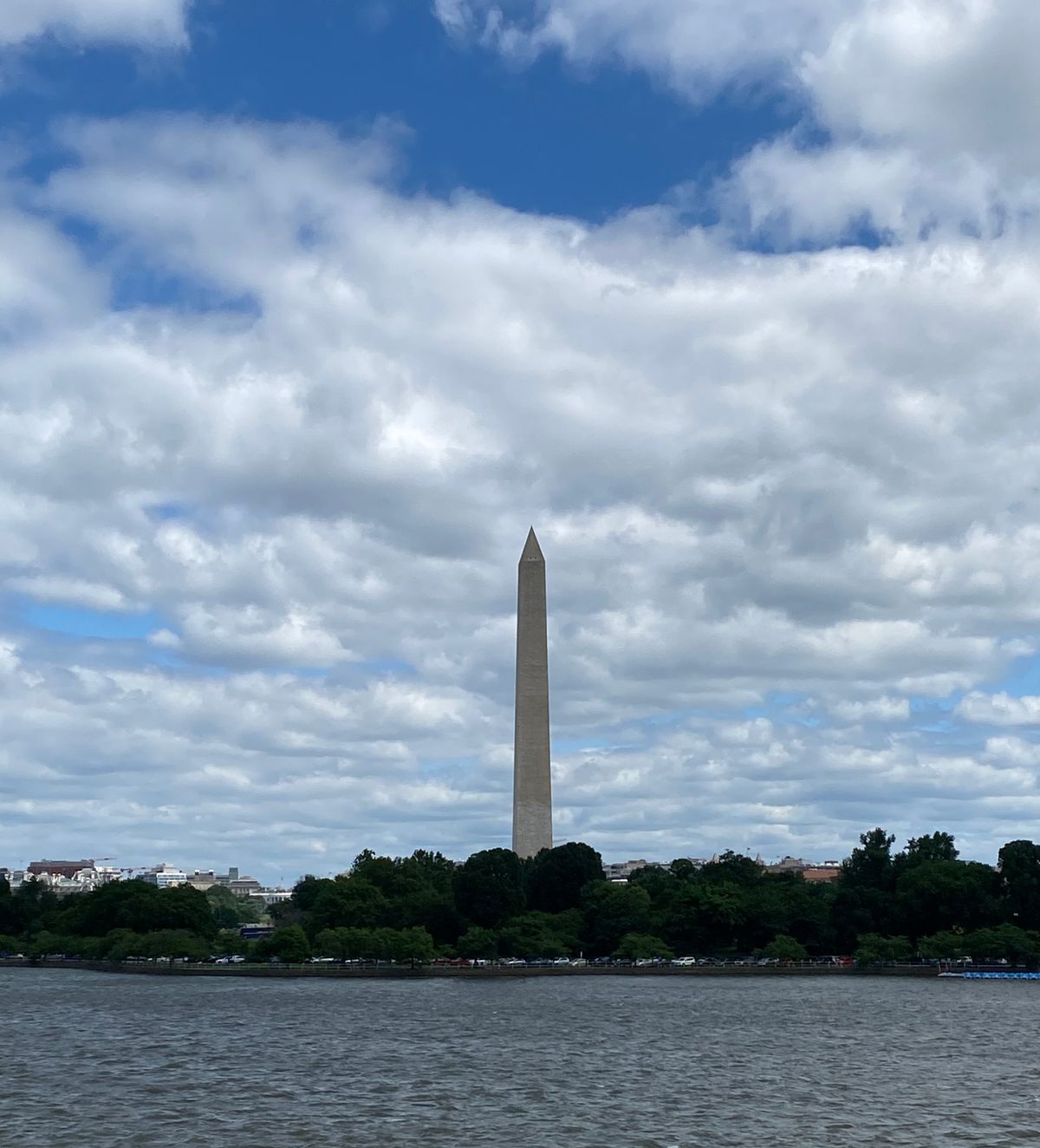
The Washington Monument is the tallest obelisk in the world and the most recognisable structure on the National Mall. It stands 555 feet 5 inches (169 metres) - a height specified partly because no building in Washington DC was historically permitted to exceed it, a restriction that no longer legally applies but that the DC city planning code effectively preserves. Entry is free. The view from the 500-foot observation deck is the best 360-degree view of the city available anywhere.
The planning challenge is not cost but access: timed-entry passes are required and sell out weeks in advance during peak season.
How to Get Washington Monument Passes
Passes are free and available through recreation.gov. This is the National Park Service’s booking platform for federal sites across the United States.
Step-by-step:
- Go to recreation.gov and search “Washington Monument”
- Select your preferred date - passes are bookable up to 30 days in advance
- Passes release at 7am Eastern Time, exactly 30 days before the visit date
- Choose a timed-entry slot (typically in 30-minute windows throughout the day)
- Complete the booking - no payment required
Each booking covers the reservation holder plus up to 5 additional guests, so one reservation handles a party of 6.
When to book: In peak season (April through August, especially weekend dates), passes on popular dates disappear within 15–30 minutes of the 7am release. Set a calendar reminder for exactly 30 days before your intended visit and be ready at 7am ET.
Phone bookings: Call 1-877-444-6777. A small service fee applies for phone reservations.
Same-Day Passes
Approximately 10 percent of each day’s capacity is held back for same-day visitors. These passes are distributed at the Washington Monument Lodge, at the base of the monument on 15th Street NW, typically beginning at 9am. In peak season, queues form before the lodge opens. Arriving by 8:30am gives a reasonable chance. In the October–March off-season, same-day passes are frequently available well into the morning without queuing.
The Observation Deck: What You See
The elevator ride takes approximately 70 seconds from ground level to the 500-foot observation deck. The deck has 16 windows positioned around the four cardinal directions.
North: The White House is directly north, about 3,000 feet away on Pennsylvania Avenue. The Ellipse - the park between the monument and the White House South Lawn - is visible below, used for the national Christmas tree lighting each December.
East: The US Capitol dome appears at the far end of the National Mall, 1.4 miles away. The Smithsonian castle and museum rooftops line both sides of the Mall in the foreground.
South: The Potomac River and the Tidal Basin are visible from the south windows, with the Jefferson Memorial’s dome on the far bank of the Tidal Basin and the Pentagon visible in the distance across the river in Virginia.
West: The Lincoln Memorial and its Reflecting Pool are directly west. The Vietnam Veterans Memorial’s black granite wall is visible at the northwest corner of the Reflecting Pool, and the Korean War Veterans Memorial is in the woods beyond it.
Rangers are stationed on the observation deck throughout operating hours and can answer questions about the city’s layout, the monument’s history, and the individual landmarks visible from each window.
The Monument Itself: Key Facts
The Washington Monument was constructed in two phases separated by a 22-year gap. The first phase ran from 1848 to 1854; funding ran out and the Know-Nothing Party briefly took control of the Washington National Monument Society, halting construction at the 150-foot level. Construction resumed in 1879 under the Army Corps of Engineers, completing in 1884. The change in management created a visible colour difference in the stone at the 150-foot level - the newer Maryland marble is a slightly different shade than the original quarry source - which is visible from the outside when the light conditions are right.
The capstone was placed on December 6, 1884, making it briefly the tallest structure in the world. It held that distinction for six months, until the Cologne Cathedral was completed in August 1885. The monument was dedicated in 1885 and opened to the public in 1888.
The original climb to the top was by stairs - 897 steps. The first elevator was steam-powered and considered too dangerous for women and children on the initial opening; only men could use it. The current high-speed elevator was installed in 1998.
When to Visit
Spring (April–May): Peak demand. Cherry blossom season in late March to early April makes the entire Mall exceptionally crowded. Book passes the maximum 30 days in advance for any spring weekend date.
Summer (June–August): Long operating hours, highest visitor numbers, warmest temperatures. Weekend passes are the hardest to secure of any time of year. Weekday morning slots are somewhat easier. The view in summer haze is less sharp than in autumn or winter, but the longer daylight hours extend the usable afternoon slots.
Autumn (September–October): Lower demand than summer, comfortable temperatures, and clear skies make this the best overall time to visit. Passes are easier to secure. The Mall’s elm trees turn yellow-gold in October.
Winter (November–March): Passes are often available same-day. The monument is open and operational in cold weather; the observation deck view is clearest in winter air. The monument’s appearance in snow is striking from the Mall.
Getting to the Washington Monument
The monument sits at the geographic centre of the National Mall, roughly equidistant from the Lincoln Memorial (west) and the US Capitol (east).
Metro: Smithsonian station (Blue, Orange, and Silver Lines) is the closest, on the south side of the Mall at Independence Avenue. The monument is approximately a 5-minute walk north from the Smithsonian station exit. Alternatively, Federal Triangle station (Orange and Silver Lines) puts you on the north side of the Mall, also about a 5-minute walk.
By foot from Lincoln Memorial: The Mall is 1.9 miles from the Lincoln Memorial to the Capitol. The Washington Monument sits at roughly the one-third mark from the Lincoln end - about a 10-minute walk east from the Lincoln Memorial along the Reflecting Pool.
Parking: There is no monument-specific parking lot. The closest parking areas are along Ohio Drive SW near the Tidal Basin and in the Federal Triangle area. Driving is not recommended; Metro is significantly more convenient.
Combining with the National Mall
The monument sits at the centre of a walkable cluster of sites, all free:
- Lincoln Memorial (10–15 min walk west): The Reflecting Pool stretches between them - the most iconic view on the Mall
- Vietnam Veterans Memorial: Just north of the Reflecting Pool, one of the most affecting memorials in the city
- World War II Memorial: Between the Washington Monument and the Lincoln Memorial, directly on the Mall
- Jefferson Memorial (15 min walk south): On the Tidal Basin - best reached via the walk around the basin
- Smithsonian museums: The National Museum of Natural History and National Museum of American History are directly on the Mall, 5 minutes walk east
For the full overview of Washington DC’s free and ticketed sites - and how to structure your days on the Mall - see our Washington DC attractions guide. Our DC hotels guide covers accommodation options from the Penn Quarter to Georgetown.
National Mall Guided Tours at a Glance
All monuments are free to visit independently. Guided tours add historical context and handle logistics. Prices as of 2026. Book Washington DC tours on GetYourGuide.
| Tour | Duration | From | Book |
|---|---|---|---|
| Monuments by Moonlight Bus Tour | 2.5 hrs | ~$55 | Book on GYG |
| Washington Mall Walking Tour | 2–3 hrs | ~$25 | Book on GYG |
| Capitol Hill and Supreme Court Walking Tour | 2–3 hrs | ~$35 | Book on GYG |
| Arlington Cemetery Walking Tour | 2 hrs | ~$25 | Book on GYG |
| DC History and Architecture Tour | 2.5 hrs | ~$30 | Book on GYG |