Chicago’s top paid attractions are among the best in the United States, and the concentration of the main venues on the lakefront makes it practical to visit three or four in a single full day. The Museum Campus - where the Field Museum, Shedd Aquarium, and Adler Planetarium sit side by side on the lakefront south of Grant Park - is the logical centrepiece of most first visits. The Art Institute, the Willis Tower Skydeck, and the Museum of Science and Industry round out the headline lineup.
Museum Campus: Field Museum, Shedd Aquarium & Adler Planetarium
The Museum Campus occupies a peninsula on the lakefront at the southern end of Grant Park, about 1 mile south of Millennium Park. All three institutions are within a 10-minute walk of each other.
Field Museum
1400 S Lake Shore Drive | Approximate admission: $35 adult, $25 child (3–11), as of 2026
The Field Museum holds one of the largest natural history collections in the world - over 40 million specimens across anthropology, botany, geology, and zoology. Sue the T. rex (the most complete T. rex skeleton ever found) occupies the main hall and is the exhibit everyone photographs. The Egyptian mummies collection is excellent, and the Underground Adventure exhibit - where visitors are shrunk to the size of a beetle to explore soil ecology - is particularly effective with children. Allow 3–4 hours; the full collection is too large for a single day.
Book tickets at the Field Museum’s website or via GetYourGuide Chicago tours.
Shedd Aquarium
1200 S Lake Shore Drive | Approximate admission: $55 adult, $45 child (3–11), as of 2026
The Shedd is one of the largest inland aquariums in the world and the single busiest paid attraction in Chicago. The centrepiece is the Abbott Oceanarium - a vast space housing beluga whales and Pacific white-sided dolphins, with a naturalistic Pacific Northwest coastline recreated around the central performance pool. The Wild Reef exhibit (Philippines coral reef habitat with 500 Indo-Pacific fish species and multiple shark species) is the best large-reef aquarium exhibit in the Midwest. The Caribbean Reef - a 400,000-gallon cylindrical tank with stingrays and sharks swimming around a free-standing glass cylinder - is the first thing visible upon entering.
Book in advance to avoid peak queues, particularly on summer weekends when the Shedd can reach daily capacity.
Adler Planetarium
1300 S Lake Shore Drive | Approximate admission: $25 adult, $21 child (3–11), as of 2026
The Adler combines a planetarium, astronomy museum, and the best lakefront views of the Chicago skyline of any attraction on the Museum Campus. The Sky Theater full-dome show runs multiple programmes daily, with dedicated children’s shows in the morning. The Shoot for the Moon exhibition covers the Apollo programme with original artefacts. For most families, the Adler is the third Museum Campus priority after the Field and the Shedd - plan 2–3 hours.
Art Institute of Chicago
111 S Michigan Avenue | Approximate admission: $35 adult, free under 14, as of 2026
The Art Institute is Chicago’s most significant cultural institution - a collection assembled since 1879 that places it among the top five art museums in North America. The European paintings collection is the headline draw: the Impressionist and Post-Impressionist rooms hold Seurat’s A Sunday on La Grande Jatte, Monet’s Stacks of Wheat series, and significant works by Cézanne, Picasso, and Matisse. The Modern Wing (opened 2009, designed by Renzo Piano) houses the contemporary collection including major works by Jasper Johns, Mark Rothko, and Cindy Sherman. The Thorne Miniature Rooms - 68 tiny rooms recreating European and American interiors from the 13th century to the 1930s - are a persistent favourite with children and adults alike.
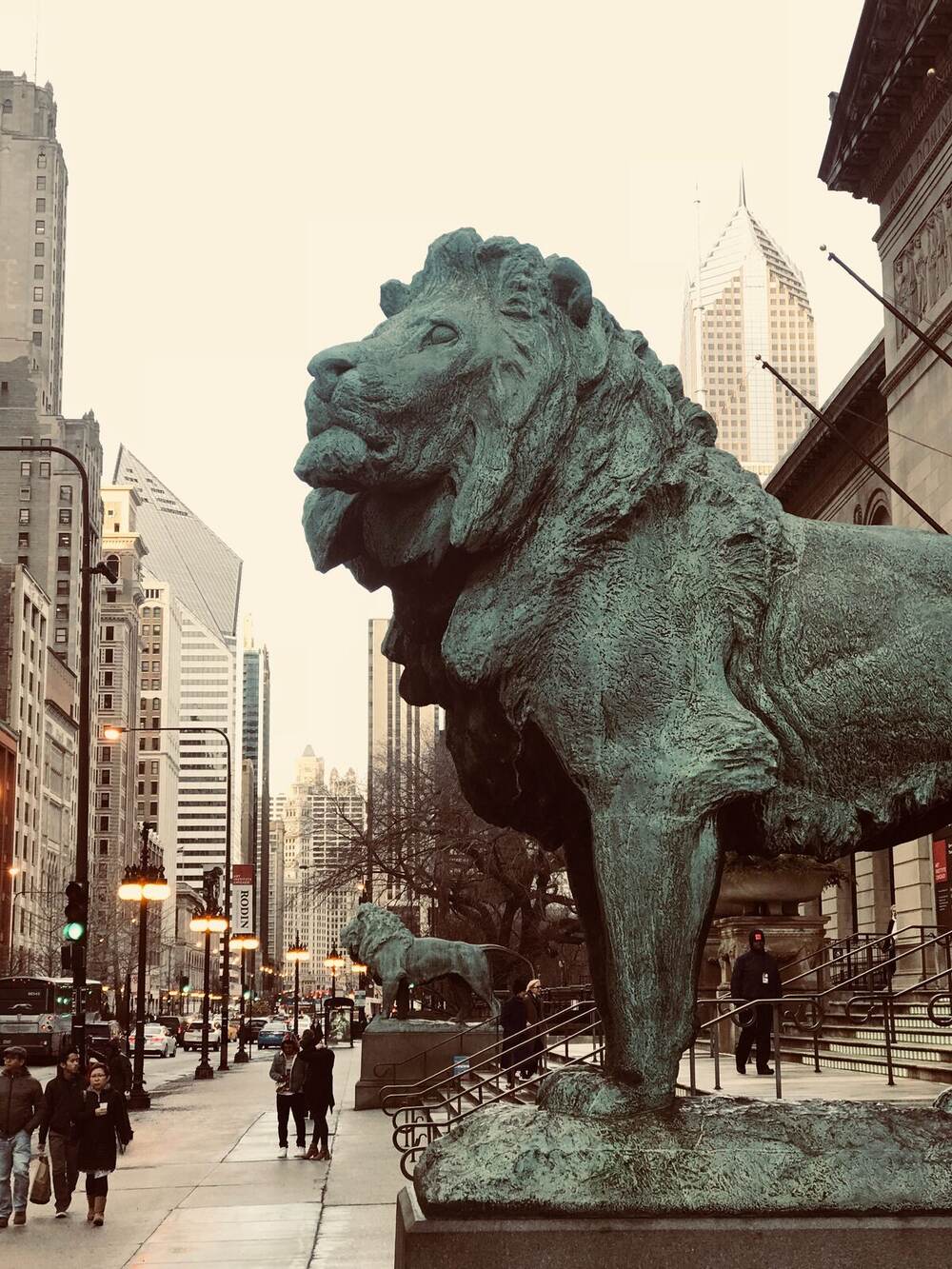
The bronze lion statues flanking the main Michigan Avenue entrance have guarded the building since 1894 and are Chicago’s most photographed public sculptures after Cloud Gate. Museum hours are typically 11am–5pm (Thursday until 8pm). Book tickets at the official site or browse Chicago tours on GetYourGuide for guided Art Institute experiences.
Skydeck Chicago (Willis Tower)
233 S Wacker Drive | Approximate admission: $35 adult, $27 child (3–11), as of 2026
The 103rd-floor observation deck of Willis Tower sits at 1,353 feet - the highest in the Western Hemisphere until One World Trade Center opened in 2014. The Ledge - four glass box balconies that extend 4.3 feet out from the building with glass floors - provides the sensation of standing in open air above the city. On a clear day, views extend to four states: Illinois, Indiana, Michigan, and Wisconsin.
The exhibit on the ground level covers the history of Chicago’s skyscraper culture well - useful context before ascending. Queues for the elevator can run 45–60 minutes during peak periods; booking a timed-entry ticket online removes the queue. Allow 1–1.5 hours for the full experience.
Chicago CityPASS: Is It Worth Buying?
Chicago CityPASS (approximately $119 adult, $89 child 3–11 as of 2026) covers five attractions: Shedd Aquarium, Field Museum, Skydeck Chicago, Museum of Science and Industry, and Art Institute of Chicago. Buying all five individually costs approximately $181 per adult - the CityPASS saves around $62 per person and is valid for 9 consecutive days from first use.
The pass makes clear financial sense if you plan to visit three or more of the five venues. The Shedd and Field alone cost approximately $90 combined; the CityPASS covers both plus three more for an additional $29. Purchase online in advance - you can download the passes to your phone immediately. CityPASS also includes reserved entry windows at most participating venues, avoiding the ticket queue.
Museum of Science and Industry
5700 S Lake Shore Drive, Hyde Park | Approximate admission: $21 adult, $12 child (3–11), as of 2026
The MSI is Chicago’s most interactive museum - a 14-acre complex in Hyde Park (about 8 miles south of the Loop) with exhibits on everything from a German U-boat (U-505, captured in 1944 and on display since 1954) to a coal mine, a recreated Chicago 1893 World’s Fair streetscape, and a full-size Boeing 727 suspended from the ceiling. The Coal Mine and the U-505 exhibits are genuinely extraordinary - the submarine in particular is one of the most affecting museum experiences in the Midwest. Budget a half-day; travel to Hyde Park takes about 20–25 minutes by CTA Green Line from the Loop.
Free Attractions: Millennium Park and Lincoln Park
Millennium Park (201 East Randolph Street) is free and should be on every Chicago itinerary regardless of budget. Cloud Gate (the Bean) - Anish Kapoor’s 110-ton polished steel sculpture - reflects the skyline in a distorted panorama that changes completely with the light and season. Crown Fountain (two 50-foot glass towers projecting faces of Chicago residents) and the Lurie Garden are also free. The Grant Park Music Festival runs free classical concerts on Wednesday and Friday evenings in summer at the Pritzker Pavilion designed by Frank Gehry.
Lincoln Park Zoo (2001 N Clark Street) remains one of the last free zoos in a major American city. Home to approximately 200 species including African lions, snow leopards, gorillas, and polar bears, the 35-acre zoo is open year-round with extended summer hours. The Lincoln Park Conservatory adjacent to the zoo is also free.
Navy Pier
600 E Grand Avenue | Free to enter; individual attractions priced separately
Navy Pier extends 3,000 feet into Lake Michigan and functions as Chicago’s primary outdoor gathering space. Entry is free; individual attractions - including the Centennial Wheel (approximately $18 per ride), the Chicago Children’s Museum (approximately $17 child), and the Chicago Shakespeare Theater (ticket prices vary) - are priced separately. The pier is at its best in the evening for the skyline views from the lakefront. Architecture boat tours depart from the south side of the pier; Chicago river architecture cruises are among the most consistently recommended experiences in the city.
Planning Your Chicago Attractions Visit
Museum Campus in one day: The Field Museum, Shedd Aquarium, and Adler Planetarium can technically be visited in a single day, but the combination is genuinely exhausting. Choose two Museum Campus institutions per day and add a third separately.
Combine downtown attractions: The Art Institute and Millennium Park sit adjacent to each other - they pair naturally into a half-day Loop visit. The Skydeck is a 15-minute walk west from the Art Institute.
Book in advance for the Shedd: More than any other Chicago attraction, the Shedd Aquarium benefits from advance booking - particularly on summer weekends when it reaches daily capacity before noon.
For accommodation near these attractions, our Chicago hotels guide covers options across all budgets from Millennium Park to Wicker Park. For Chicago-specific guided experiences including architecture tours and food walks, browse Chicago tours on GetYourGuide or see our full Chicago tours guide. Day trips from Chicago covers Indiana Dunes, Milwaukee, Galena, and other options for extending a Chicago visit.
Chicago Attractions at a Glance
Prices as of 2026. The CityPASS (~$119 adult) covers the Shedd, Field Museum, Skydeck, MSI, and Art Institute - saving approximately $62 vs. buying separately. Book Chicago tours and attraction tickets on GetYourGuide.
| Attraction | Adult Admission | Time Needed | Advance Booking |
|---|---|---|---|
| Shedd Aquarium | ~$55 | 2–3 hrs | Strongly recommended (sells out on summer weekends) |
| Field Museum | ~$35 | 3–4 hrs | Recommended |
| Art Institute of Chicago | ~$35 | 3–4 hrs | Walk-in or book on GYG |
| Skydeck Chicago (Willis Tower) | ~$35 | 1–1.5 hrs | Book timed entry to avoid 45-min queue |
| Adler Planetarium | ~$25 | 2–3 hrs | Walk-in or online |
| Museum of Science and Industry | ~$21 | Half-day | Walk-in (Hyde Park - 20 min from Loop) |
| Chicago CityPASS (5 venues) | ~$119 | Multi-day | Buy online in advance |